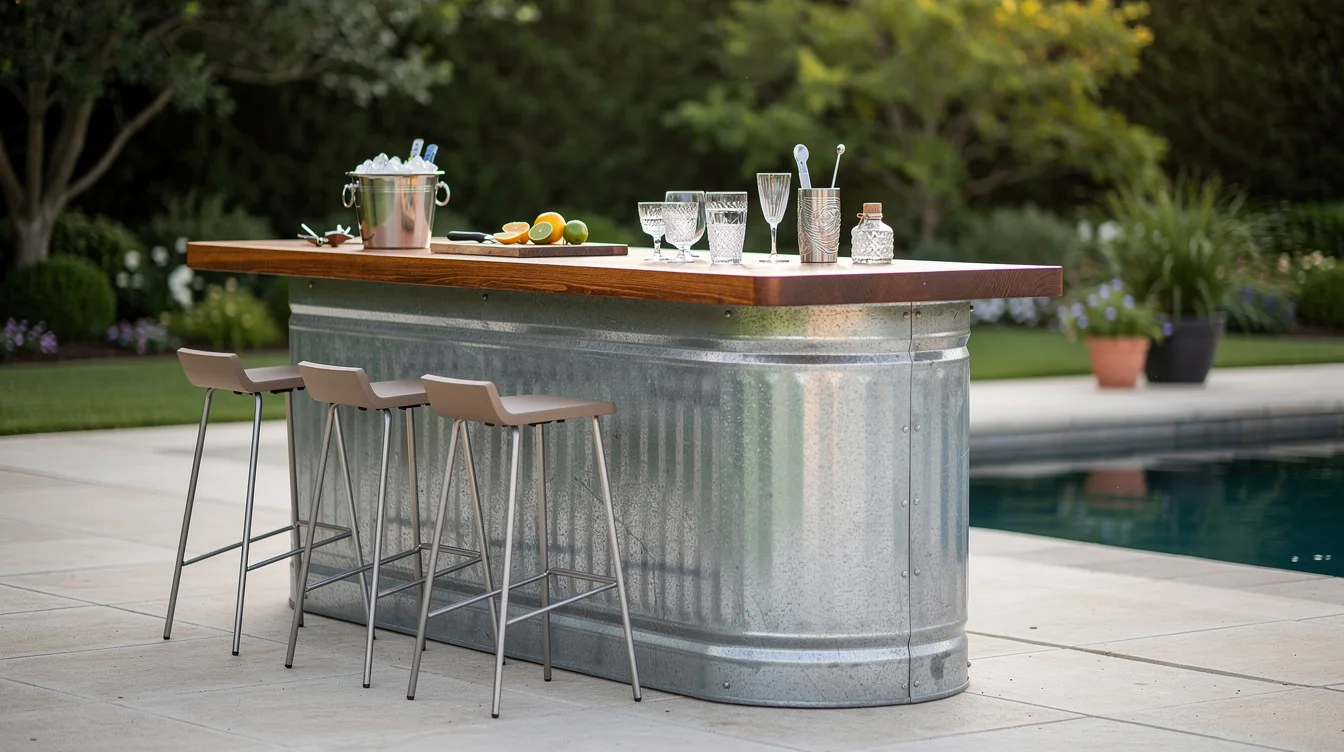
By 2 p.m., my patio had that awkward in-between look: floaties on one side, a cooler on the other, and nowhere to actually set down a drink without balancing it on the tank rim.
I didn’t want a full outdoor kitchen, and I definitely didn’t want a weeklong DIY project. I wanted one solid bar edge, a clean place for bottles, and a setup that looked intentional before dinner.
Start With the Right Tank Size
A galvanized stock tank in a 6-foot or 8-foot diameter is the sweet spot for this idea. Typical height lands around 24 to 28 inches, which is exactly why it works so well as a lean-up bar from the pool side.
I’d pick the 8-foot version if you have the room. A typical 8-foot tank runs about $400 to $800 in 2025 to 2026, and it simply looks more convincing as a real backyard feature than a tiny add-on.
The 6-foot size still works if your patio is tight. It keeps the budget closer to the lower end of that roughly $600 to $1,500 total build range, but it won’t give you the same visual impact.
Level the Base Before You Touch the Top
I set mine on a thin layer of compacted gravel, not a full pool build. That part matters more than people think, because a bar top looks sloppy fast if the tank itself reads crooked.
A bagged gravel base from Home Depot or Lowe’s is enough for a quick afternoon layout. This is the least glamorous step, but it’s the one that keeps the whole project from looking temporary.
Leave one side open for stools or step access, then claim about 5 to 6 feet of the rim for serving space. That half-and-half layout feels smarter than trying to wrap the entire tank in countertop.
Build a Bar Top That Looks Finished Fast
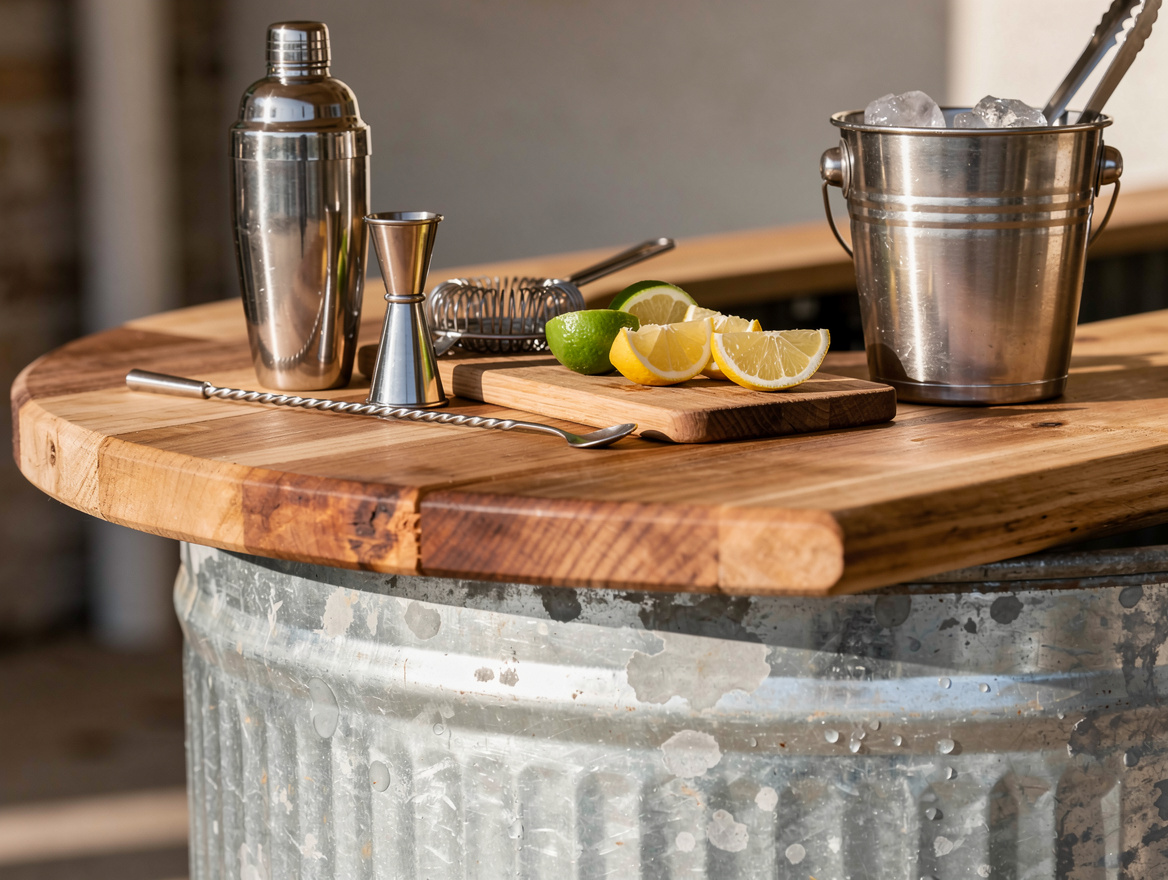
For the top, a pressure-treated wood plank build is the fastest path. Typical 2×8 or 2×10 boards in an 8-foot length often run about $15 to $25 each, and that’s why this route still makes sense for a one-afternoon job.
I like a 16- to 20-inch-deep serving ledge, built from two or three pressure-treated boards. It’s deep enough for a shaker, a cutting board, and a few glasses without turning the tank into a bulky island.
If you want less maintenance, composite deck boards from Lowe’s or Home Depot are the cleaner choice. Typical material cost for a 5- to 6-foot bar segment is about $80 to $150, and I think the extra spend is worth it if your yard gets hard sun.
A fast coat of exterior oil or stain makes wood look deliberate instead of raw. Skip high-gloss anything, because it tends to read more DIY patio project than actual cocktail bar.
Clamp the Structure Instead of Overbuilding It
You do not need a giant frame for this. A few stainless L-brackets, bolts, and sturdy clamps can hold a floating top on one arc of the tank, and a typical hardware spend sits around $30 to $60.
I’d rather see a simple, removable structure than a bulky apron that hides the tank. The whole point of a stock tank bar is that the metal shape is already doing half the visual work.
If you want a cleaner edge, cut a small piece of exterior-grade plywood as backing under the boards and keep all the hardware tucked below the surface. That one move makes the top feel custom, even if you built it in an hour.
Style the Front So It Stops Looking Agricultural
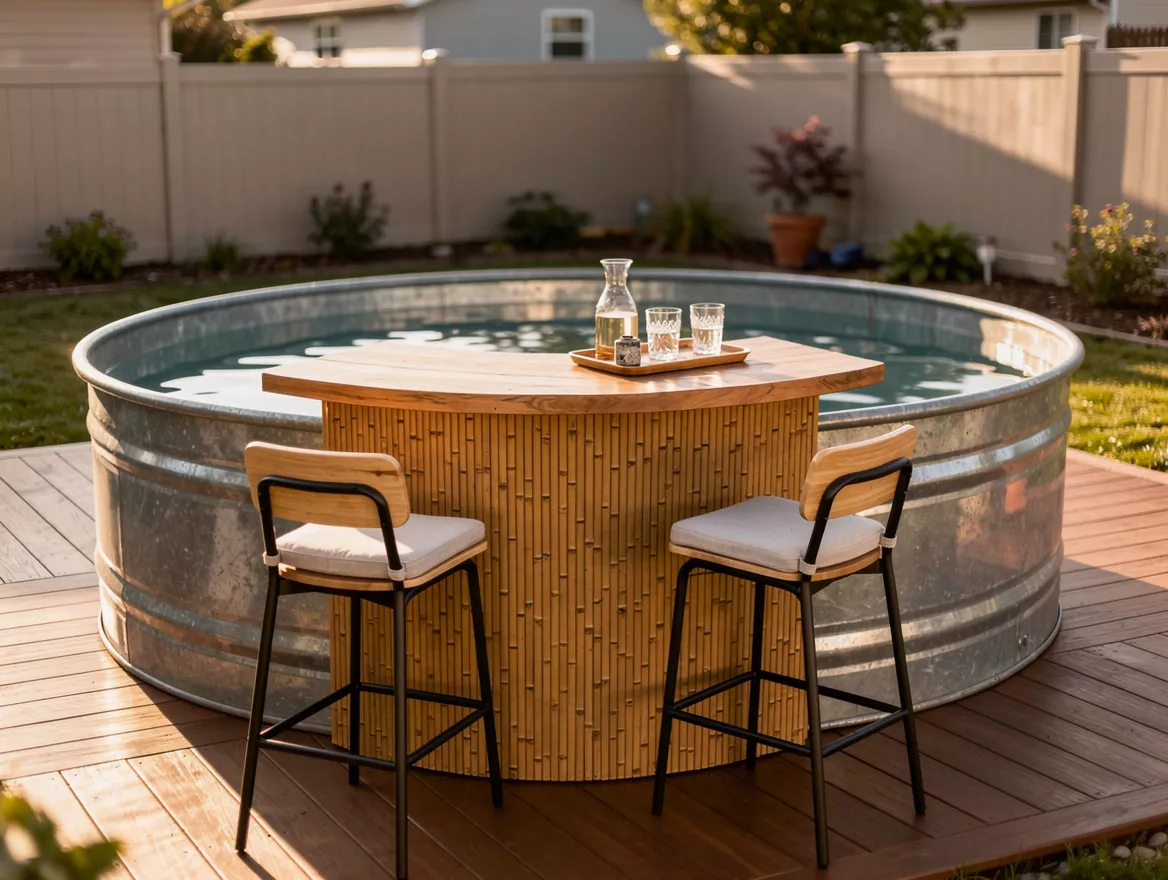
The fastest cosmetic fix is a wrap on the outside. A bamboo screening roll from Amazon or Wayfair can soften the galvanized finish without hiding it completely, and typical cost is around $100 to $150 for enough material to dress one tank.
I don’t think you need to go full tiki unless the rest of your backyard already leans that way. One wrap, one or two stools, and maybe a shade sail overhead is usually enough.
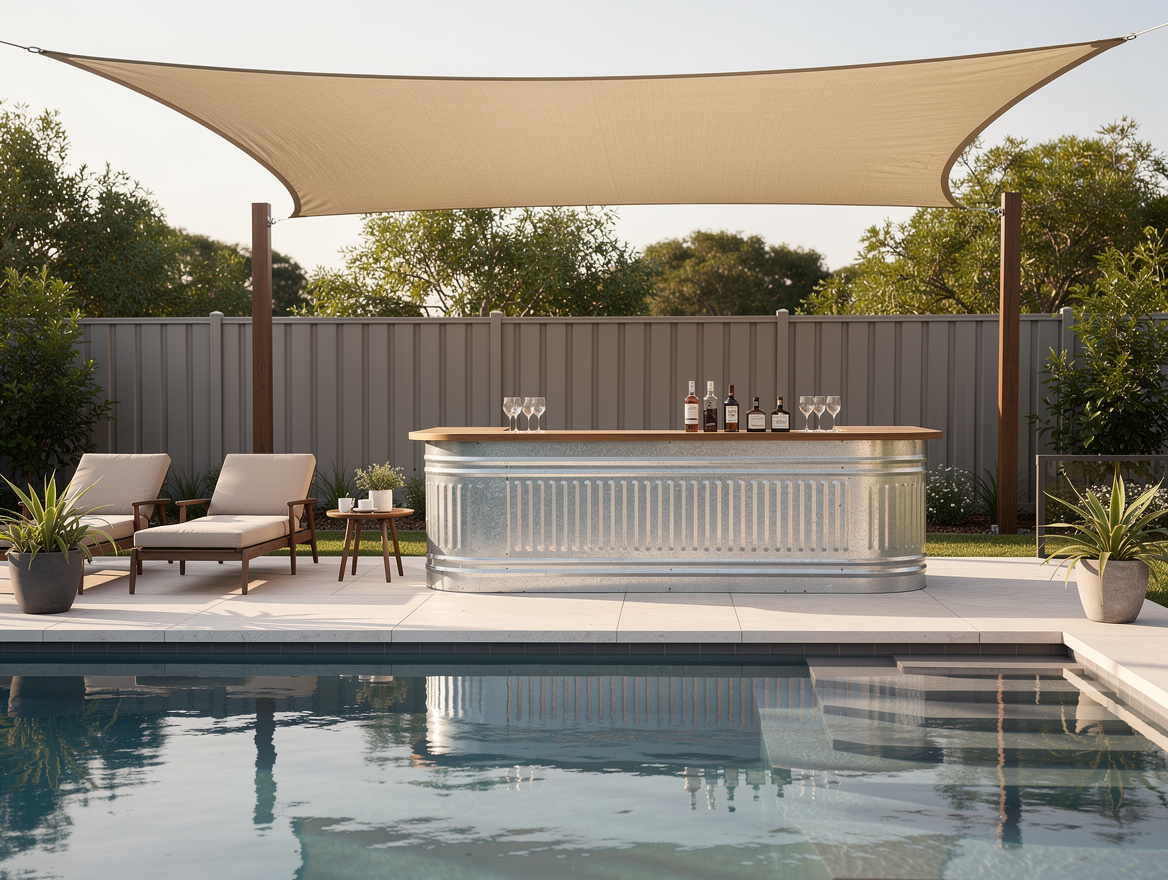
A compact shade sail from Target or Walmart can run roughly $100 to $300 depending on size. It adds just enough vacation energy, and it also keeps bottles and mixers from cooking in direct sun.
Keep the Drink Setup Tight and Practical
The best version of this bar is not overloaded. I’d stock four to six base spirits, a bucket for ice, tonic or soda, citrus, and a cutting board, because a poolside setup should stay compact and easy to wipe down.
A typical core bottle setup in 2026 can cost about $120 for the basics, and that’s before mixers or glassware. The number matters, because this project gets expensive fast if you treat it like a full indoor bar.
I used a metal ice bucket, a small tray, and a lidded tub for napkins from Target. That’s the right scale here, not a giant rack of syrups and bar tools nobody touches after the first weekend.
If you need extra storage, add a slim rolling cart from IKEA or Amazon beside the tank instead of trying to cram everything onto the top. A bar surface should stay open, or it loses the whole point.
Spend on the Pieces People Actually Notice
The typical full budget for this project lands around $600 to $1,500 in 2026, depending on the tank, your top material, and how polished you want the finish. That range feels accurate, and it’s why I’d put money into the tank and countertop first.
A composite top plus a solid 8-foot tank looks expensive even when the accessories are basic. Cheap stools and too many decorative extras do the opposite in about ten seconds.
If you want one last upgrade, bring in two weather-friendly bar stools from Costco or Ace Hardware and stop there. The project looks best when it reads like a smart backyard bar, not a themed party prop.
Begin with the tank size and the serving ledge, then decide whether the wrap and shade are worth it for your yard. Once those two pieces look right, the rest is just bottles, ice, and keeping the surface clear enough to use.
Mia Carter writes about small-space living and budget home makeovers. She has restyled three rentals and tests most ideas in her own 45 sqm flat.