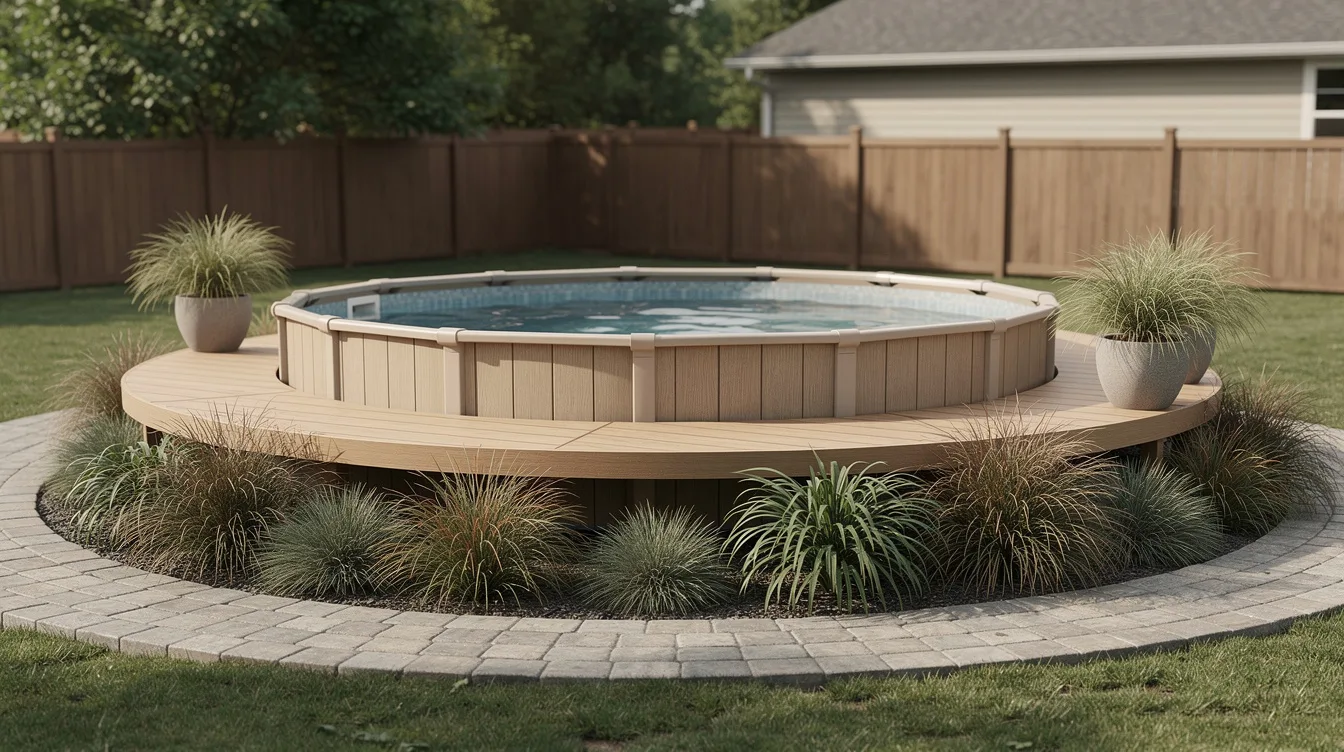
I get why people hesitate with an above-ground pool: the water looks great, then your eye drops to that visible wall and the whole yard feels temporary. The awkward part is usually the view from the patio, where the frame, hoses, and pump all show up at once.
The fix is rarely one big move. It’s usually a smart mix of decking, planting, and a cleaner perimeter, sized for how much access you still need.
Build a Deck to Pool Height
The most convincing upgrade is a pressure-treated deck built level with the pool wall, usually around 48 to 52 inches high on common above-ground pools. That single move changes the read instantly, because people stop seeing a freestanding tank and start seeing a swim platform.
For a typical 12 to 18 foot round pool, the full hide-the-frame budget often lands around $1,600 to $8,700 depending on how built-in you want it to feel. Home Depot and Lowe’s both stock framing lumber, exterior screws, and basic rail kits, and I’d spend here before I spent on decorative extras because this is the part that actually erases the pool shape.
You do need breathing room. I would keep about 24 to 36 inches between the pool wall and any fixed framing where equipment access matters, even if the front-facing side looks flush from the patio.
Wrap the Exposed Sides in Cladding
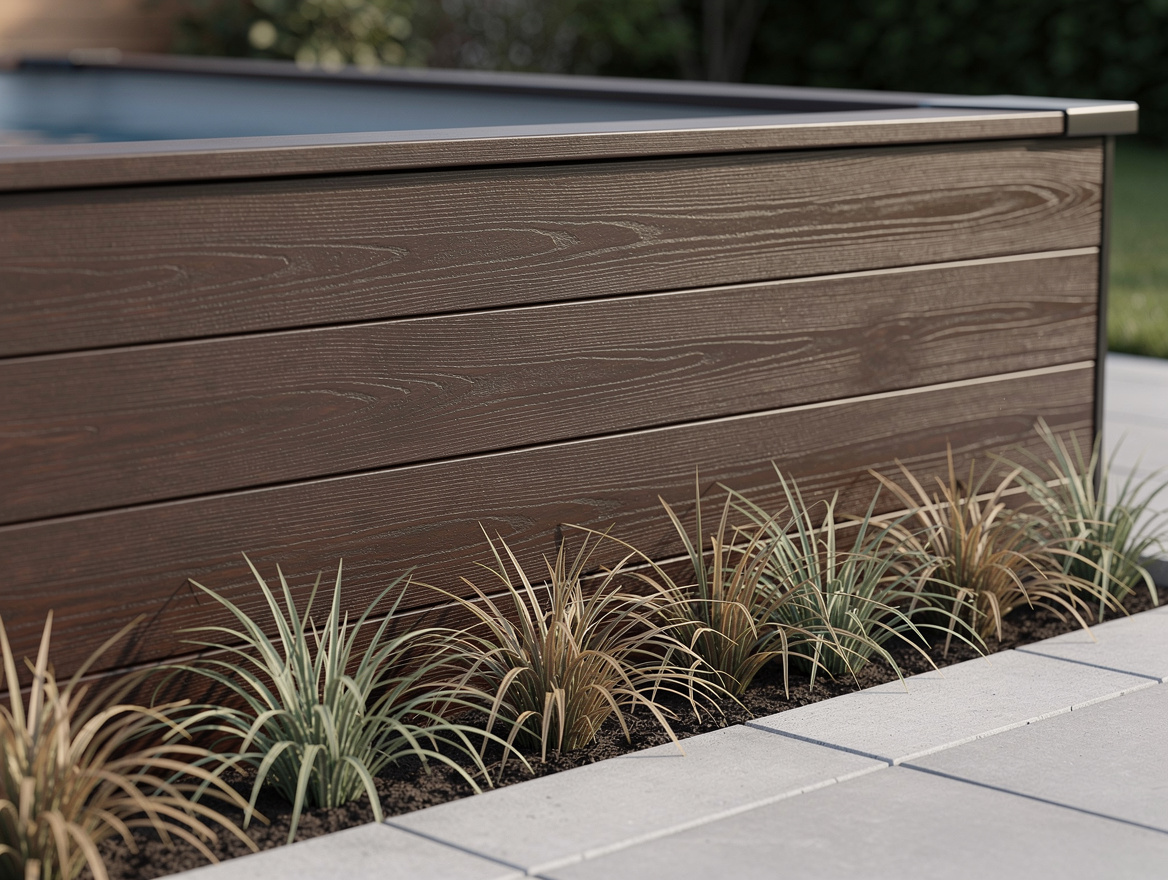
If you can’t or don’t want to deck the whole perimeter, box the visible sides with horizontal wood cladding. A simple frame skinned with pressure-treated pine boards gives the pool a cleaner, architectural outline and hides that ribbed metal look that makes most setups feel unfinished.
Cedar looks better, but pressure-treated lumber from Ace Hardware or Lowe’s is usually the smarter buy for a first pass. I like horizontal boards in a mid-tone brown or soft gray because they connect more easily to fences, patio furniture, and sheds than bright honey wood does.
Composite cladding can work too if you’re already using composite decking from Trex or TimberTech. The match matters more than the material, because the goal is to make the pool read like one intentional backyard structure.
Use Skirting for the Budget Version
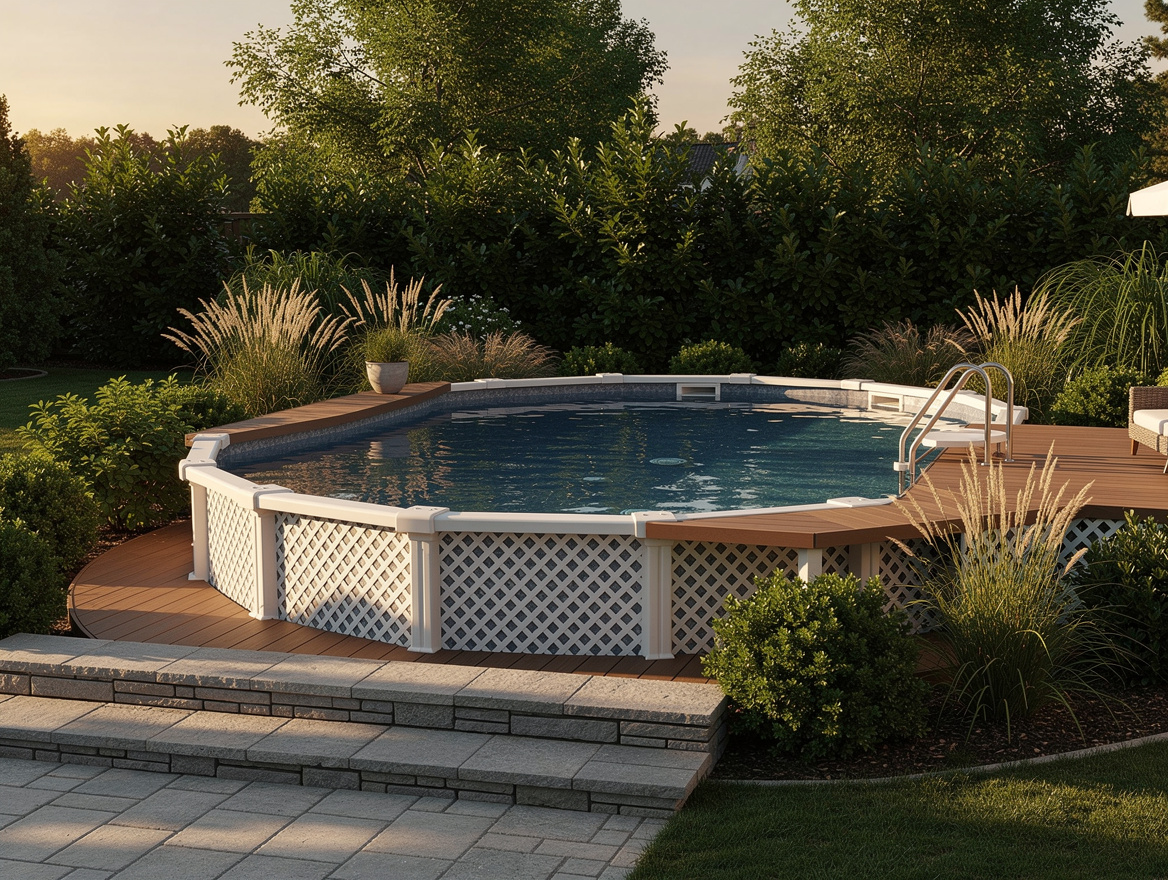
Decorative skirting is the fastest lower-cost option, and it works better than people think when the pool is small or soft-sided. A lightweight frame with vinyl lattice panels or PVC skirting hides the lower wall, softens the base, and still lets air move around the equipment area.
Walmart, Amazon, and Home Depot all carry white and black lattice panels, but I’d skip bright white unless your house trim is also white. Black or dark bronze usually disappears better in a yard, especially once mulch and shadow kick in.
This is not the luxury version, and that’s fine. It’s a smart phase-one move if your real plan is to add a deck later, because it cleans up the view now without locking you into a permanent layout.
Plant a Green Belt That Covers in Layers
Plants do a lot of visual work when you stop lining them up like a hedge and start layering them by height. I’d leave about 24 to 36 inches of access next to the pool wall, then use a band of ornamental grasses in front, fuller shrubs behind, and one climbing element where you want the eye to travel upward.
For a 15 foot round pool, a planting zone about 3 feet deep on the less-used side is often enough to block the frame from most angles. That’s especially effective if the patio faces the pool straight on and you only need screening from one primary viewpoint.
Target and Costco both tend to have seasonal planters and larger nursery pots at decent prices, and Wayfair is useful if you want raised planters instead of digging beds. I’m a fan of planters here when the pool may move in a few years, because you keep flexibility without giving up the softer look.
The key is density. A few scattered plants won’t hide anything, but a layered green belt makes the pool wall recede fast, especially by the second growing season.
Anchor the Perimeter With Pavers or Stone
The frame looks cheaper when it rises out of patchy grass. A ring of concrete pavers, crushed stone, or brick creates a clean base line and makes the pool feel placed instead of dropped into the yard.
For planning, many round pools need more room around them than people expect: about a 20 by 20 foot footprint for a 12 foot pool with circulation space, roughly 23 by 23 feet for a 15 foot pool, and closer to 26 to 30 feet square once you move into 18 to 21 foot sizes with seating or beds. That extra edge space is where hardscape pays off, because it keeps mud off feet and gives the entire setup visual structure.
Lowe’s and Home Depot both carry palletized pavers and bagged base materials, and I’d rather see a modest paver ring than an oversized deck done cheaply. Stone underfoot makes the pool area feel finished even before you touch the wall itself.
Hide the Pump and Ladder on Purpose
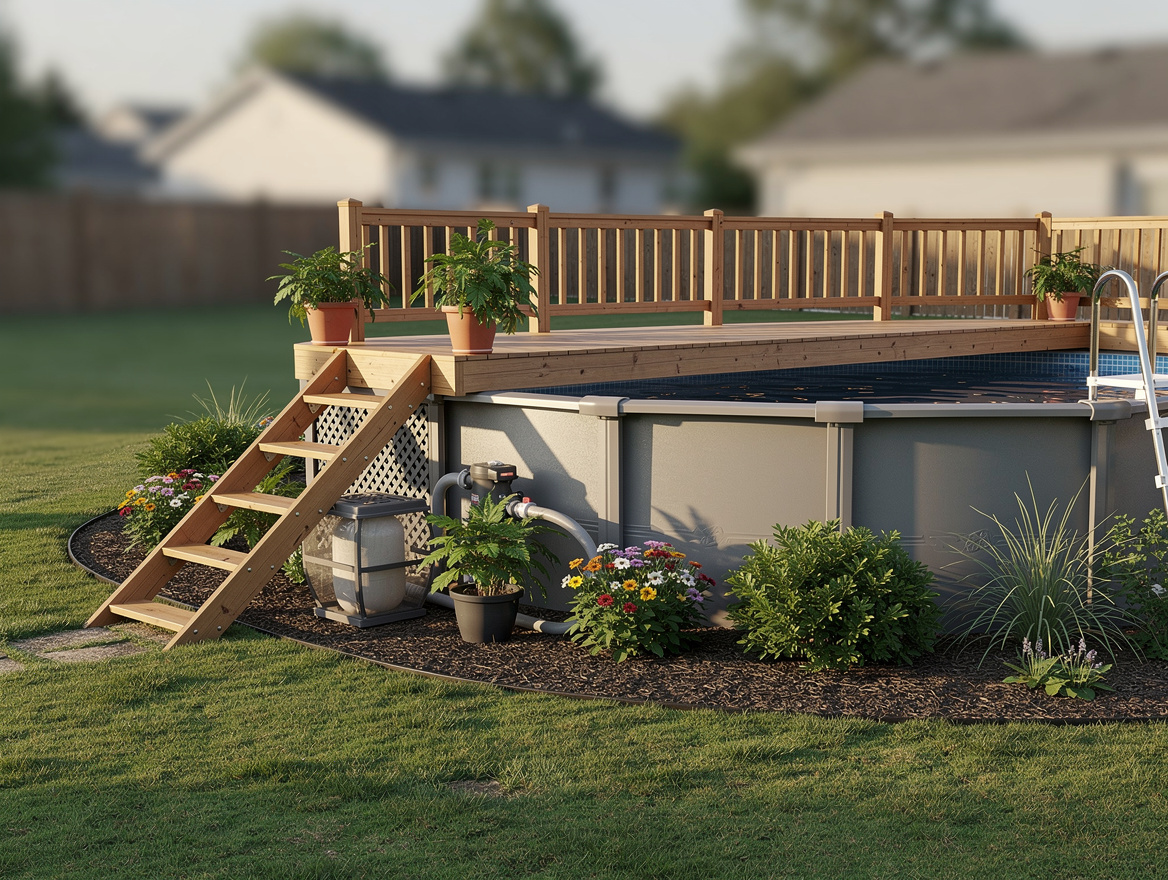
Nothing ruins the illusion faster than a nice deck beside a visible filter pump and a random ladder. If the hardware stays in view, the pool still reads as temporary no matter how good the cladding looks.
This is where a half-moon deck, a small storage bay, or a bench-front screen earns its keep. IKEA outdoor storage boxes and simple privacy panels from Amazon or Wayfair can shield hoses, chlorine bins, and nets without blocking service access.
I also like matching the ladder area to the rest of the build. If your deck boards are warm brown and your skirting is charcoal, keep that same palette around the steps and equipment screen so the eye reads one zone instead of separate fixes.
For a 15 foot round pool, one of the smartest layouts is a deck roughly 23 by 13 feet on one side, cladding on the exposed faces, and a planted band on the opposite arc. From most common yard angles, you end up seeing timber boards and foliage, not steel.
Start with the angle you see every day from the patio or kitchen window, then spend your first dollars there. If that view gets a deck edge, a clean base, or a dense planting band, the whole pool will feel more expensive before you finish the rest.
Mia Carter writes about small-space living and budget home makeovers. She has restyled three rentals and tests most ideas in her own 45 sqm flat.