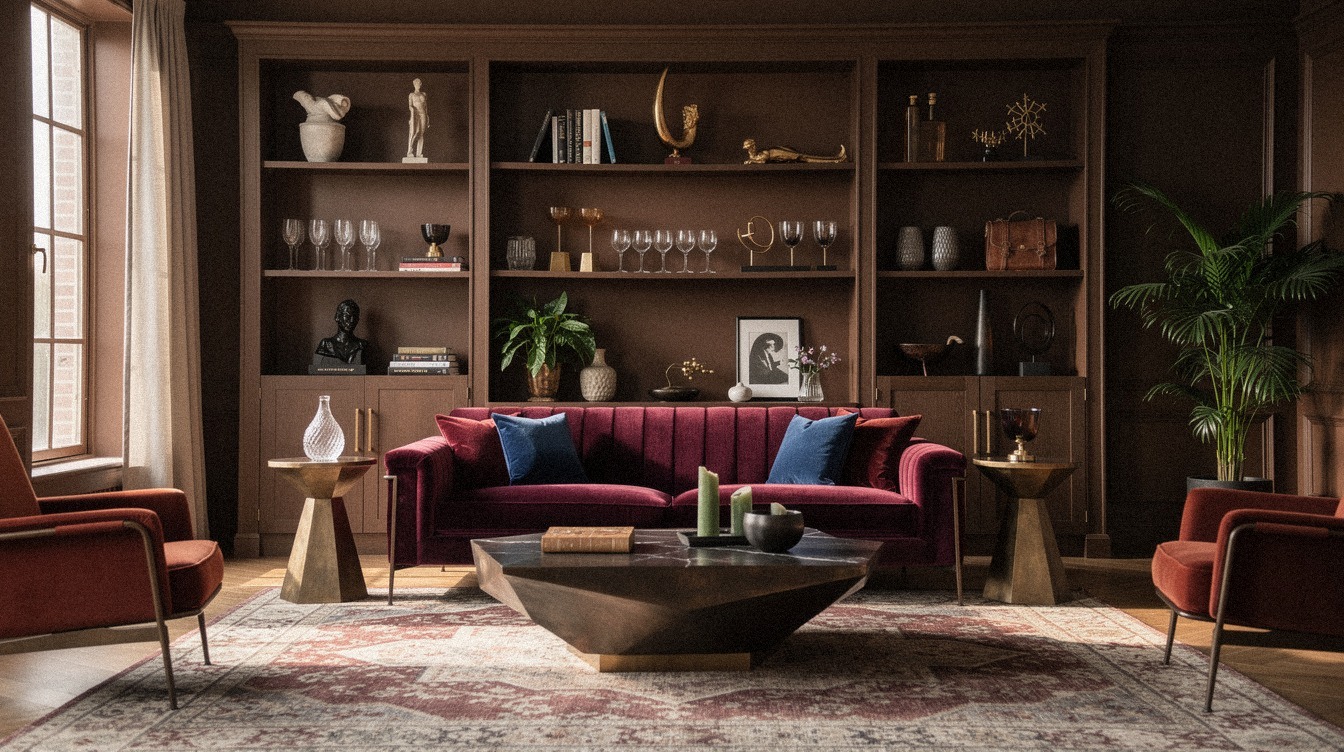
Speakeasy living room ideas for an everyday lounge with drama work best when you treat the room like a mood problem, not a shopping problem. I did this after months of staring at a living room that felt flat by 6 pm, even with decent furniture. One paint sample, two amber lamps, and a little nerve later, the room had depth I could feel the second I walked in.
Here’s what it looked like before: the No-Glow Problem
Before this makeover, the room had the full polite-neutral package: Benjamin Moore White Dove (OC-17) walls, one overhead fixture, a sofa that floated without purpose, and a coffee table that looked fine but did nothing. Nothing was ugly. That was the problem.
You could sit there, but you couldn’t sink in. By late afternoon, the light washed everything out, and the room felt more like a waiting area than a lounge.
I kept trying the small fixes first because that’s what most of us do. A new throw from Target Threshold.
A better candle from IKEA. A stack of books.
But the base was wrong, so every layer sat on top of that wrongness. If your room feels chilly even when the thermostat says otherwise, you’ll probably relate to this take on why small living rooms can hold more winter warmth. The turning point for me was realizing I didn’t need a movie-set speakeasy. I needed a regular room with darker edges, lower light, and a few materials that looked better after sunset.
Even the Wayfair end table I had at the time kept reading wrong because the wood tone was too pale next to the wall.
The second I tested a single Farrow & Ball Down Pipe (No.26) swatch, the room finally made sense in my head. Dark, yes.
But it carried warmth underneath. That’s when I started painting.
- I painted the walls a tobacco brown
- I chose a low tufted leather sofa
- I placed club chairs around a round table
- I added a burgundy rug under everything
- I hung smoky portraits above the sofa
- I installed brass sconces beside the artwork
- I tucked a bar cabinet behind chairs
- I styled decanters on a mirrored tray
- What if I skipped the warm bulbs entirely?
- I framed the windows with velvet curtains
- I added fluted glass to the cabinet
- I set a chess table near the armchair
- I layered jazz records on the console
- I finished with matchbooks and cocktail books
1I painted the walls a tobacco brown
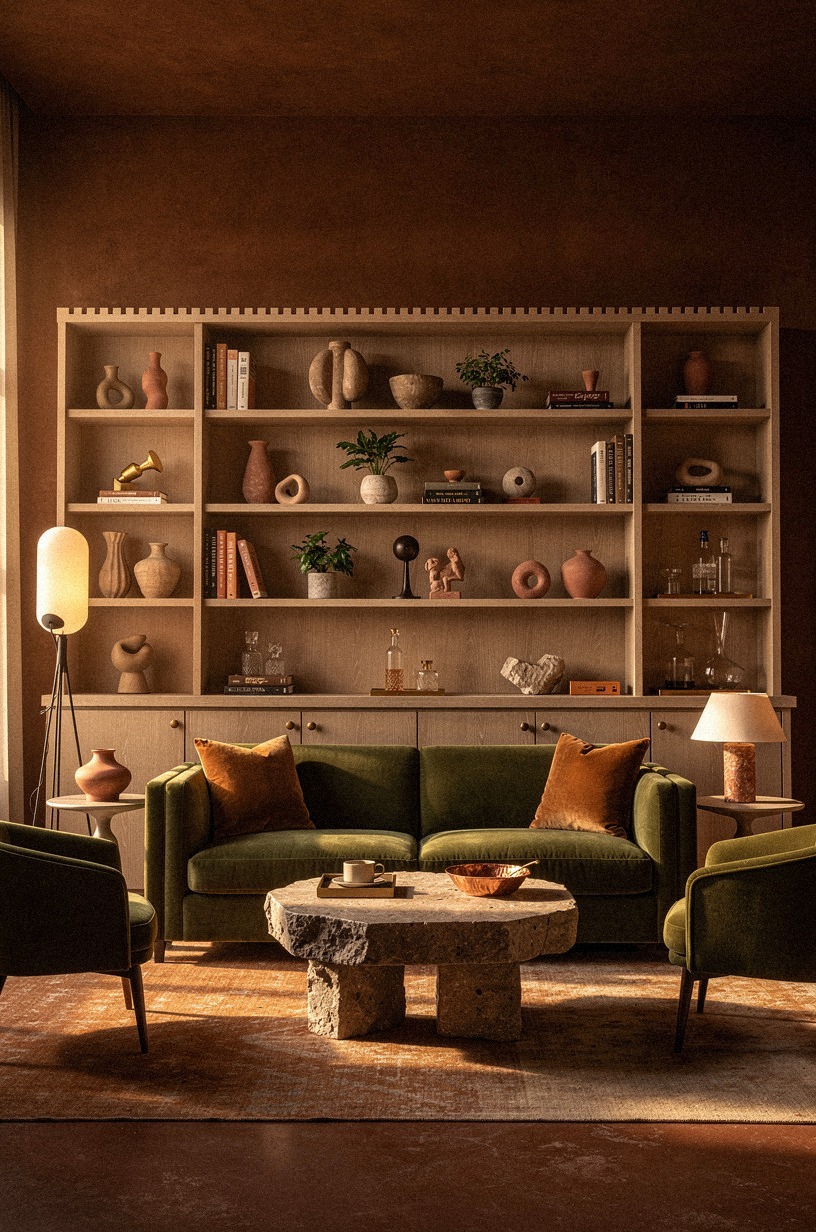
This was the move that changed everything because the room stopped behaving like a blank box and started acting like a backdrop. I tested Farrow & Ball Hague Blue (No.30) first, then Sherwin-Williams Evergreen Fog (SW 9130), but both felt too familiar for the mood I wanted. Tobacco brown gave the walls a dry, smoky depth that let the trim, lamps, and leather push forward instead of disappearing.
If you’re trying this in your own speakeasy inspired living room, don’t just chase dark paint for the sake of it. You want undertones that stay warm in late-afternoon light, not brown that turns muddy by dinner.
I painted the walls over one weekend, and the room finally looked intentional from the doorway. But here’s the part nobody respects enough: once the walls go darker, your clutter looks louder, so you need to edit the room harder.
If your living room still feels cold after paint, this piece on terracotta fixes in gray rooms is worth reading next.
2I chose a low tufted leather sofa
The old sofa sat too high, too puffy, and too far into the room. It blocked sightlines the second you walked in.
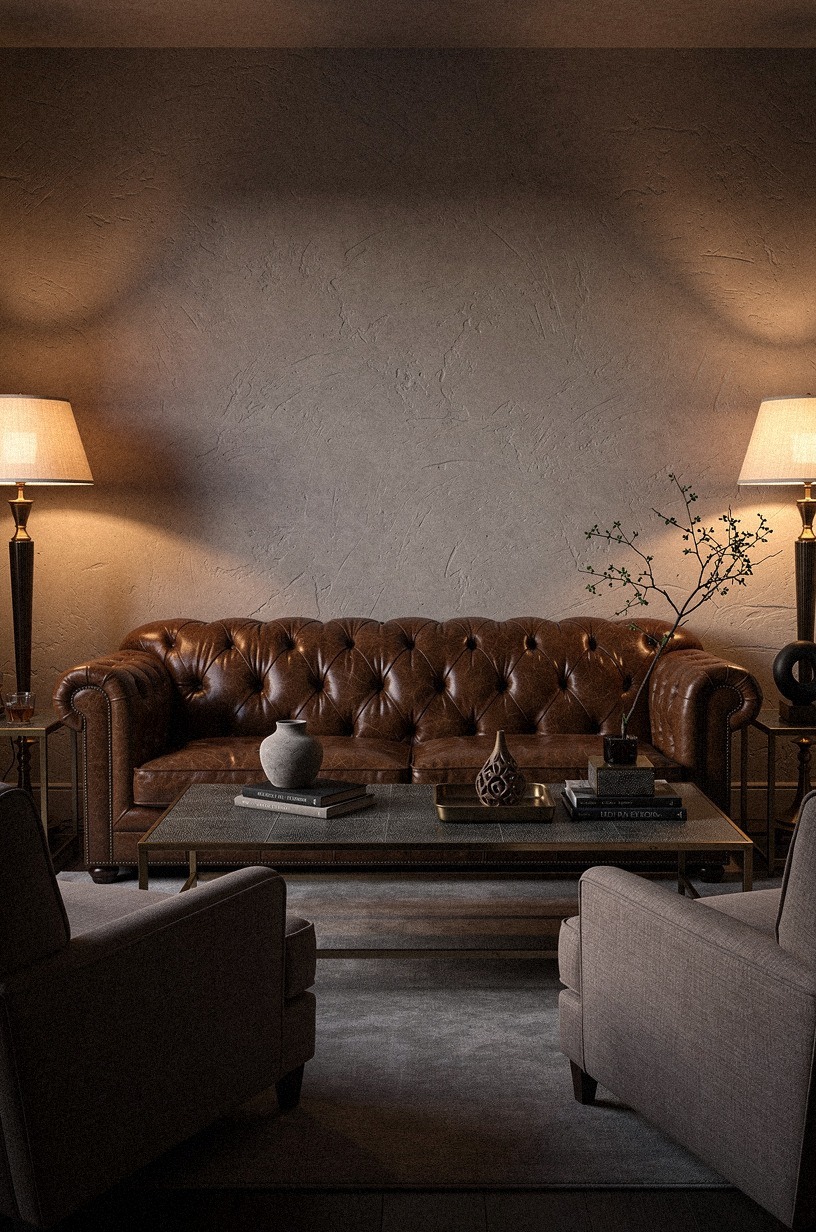
I swapped it for a low tufted sofa in Article Sven Charme tan leather, and that lower profile made the ceiling feel taller right away. The room looked calmer before I even added a pillow.
I went back and forth on the leather grade, then settled on full-aniline top-grain because it wears in instead of peeling, which matters more in a room you’ll actually live in.
For a speakeasy style living room, sofa depth matters more than people think. The sweet spot is usually 35 to 40 inches, and anything bulkier can make a lounge feel like a blocked hallway. I learned that the annoying way after buying a deep sofa years ago that looked luxurious in a showroom and ridiculous at home. If you’re shopping now, compare your floor plan to this sofa-size warning for tight living rooms.
And yes, leather was the right call here. Bouclé would’ve softened the mood too much. You want a seat that catches lamp light and gets better with wear. If you want a leather look without the leather spend, IKEA’s LANDSKRONA in cognac runs about a third of the price and ages in a similar way.
Worth a look if you’re building this room on a tighter budget.
3I placed club chairs around a round table
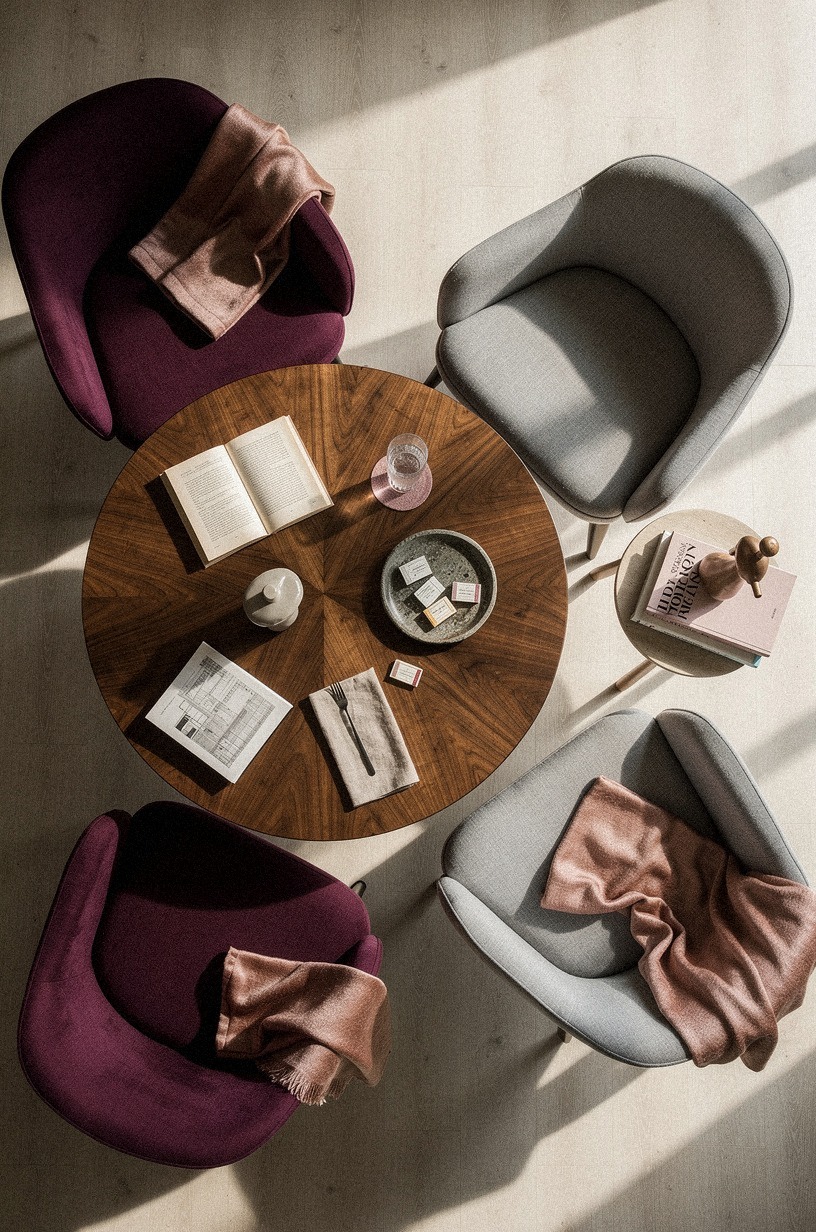
The room didn’t feel like a lounge until I stopped treating every seat as TV seating. I pulled two club chairs around a round table in book-matched walnut veneer, and suddenly the room had a reason to gather.
That circle changed the energy more than any accessory did. You could imagine a drink, a deck of cards, a late conversation.
That’s the whole point.
If you’re building club room ideas into a normal family living room, think in zones. One sofa zone.
One conversation pocket. One place where your eye can land.
I used a 36-inch round table because it fit the chairs without pinching leg room, and the walnut top brought in a richer wood note than the coffee table. But don’t copy the exact layout if your room runs narrow.
Angle the chairs sooner, leave a wider path, and let the table feel tucked in rather than forced. For more warmth layering, I liked rereading this piece on why smaller rooms often feel warmer.
The chairs themselves came from a local estate sale and reupholstered in a brushed wool mocha from Kravet, which I’d recommend to anyone who wants the club-room feel without the club-room waitlist. If you’re going new, Article has a similar tub-chair silhouette for around $900 that works in a smaller footprint. Skip swivel bases in tight rooms; they eat more floor than you’d think and never stop squeaking.
4I added a burgundy rug under everything
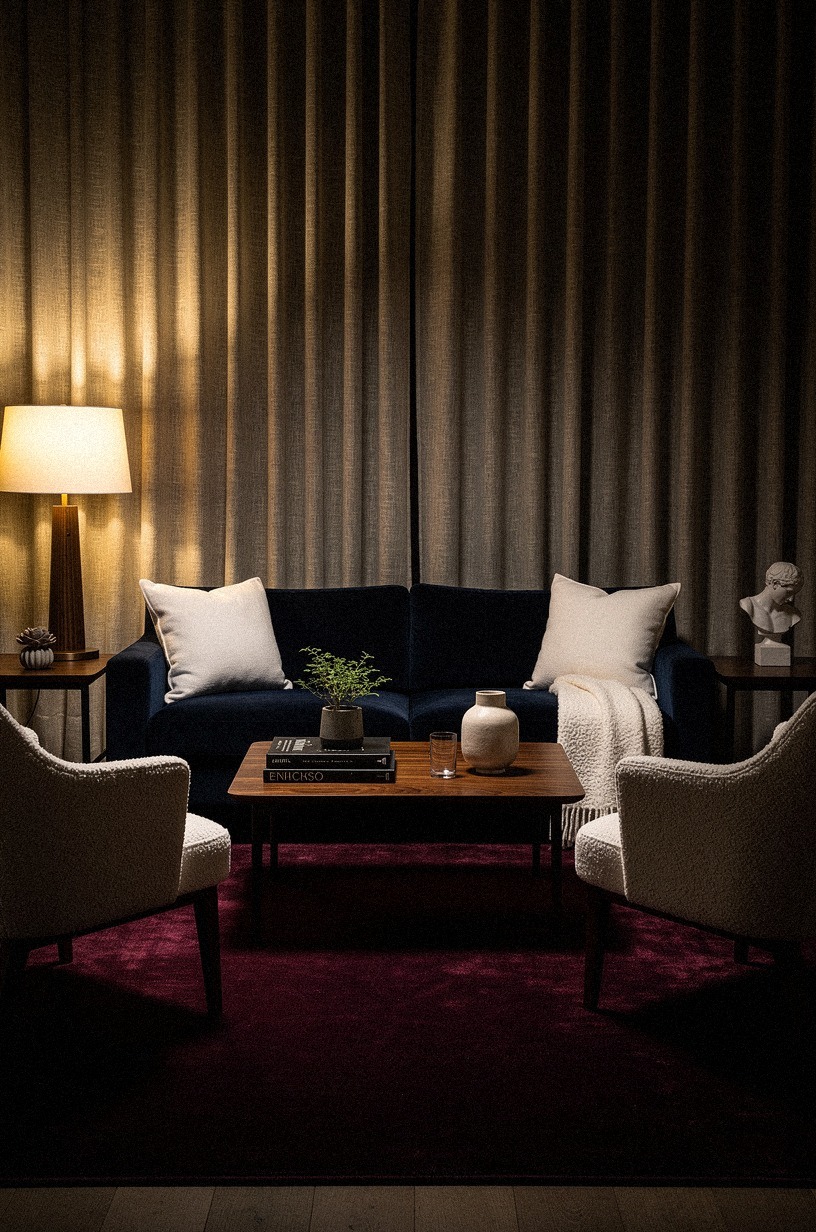
The rug is where the room stopped floating.
5I hung smoky portraits above the sofa
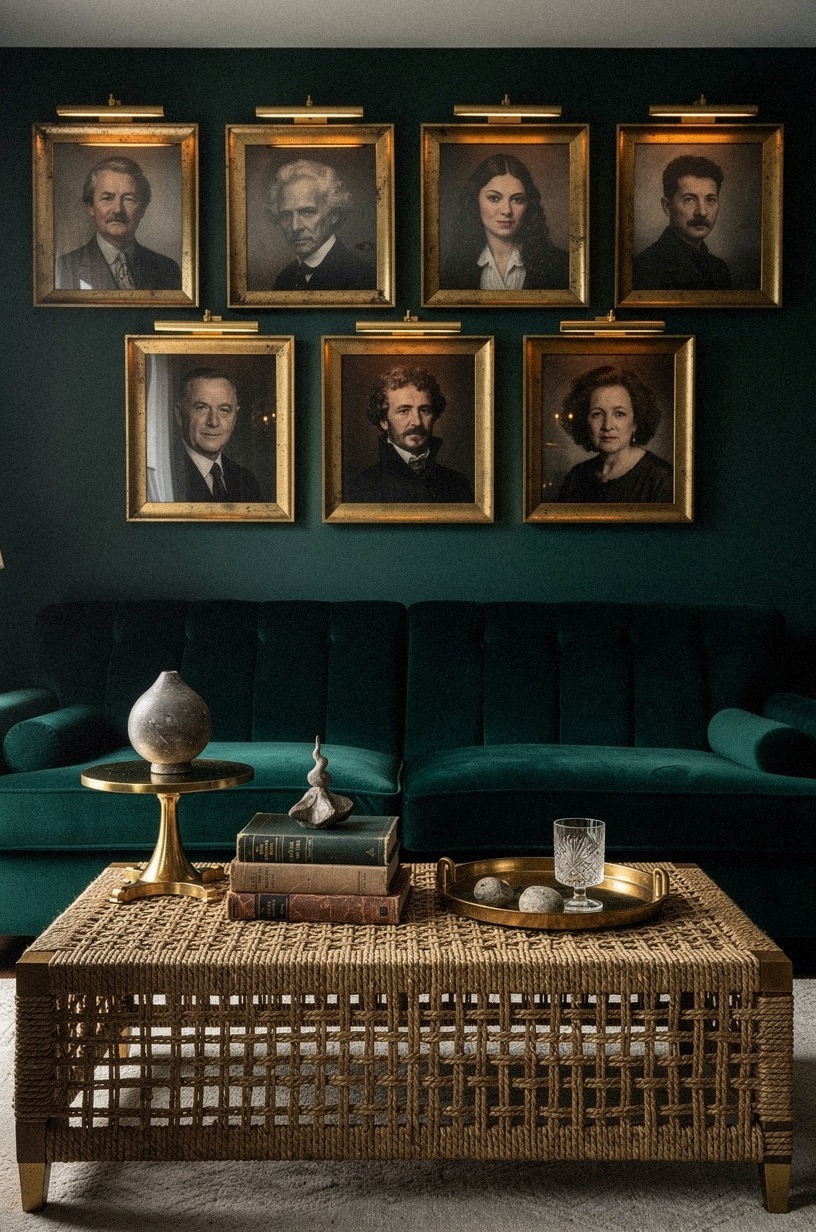
This is where the room picked up narrative. The portraits weren’t huge, but they were dark, soft-edged, and a little mysterious, which kept the sofa wall from feeling like a furniture display.
I chose art with smoke, shadow, and muted gold because bright modern graphics would’ve broken the spell. The prints sit in 2-inch aged black maple frames sourced from a local framer, and the matte finish keeps glare off the glass.
And honestly, this was the section where I went back and forth the longest.
If you’re styling a cozy speakeasy room, hang art that deepens the mood instead of explaining it. The sofa wall already carries enough visual weight, so you don’t need loud color there. You need atmosphere.
My frames were aged black with a slim unlacquered brass inner lip, and that detail mattered because it tied into the sconces later. But don’t hang pieces too high just because the wall is dark. Keep them low enough that the grouping feels tied to the sofa, not floating off on its own.
Why make a dramatic room if the art looks afraid of the furniture?
If you’re chasing moody wall styling on a tighter budget, CB2 carries a great printed portrait collection that runs about $80 to $180 unframed, and their matte black gallery frames have that same hand-aged feel. Pair one oversized piece with a smaller companion, and you skip the “gallery wall” look without losing any narrative depth. Worth a browse before you commit to a custom framer.
6I installed brass sconces beside the artwork
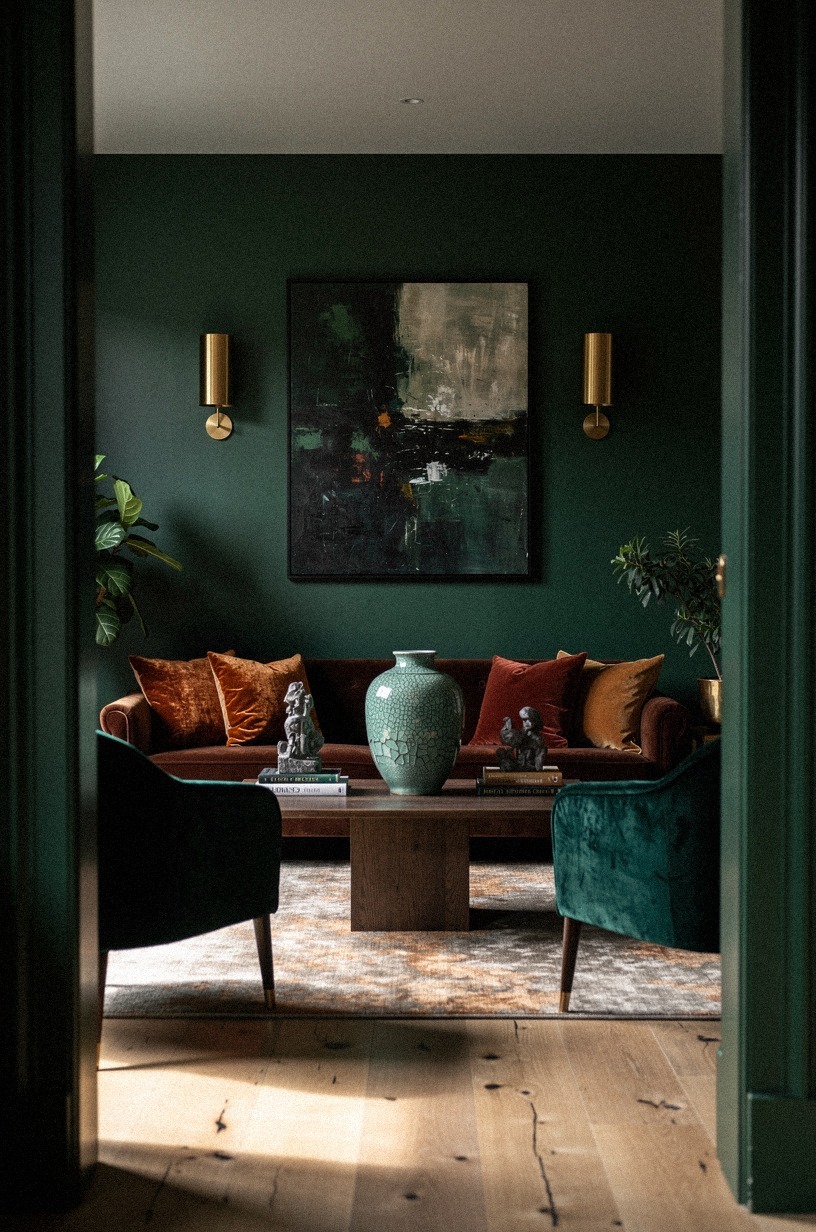
The sconces did what the ceiling light never could. They carved light across the wall instead of dumping it from above.
I used plug-in sconces in unlacquered brass, one on each side of the artwork, and that symmetry gave the room a little ceremony without making it precious. You notice the glow before you notice the fixture.
That’s good.
For your own speakeasy inspired living room, place sconces so the center sits close to eye level when you’re standing, then test bulb warmth at night. I switched to amber-toned 2700K bulbs and the portraits suddenly looked richer, while the leather sofa picked up a softer sheen.
But skip anything too polished. Bright brass can tip fancy in the wrong direction, and speakeasy style needs shadow more than sparkle.
If you want another angle on how layered warmth keeps people lingering, this fireplace article nails that idea.
The sconces I chose are a Schoolhouse Electric reproduction of a 1940s library style, about $189 each, and they plug in so I didn’t need an electrician. The cord runs along the baseboard in a brass cord cover that disappears against the dark wall. If you’re not ready to commit to hardwiring, the same approach works with a West Elm plug-in sconce in antique brass, which runs about half the price.
7I tucked a bar cabinet behind chairs
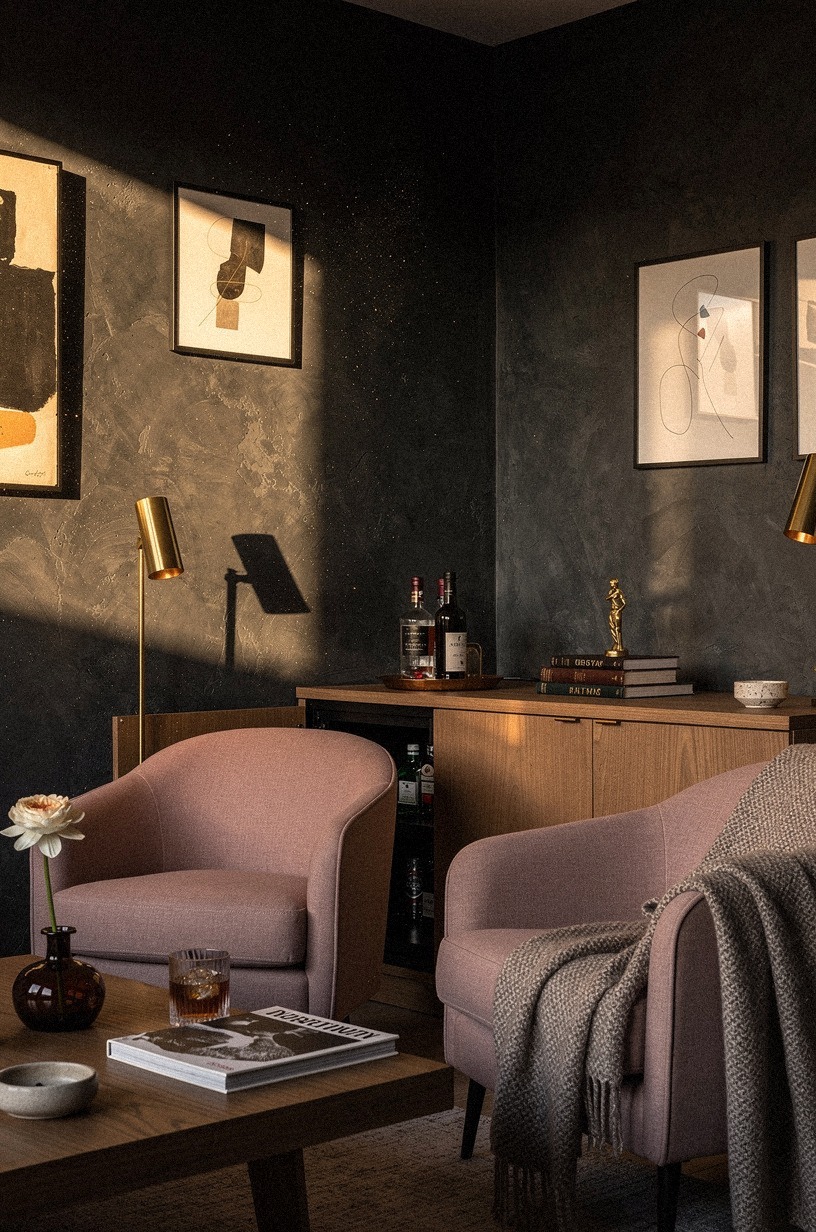
Putting the bar cabinet behind the chairs was the layout move I wish I’d made first. It gave the back of the room a reason to exist, and it kept bottles, glassware, and the inevitable clutter out of the main sightline. I used a rhodes-bar style cabinet in dark wood with a slimmer footprint so it felt discovered rather than announced.
If you’re working with club room ideas in a normal home, hidden service zones matter. You don’t want every function screaming at once.
My cabinet sat just deep enough to hold decanters and coupes, but shallow enough that you could still walk past it comfortably. Around 16 to 18 inches of depth is usually plenty for this kind of piece.
And if you rent, you can do the same move with a narrow IKEA HEMNES sideboard in a darker stain, which I used in my sister’s place and was surprised how well it disappeared against a tobacco wall. This small-room warmth story is a helpful reminder that tucked-in layouts often feel better, not worse. For more on why a tucked-back bar zone makes a lounge feel finished, this piece on layered warmth gets at the same logic from a smaller-room angle.
8I styled decanters on a mirrored tray
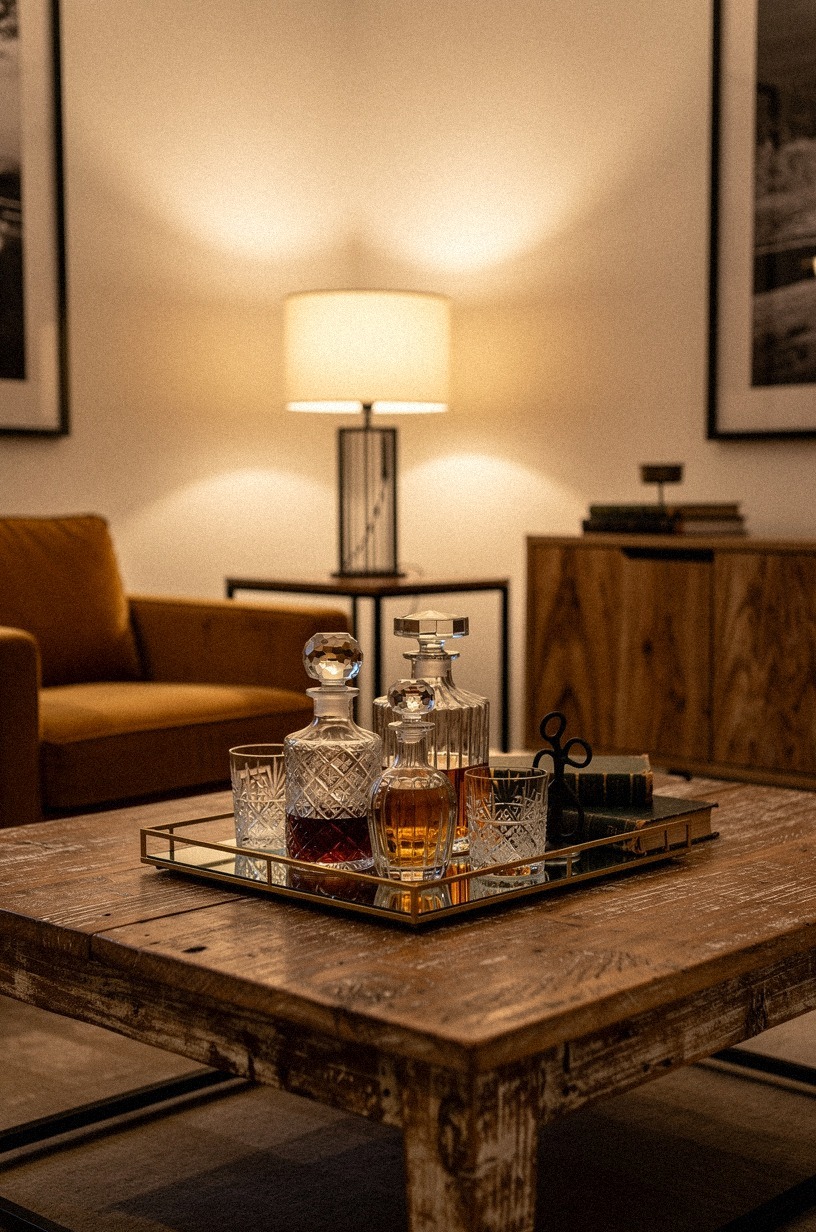
I was prepared for this to feel cheesy. It didn’t.
The mirrored tray bounced just enough low light back into the room that the tabletop felt alive, and the glass decanters added shine without reading glossy. On a reclaimed weathered teak table, that contrast of worn wood and clean reflection was the sweet spot.
When you style a bar surface, keep the grouping tight so it reads like a ritual, not storage. Two decanters. A small bowl. A folded cocktail napkin.
Maybe one brass bar spoon if you really use it. That’s enough.
But don’t buy a giant tray because you think more glamour equals more drama. Empty mirrored space looks awkward fast.
You want the tray to frame objects, not beg for more of them. I also found that a slightly smoky glass tone looked better here than crystal-clear pieces because it kept the palette from turning too bright.
For the decanters themselves, I went with a pair of mouth-blown smoked glass stoppered bottles from West Elm (about $48 each). They catch lamp light without shouting, and the wider base keeps them from tipping when the dog bumps the table. If you’re building out a similar surface, check this velvet throw article for the same “soft, tactile, low-sheen” principle that applies to every layer of a room like this.
9What if I skipped the warm bulbs entirely?
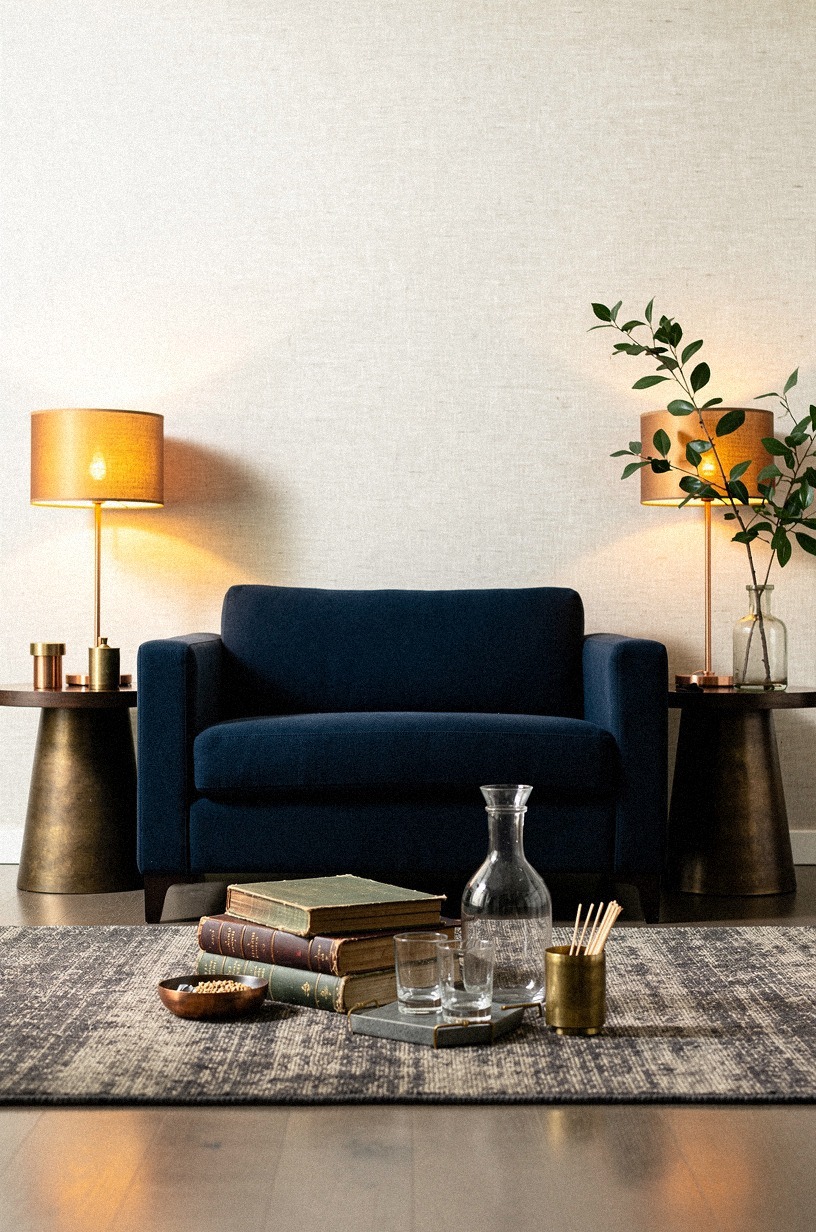
This is the question I get most often, and the answer is: don’t. White bulbs made every surface look flatter, especially the walls, while amber lamps gave the room gradation.
Light gathered in pools instead of flooding the whole space. The second I switched them on, the room stopped feeling honest-to-a-fault and started feeling protective.
If your living room still feels cold at night, kill the overhead light first and test table lamps before you buy anything else. I used warm 2700K bulbs in shaded lamps rather than exposed Edison bulbs because I wanted the glow, not the gimmick.
But here’s the surprise: even morning light looked better afterward because the lamps, shades, and brass bases still read warm when they were off. For more on building warmth through texture, I kept coming back to this velvet throw article.
Small spend. Big return!
10I framed the windows with velvet curtains
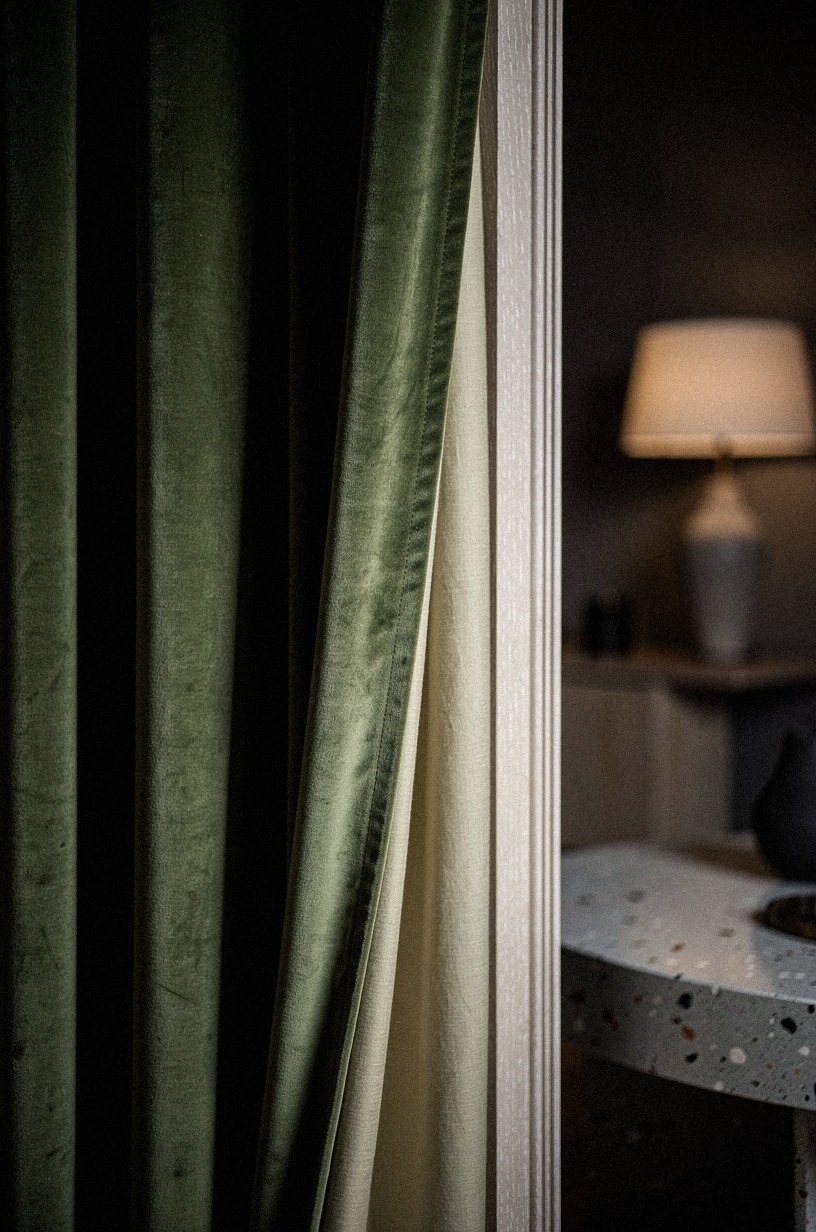
Velvet curtains were the move that made the room feel finished instead of merely dark. I used 18 oz cotton velvet panels in a deep tobacco-burgundy range, and the fabric caught evening light in that slow, uneven way flat linen never does.
The window finally looked dressed. Better than that, the room sounded softer too.
If you’re copying this for your own speakeasy style living room, hang the rod high and wide so the curtains skim the frame rather than covering glass. A basic pair of drapes can run about $120 to $400, and I would’ve rather spent there than on a trendier side table. I sourced mine from IKEA’s AINA line in dark burgundy, which is 100% cotton velvet at a fraction of designer pricing.
But don’t choose velvet so heavy that it collapses stiffly. You want folds, not theater-stage weight.
And yes, a renter can fake a lot of this with a dark tension rod and fuller ready-made panels. That one swap made the daylight feel more controlled, which is half the mood.
For the deeper build, a Pottery Barn velvet panel in their dolce colorway runs about $189 per panel and feels closer to old-club velvet, with the right drape weight for a tall window. The upgrade is real if you can swing it.
11I added fluted glass to the cabinet
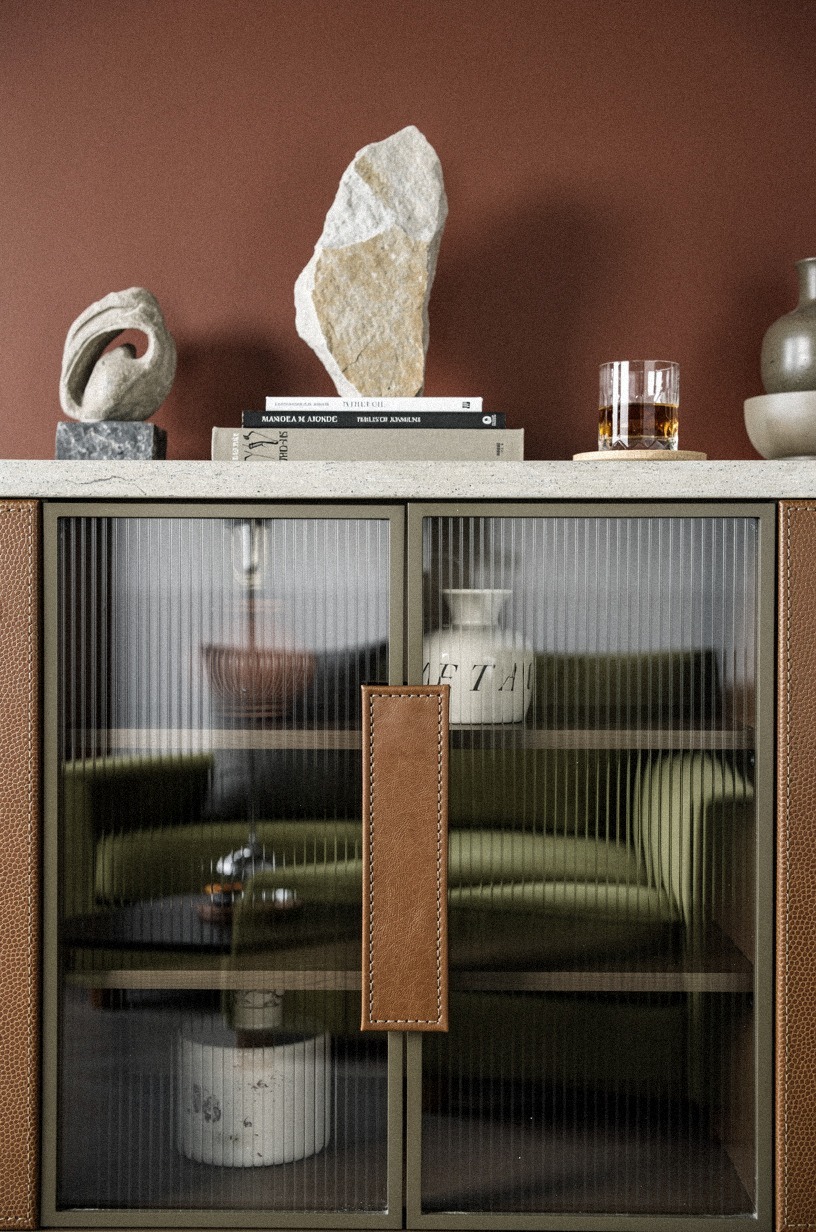
Fluted glass fixed a problem I didn’t know I had: the cabinet contents were visually noisy even when they were tidy.
12I set a chess table near the armchair
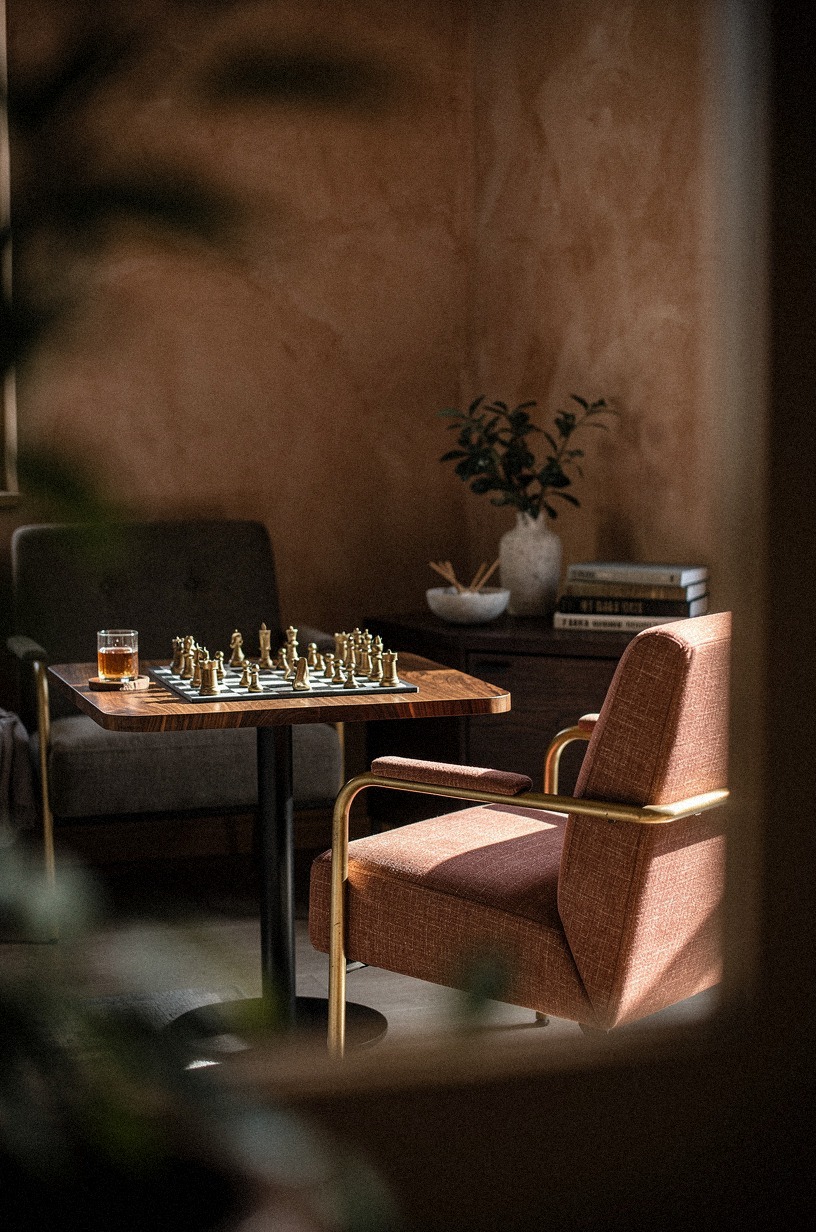
The chess table turned a leftover corner into a reason to linger. I set it beside an armchair instead of centering it in the room, and that made it feel personal, almost accidental, which is exactly what you want.
A room gets more dramatic when not every object announces itself. Some pieces should feel discovered on the second look.
If you’re shaping club room ideas at home, give one chair a companion that isn’t a lamp or basket. A little game table, a drinks stand, a narrow pedestal, something that suggests use. My walnut chess table was small enough to slip beside the chair without blocking circulation, while the wood tone sat between the sofa leather and the darker cabinet so the palette stayed coherent.
But don’t over-style it. A board set, one book, done.
You want a corner that invites someone in, not a stage set begging for approval.
13I layered jazz records on the console
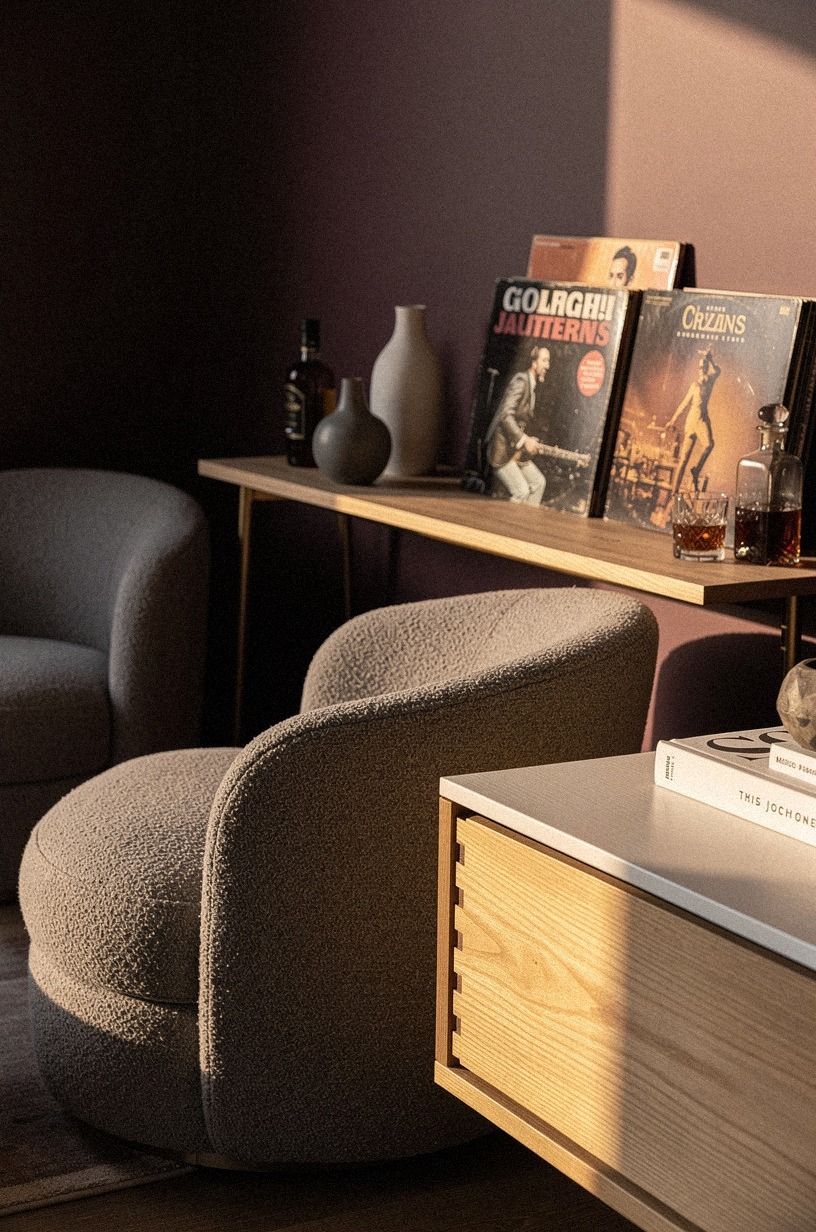
Records did for the console what portraits did for the sofa wall. They gave the room cultural texture without turning it into themed decor.
I leaned a few sleeves instead of lining them up perfectly, and that looseness mattered because the room already had strong lines from the curtains, table, and sconces. You need one area that feels handled, not overcomposed.
If you don’t collect records, the principle still holds. Layer objects with biography. Books you’ve reread.
Matchbooks you kept. Framed ephemera. I used darker album covers with amber, black, and cream because neon color would’ve pulled the room off course.
The console itself is a slim reclaimed chestnut piece about 48 inches wide, deep enough to anchor the wall without crowding the doorway. But don’t stack too many. Once a console starts looking like storage, the spell breaks. This smaller-room article is a good reminder that restraint is often what makes a room feel richer.
14I finished with matchbooks and cocktail books
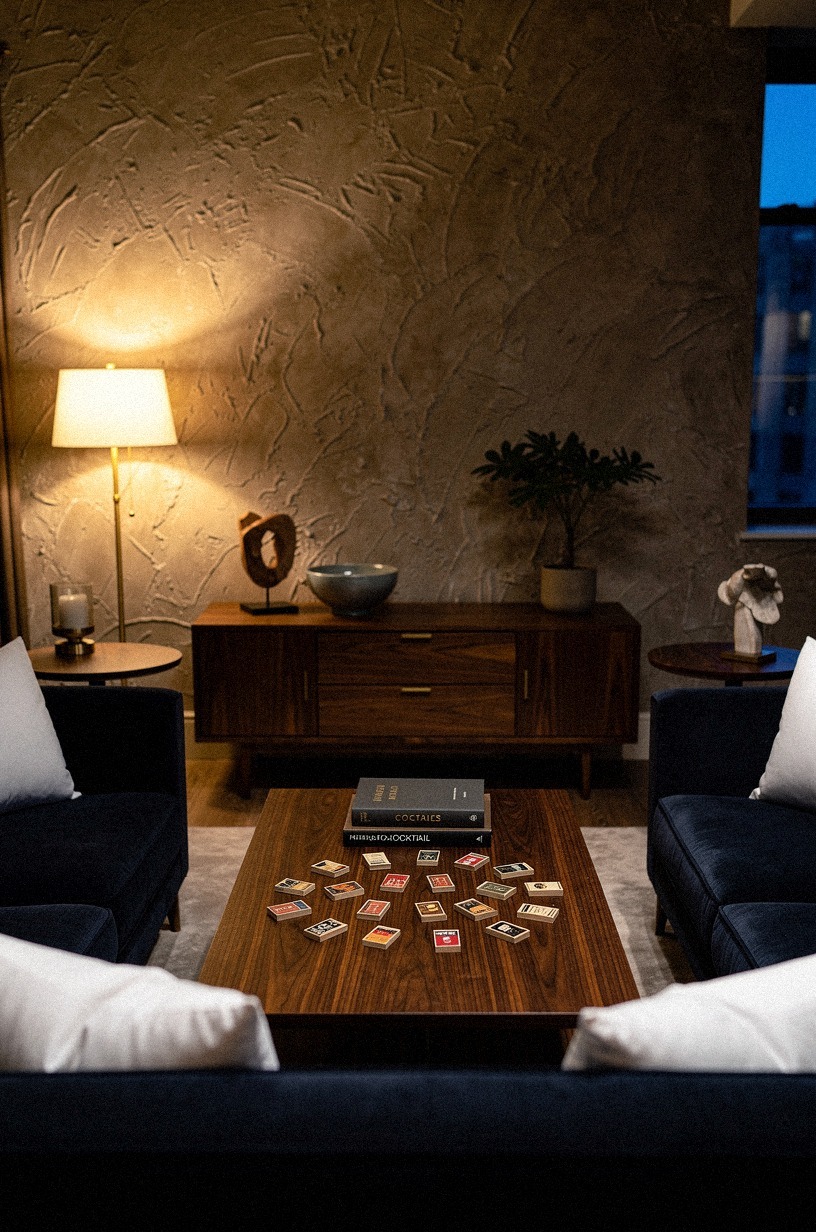
This final layer sounds tiny, but it told the room what it was. A few old matchbooks, two cocktail books bound in soft leather-look covers, and a walnut coffee table with the right scale made the whole setup feel inhabited instead of installed. My table lands in the typical 16 to 18 inch height range, and it’s roughly two-thirds the sofa length, which keeps it substantial without turning it into a block.
If you want a speakeasy inspired living room that still works every day, end with objects you can touch and move. That’s what keeps the room from becoming a frozen reveal photo. I made the mistake once of styling a table too neatly, and nobody wanted to use it.
This version feels better because the books can open, the matchbooks can shift, and the surface still has breathing room. Little things, yes.
But they’re often the difference between a dramatic room and a room that only photographs well.
The cocktail books I rotate are mostly secondhand: a 1962 Mr. Boston and a tatty Vintage Spirits & Forgotten Cocktails that I paid twelve dollars for at a library sale.
The matchbooks come from a friend’s downtown bar that closed last spring, and I keep them in a small hammered brass dish so they read collected, not cluttered. If you’re hunting similar small props, estate sales and antique malls are the move. You’ll pay a fraction of RH prices for the same lived-in soul.
Could one Benjamin Moore shade do the same job as my tobacco brown?
Probably not, and I tried. I rolled samples of Benjamin Moore Black Forest Green (HC-189) and Sherwin-Williams Urbane Bronze (SW 7048) on the same wall during the same week.
The greens stayed cold by dinner, the bronze looked right only when the lamps were on, and the tobacco read warm from sunrise to last call. Color temperature matters more than hue here.
If you’re shopping, I’d skip the test pot and go straight to a 2×2 foot peel-and-stick sample taped to the wall for 48 hours. Watch it in morning light, in afternoon glare, and in lamp light after dark.
A shade that’s dreamy at noon can turn muddy by 5 pm, and you don’t want to find out after you’ve painted the whole room. The brown family tends to age well because it doesn’t fight either sun or tungsten.
Worth it if you’re going dark!
How much it cost: my Three-Zone spend
I didn’t do this as a single luxury reveal. I spread it out, kept what still worked, and spent where the mood shift would show up fastest. That’s why this kind of makeover is more flexible than it looks.
My room landed between budget and mid-range because I repainted, added lighting, replaced the sofa, used a better rug, and upgraded the cabinet details without touching architecture.
And if you’re prioritizing, I’d put paint and bulbs first, curtains second, rug third, and sofa after that unless yours is already wrong for the room. Worth it! Still one of my favorite payoffs in the house!
The Three-Glow Rule I wish I’d known earlier
What I didn’t understand at the start was that speakeasy mood isn’t one bold purchase. It’s three layers of controlled darkness working together.
First, the envelope. That means your walls, rug, and curtains need to quiet the edges of the room so the eye stops bouncing around. Second, the seating line.
If the sofa sits too high, if the chairs don’t face each other, if every piece is pushed to the wall because you’re scared of losing floor space, the room will never feel intimate. It will feel arranged. There’s a difference.
The third layer is glow, and this is where most rooms fall apart. People buy warm things, then light them with cold bulbs.
Or they paint dark walls, then keep a bright ceiling fixture blasting the whole room flat. I did both at different points, and neither worked.
But once I switched to lower lamps, side light, and reflective touches that stayed subtle, the whole room settled down. You could see less, but you felt more. That’s the line.
If you’re wondering whether this kind of drama is practical in a real home, I think it is, maybe more than the pale all-day version. Darker walls forgive life.
Leather forgives life. A cabinet that hides the mess forgives life. But you can’t fake soul by buying every old-money cliche at once.
Skip the giant fake library ladder, skip the random globe bar, skip the heavy-handed nostalgia. The room should hint, not cosplay.
I also think people overspend in the wrong order. They’ll put thousands into a statement sofa from RH, then leave builder bulbs, bare windows, and thin art on the wall. I’d reverse that.
Paint first. Lighting second. Rug third. The sofa matters, of course, but it can’t do the emotional work alone.
And if you’re trying to make a room feel warmer without a renovation, this take on why guests linger around warmth cues explains the psychology better than most design posts do. Start with the atmosphere, then let furniture support it.
That’s the rule I wish someone had handed me before I bought my first “nice” lamp and wondered why the room still felt dead.
And while we’re at it, the cheapest upgrade most people skip is also the most cinematic: a drum shade in raw linen swapped onto an existing socket. I picked one up from Pottery Barn for about $79, and it changed the lamp’s character from utility to atmosphere.
Same bulb, same socket, totally different room. If you can’t paint this weekend, do that one thing tonight.
The Questions I Get Asked Most
What is the best Speakeasy Living Room Ideas for an Everyday Lounge With Drama for a small living room?
A dark wall color plus a lower-profile sofa is the best starting point for a small living room because it changes both mood and scale at once. Better proportions matter more than more stuff. Try a compact Article Sven or a darker IKEA KALLAX frame, then add one amber lamp.
Where can I buy Speakeasy Living Room Ideas for an Everyday Lounge With Drama pieces on a budget?
Start with IKEA, Target Threshold, and Wayfair for the easy pieces, then hunt Facebook Marketplace for older wood tables and brass lamps. Secondhand wood and leather usually look better here than brand-new faux-luxury decor. One good vintage chair can do more than five trendy accessories.
How much does a Speakeasy Living Room Ideas for an Everyday Lounge With Drama makeover cost?
For most rooms, it costs about $300 to $1,200 if you’re painting, adding lamps, styling art, and swapping textiles, while a bigger version with a sofa can run $2,500 to $8,000. Paint and bulbs are the cheap wins. Keeping your current coffee table or chairs saves the most.
Can I create a Speakeasy Living Room Ideas for an Everyday Lounge With Drama on a budget?
Yes, and you don’t need custom millwork to get there. Low-cost mood shifts first.
Darker paint. Warmer bulbs.
Thrifted frames. A fuller curtain panel. If you already own a decent rug, move it farther under the seating and let layout do part of the work for free. For more on layering warmth without spending much, I keep pointing people to this take on velvet throws adding real warmth.
It’s the same principle applied to textiles.
Is a Speakeasy Living Room Ideas for an Everyday Lounge With Drama worth it in a small space?
Yes, small spaces often make this look easier because the room can hold shadow and glow without feeling scattered. Tighter layouts feel more intimate. Keep your seating grouped, use fewer brighter accents, and let one dark rug define the zone instead of breaking the floor into pieces.
Is Speakeasy Living Room Ideas for an Everyday Lounge With Drama a good idea for a rental?
Yes, as long as you lean on reversible changes. Rental-safe drama is very doable.
Removable plug-in sconces. Tension-rod velvet panels.
Leaned art instead of drilled gallery walls. A dark cabinet, a mirrored tray, and amber lamps will get you surprisingly close without touching the bones.
For a deeper dive on layered warmth without permanent changes, this layered hygge approach is the closest reference I’ve found.
The Tobacco Envelope Rule I’d start with
If I had to pick one, I’d start with the wall color. You can’t build moody light on top of bright, bouncy walls because every lamp has to fight the room first. Paint the envelope, then everything else lands.