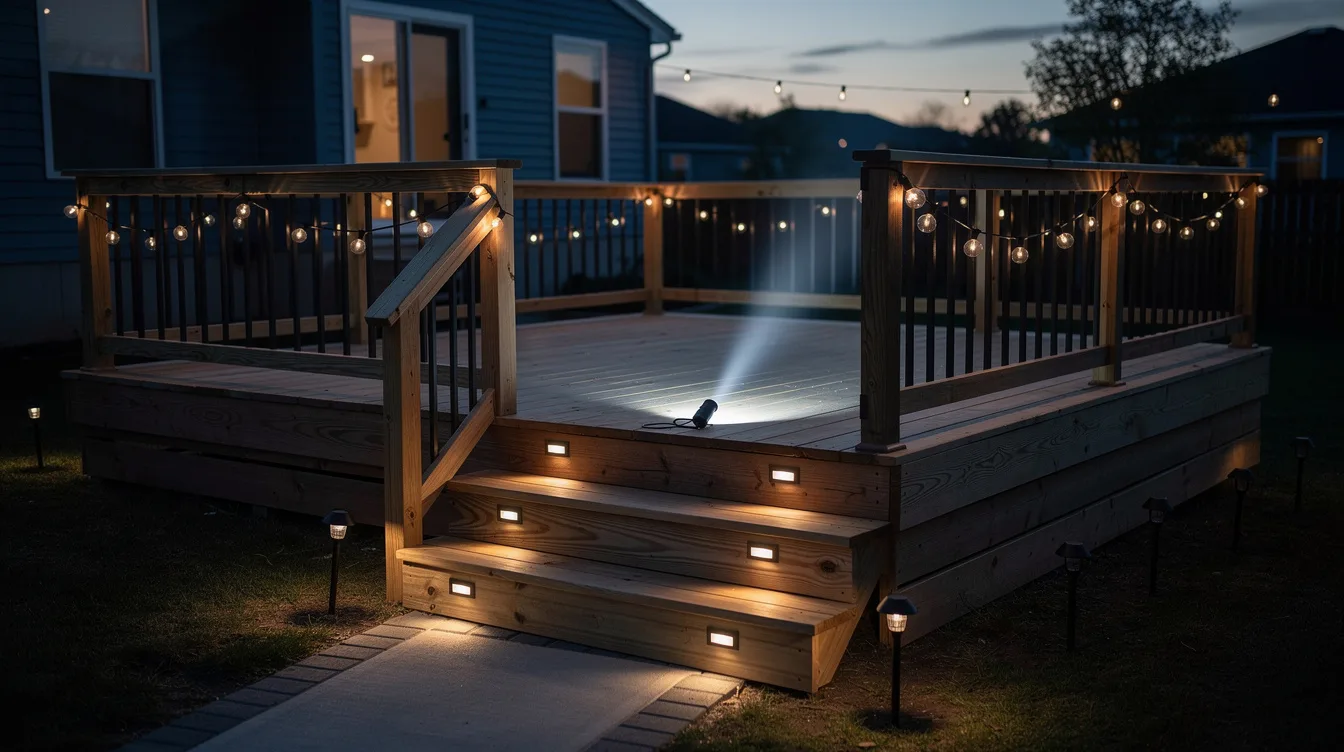
The hardware store was closed, my deck stairs were too dark, and the only beam I had was the one from my phone. That turned out to be enough to plan the whole layout before buying a single fixture.
I treated the deck like a lighting mockup: test the glow, mark the good spots, then choose simple gear from big-box stores the next day. No pro tools, no guessing in the dark.
Map the Dangerous Spots Before You Buy Anything
Start by walking the deck with your phone flashlight pointed at the floor, not straight ahead. The spots that matter first are stair edges, door thresholds, grill zones, and the corner where someone always misses the last step.
I like holding the light at about 36 to 42 in high to mimic post-cap lights. That height gives a useful preview of how a typical Home Depot solar cap or low-voltage cap light will spill across deck boards.
For stairs, crouch and hold the beam 4 to 6 in above each tread. If one step disappears when the phone moves away, that step needs its own fixture or a light on the riser beside it.
Soften the Beam So the Layout Feels Real
A bare phone light is too sharp, so diffuse it before you judge the mood. I used a white paper napkin over the lens, which made shadows softer and closer to an actual warm deck fixture.
A frosted food lid or thin white shopping bag works too, as long as it doesn’t touch anything hot. This is the easiest way to preview a 2700K to 3000K warm white glow before ordering an Amazon LED kit.
My opinion: skip cool white outside unless you’re lighting a workbench. On a deck, cool light makes wood look flat and makes every chair feel like patio furniture outside a dentist’s office.
Mark Fixture Positions With Cheap Temporary Cues
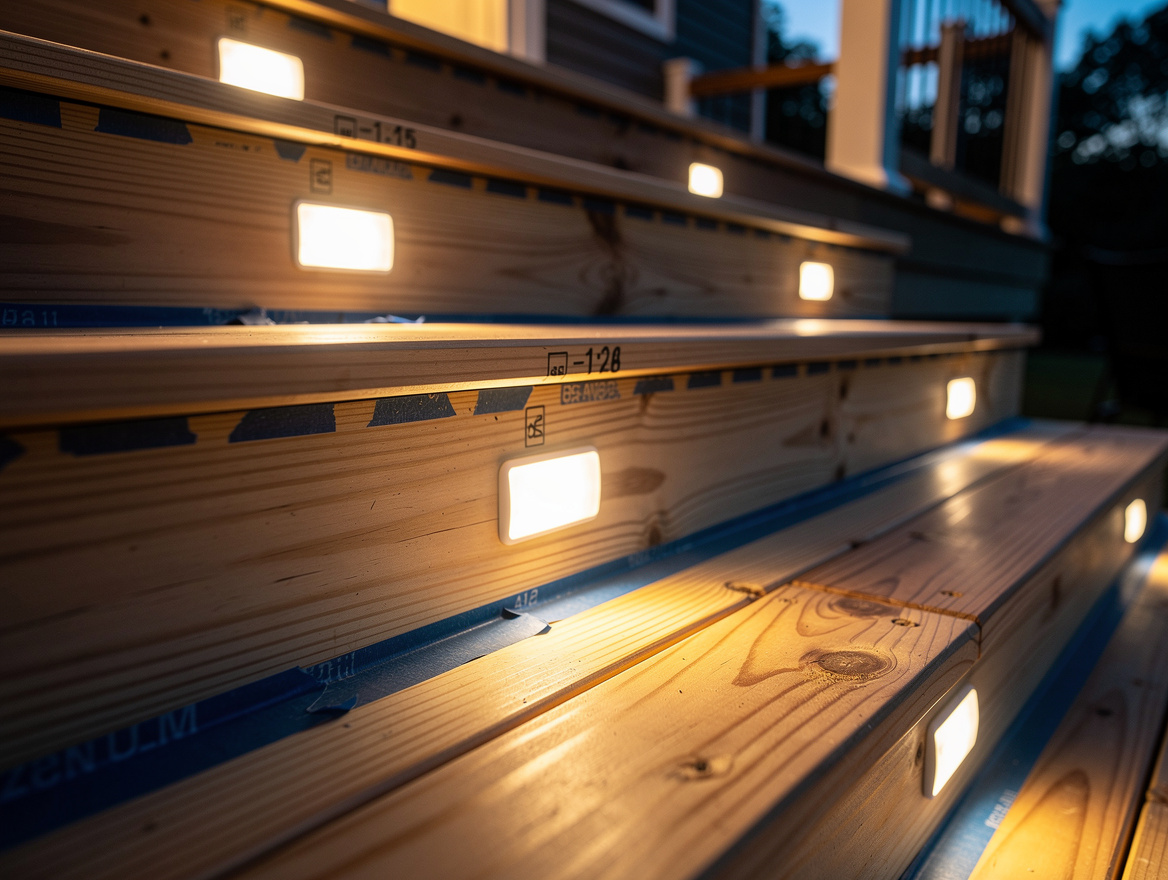
Once the glow looks right, mark each future light position with painter’s tape, a sticky note, or a small pencil dot on the underside of the rail. Don’t trust yourself to remember it in daylight.
For under-rail lighting, hold the phone 2 to 4 in below the top rail and move along the perimeter. That test copies the feel of a 16 ft to 32 ft Amazon LED strip, which typically runs about $18 to $45 in 2026.
Keep the tape marks slightly hidden from the main view. Lights should explain the deck shape at night, not turn every bracket and screw into a display.
Add Temporary Light You Can Use Tonight
If you need the deck usable before stores open, start with movable pieces. A pair of battery lanterns on the table and top step can solve the worst safety problem in five minutes.
Typical 2026 prices at Walmart or Target run about $10 to $30 per outdoor lantern, with many using AA batteries or USB charging. I prefer squat lanterns around 6 to 10 in tall because they don’t tip over as easily in wind.
Clip-on string lights are the next fast layer if you already own them. A 24 ft to 48 ft strand with plastic bulbs and PVC-jacketed wire usually costs about $18 to $55 at Target, Walmart, or Amazon.
Use Solar Stakes for Edges and Approach Paths
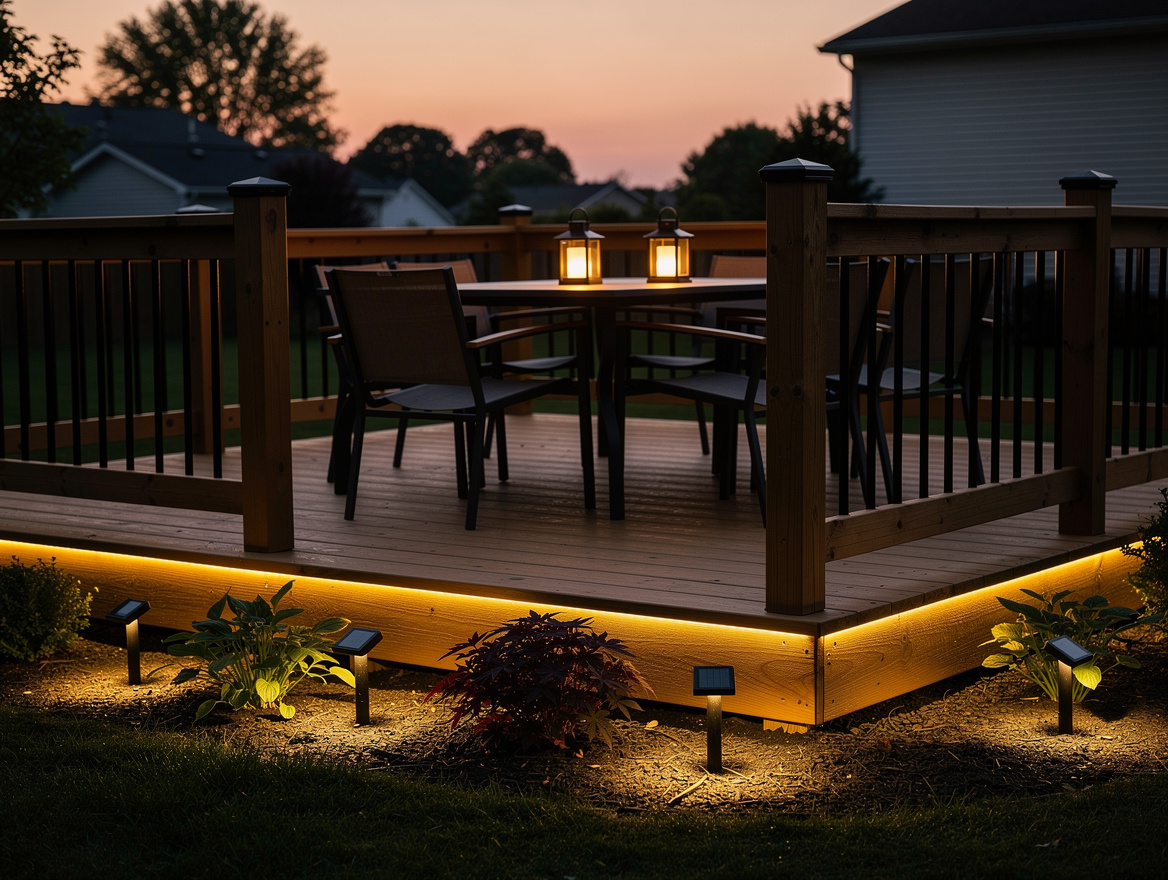
When the store reopens, solar stakes are the fastest no-wiring upgrade for deck edges, steps, and the path leading to the stairs. Look for polycarbonate solar lights with warm white output and heads around 2.5 to 4 in wide.
In 2026, a typical 6 to 12 pack at Lowe’s, Home Depot, Amazon, or Costco lands around $20 to $45. That’s cheap enough to test spacing without treating every stake like a permanent commitment.
Place them outside the walking line, not where bare feet or chair legs will hit them. Solar is best for outlining, while stairs still deserve a more reliable light if people use the deck every night.
Build the Permanent Layer With Low-Voltage Pieces
For the cleanest long-term setup, use low-voltage deck lights after your phone test has proved the layout. A starter transformer and cable setup from Home Depot or Lowe’s commonly runs about $45 to $90 before fixtures.
Step light 4-packs often sit in the $40 to $90 range in 2026, depending on finish and weather rating. Choose black aluminum step lights if your railing hardware is dark, because they disappear better during the day.
Post-cap and rail lights should repeat one finish, even if the fixture types vary. Mixing black, brushed nickel, and bronze on a small deck looks accidental fast.
Aim Everything at Night Before You Mount It
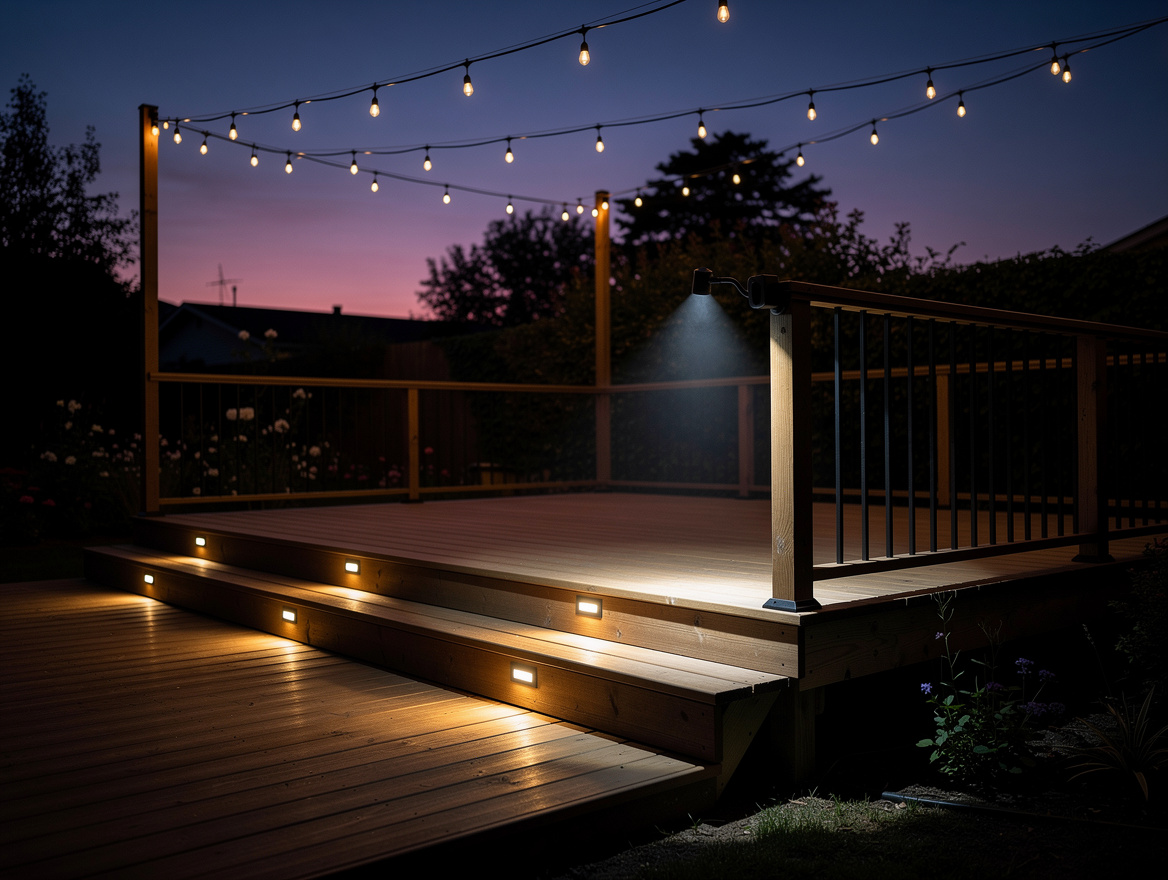
Do the final aim check after sunset, with every fixture sitting loose or taped in place. Your low-voltage cable, solar stakes, and string lights should make one soft path from the door to the stairs.
Stand inside the house and look through the door glass before mounting anything. If the brightest thing you see is a bulb, shade it, lower it, or move it under a rail.
My rule is simple: light the walking surface first, then add glow above shoulder height only where people sit. That keeps the deck useful without making the neighbors feel like they’re staring at a restaurant patio.
Start with the phone test tonight and buy only for the tape marks that still make sense tomorrow. A $40 string light strand and a $30 solar pack can do more than a cart full of random fixtures.
Mia Carter writes about small-space living and budget home makeovers. She has restyled three rentals and tests most ideas in her own 45 sqm flat.