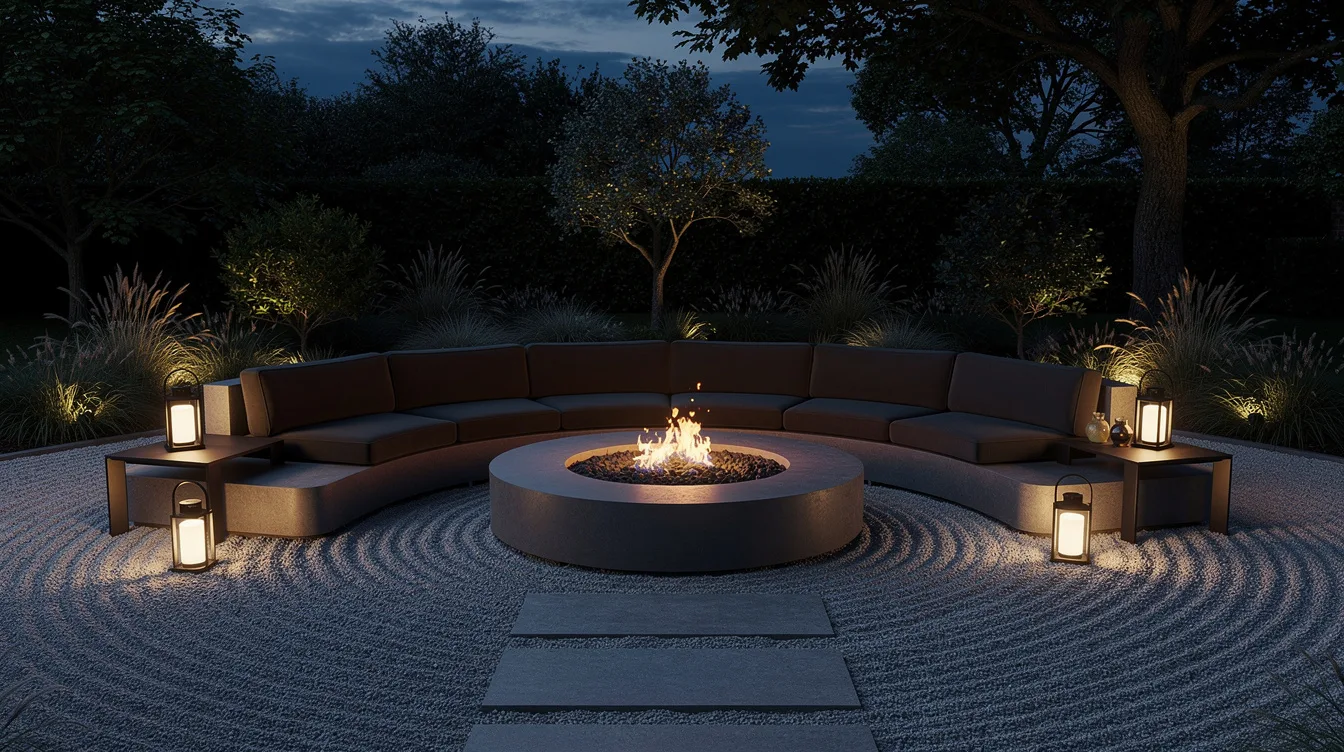
My backyard had a fire pit and four folding chairs that looked like I’d borrowed them from a church basement. Every Pinterest board showed built-in stone seating that needed a mason, a permit, and three weeks I didn’t have.
I had a Monday deadline, a $600 budget, and zero power tools. The solution wasn’t faking stone. It was faking the decision to build in stone.
Start With the Anchor, Not the Seats
I spent Saturday morning staring at a bare concrete slab behind my garage, a $79 Mainstays 36-inch smokeless fire pit from Walmart still in its box. The pit was the easy part. Making four people feel like they were settling into something permanent, not camping, was the puzzle.
The trick: buy the fire pit first, then build the seating radius around it. A 36-inch diameter pit needs about 4.5 feet from center to seat front. That gives you roughly 24 inches of clearance from flame edge to where knees land, safe and conversational.
Buy Armless Modular Pieces That Touch
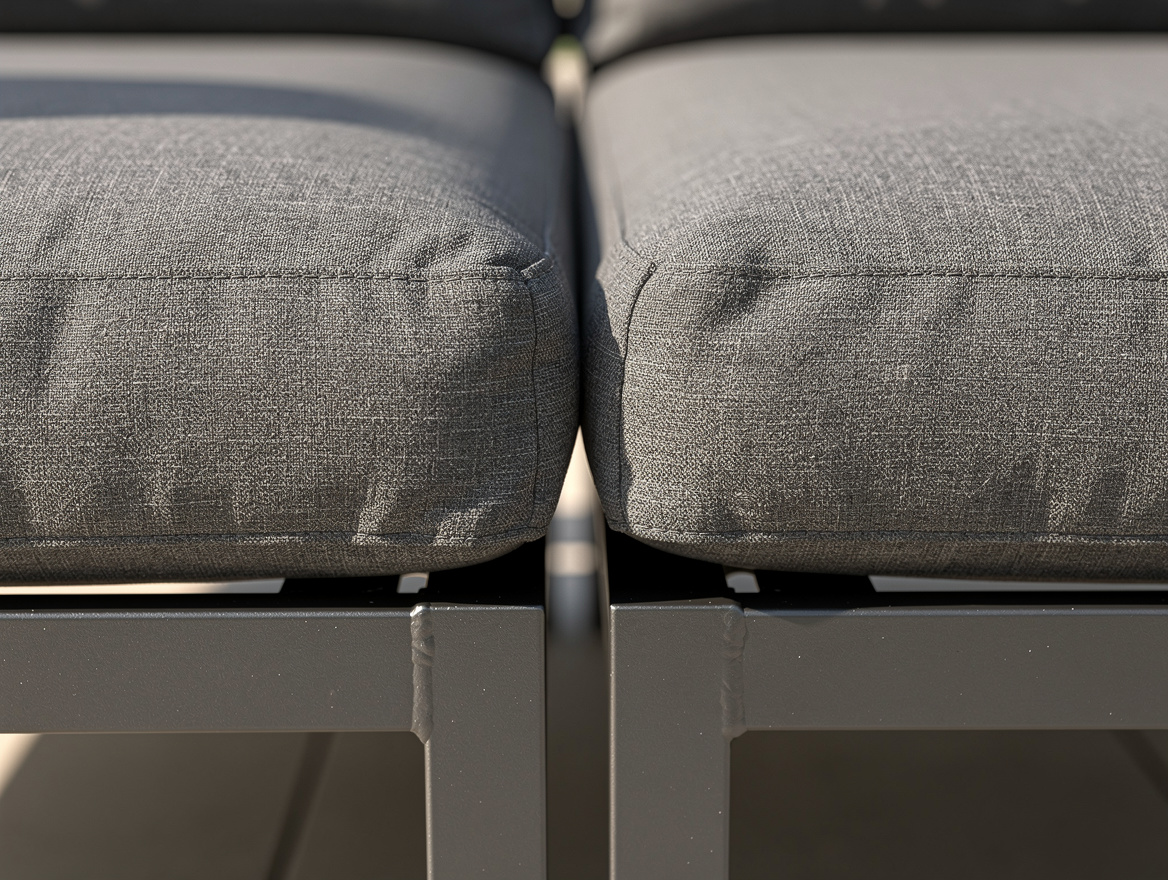
I found two Devoko 3-piece armless outdoor sectionals on Amazon for about $340 total. Each unit is 25 inches wide, 16 inches high without cushion, and 18 inches deep. Pushed together, four units made a 100-inch curved bench that looked like one continuous thing.
No arms between sections. That gapless line is what sells the built-in illusion. The steel frames bolted together in ten minutes with an Allen key, no drill needed.
Add a Gravel Pad So It Looks Grounded
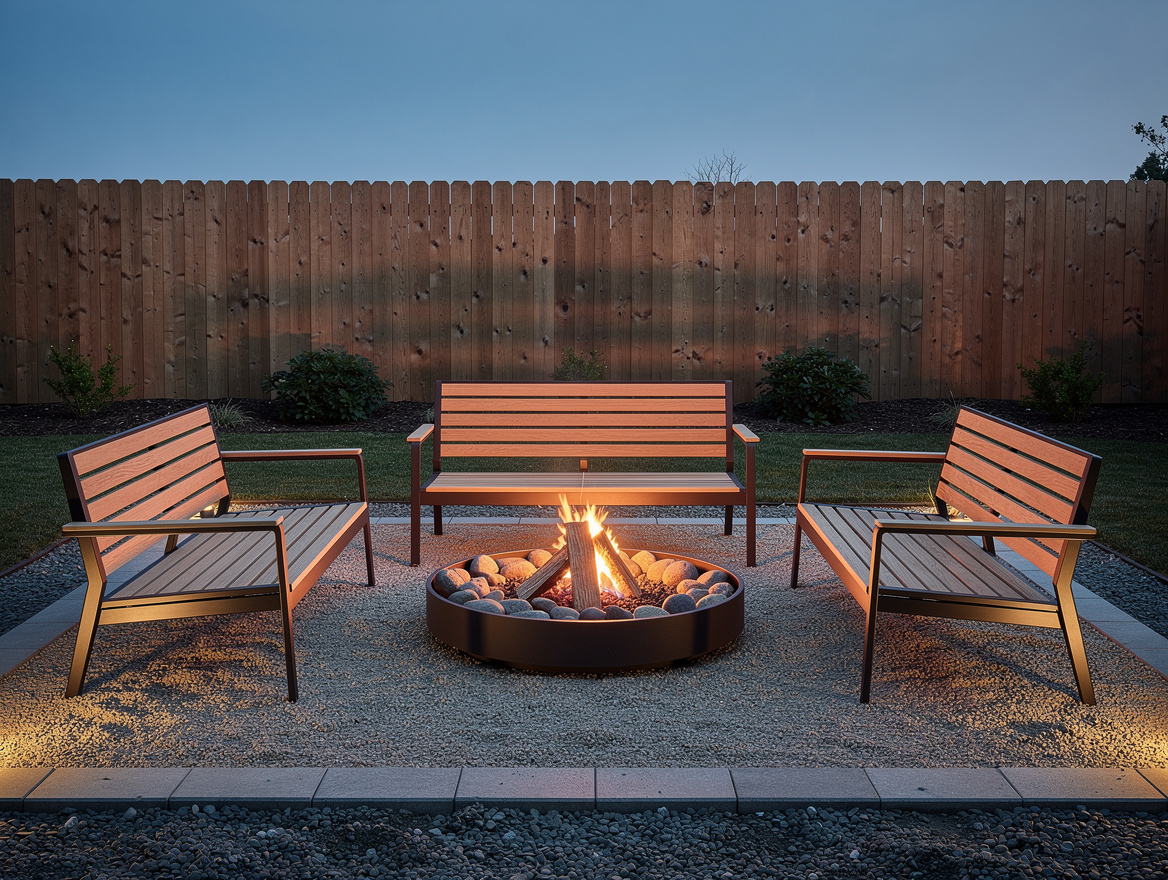
Raw concrete or grass makes modular seating look like patio furniture you dragged out. I laid a 10-by-10 foot zone of Home Depot pea gravel, about $5 per 50-pound bag, six bags total. Raked it level, no edging, just a soft contained spill.
The benches sit slightly sunk into the gravel. That half-buried look reads as masonry-adjacent, especially at dusk when edges blur.
Use Backless Benches to Fake a Wall Cap
On the straight side facing my fence, I lined up two Best Choice Products 48-inch acacia backless benches from Walmart at $160 each. Height: 17 inches. Depth: 18 inches.
Pushed against the fence with a half-inch gap, they read like a poured concrete cap you could find at a boutique hotel in Ojai.
The fence became the backrest. Instant built-in against architecture.
Layer One Concrete-Look Block for Weight
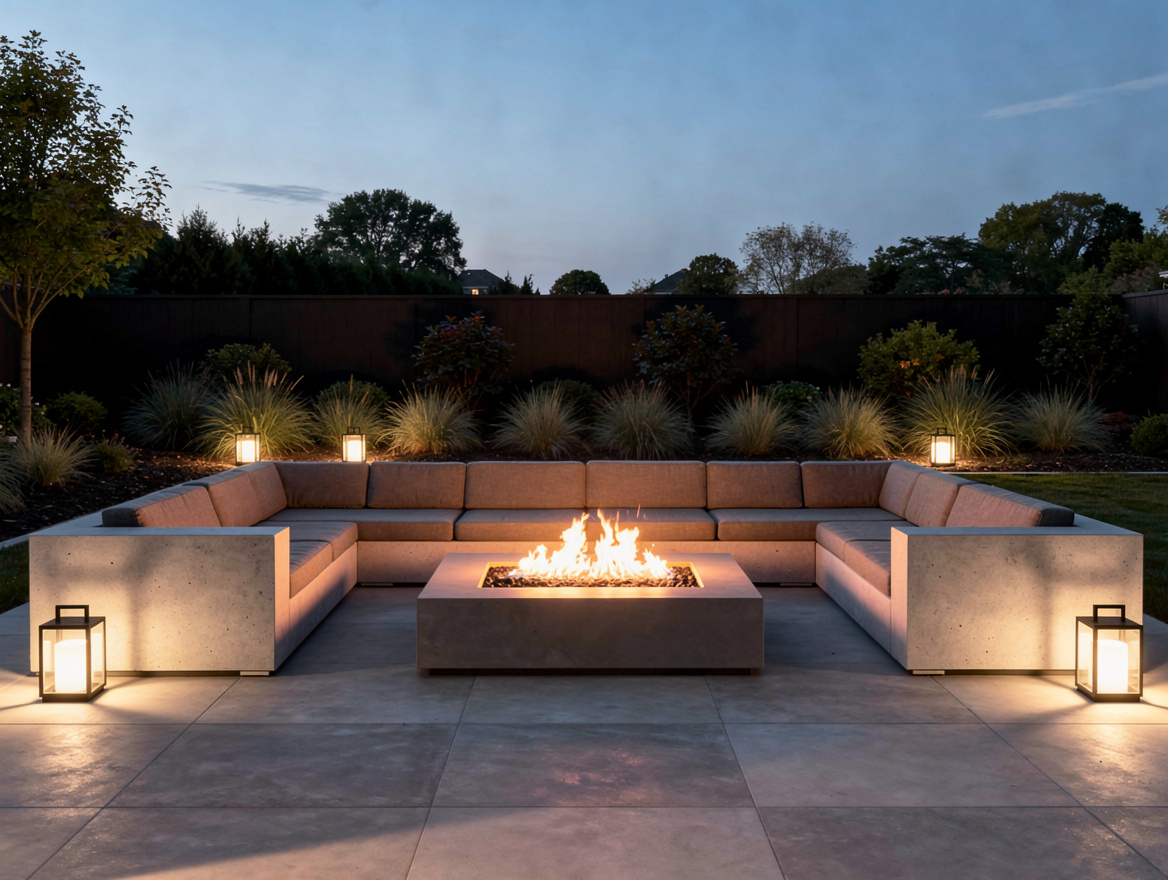
To break up the wood-and-wicker, I added one Christopher Knight Home 47-inch faux concrete resin bench from Wayfair, $280. It’s 16 inches high, 16 inches deep, a gray rectangular block that mimics cast stone without the 400-pound reality.
I placed it as a solo seat opposite the curve. The visual weight anchors the whole arrangement. Your eye needs something that looks like it was dropped by a crane.
Match Cushion Colors to Kill the Catalog Look
The fastest way to spot modular furniture: mismatched cushions in factory beige. I ordered four sets of Arden Selections 20-inch outdoor cushions from Target at $35 each, all in a single charcoal gray. Uniform color across different bench brands erases their separate origins.
Cushion thickness matters. Two inches is standard, three reads more luxe. I went with three, which raises seat height to 19 inches, still comfortable for a 36-inch pit.
Light It Sunday Night for the Reveal
By 7 PM Sunday, I had a U-shaped arrangement seating six, no tools beyond a hex key and a rake. The gravel was still settling. I placed three IKEA SINNERLIG LED lanterns at $15 each on the ground between benches, not on them.
Low light from below makes edges disappear and mass read as permanent.
Monday morning, my neighbor asked who I’d hired. That’s the metric.
Start with the gravel pad and one armless modular piece this weekend. Add benches as budget allows. The built-in look comes from the spacing and the visual continuity, not from what’s actually holding you up.
Mia Carter writes about small-space living and budget home makeovers. She has restyled three rentals and tests most ideas in her own 45 sqm flat.