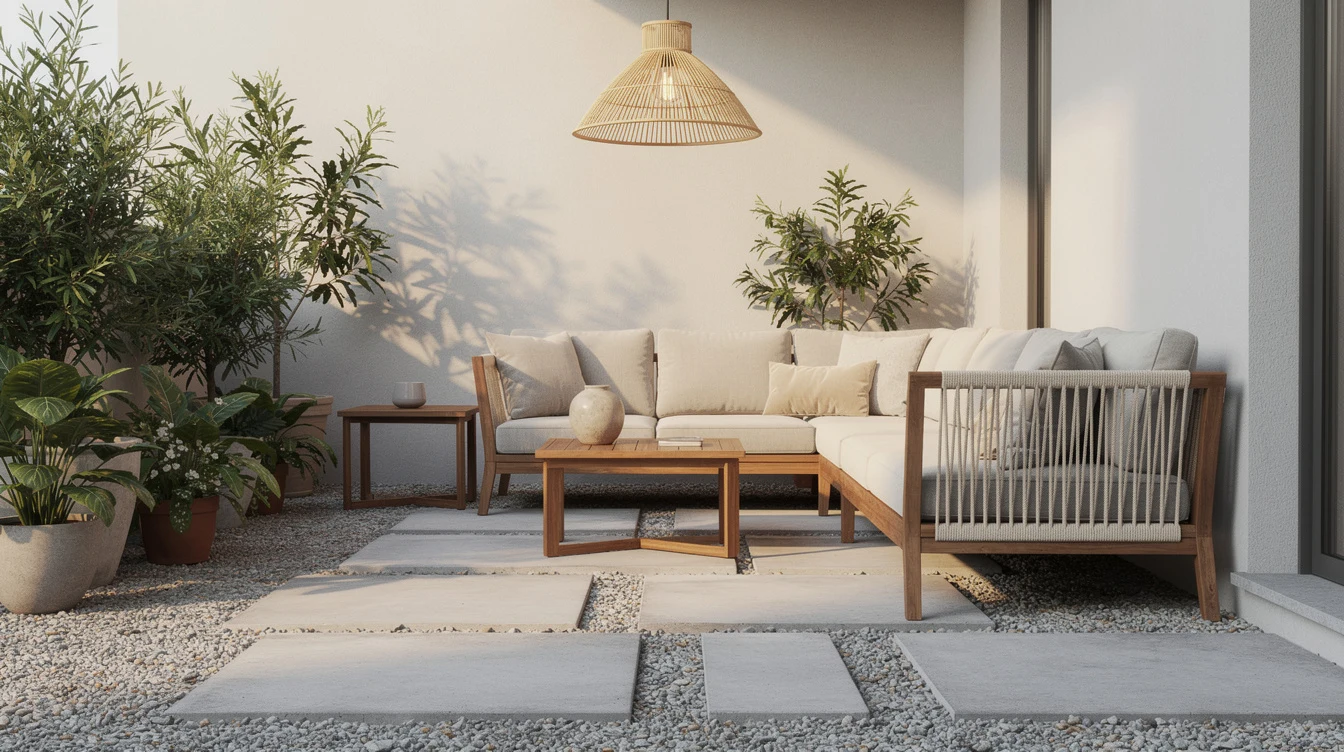
My patio used to look like a furniture-store parking lot. One grey rattan set, one slab, one string-light canopy. Every guest said “so clean,” which is code for “so boring.”
Designers are killing that 2015, 2022 showroom look for summer 2026. The new direction is smaller, mixed, more natural, patios that actually get used instead of photographed. Here’s what’s out, what’s replacing it, and what I’d buy at real stores with real prices.
- ✓Ditch the matchy set, build outdoor rooms instead
- ✓Kill the shiny fake rattan before it cracks
- ✓Break up the concrete slab
- ✓Swap the daybed for real seat height
- ✓Ditch the string-light canopy for sculptural lighting
1. Ditch the Matchy Set, Build Outdoor Rooms Instead
My neighbor’s patio still looks like a furniture showroom: one slab, one beige set, dead center. Designers are done with that 2018 look. A single 4, 6 piece rattan bundle eats your whole footprint and locks you into one awkward layout.
The 2026 move is multiple zones, cook, dine, lounge, using modular pieces you can reconfigure. At Home Depot, a typical 3-piece modular set runs $400, $700, but I’d rather mix sources.
I grabbed two IKEA SOLLERÖN arm modules ($99 each, 31 inches wide) and a vintage aluminum table from Facebook Marketplace. Total footprint: under 8 by 8 feet. Way more flexible than the 10-by-12 slab-hogger my parents bought at Lowe’s in 2019.
2. Kill the Shiny Fake Rattan Before It Cracks
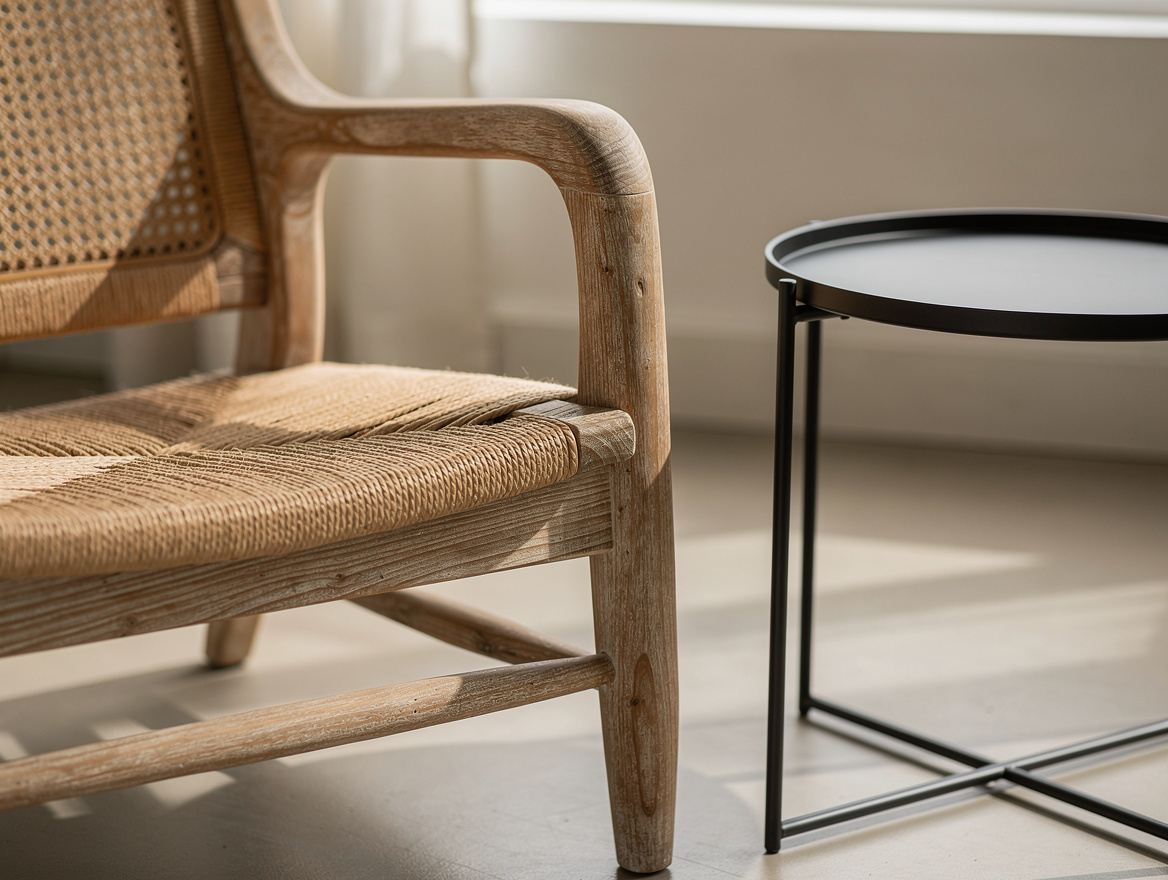
That glossy grey PE wicker? It looks like a plastic Easter basket by year three. Designers are swapping it for powder-coated aluminum, teak, and woven rope that actually ages.
At Wayfair, a basic faux-rattan conversation set still runs $250, $500, but the frames warp and the weave splits at the arms. I’ve seen it.
Better bet: Target’s Project 62 rope lounge chairs in matte black steel, around $180 each. Or hit Costco for their teak-aluminum hybrid dining sets, typically $800, $1,200 for a 7-piece. The teak grays out; the aluminum doesn’t rust.
That’s the point.
3. Break Up the Concrete Slab
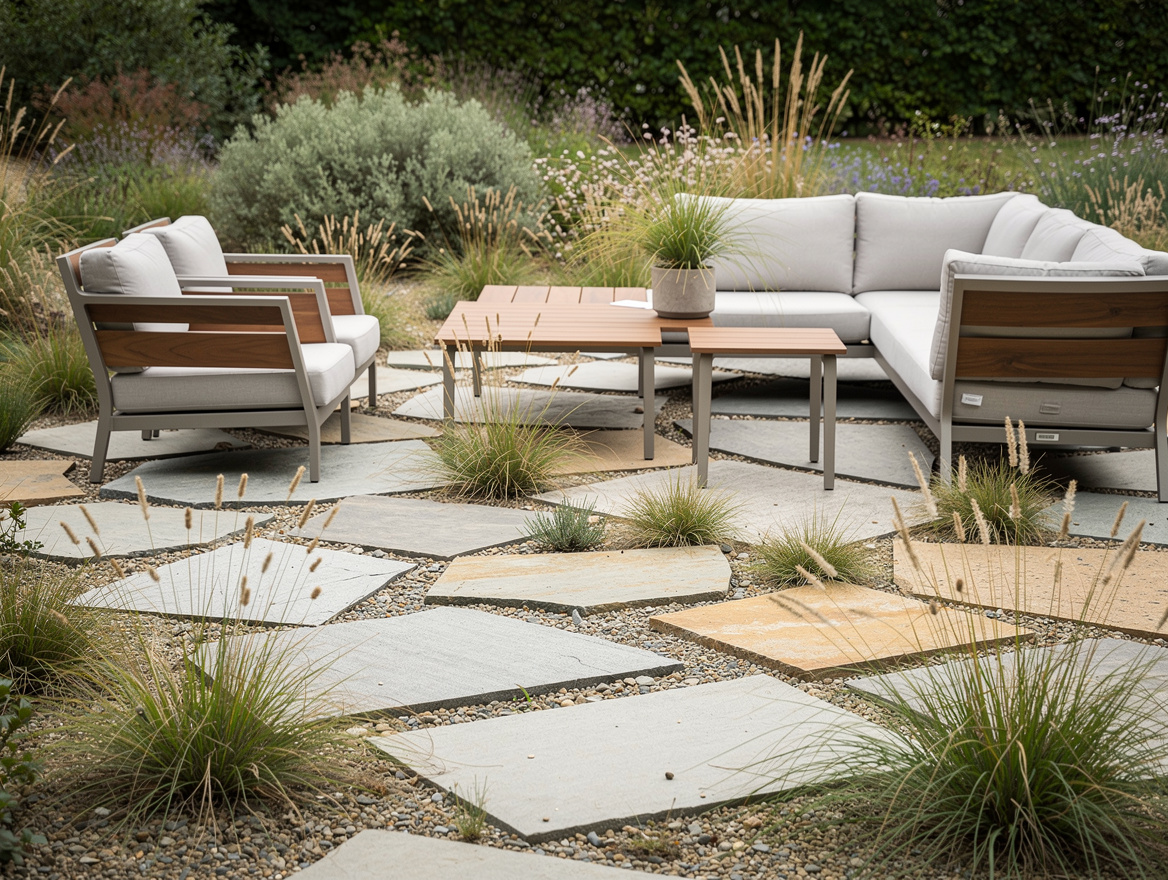
A single poured slab feels like a hotel loading dock. Average install runs $4, $16 per square foot depending on finish, so a 400-square-foot patio can hit $6,400 before you buy a single chair. No thanks.
Designers are using permeable pavers, gravel bands, and composite decking to create texture and drainage. At Lowe’s, 16-inch concrete pavers run about $3, $5 each; leave 2-inch gaps planted with sedum or filled with pea gravel.
I did a 10-by-12 foot zone with Home Depot bluestone-look porcelain pavers ($6, $8 per square foot) and crushed granite joints. Total hardscape: under $900. Looks intentional, not leftover.
4. Swap the Daybed for Real Seat Height
Those 14-inch-deep lounge daybeds? Gorgeous in a catalog, impossible for anyone over 60 to escape. Designers call them “guest traps.” Typical footprint: 6 by 7 feet minimum, and you’re stuck with one function.
Standard dining seat height is 18 inches. Lounge should hit 16, 17 inches, not 12. At IKEA, the ÄPPLARÖN series seat height is 17 inches, usable for eating, working, or sprawling.
I found a 1960s-style Wayfair aluminum sling chair, 26 inches wide, seat height 16.5 inches, for $149. My mother-in-law sat in it for two hours without complaining once. That’s the test.
5. Ditch the String-Light Canopy for Sculptural Lighting
String lights draped in a sagging canopy overhead? Played out. Every rental balcony in America has them.
A 48-foot LED strand at Amazon or Walmart costs $25, $40, which is part of the problem, they’re too easy, too everywhere.
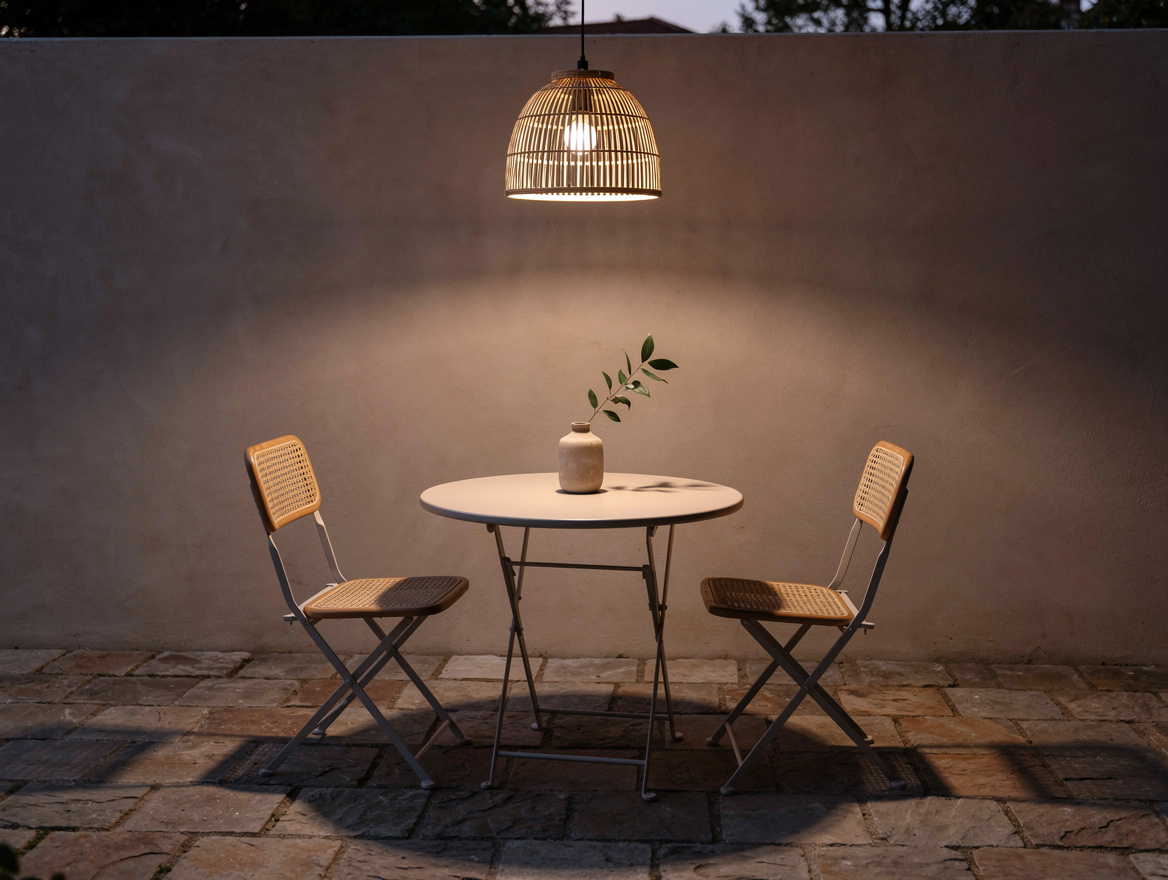
Designers are using single statement pieces: a weighted floor lantern, a ceramic table lamp, one good pendant. At IKEA, the SINNERLIG bamboo pendant is $39. I hung one over my 30-inch bistro table from Target and deleted the rest.
For portable, I bought a Home Depot Hampton Bay 20-inch battery lantern in matte black, $49. It moves where I move. One good light beats 40 mediocre bulbs.
6. Lose the Outdoor Rug as a Crutch
The 8-by-10 “indoor rug but polypropylene” move is tired. It was a clever 2019 hack to make concrete feel homey. Now it just signals “I gave up on the actual floor.”
Designers are treating the ground itself as texture. If you need softness, use smaller, natural-fiber mats, jute, seagrass, that can handle moisture and age visibly. At Amazon, a 3-by-5 jute runner runs $40, $70.
Small enough to shake out, cheap enough to replace.
I tried a Wayfair 4-by-6 recycled-plastic outdoor mat in a faded stripe, $89. It looks like a vintage Turkish rug, doesn’t hold water, and I can hose it flat against my fence in November. No storage drama.
7. Stop Pretending It’s a Second Living Room
The biggest outdated trend? Treating your patio like an indoor room that happens to have sky. Matching curtains, matching cushions, matching everything.
It looks staged, not lived-in.
Summer 2026 is about materials that weather and pieces that don’t match. A $79 Ace Hardware folding teak director’s chair next to a $220 Costco rope armchair. A concrete Lowe’s side table ($45) holding a ceramic pot you made in 2019.
The average American patio is 150, 300 square feet. That’s not a living room. It’s a porch, a stoop, a corner.
Own the scale. Mix the eras. Let the teak go silver, let the rope fray slightly, let it look like someone actually sits there.
If I had to pick one move, I’d start with the seating height. Everything else follows once you can actually sit somewhere comfortable. The rest is just editing.
Mia Carter writes about small-space living and budget home makeovers. She has restyled three rentals and tests most ideas in her own 45 sqm flat.