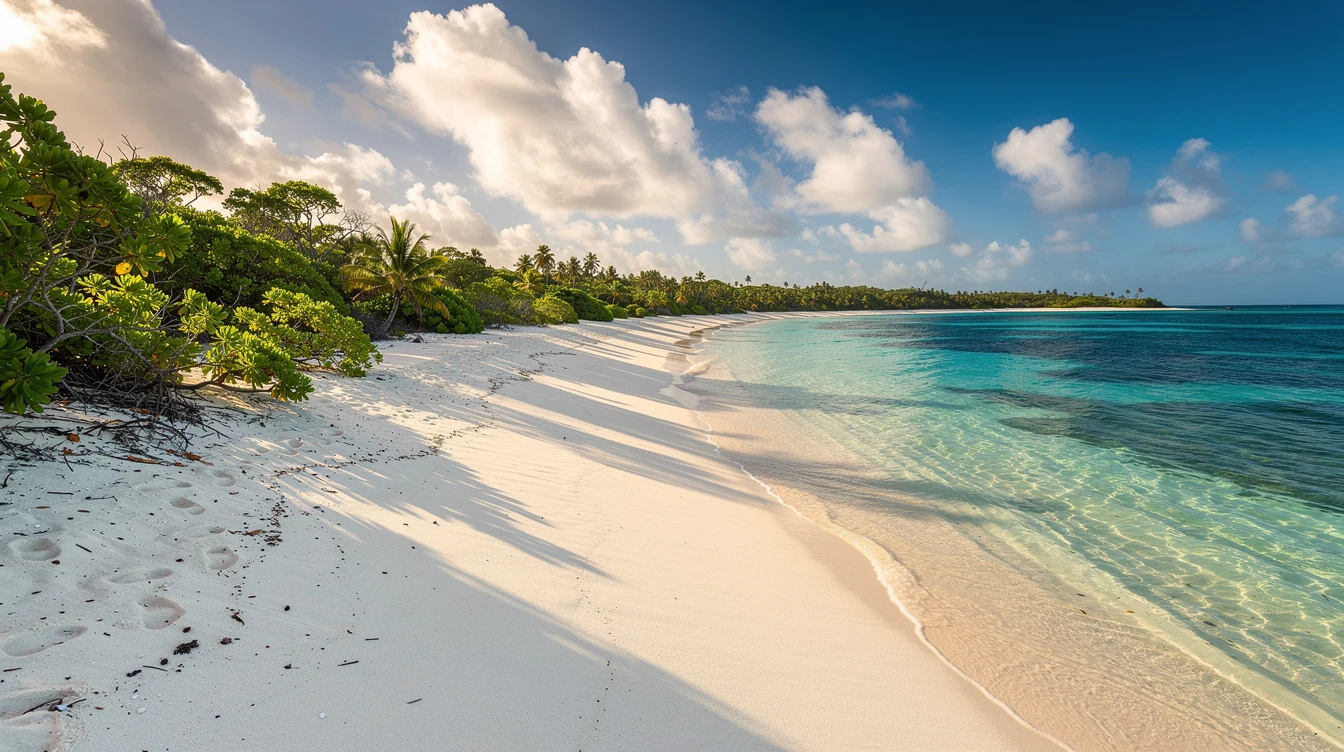
The flight from Nouméa takes 40 minutes, and then the road runs out. That’s when you see it: 25 km of unbroken white sand, one of the longest continuous beaches in the Pacific, curling along the eastern edge of Ouvéa like a dropped rope. The lagoon here has been UNESCO-listed since 2008, but the island itself still feels like a place you have to choose to find.
Ouvéa is flat, narrow, and hard to get lost on
The atoll stretches 35-50 km north to south but narrows dramatically in places. A single road runs the length of it, threading between the beach and the open Pacific. You can’t take a wrong turn because there aren’t any.
The island’s 3,374 residents live in three main districts: Saint-Joseph, Fayaoué, and Mouli. Fayaoué is the administrative center, though “center” feels generous for a settlement of a few hundred people.
The flatness changes everything. There are no hills to climb for a view, no valleys to hide the sound of the sea. The wind moves across the atoll without interruption, and the coconut palms lean the same direction they have for decades.
It’s exposed, which is why the dry season from April through October is the time to come. The wet months run November to April, and the humidity then is serious: average annual rainfall hits 53 inches, with March the heaviest.
The beach is the main event, but the water is the reason you stay
The sand is white, fine enough to squeak underfoot, and it doesn’t stop. You can walk for an hour and not reach the end. But the real draw is the lagoon, part of the larger New Caledonian reef system that earned UNESCO protection for its coral diversity and sheer scale.
The water shifts color depending on the depth of the reef below, and the barrier coral forms a wall that keeps the inner lagoon calm enough to swim in almost any weather.
Snorkeling here is straightforward. The reef is close enough to reach from shore in many spots, and the clarity is consistent because the atoll has no rivers to cloud the water with sediment. The fish life is typical of the Pacific reef environment, with plenty of movement in the channels.
The coral itself is the point, though. It’s the structure that built this island, and it’s still growing.
The culture is Kanak, but with a Polynesian thread
Ouvéa’s population is a mix of Melanesian and Polynesian heritage, and the Polynesian influence is specific. The West Uvean language, Faga Uvea, is the only Polynesian language that has taken root in New Caledonia. Its speakers have fully integrated into Kanak society and identify as Kanak, which is a nuance that matters: this isn’t a simple story of separate cultures living side by side.
It’s one culture that absorbed and kept a distinct linguistic thread.
The Iaai language is also spoken here, along with French. You’ll hear all three in the small shops and at the airstrip. The island’s three customary districts still function as organizing units for land and community decisions, which matters more than it might seem: in New Caledonia, “customary” isn’t ceremonial.
It governs access to certain areas and activities.
Getting there is easy; getting around is easier
Air Calédonie runs the 40-minute hop from Nouméa Magenta to Ouvéa-Ouloup airstrip, which sits roughly in the island’s middle. From there, you rent a car or arrange a transfer, and then you’re free. The road is paved but narrow, and it dead-ends at both tips of the atoll.
There’s no public bus system and no real need for one.
Accommodation is limited. A handful of small lodges and guesthouses operate along the main road, mostly family-run. There are a few restaurants, and they keep irregular hours.
The trade-off is the one that defines Ouvéa: you get 25 km of beach with almost no development on it, but you don’t get room service or a cocktail menu. Bring sunscreen, because the shade is wherever the palms happen to be, and they’re not always where you want them.
When to go, and what to expect
The dry season, April through October, is the window. The weather is milder then, and the rainfall drops off sharply. July is the coolest month; February is the hottest.
The water is warm enough to swim year-round, but the wind in the dry months keeps the bugs down and the sand from sticking to your skin.
Even in the dry season, Ouvéa is quiet. It’s not a party island, and it’s not trying to be. The nickname “the island closest to paradise” is the kind of marketing that usually makes me suspicious, but here it fits because the place is so stripped down.
There’s almost nothing to do except walk, swim, and wait for the light to change on the water. That is either exactly what you want, or it’s a reason to look elsewhere.
Is it worth the effort?
Ouvéa is not for everyone. The lack of elevation means no dramatic viewpoints. The single road means no scenic drives through varied terrain.
The limited dining means you’ll eat simply, and you’ll eat early. But the beach is real, the lagoon is protected, and the scale of both is hard to match without flying to a much more developed destination. The 40-minute flight from Nouméa puts you in a place that feels farther away than it is, and that’s the point.
The last ferry doesn’t exist here, but the last flight leaves in late afternoon, and by the time it goes, the airstrip is empty and the road belongs to the people who live on it. That’s when Ouvéa feels most like itself, and most worth the trip.