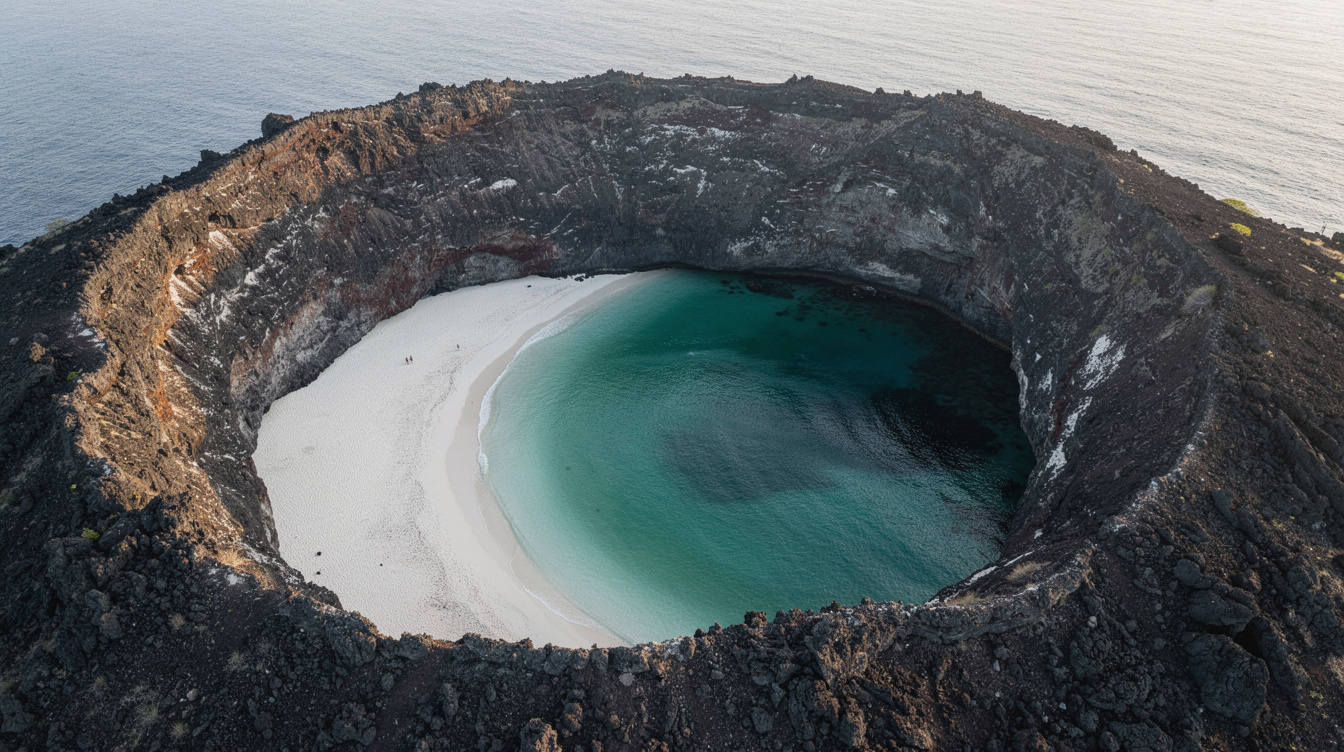
You’re chest-deep in the Pacific, volcanic rock six inches above your head, and the tunnel bends just enough that you can’t see the exit yet. The water is around 75°F and your hands are already finding the rock floor. Behind you is open ocean. Ahead, maybe 100 feet of darkness, then a circle of white sand that has no business existing inside a wall of rock.
That’s the entrance to Playa del Amor, and it’s the only one. There’s no path, no dock, no gate with a sign. Just this tunnel, and the tide deciding whether you go through today or not.
The permit comes before the boat
Playa del Amor sits inside the Islas Marietas Biosphere Reserve, a federally protected zone managed by SEMARNAT, Mexico’s environmental authority. You can’t walk up, rent a kayak, and paddle over. Independent access is prohibited, full stop.
You book through a licensed tour operator who holds a SEMARNAT permit allocation for the beach. Tours depart primarily from Punta de Mita, roughly 45 minutes north of Puerto Vallarta by car, or from La Cruz de Huanacaxtle. The crossing by panga takes about 45 minutes across the Bahía de Banderas. Because the daily visitor quota for the beach is capped, the permit sells out weeks ahead during high season. Book two to three weeks out from December through April, or you’ll be watching from the water.
Expect to pay $80-$130 USD per person for a licensed day tour that includes the permit, boat transport, and basic snorkeling gear. Budget a private taxi from Puerto Vallarta to Punta de Mita at roughly $25-$40 USD each way. And confirm your operator holds specific authorization for Playa del Amor, not just the outer snorkeling areas of the Marietas. That distinction matters more than most people realize before they arrive.
A boat captain who has run this crossing for years will tell you the same thing: the operators who cut corners on permits also cut corners on tide timing. Those are the tours that wait outside the tunnel for an hour.
The crossing and what happens before the tunnel
The Marieta Islands sit roughly 20 miles west-northwest of Puerto Vallarta, dark volcanic humps low on the horizon. From January through March, humpback whales use the Bahía de Banderas as a breeding ground, and sightings on the crossing are common enough that most guides stop the boat. The smell changes on approach: salt sharpens, something mineral comes off the rock, and you’ll hear blue-footed boobies before you see them on the cliff faces.
But the tunnel is the real arrival. You enter swimming, or on a paddleboard depending on the operator, at low tide when the ceiling is highest. Inside, the light goes out within the first few body lengths, then rebuilds as a pale circle ahead. You pull through on your hands against the rock floor for the last meter. And then the sky opens above a crescent of fine pale sand, walls of volcanic rock on every side, the Pacific completely silent behind you.
Because the tunnel absorbs almost all incoming wave energy, the water inside the cove stays flat enough to see the bottom through several feet of depth. The color runs from pale jade at the edges to deeper green near the tunnel exit. There are no facilities on the beach, no shade, no vendor, nothing. The geological reason this cove exists at all is a story worth reading separately, and it involves the Mexican Navy doing something they didn’t intend to make permanent.
When it works and when it doesn’t
High season, December through April, delivers calm seas, clear water, and reliable tunnel access. The rainy season runs roughly June through October; the crossing gets rougher, visibility drops after rain events, and some operators suspend Marietas tours during heavy weather. Hurricane season officially runs June through November, and a serious storm can close access for days at a time.
High tide can make the tunnel impassable. Some operators wait. Some abort. The tour price refund policy for weather and tide cancellations varies by operator, so ask before you book. Thailand ran into the same problem at Maya Bay, and the fix there was the same: a hard cap and licensed operators only. The permit system here isn’t bureaucratic friction. It’s what keeps the sand inside from looking like every other beach.
Most tours allow 45 minutes to an hour on the beach. That’s enough. Local guides say the crowd pressure before the cap was reinstated was visible in the coral within two seasons. Other effort-gated beaches have found the same thing: friction produces quiet, and quiet is the whole point.
Your questions about Hidden Beach, Marieta Islands answered
How do you actually get to Playa del Amor from Puerto Vallarta?
Drive or taxi roughly 45 minutes north to Punta de Mita or La Cruz de Huanacaxtle. Book a SEMARNAT-authorized tour operator in advance. There’s no public ferry, no water taxi, and no self-guided route into the reserve. The panga crossing takes about 45 minutes each way.
What’s the best time of year to visit?
January through March is the sweet spot: calm seas, clear water, and humpback whales on the crossing. Book at least two to three weeks ahead during this window. Sargassum is a Caribbean issue, not a Pacific one, so the Marietas stay clear on that front. But rainy season conditions after June can compromise the crossing and the tunnel.
What does a full trip to Hidden Beach cost?
Budget $80-$130 USD per person for the licensed tour, plus $25-$40 USD each way for private transport from Puerto Vallarta to Punta de Mita. Total for two people, including transport: roughly $260-$340 USD for the day, depending on operator and taxi rates.
On the return crossing, someone on the boat is already scrolling through photos, trying to find the one that explains the tunnel to someone who wasn’t there. The pale circle at the end of the dark. The sky appearing all at once. They won’t find it.