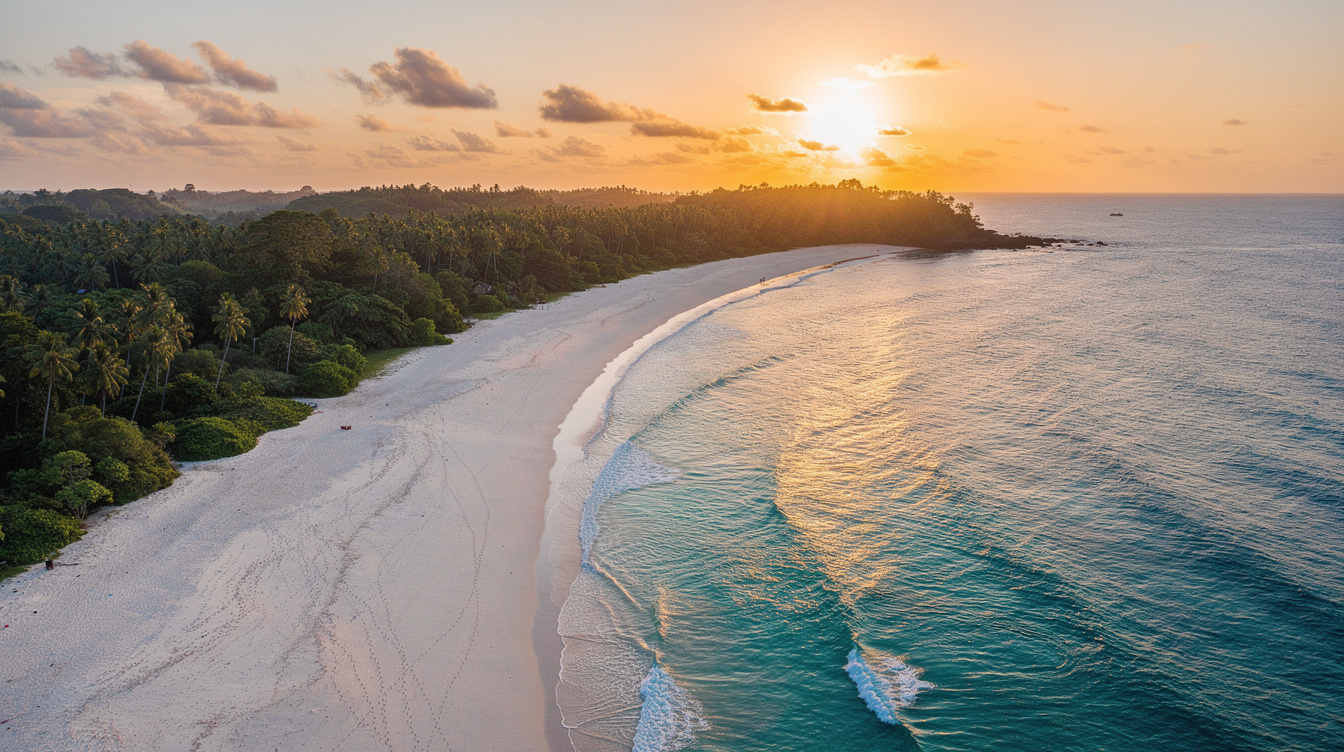
In 2004, Time magazine named Radhanagar Beach the best beach in Asia. That sentence still appears on nearly every hotel booking page within 12 kilometers of the jetty. What it never mentioned: the beach sits on an island 37 miles northeast of Port Blair, behind a ferry schedule the monsoon occasionally overrules. It never explained the specific geometry that makes the sunset look the way it does in the photographs. And it never mentioned that for roughly four months each year, the beach that earned that award is a different place entirely.
The west-facing coast and the light that built the reputation
Radhanagar Beach faces almost due west across the Bay of Bengal, with no significant landmass interrupting the horizon for hundreds of miles. That orientation means the sun drops directly over open water, producing the amber-on-turquoise color contrast that became the beach’s visual signature. The sand is pale, fine-grained, and holds color well in low light.
The beach curves slightly, so visitors in the northern half of the arc see the sunset framed by tropical forest. Visitors in the southern half get an unobstructed horizon. But because both work, the geography rewards you for walking the full length before you pick a spot. Arrive by 5:30 pm in the dry season. The light moves faster than you expect.
The window the ranking never posted
When Radhanagar actually works
The reliable window runs mid-October through April. November through February gives you the calmest water, the lowest humidity, and the clearest sunsets. March and April are still viable, warmer, and noticeably quieter on the sand. Because the beach curves toward the south, afternoon wind stays low, and the water stays swimmable well into the evening hours.
But the Southwest Monsoon typically reaches the Andaman Islands by late May, earlier than it hits mainland India. And when it arrives, it shuts the experience down: seas roughen, ferry schedules from Port Blair to Havelock become reduced or suspended through September, and the surf at Radhanagar makes swimming inadvisable. The beach doesn’t close. The conditions do. The same Southwest Monsoon that reshapes Phuket’s coastline works identically here.
Getting from Port Blair to Beach 7 without losing the afternoon
The ferry crossing and what the schedule means
Havelock Island, officially Swaraj Dweep, sits 37 miles northeast of Port Blair. Private high-speed operators including Makruzz and Green Ocean cover the crossing in roughly 1.5 hours. Government ferries run slower, closer to 2.5 hours. The private fare difference is small, around $5-$7 per direction, and the comfort difference is not. Book ahead in December and January because same-day availability disappears.
Ferries depart Port Blair in the morning. The last return sailing from Havelock leaves mid-afternoon, which means day-trippers from Port Blair lose the sunset entirely. Access mechanics here shape the experience more than any ranking acknowledges. Staying on the island isn’t an upgrade. It’s the only way to see what the photograph actually showed you.
Beach 5 to Beach 7: the 12 kilometers nobody mentions
Radhanagar is locally called Beach 7, part of a straightforward numbering system running outward from the main jetty at Beach 5. The road covers roughly 12 kilometers on a mostly paved, two-lane surface that goes dark fast after sunset. Autorickshaws are the standard option near the jetty. Bicycles are available for hire but the ride takes 40 minutes each way, and the return after dark is a genuine inconvenience.
Negotiate the autorickshaw fare before you sit down. There’s no meter. A round trip with wait time typically runs 400-600 rupees, roughly $5-$7 USD. Boat captains who’ve run the harbor route for decades will tell you the same thing: the people who leave the beach frustrated almost always skipped the negotiation and paid double.
What the beach actually withholds
There’s no beach bar at Radhanagar in the way that phrase usually implies. Basic food stalls sit near the entrance, but the beach itself stays largely undeveloped in the way famous beaches rarely do. That’s the reason it photographs the way it does. It’s also the reason a half-day visit with no preparation ends with someone hungry on a dark road.
The tropical forest behind the beach is thick, humid, and considerably louder once the light drops. The beach doesn’t try to keep you comfortable after sunset.
Your questions about Radhanagar Beach, answered
How do you get to Havelock Island from mainland India?
Fly into Port Blair (IXZ) from Chennai, Kolkata, Delhi, or Bengaluru. From Port Blair, take a private high-speed ferry to Havelock. No direct international flights serve Port Blair from the US. A connection through a mainland Indian hub is required.
What’s the best month to visit Radhanagar Beach?
December and January offer the most consistent dry conditions and calm water. November is quieter and still reliable. March and April work but bring more heat and variable cloud cover right at sunset.
What does a Havelock Island trip cost?
Budget guesthouses run $20-$40 per night. Mid-range resorts on the island run $60-$120. A private ferry round trip costs roughly $15-$20 per person. A full meal at a local restaurant comes in under $5. The beach itself charges no entry fee.
At 6:15 pm in January, the sand at Radhanagar is still warm on the surface and cool two inches down. The light coming off the water is the color of old brass. A fishing boat moves across the horizon so slowly it takes ten minutes to confirm it’s moving at all.