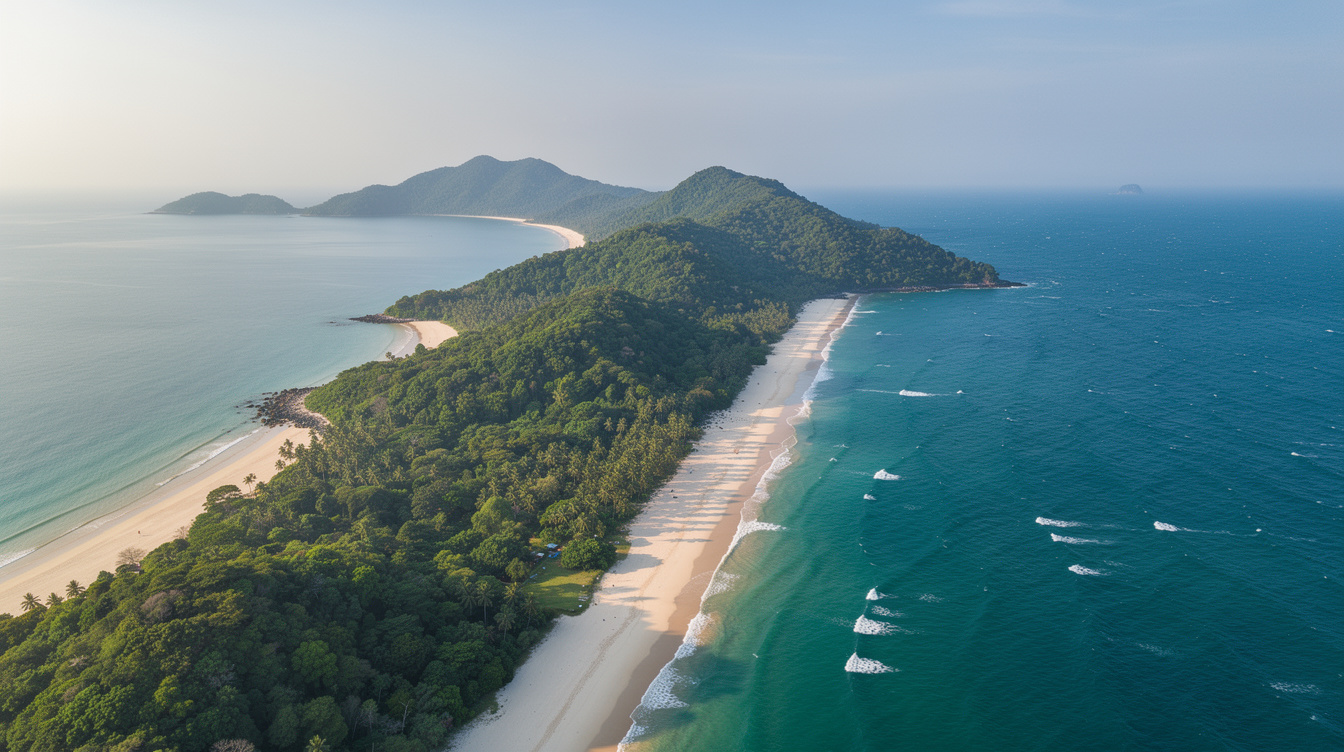
You land at Phuket International Airport (HKT) after 22 hours in the air. The booking photos showed flat turquoise water and long pale sand. What you find in September is brown chop, closed umbrella stands, and a red flag planted in the beach. This is not bad luck. It is geography, and it was there in the forecast the whole time.
Phuket runs roughly 30 miles long and 13 miles wide. A forested central ridge, reaching around 1,600 feet near Khao Phra Thaeo in the north, divides the island into two coasts that behave like separate destinations under the southwest monsoon. The month you arrive decides which one you actually get.
The ridge in the middle is why two beaches 8 miles apart have completely different water
The southwest monsoon pushes in from the Andaman Sea between May and October. It hits the west coast first and hardest. Patong Beach, Kata Beach, Karon Beach, and Kamala Beach all face directly into that swell, and red flags fly on the majority of days from June through September.
But the central ridge catches the wind before it crosses to the east side. Chalong Bay, on the southeast coast, sits in that shadow. Because the ridge deflects the prevailing swell, the water there stays workable when the west side is closed. That cause-effect relationship is the one piece of island geography most first-time American visitors never read before booking.
And it’s not a minor difference. Long-tail boats stop operating from Patong pier on bad-swell days. The Thai Marine Department posts no-swim warnings for weeks at a stretch. Boracay operates on the same principle, where seasonal wind mechanics govern which shore is swimmable, and Phuket’s version is just as binary.
What the monsoon actually does to each coast, from May through October
On the west coast, the consequences are specific. A mid-range room in Patong that costs $120 a night in February can run $55 in August. But the beach that justified the booking is largely off-limits for swimming, which is the trade-off nobody sees in the booking confirmation.
Chalong Bay, where most dive and snorkel boats depart for Koh Racha Yai roughly 12 miles offshore, loses fewer operating days in monsoon season than Patong does. The east coast has no long west-facing white sand. What it has is functional water when the postcard version isn’t.
Guides who run the Chalong-to-Racha route year-round will tell you that July and August mornings are often calm enough to go out before noon, when afternoon squalls build. The wind timing matters more than the month, and that’s knowledge that doesn’t appear in most trip-planning tools. Bali’s interior geography works similarly, where elevation and ridge position create pockets of usable weather inside a broader wet season.
When the dry season arrives and where the crowds go
The monsoon retreats around late October. From November through April, the Andaman Sea settles into the conditions that match the booking photos: flat water, air temperatures around 84 degrees, and diving visibility of 65 to 100 feet near the outer islands. This is peak season, and Patong fills completely.
November and early April are the practical sweet spots. Prices sit 20 to 40 percent below December peak, the beaches are in dry-season condition, and the roads aren’t backed up. Kamala Beach, about 4 miles north of Patong, empties noticeably after mid-March when European charter traffic drops. And Surin Beach, 2 miles north of Kamala, stays quiet on weekday mornings in November even with good water.
The pattern of compressing an island into one zone plays out in Phuket exactly as it does in Palawan: most American bookers land in Patong and stay there, missing the functional geography of everything north and east.
The part of the island the monsoon doesn’t reach
Phuket Town, on the island’s southeast side, operates on its own clock. The Sino-Portuguese shophouses along Thalang Road and Dibuk Road smell of motor oil and jasmine garlands regardless of the season. The morning market on Ranong Road opens at 6am and a bowl of noodles at a plastic table costs about $1.65.
The monsoon doesn’t close anything here. And the crowds from Patong rarely make it this far. Thai islands that stay off the main booking circuit tend to hold this quality longer, but Phuket Town has held it simply because it doesn’t have a beach.
Your questions about Phuket, Thailand answered
How do you get to Phuket from the US?
There are no nonstop flights from the US to HKT. Most Americans connect through Bangkok, Doha, or Taipei. Total travel time from the US East Coast runs 22 to 26 hours. The airport sits in the island’s north, about 25 miles from Patong. Official metered taxis from the airport to Patong cost around $20 to $23, and the airport queue is more reliable than touts inside the terminal.
When is the best time to visit Phuket?
For west-coast beaches, November through April is the functional window. December and January deliver the best water clarity but peak prices and crowds. November and April offer the same beach conditions at lower cost. If you’re focused on Koh Racha diving or Phang Nga Bay kayaking, the east coast and sheltered bays are workable outside peak season, though expect afternoon rain most days from June through September.
How much does Phuket cost per day?
A mid-range Patong hotel in peak season runs $80 to $150 per night. Phuket Town guesthouses start around $25 to $40 for a clean room. Street food meals cost $1.50 to $4. A half-day longtail charter to nearby islands runs $50 to $80 split among passengers, and scooter rental for a full day costs around $8 to $12.
At 6am on a November morning at Surin Beach, the sand is cool and slightly damp. The longtail boats are still moored. The Andaman Sea is flat enough to reflect the treeline, and two monks walk the shoreline heading north with no particular hurry.