
The best moody bedroom isn’t decorated. It’s felt. You walk in and something in your shoulders drops.
These 13 rooms get that right. Dark walls, warm amber pools, materials with actual weight. Here’s what makes each one worth saving.
The Backlit Headboard Wall That Changes Everything
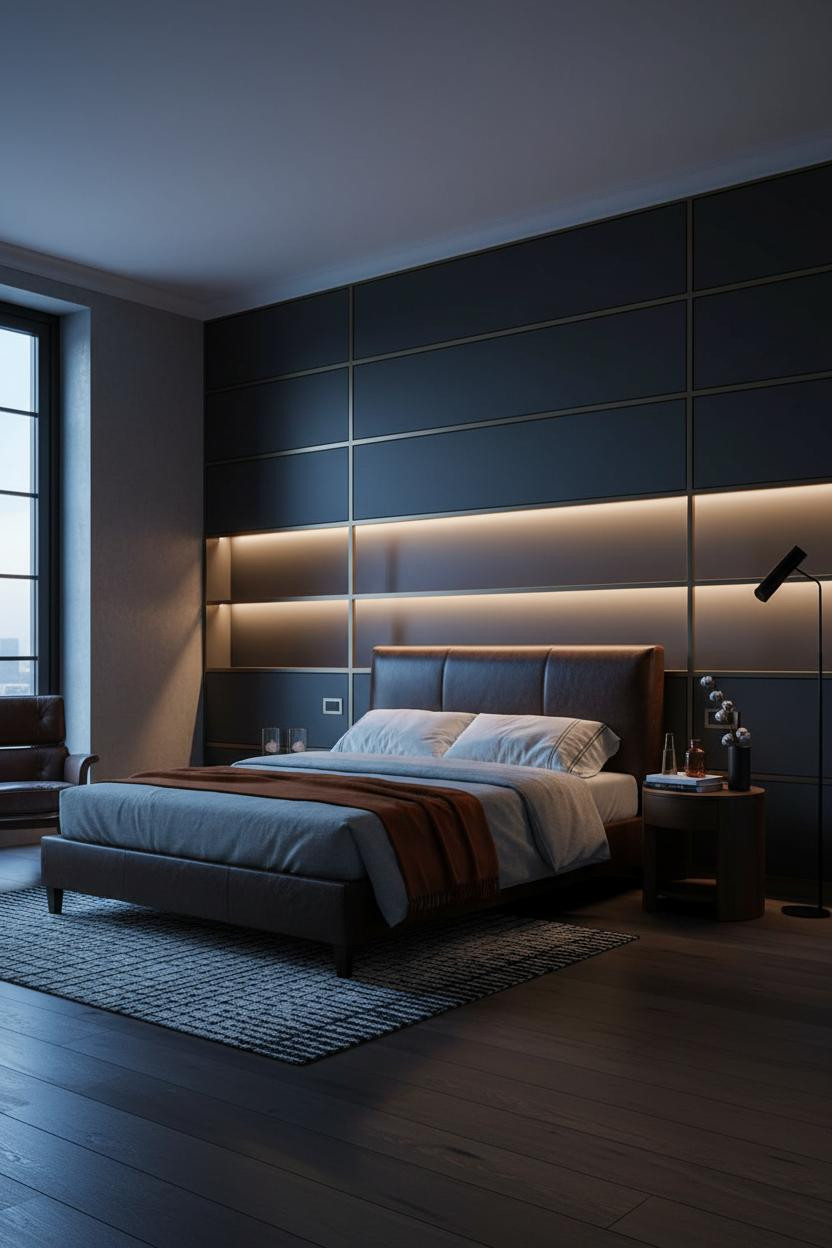

Bold choice. Not for everyone. But the rooms that commit to this never look like anyone else’s.
What makes it work: the charcoal lacquer recessed panel catches warm light on its lower lip while the recess above falls into true shadow. Horizontal rhythm, built into the wall itself.
The detail to keep: A burnt orange mohair throw draped diagonally off the footboard is the only warm accent you need. Don’t add more.
Forest Green Wainscoting Done the Right Way
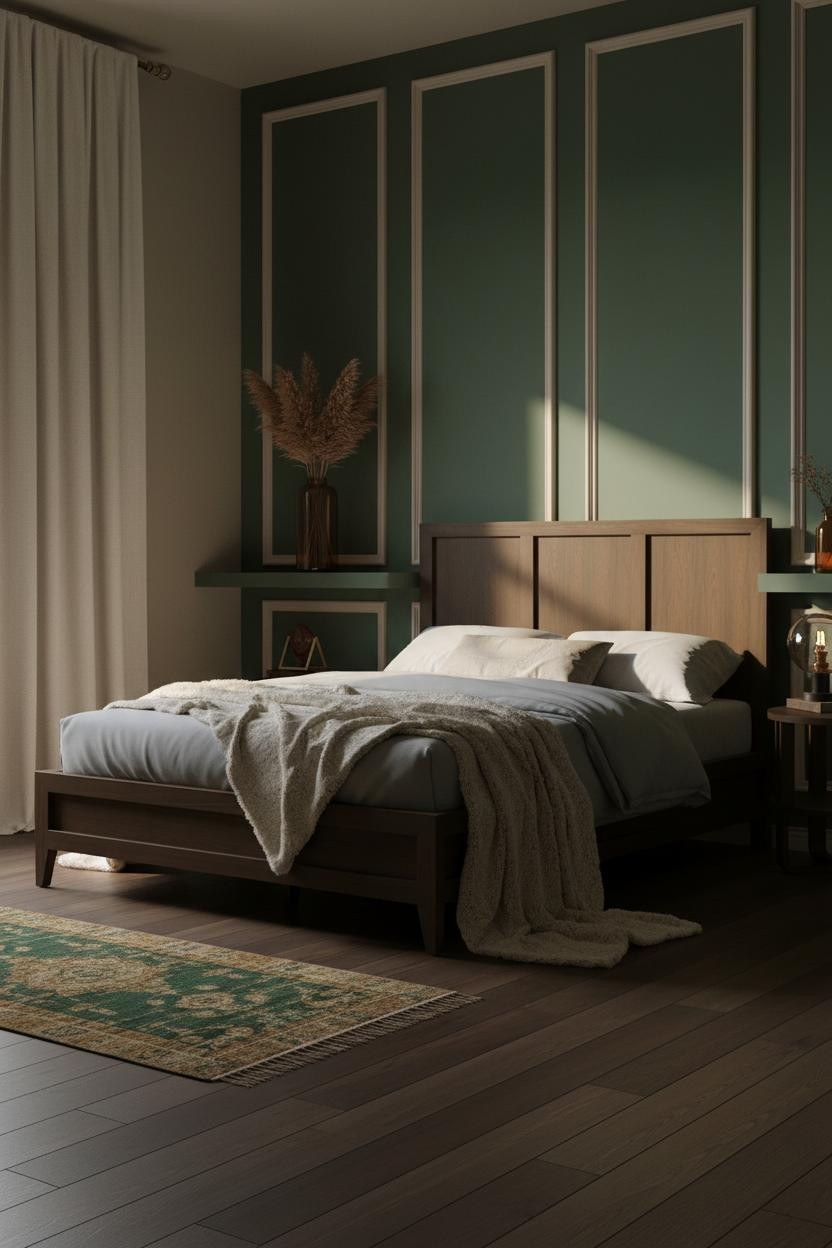

I keep coming back to this one. There’s something about floor-to-ceiling wainscoting that makes a bedroom feel deliberate in a way that paint alone never does.
Why it holds together: Raking amber light catches the raised molding edges of the matte forest green panels, so the wall reads as texture, not just color. The cream rails keep it from going too heavy.
Steal this move: Pair it with dark walnut wide-plank flooring and a faded kilim. The contrast between old and architectural is where the room finds its personality.
Indigo Brick That Feels Ancient and Intentional
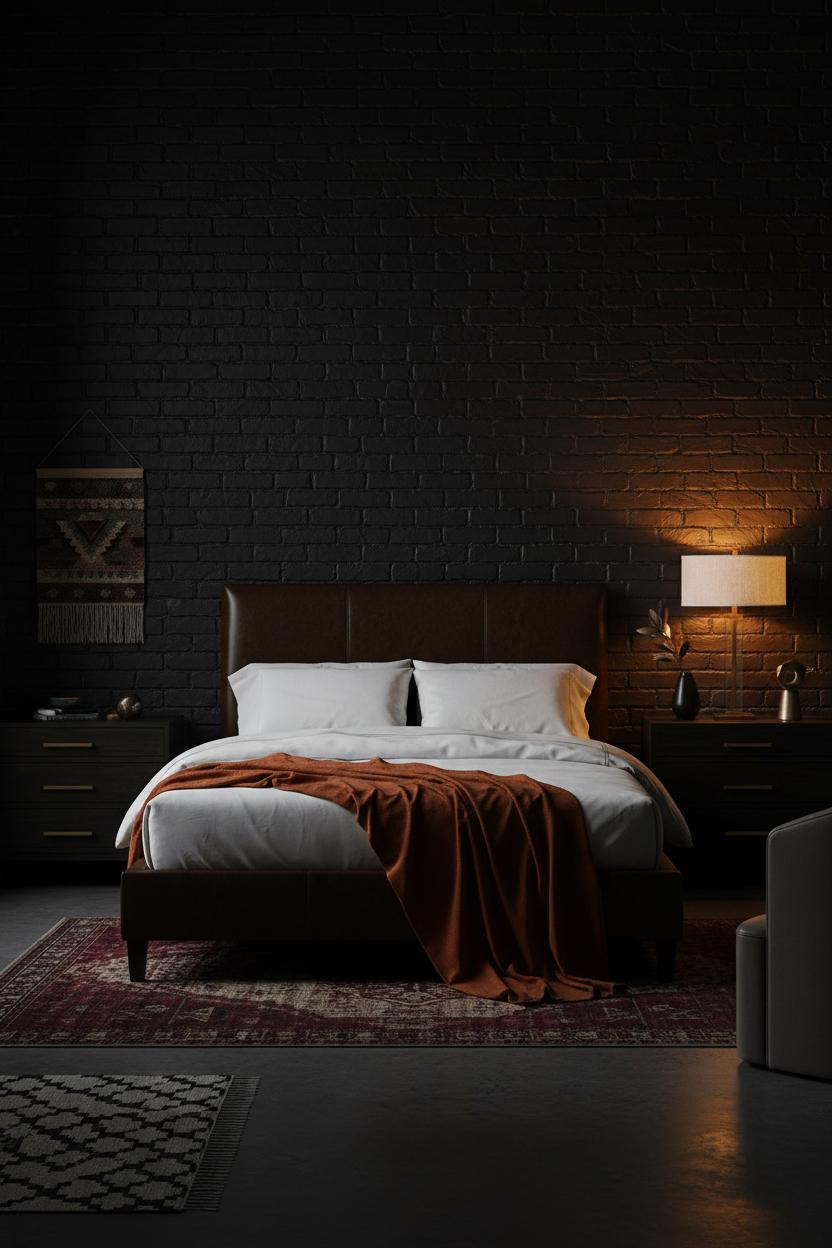
It shouldn’t work. Hand-painted indigo brick sounds like a design school experiment. But the result is somehow one of the most grounded rooms I’ve seen in this style.
The reason it feels moody instead of theatrical is the matte finish. Matte indigo brick kills any shine that would make the wall feel decorative. Warm lamp pools rake across the uneven surface and the mortar lines drop into true black.
What not to do: Don’t style the nightstand with anything too bright. One dried stem in a narrow vessel. That’s it.
Deep Teal and a Bookshelf Wall Worth the Commitment
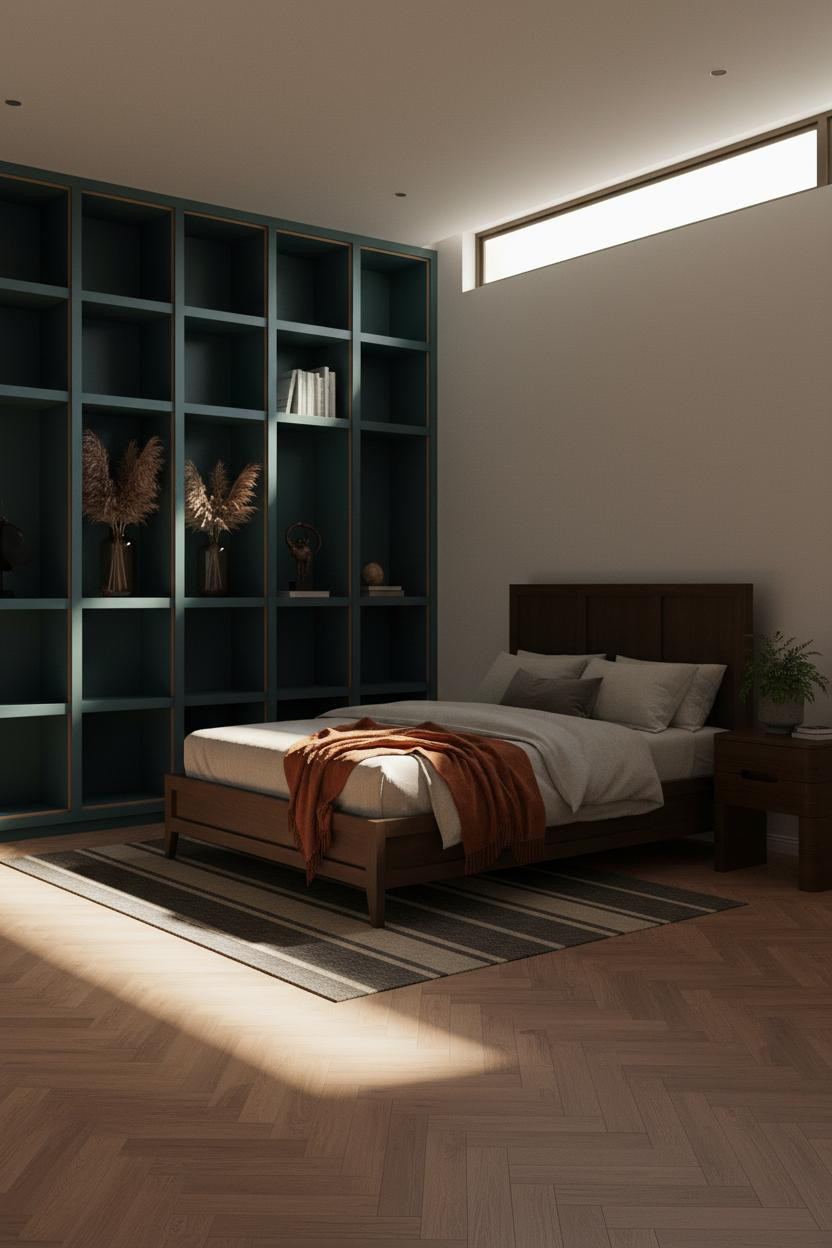
Having a floor-to-ceiling bookshelf wall changes how you actually use a bedroom. It stops being a place you sleep and starts being a place you stay.
What gives it presence: The ebonized wood shelving edges catch warm sidelight while shadow pools deep inside each recess. Vertical geometry that does more than storage.
In a room this color, the smarter choice is stone-washed linen bedding in oatmeal. It keeps the teal from going cold while still feeling earthy.
Hand-Troweled Slate Plaster and a Single Brass Lamp
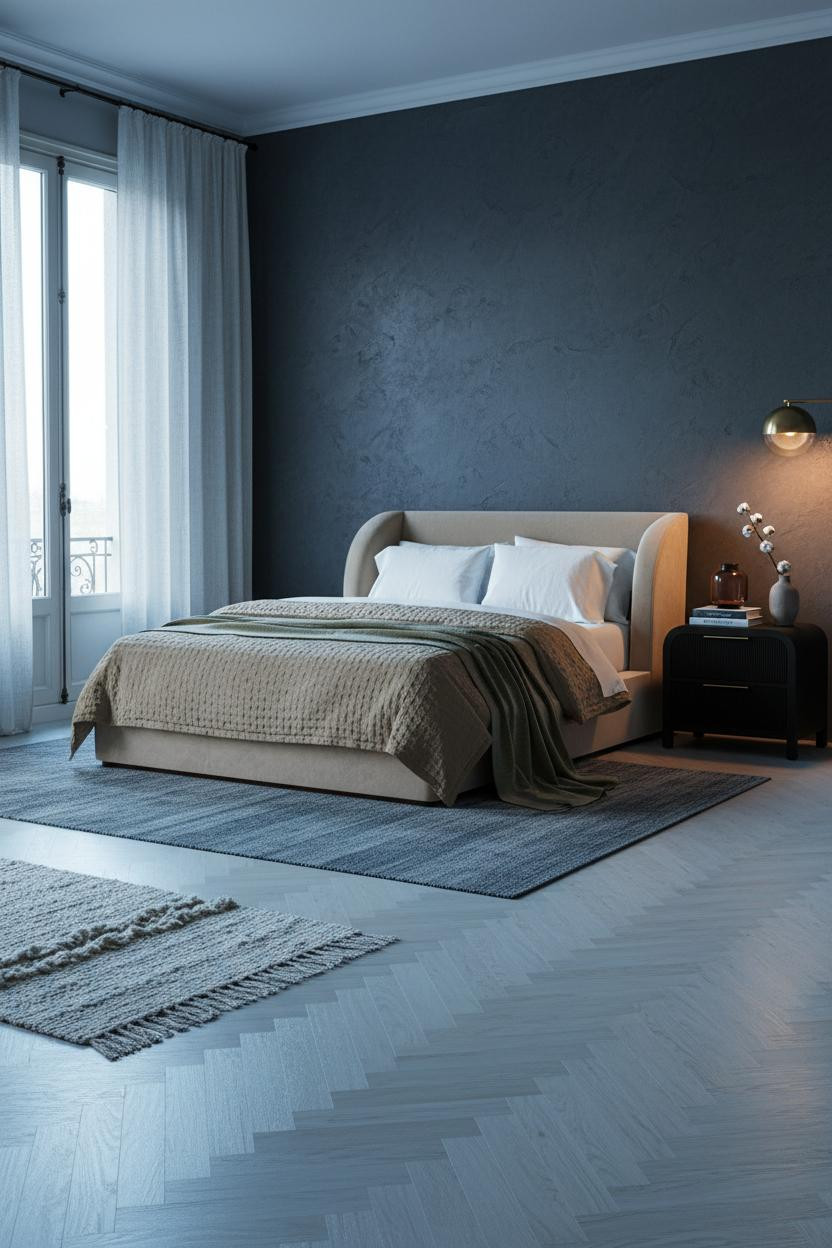

This one is divisive. Deep slate plaster with a pale birch floor sounds like a mismatch. But the brass floor lamp changes the whole equation.
Why it feels intentional: Hand-troweled plaster in irregular passes means the wall catches light at a different angle every few inches. Matte peaks warm amber, furrows cool shadow. No paint does that.
Pro move: The oversized woven wall hanging mounted low-left keeps the composition grounded. Nothing too precious or matchy on the nightstand.
The Crittall Window Bedroom You Actually Want to Sleep In
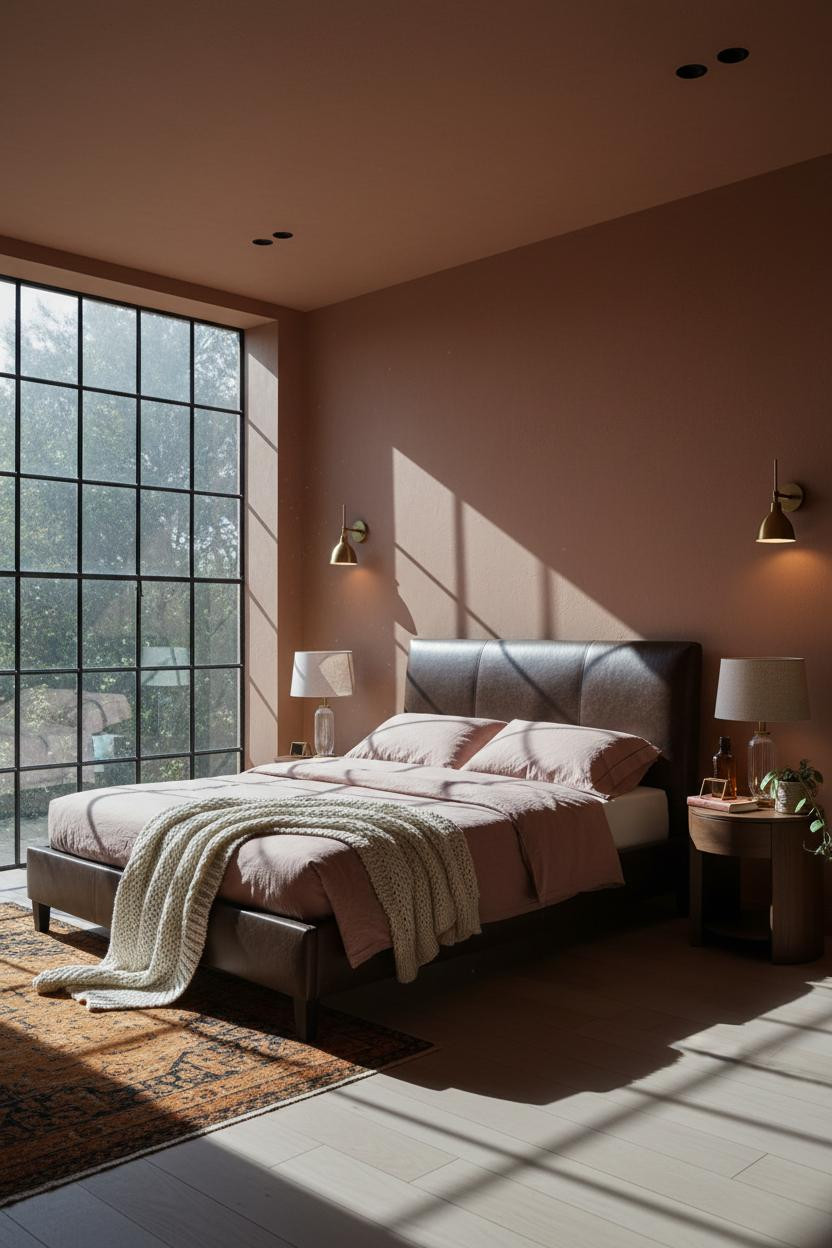
Black steel Crittall frames cast a grid of shadows across the floor all day. And honestly, that’s half the design work done for you.
What creates the mood: The rust-clay matte plaster walls absorb the cool window light in a way that keeps the room warm even when the sun isn’t. Warm and shadowed at the same time.
Avoid this mistake: Dusty pink linen bedding (not white) is what stops the dark steel from tipping cold. Cool-toned sheets would flatten the whole thing.
Olive Shiplap: Quieter Than You’d Think
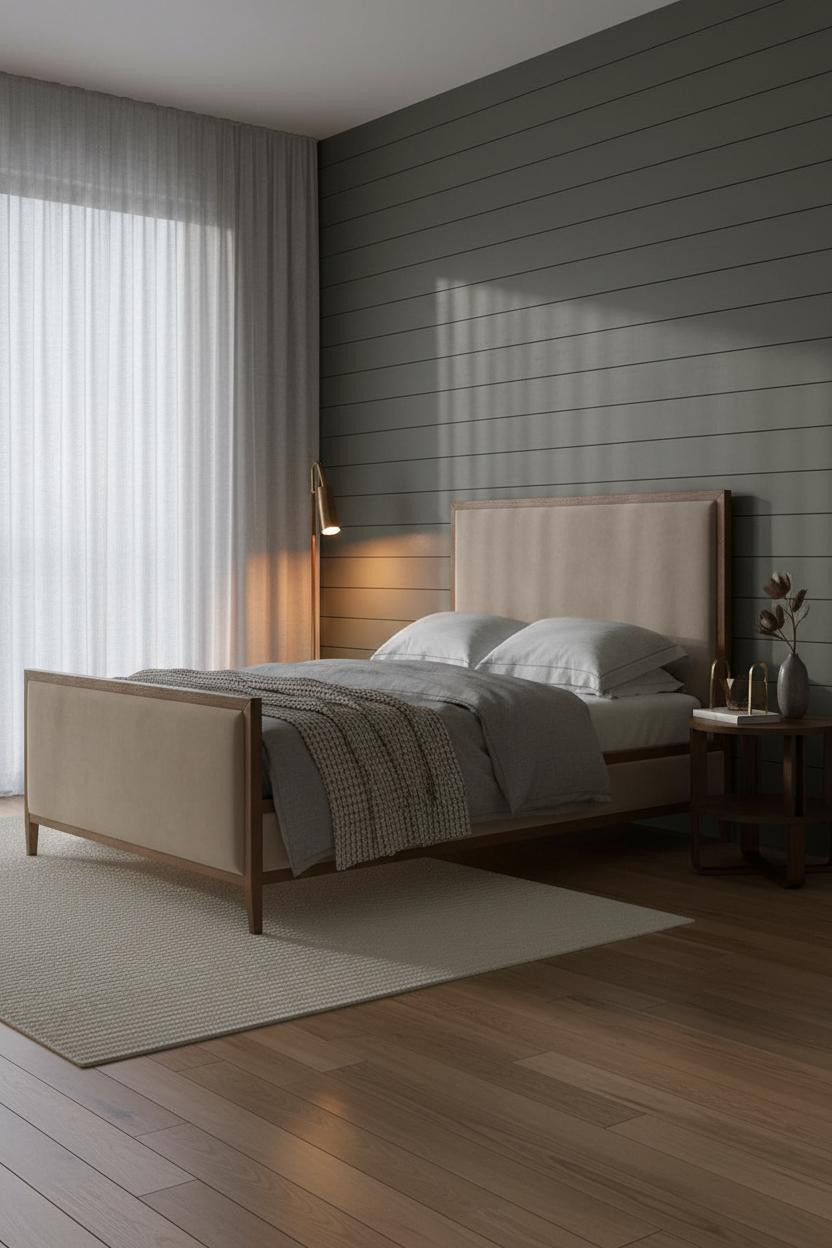

I expected to feel underwhelmed by olive shiplap. Turns out the horizontal grain does something to a bedroom that vertical paneling just doesn’t.
Design logic: Each board edge catches warm lamplight while shadow striations pool in the recessed joints, making the deep olive-grey wall feel tactile in a way that reads even across a small screen. Raw without being rough.
The finishing layer: Warm maple floors plus a cream and charcoal linen runner. The warmth from the floor pulls the olive toward earthy rather than military.
When Portuguese Tile Becomes the Whole Personality
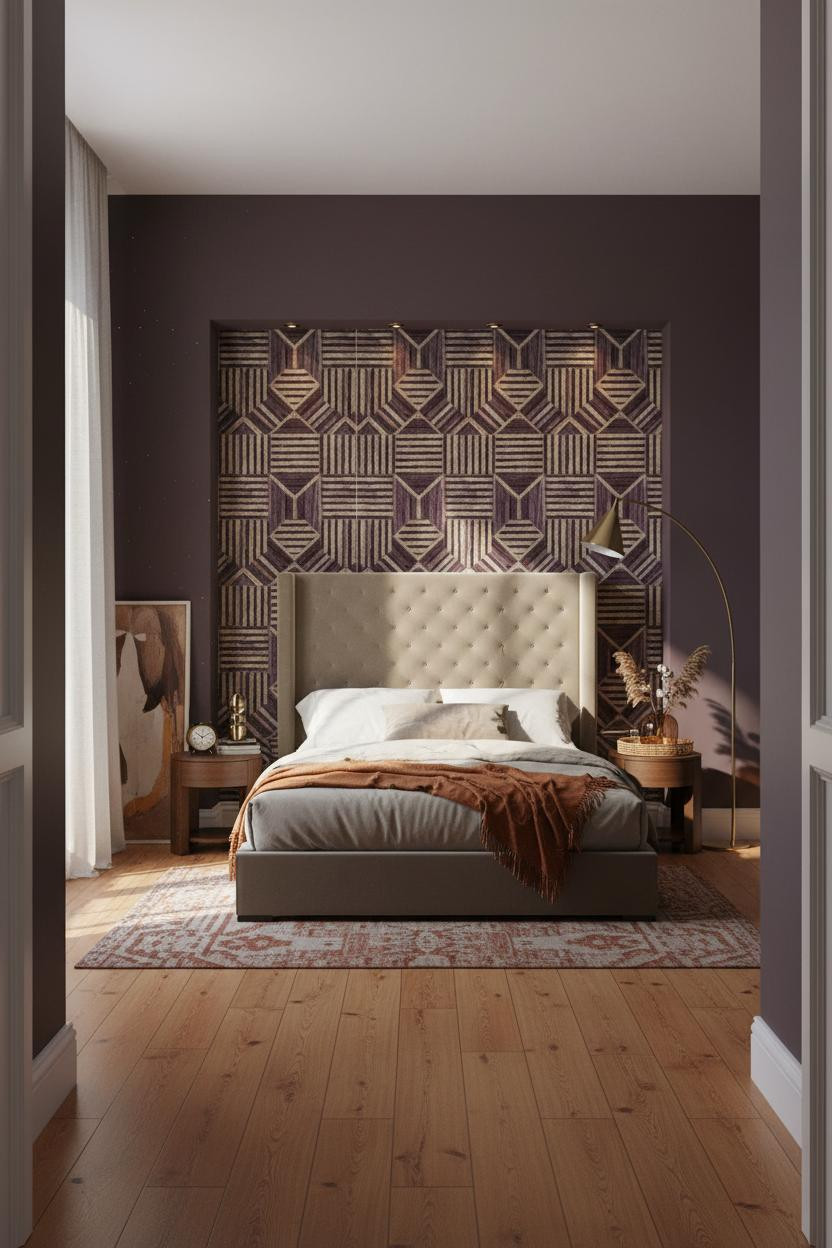

Fair warning. This look only works if you commit completely and don’t try to tone it down with neutral everything else.
What makes this one different: A hand-painted azulejo tile alcove in deep aubergine and cream lets warm lamp glow catch each recessed tile facet individually. Grout lines become graphic texture, not just filler. The pattern earns its scale.
Worth copying: A rust and ivory kilim on reclaimed wood planks keeps the room feeling collected rather than themed. Just enough pattern tension to keep things interesting.
Charcoal Paneling With One Round Mirror Above the Bed
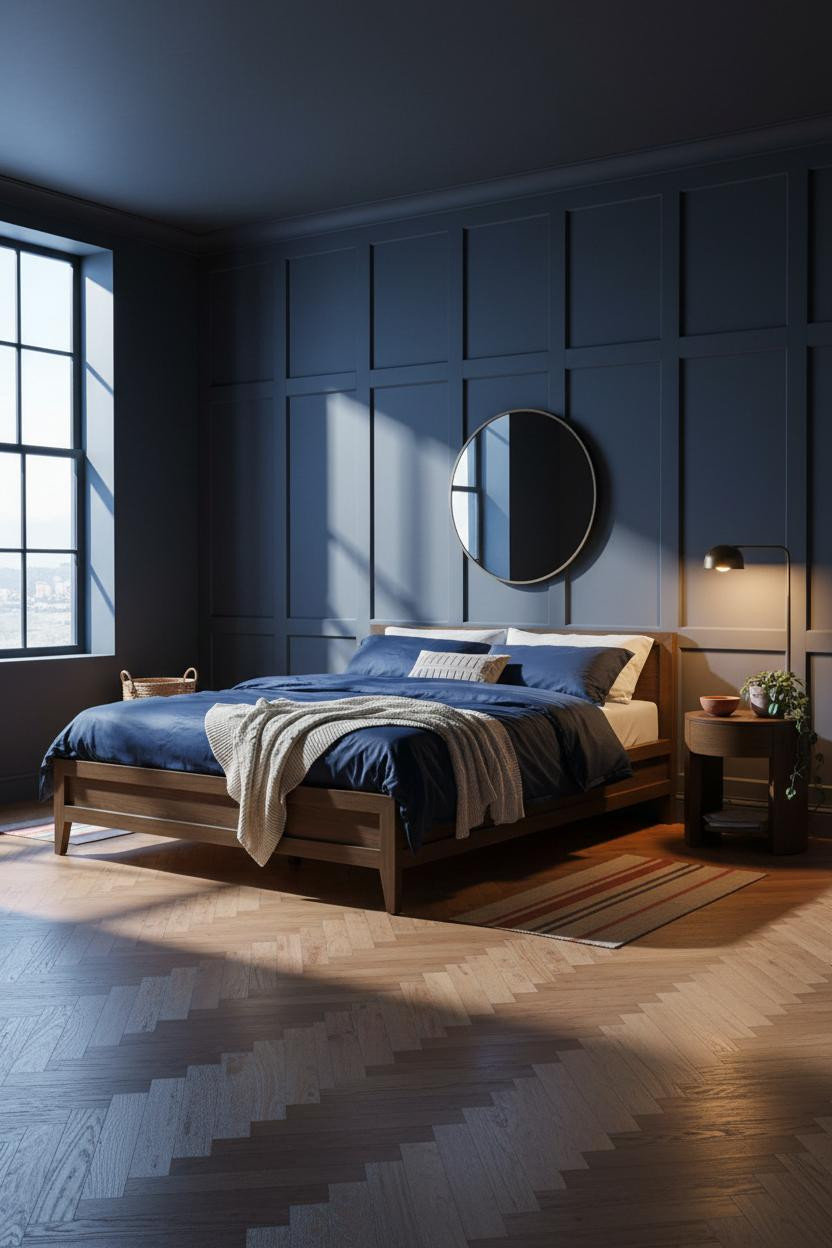
This is the kind of room that makes you want to turn your phone off and stay there.
Why it looks custom: Matte charcoal molding panels with razor-thin vertical grooves build a rhythmic architectural grid. The morning light from the east window charges it differently than the corner floor lamp does at night. Two rooms in one.
The round mirror above the nightstand reflects both light sources at once. Small move, significant result. Don’t skip it for a framed print.
Burgundy-Stained Oak Slats and Zero Apologies
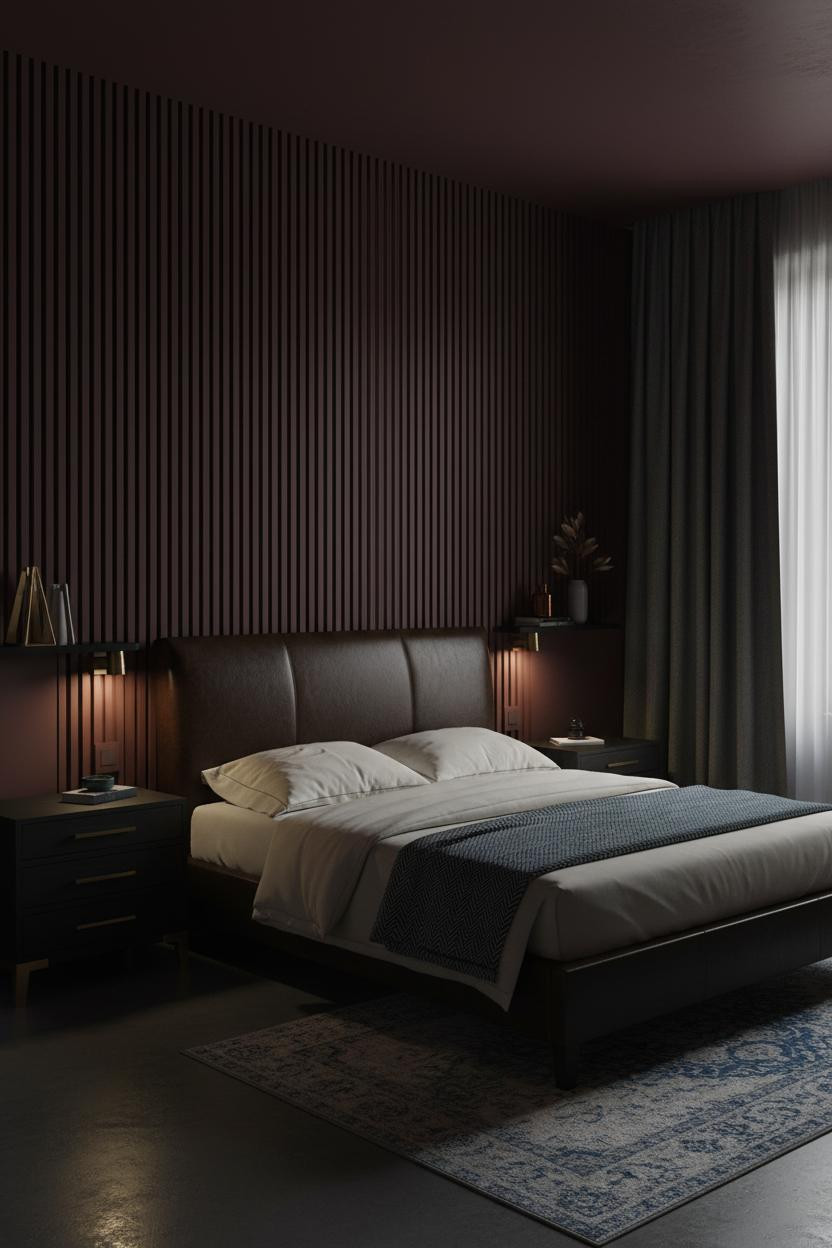
Nothing fancy about this approach. That’s actually the point.
With a dark wall this saturated, the easy win is floor-to-ceiling burgundy-stained oak slats that cast hairline shadows between each vertical run. The depth comes from the material, not the styling. Charcoal velvet curtains drawn half-closed hold the drama without fighting it.
Plum Walls With a Coffered Ceiling Nobody Expects
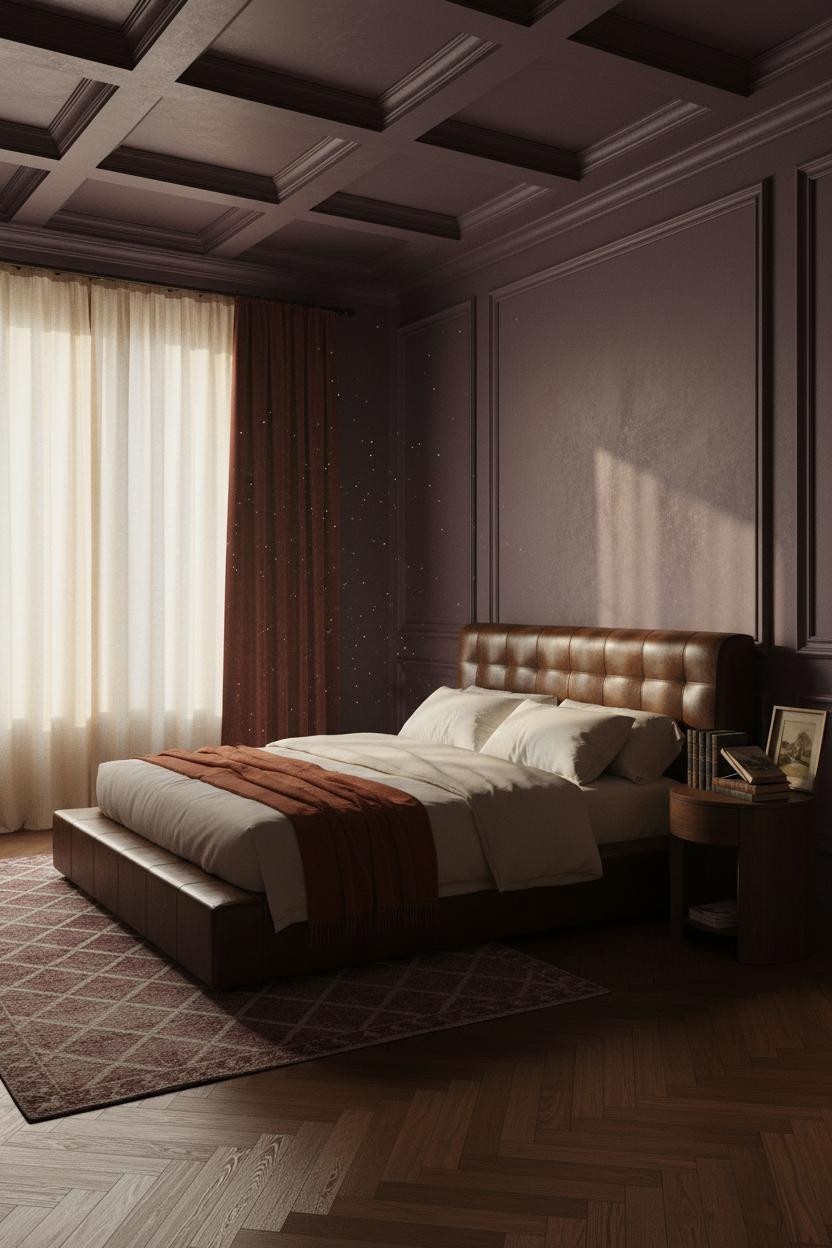

I almost dismissed this as too much. The coffered ceiling, the plum Venetian plaster, the walnut herringbone. But the room feels balanced, not overwhelming.
Where the luxury comes from: Deep plum-plastered coffered recesses framed by dark walnut molding trim catch warm lamp glow on every raised edge. The ceiling becomes an overhead texture that earns as much attention as the walls, while still feeling cohesive.
The part to get right: Keep the bedding ivory. A rust mohair throw is the only color accent you need. The plum already does everything else.
Charcoal Board-and-Batten for the Committed Minimalist
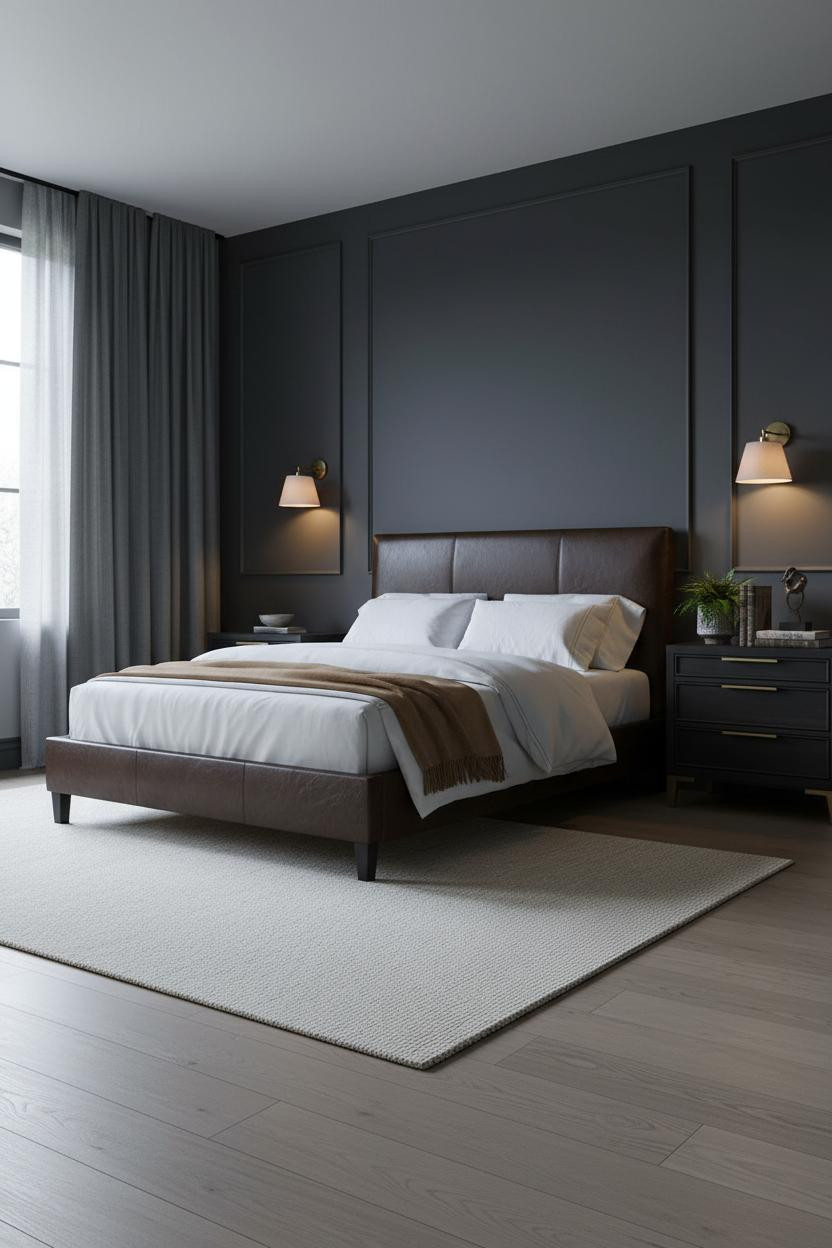
This is the quietest room in the collection. And I mean that as a compliment.
Why it feels balanced: Paired sconces flank the bed and push warm amber pools onto the deep charcoal batten surface, while soft overcast daylight floods the floor below. The contrast between the two light temperatures keeps the room from going flat or gloomy.
The foundation: Bleached oak flooring beneath a chunky cream wool rug is what stops the whole thing from reading too severe. Warm below, dark above. The room feels calm and cohesive in a way that’s harder to achieve than it looks.
Forest Green and a Charcoal Arched Alcove Worth Every Penny
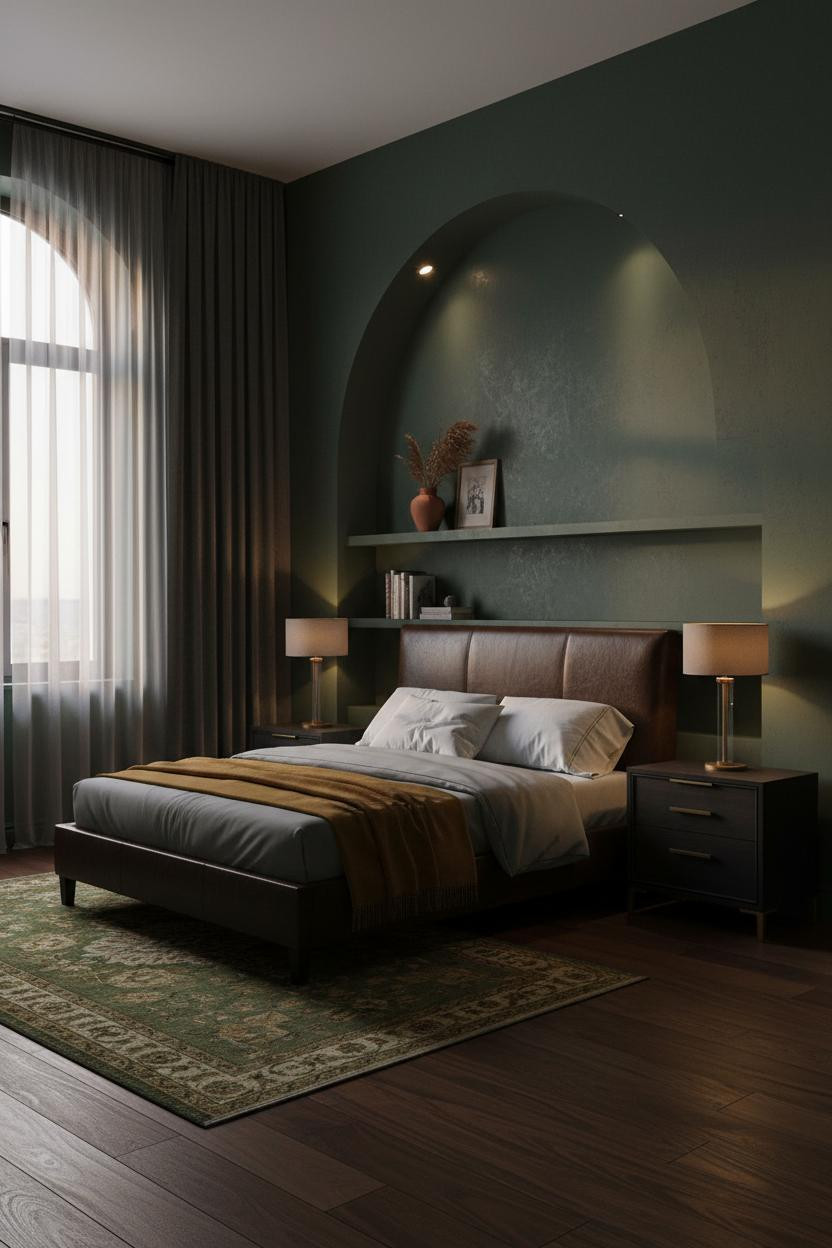
This is the room I’d build if I had the ceiling height and the nerve. The arched charcoal alcove set against deep forest green plaster walls is one of those combinations that somehow looks both ancient and completely current.
What carries the look: The alcove’s curved inner recess drops to near-black while warm lamp glow catches its outer rim. That contrast between lit arch and inner shadow makes the whole feature wall feel sculptural rather than just painted.
Where to start: A faded vintage Turkish runner on dark walnut planks pulls the earthy tones together. Mustard wool draped over the footboard is a quiet nod to warmth. Nothing too deliberate.

Our #1 Pick
Saatva Classic Mattress
America’s best-selling online luxury innerspring. 365-night trial, lifetime warranty, free white glove delivery.
Shop Saatva Classic
The Foundation Of Every Beautiful Bedroom
All of this, the dark walls, the layered amber light, the plaster and slat and tile, it’s atmosphere. But atmosphere only goes so far when the bed itself doesn’t hold up.
The Saatva Classic is what I’d put under every one of these rooms. Dual-coil support that doesn’t transfer movement, a breathable organic cotton cover that doesn’t trap heat through the night, and a Euro pillow top that’s soft without losing its shape after a year. It’s not a compromise between comfort and support. It’s both.
Walls get repainted. Throws get swapped. The mattress stays. Start there.

The rooms people save are the ones where nothing looks accidental. Good design ages well because it’s made well. And that starts with what you sleep on every single night.