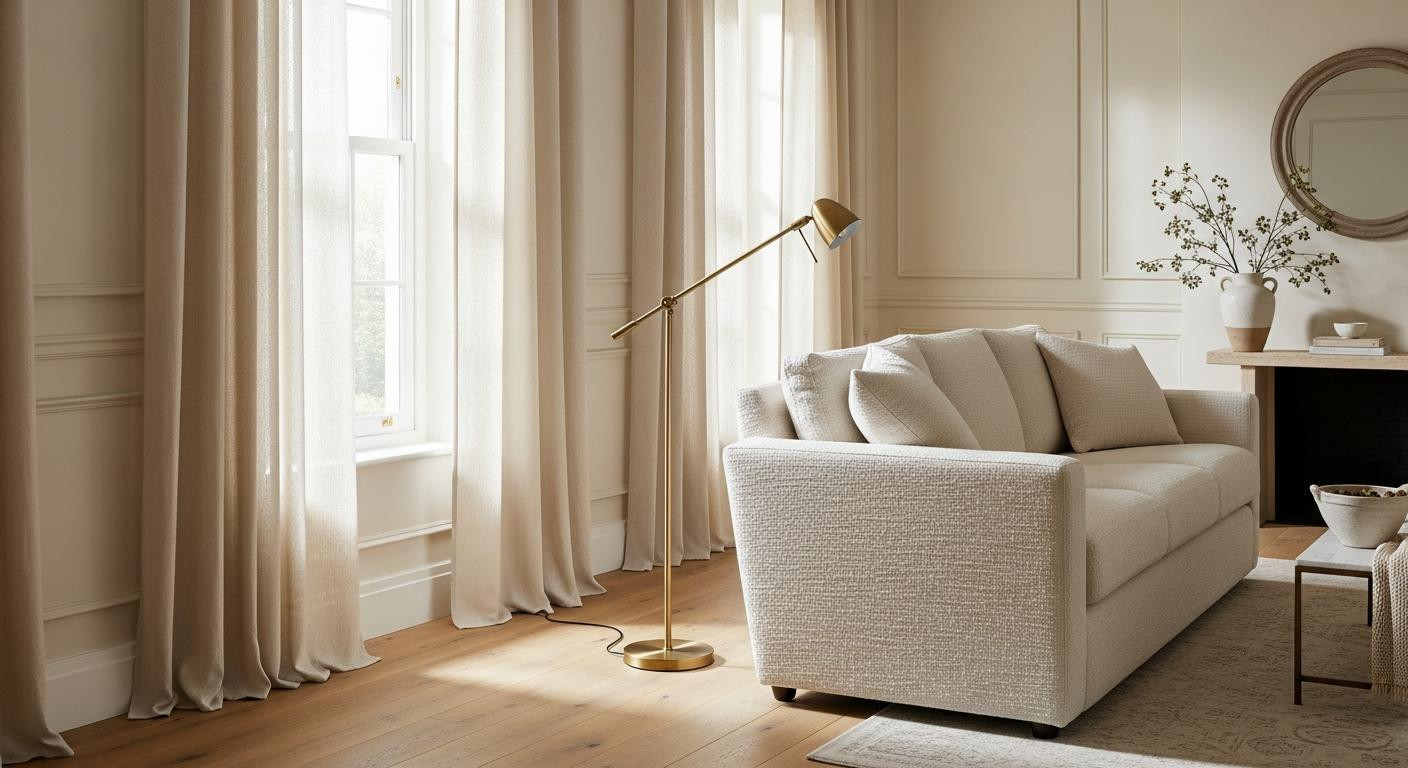
Your living room curtains stop three inches above the oak floor because the Target panels came in 84-inch length and your ceilings measure 8 feet 2 inches. The room photographs like a dorm. Every designer article says “floor-kissing elegance,” but half the Instagram comments under those posts say “mine puddle weird” or “hover looks cheap.” The truth is curtain length works like a decision tree, not a rulebook. Break length that grazes the floor by 1-2 inches wins for 70% of homes. Hover that floats 0.5 inch saves renters whose floors slope. Puddle with 3-4 inches of fabric pooling works in exactly one scenario, and it’s not what Pinterest shows.
Break length makes 8-foot ceilings feel taller if your floors stay level
Break length means the fabric grazes your floor by 1-2 inches, creating a vertical line that pulls your eye upward without collecting dust bunnies. The result is a space that feels 15-20% taller than it measures, according to staging data from HomeLight’s 2025 report showing floor-length curtains boost perceived ceiling height in rooms with 8-10 foot ceilings. But this only works if your room doesn’t have the 0.5-1 inch slope common in pre-1980 construction, where settling foundations create uneven floors across a 10-foot window span.
Measure from your curtain rod to the floor at three points across the window, use the longest measurement, then subtract 1 inch for break. That gives you the panel length you need. And this technique works best with medium-weight linens and cotton blends in the 8-12 oz per yard range that hold their shape without stiffening like cardboard.
The price reality is $35 Target Threshold panels in 95-inch lengths versus $300 custom hemming from a local tailor. If your ceiling height matches standard 84, 95, 108, or 120-inch ready-made sizes, skip the custom route. The linen texture catches morning light in a way that makes the whole room feel finished, not decorated.
Hover curtains solve the rental problem no one talks about
Why 0.5-inch clearance forgives floor slope
Apartments built before 1990 often have 0.5-1 inch floor variance across a 10-foot span, where one side of your window sits higher than the other. Break length looks perfect on the left, drags on the right. Hover float at 0.5 inch creates a consistent visual line that forgives the unevenness. Find your lowest floor point, add 0.5 inch clearance, and order panels in that length.
This prevents the fabric abrasion that causes fraying by month 18 when cotton drags across tile or hardwood with daily foot traffic. ASID-certified interior designers note that break-length panels in high-traffic rentals show visible wear within 3-6 months, leading to $100-300 deductions from security deposits for fabric damage.
The deposit-protection advantage few renters know about
Hover keeps fabric from touching floors where landlords inspect for scuff marks and dirt accumulation during move-out walkthroughs. Sheers in white or ivory show floor contact stains within 6 months at break length. But hover extends fabric life through lease renewals, saving $80-150 in replacement costs over a 24-month lease.
Design experts featured in Apartment Therapy recommend hover for renters choosing “clean modern” aesthetics combined with practical durability. The caveat is hover only works with stiff synthetics like IKEA’s $20 LILL polyester sheers in 98-inch length or panels with weighted hems that prevent uneven floating. Lightweight cotton hovers for about three weeks before gravity wins and the hem starts sagging in random spots.
Puddle works in low-traffic formal spaces under 200 sq ft
The 3-4 inch rule for intentional luxury
Puddle means 3-4 inches of extra fabric pooling on your floor, not the 6-plus inches that professional organizers with certification warn “flops like deflated laundry.” This creates romantic softness in powder rooms used 12 times per year, formal dining rooms that see holiday meals only, or primary bedroom sitting areas with zero daily foot traffic. The setup requires velvet or heavy linen in the 12-16 oz per yard range that holds sculptural folds instead of collapsing flat.
Your measuring formula is standard length plus 4 inches maximum. Price range runs $300-600 for quality fabric that doesn’t look like wrinkled bed sheets after a month. The velvet texture absorbs light in a way that photographs beautifully but demands maintenance most people underestimate.
Why puddle fails in real life 90% of the time
Pet hair accumulates in the fabric folds, requiring 3-5 vacuuming sessions per week to prevent visible dust buildup according to NKBA maintenance guidelines. Children trip over the extra fabric. The pooled material shows wear from constant movement within 6-8 months in living rooms with 20-40 daily pass-throughs from a family of four.
Lighting designers with residential portfolios note this only photographs well for Instagram. Living with puddle curtains requires either staff or obsessive cleaning habits that most households can’t sustain. The alternative that delivers 80% of the luxury with 10% of the hassle is break-length velvet from West Elm at $129 per panel in their Belgian Flax line that grazes the floor without collecting debris.
The fabric weight that changes everything
Synthetic sheers in polyester blends under 6 oz per yard hold hover shape without drooping, making them ideal for renters who move every two years. Natural linens and cotton blends need break length to avoid the “high-water” stiffness that reads cheap from across the room. And velvet requires puddle to show off the drape quality that justifies its price point, but only in those low-traffic formal spaces we discussed.
Specific examples make this concrete. IKEA LILL sheers at $20 per pair work at hover in 8-foot ceiling apartments. West Elm linen at $129 needs break length in 9-foot spaces. The Shade Store’s custom velvet starting at $299 per panel is designed for puddle installations in 10-foot ceiling formal rooms under 150 square feet.
The spring 2026 trend leans toward “warm minimal” aesthetics that favor break-length linen in ivory and taupe, with over 1 million Pinterest saves showing this setup in aspirational living rooms. The texture holds light without blocking the view, which keeps the space from feeling too busy while adding visual weight where blank walls once dominated.
Your questions about curtain length rules answered
Can I mix lengths in the same room?
Yes, if windows serve different functions. Hover sheers on French doors allow easy open-close access for daily use, while break-length panels on picture windows create drama without interfering with traffic flow. Keep the fabric family consistent with all linen or all synthetic to avoid the cheap contrast that happens when you pair $20 polyester with $150 Belgian flax in the same sightline.
What if my ceilings are 9-plus feet?
Order 120-inch panels minimum for ceilings measuring 9 feet or taller. Break length in tall spaces prevents the stubby proportion that makes rooms feel unfinished, like someone forgot to complete the window treatment. The budget option is two 84-inch panels sewn together with an invisible seam, costing $60 via Etsy alterations versus $400 for true custom lengths from specialty workrooms.
Do I need custom hemming?
Only if standard lengths in 84, 95, 108, or 120 inches don’t match your ceiling height minus 1-2 inches for break or plus 0.5 inch for hover. Most homes fit ready-made sizes from Target, IKEA, or West Elm without alterations. Custom hemming costs $25-45 per panel at local tailors with 3-7 day turnaround, worth the investment if you’re staying 3-plus years and your measurements fall between standard sizes.
It’s Tuesday evening when the ivory linen panels graze the oak floor at exactly 1.5 inches. The fabric holds its line without puddling or floating. The ceiling looks taller than it measured yesterday. Afternoon light filters through without dust shadows collecting at the hem, and the room finally photographs like the House Beautiful spread you saved last March.