
The first thing you notice in the best Modern French Country Bedroom is what’s missing. No matching sets. No obvious theme. Just materials that have earned their place.
These 13 rooms get that balance right. Collected, worn in the good way, and somehow still beautiful.
This Limestone Wall Does More Than Any Paint Could
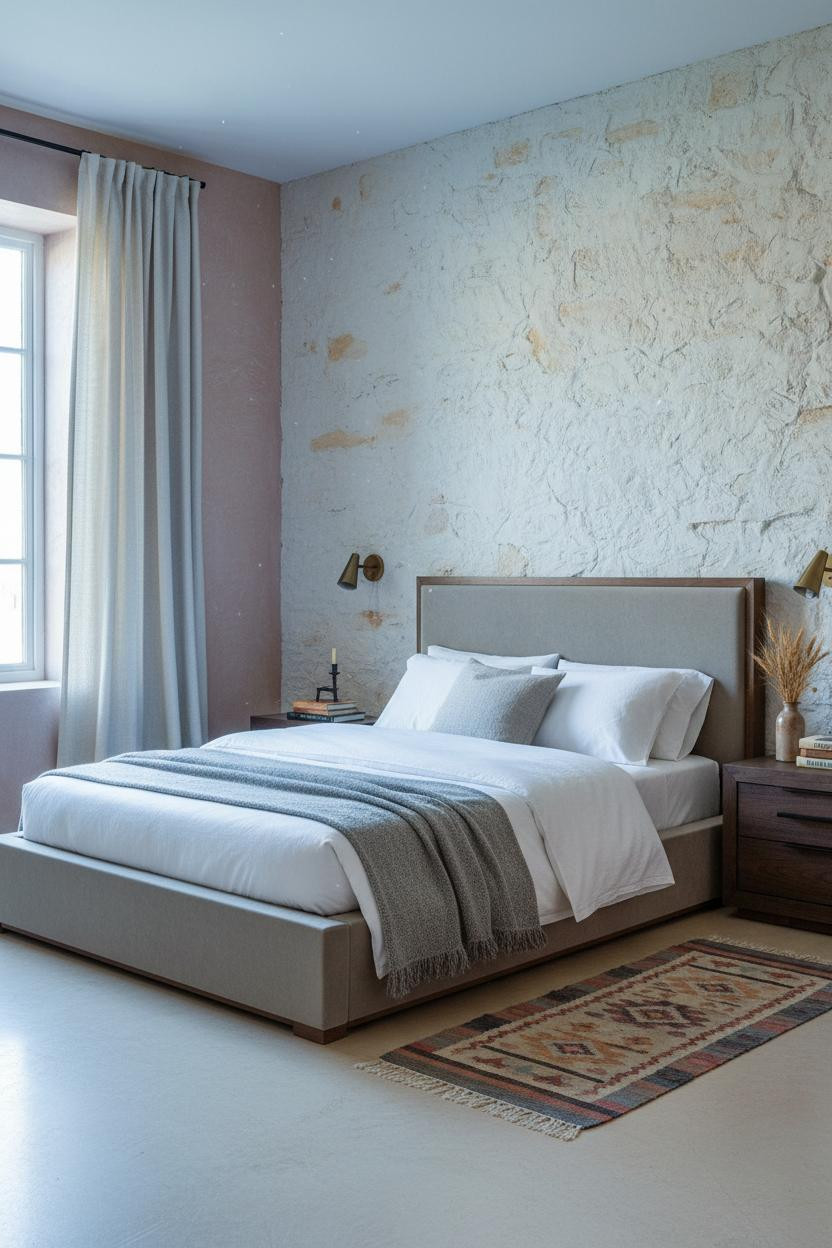


I keep coming back to this one. The texture here does something paint never could.
Why it works: Hand-troweled limestone plaster catches light differently at every hour, so the wall feels almost alive while still keeping the room calm.
The detail to keep: Pair rough plaster with washed linen curtains pooling at the floor. The softness of one makes the hardness of the other feel intentional.
A Stone Arch That Earns Its Place Every Single Morning
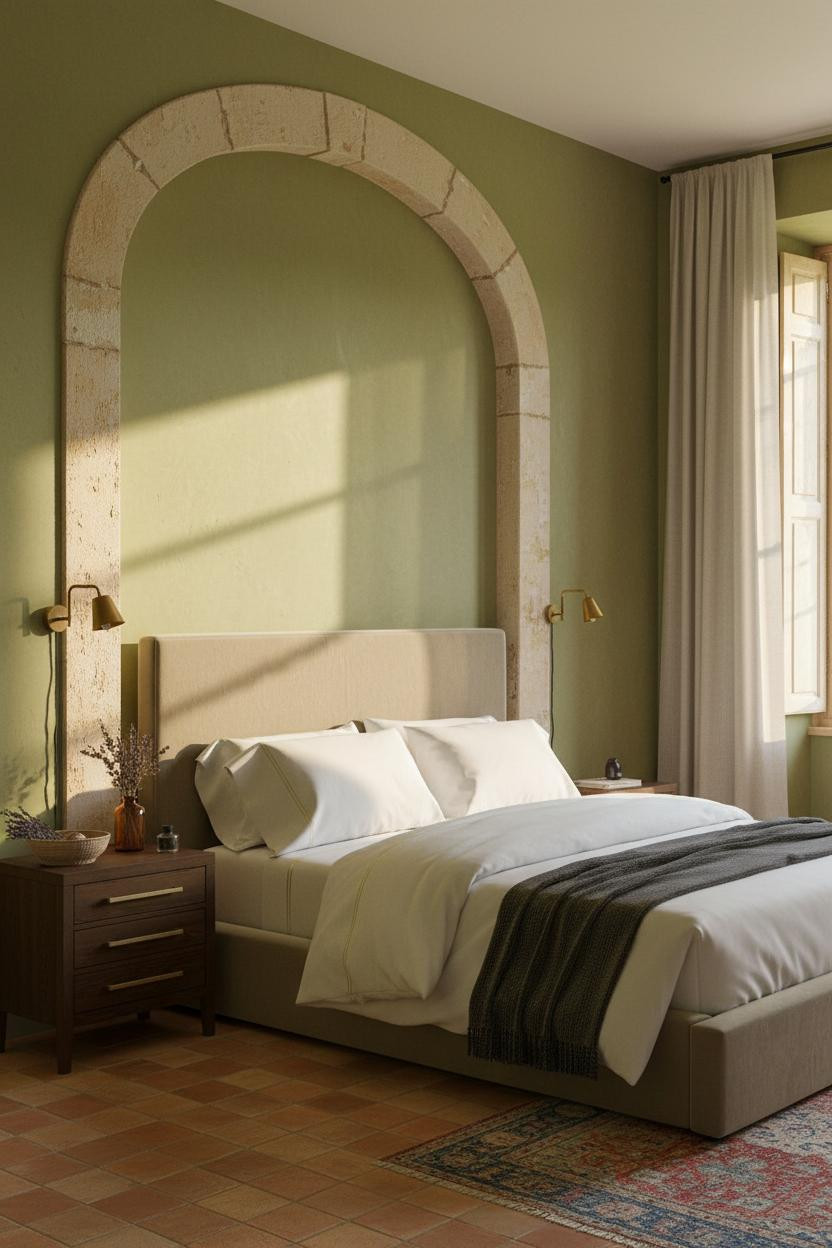


Bold choice. Not every room can carry a raw stone arch. But this one does, and here’s why.
The key is keeping everything else quiet. The aged plaster doorframe with its flaking cream-and-ivory layers creates geometry that anchors the bed without competing with it.
Avoid this mistake: Don’t fill the arch with heavy drapes. Let the stone do the talking and keep textiles loose and unlined.
Worth copying: An overdyed vintage rug beside the bed ties the terracotta floor to the soft moss walls, in a way that feels found rather than purchased.
Why Terracotta Walls Feel Romantic Without Trying
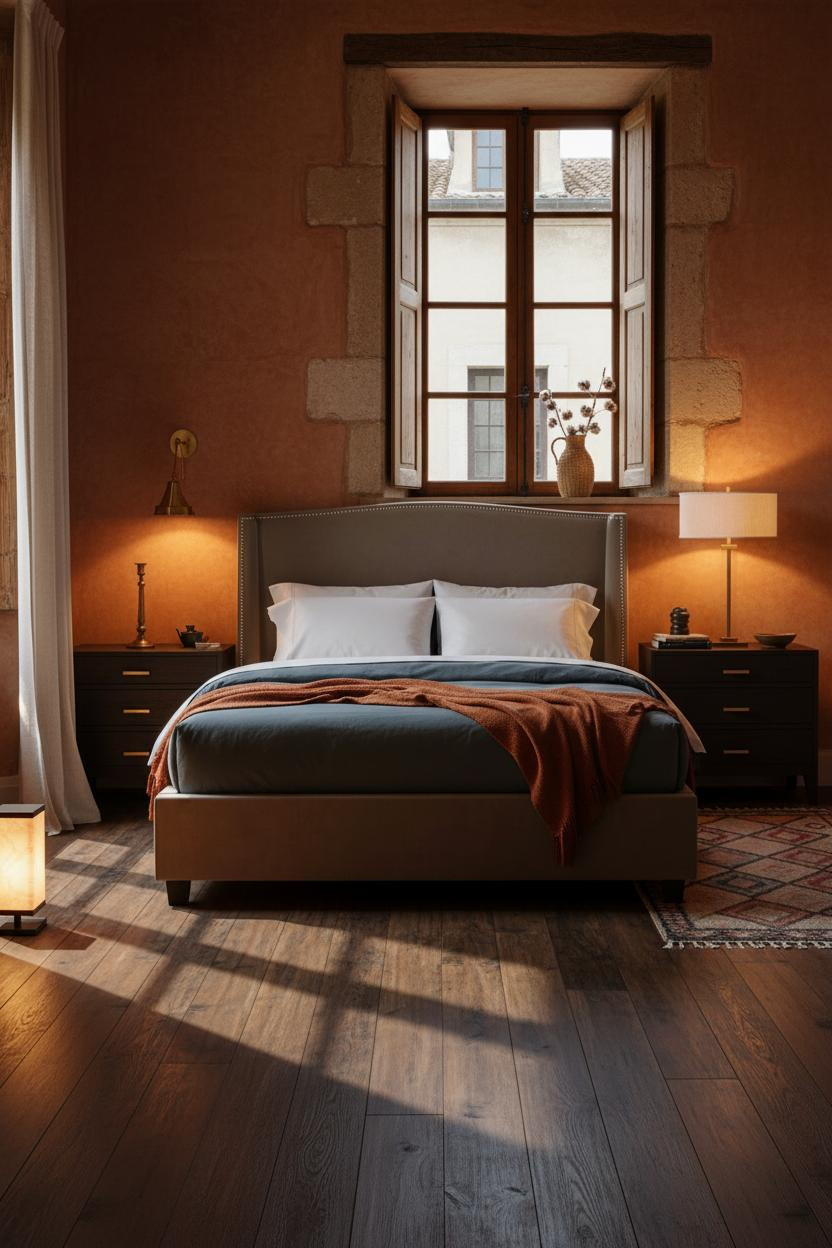

Terracotta gets underestimated. Paired with brass candlestick sconces, it stops feeling earthy and starts feeling Provençal.
What creates the mood: Warm light against a limewash-brushed wall means the color shifts from amber to blush depending on the hour, which keeps the room from feeling static.
One smart swap: Lose the overhead light entirely on this palette. Warm pools from wall sconces are all you need, and the room feels twice as intimate for it.
The Arched Window Room I’d Copy Tomorrow
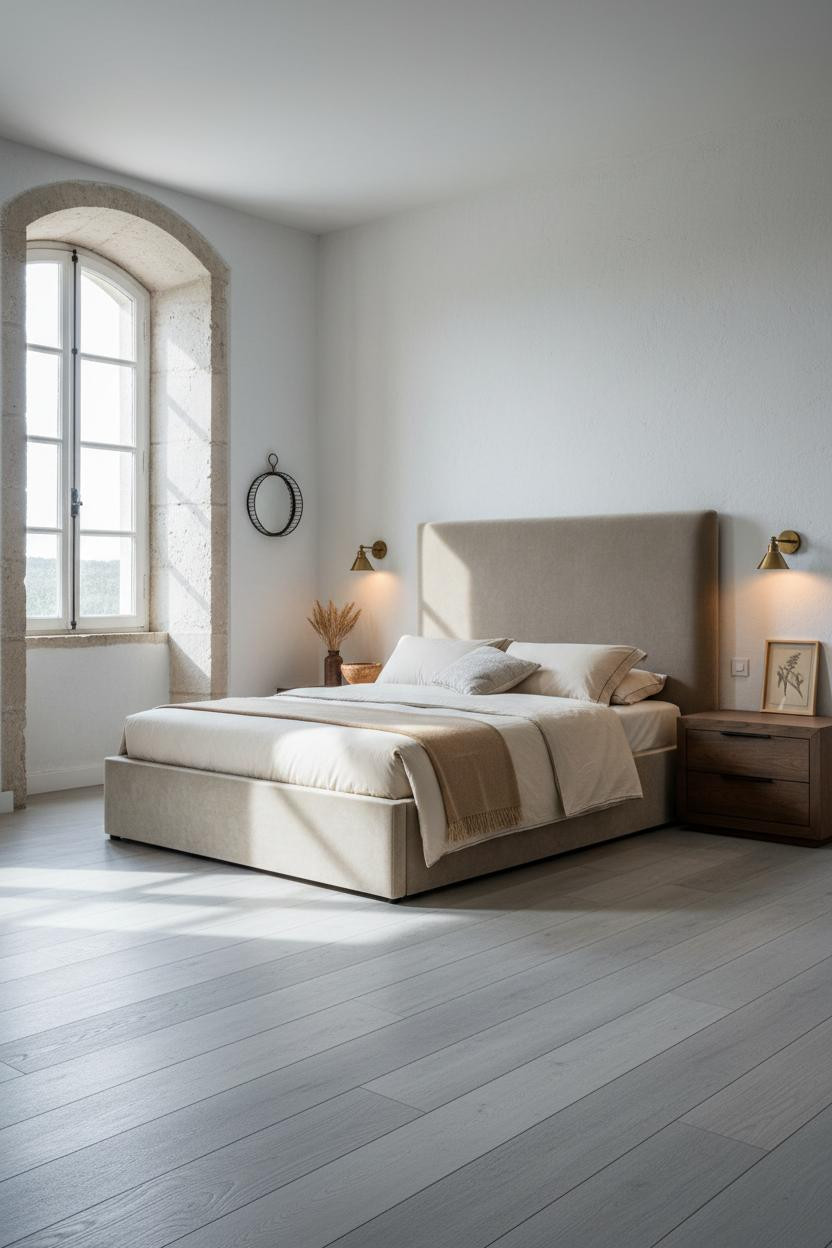

Centering the bed beneath a tall arched window is a commitment. But I’d make it every time.
Why it feels expensive: The hand-carved limestone sill, worn smooth and slightly uneven, gives the room age that no furniture purchase can replicate. That’s the whole trick.
A round iron mirror above the low shelf keeps the far wall from feeling empty. In a pale plaster room, you want one strong silhouette. Just one.
Iron Window Grids That Add Structure Without Weight
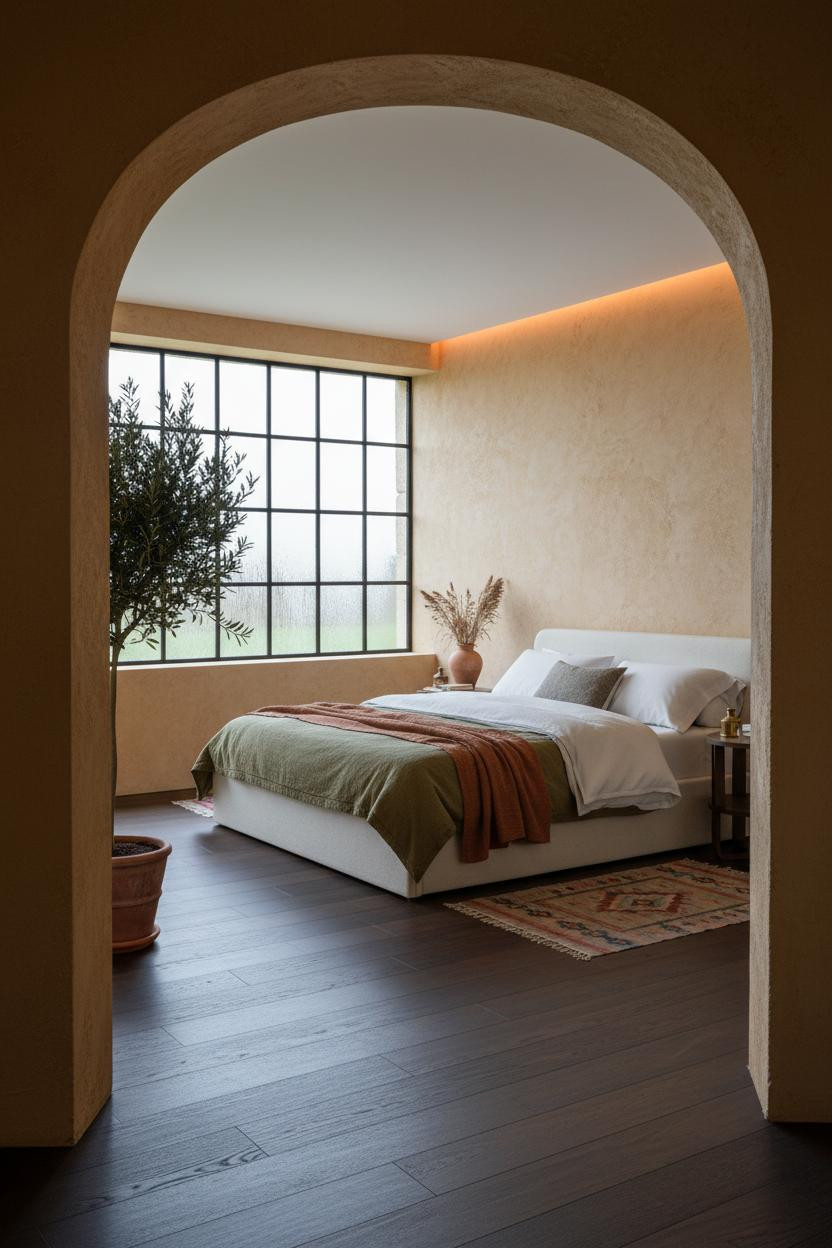


Slender black iron grid windows press against exterior stone and the geometry does something unexpected. The room feels both open and defined.
Why it holds together: Cool grey daylight through the iron frame strikes the amber-ochre plaster wall and creates a contrast that’s warm without being heavy. The two temperatures of light balance each other out.
The finishing layer: A large potted olive tree in the corner softens the industrial edge of the metalwork while still feeling collected rather than decorated.
The Salon-Style Gallery Wall That Actually Works In a Bedroom
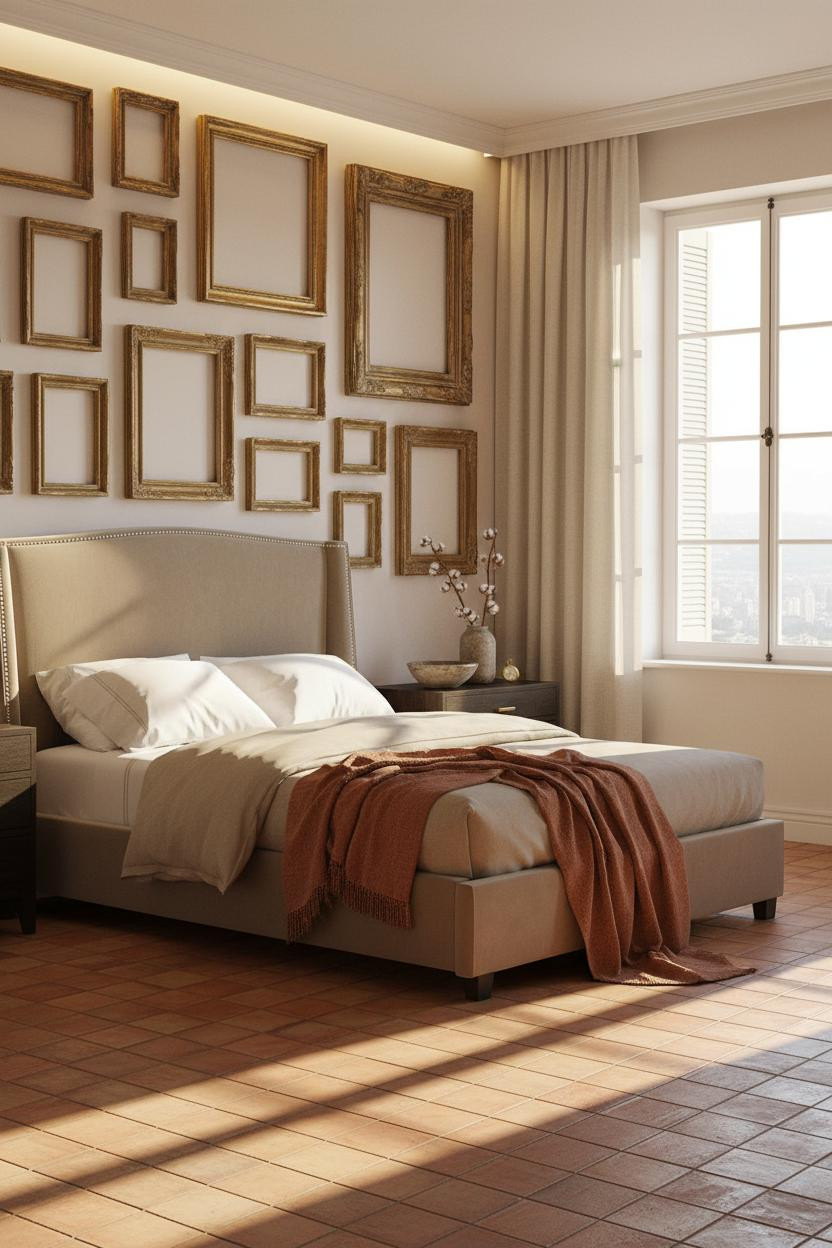
Fair warning. A floor-to-ceiling gallery wall is a lot. But when it works, it really works.
What makes this one different: The frames are mismatched gilded wood with aged gold leaf catching raking light at different angles, so the whole wall reads as a single architectural surface instead of a collection of separate things.
Avoid this mistake: Don’t hang the frames level and evenly spaced. A slight tilt on each one, here and there, is what gives this kind of wall its life. Grid-perfect kills the effect entirely.
Dove Grey Board-and-Batten for the Understated Room
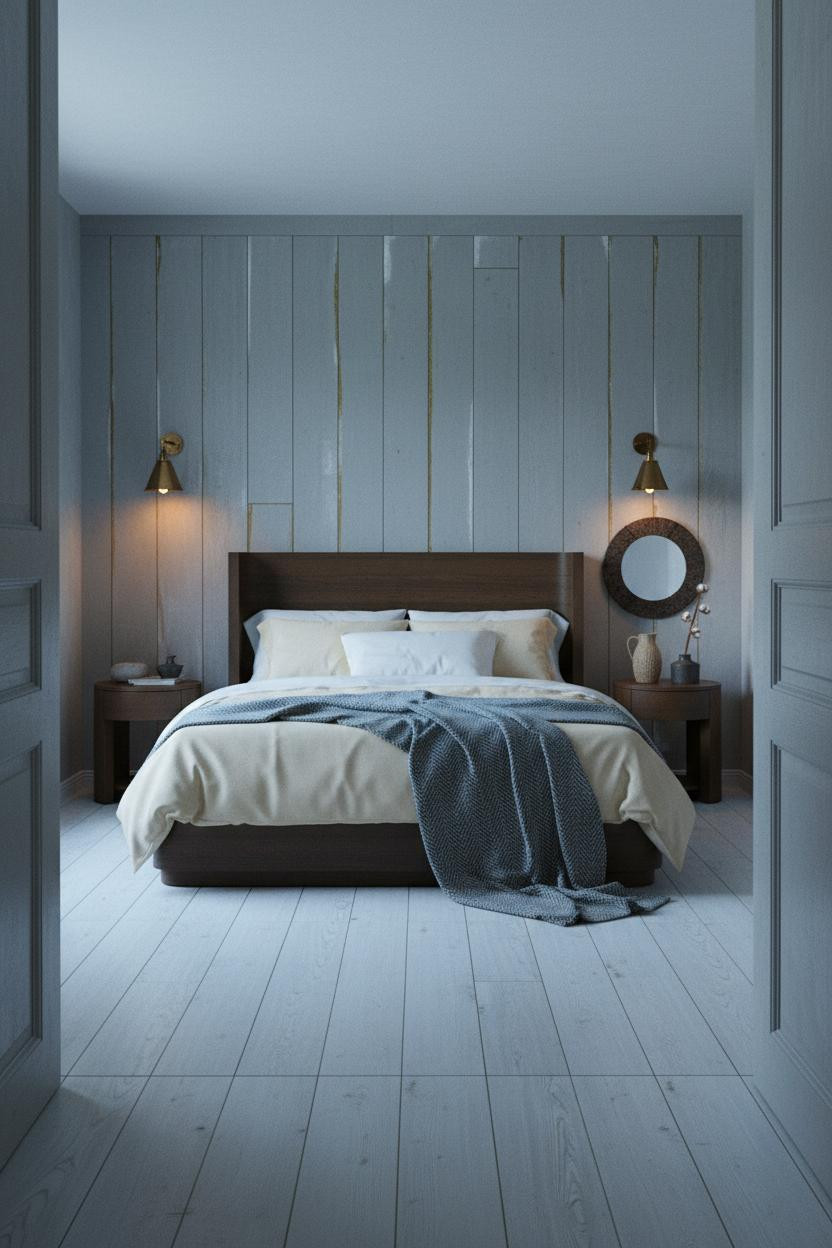

I almost scrolled past this. Glad I didn’t.
What gives it presence: Dove grey board-and-batten with hand-applied limewash lets each vertical board hold its own shadow line, so the wall has rhythm without any fuss. Paired with pale reclaimed wood floors, the room feels calm and cohesive.
Add a steel-blue herringbone wool throw at the foot and the grey palette suddenly has depth. Just enough contrast to keep things interesting.
Wainscoting That Feels Parisian Without the Price Tag
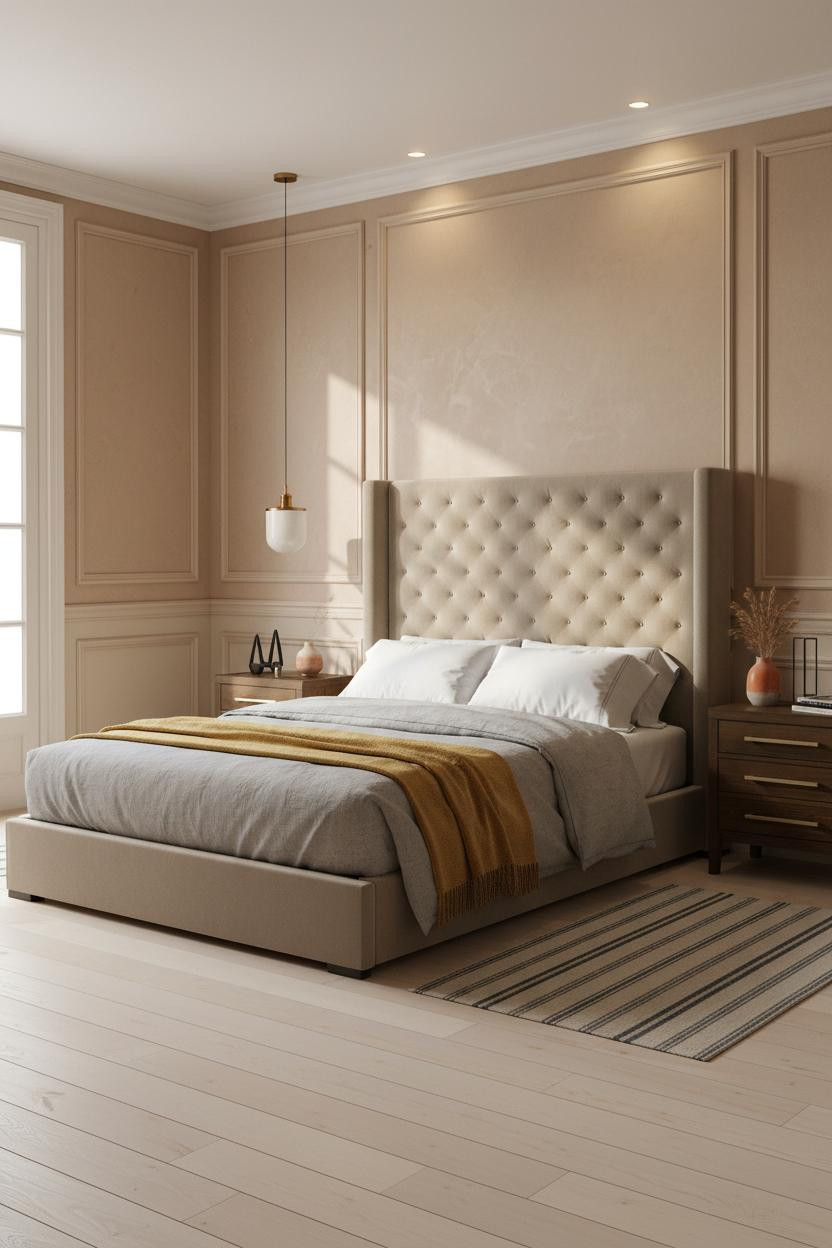

This is the kind of room that makes you want to slow down before you even sit on the bed.
Design logic: Half-height ivory painted paneling with raised moldings catches soft diffused light in a way that smooth plaster never does, giving the room layers of shadow that read as architectural detail.
The smarter choice: Keep the upper wall in warm clay rather than white. It stops the wainscoting from reading too formal and keeps the whole room feeling lived-in and intimate.
Limewashed Walls That Make Arched Windows Feel Inevitable
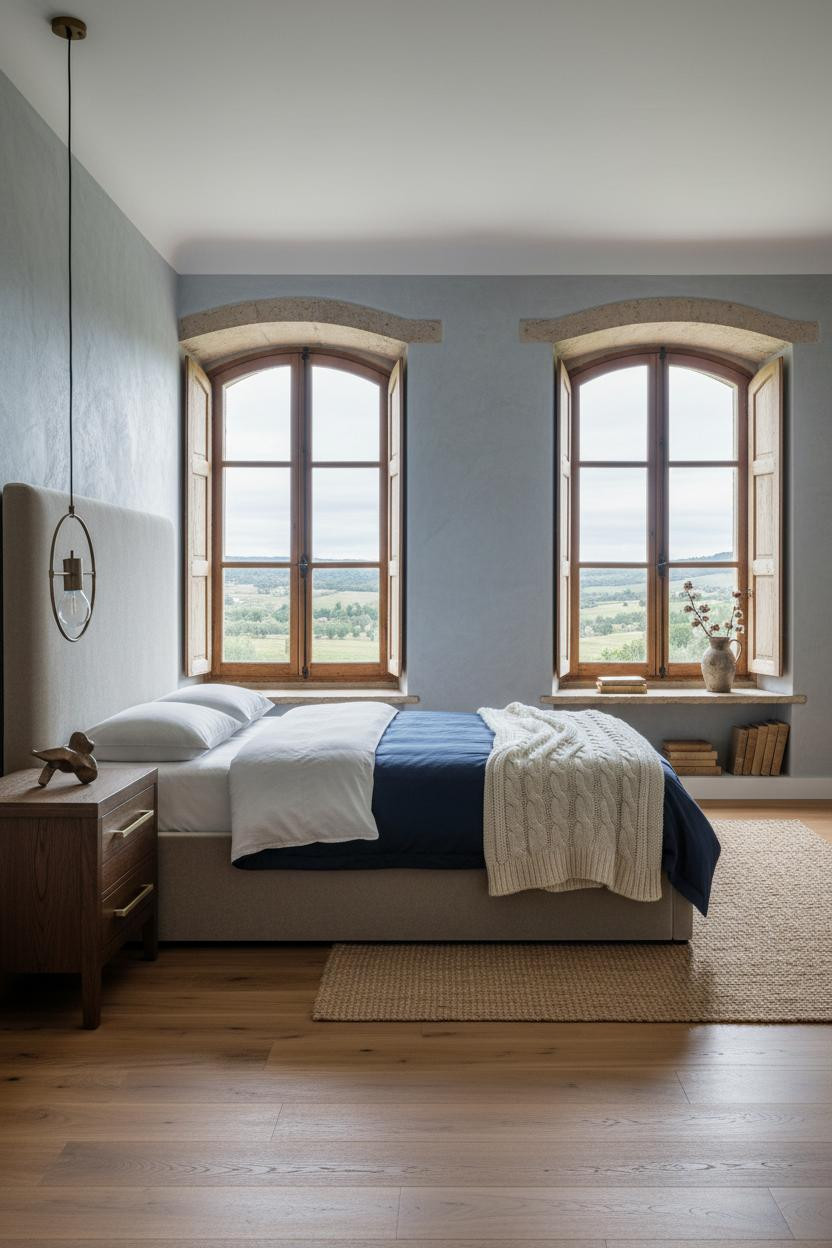
Pale blue-grey limewash on plaster walls is honestly one of the best decisions in the french-country-style-bedroom playbook. The texture does the heavy lifting.
Why the palette works: Cool wall plaster against warm honey oak floors creates a temperature contrast that keeps the room from feeling either too cold or too rustic. It’s a quiet balancing act.
Where to start: Anchor the bed with a loosely woven natural jute runner beside it. The raw texture bridges the gap between the smooth plaster and the warm timber underfoot.
A Stone Alcove Built for Slow Mornings
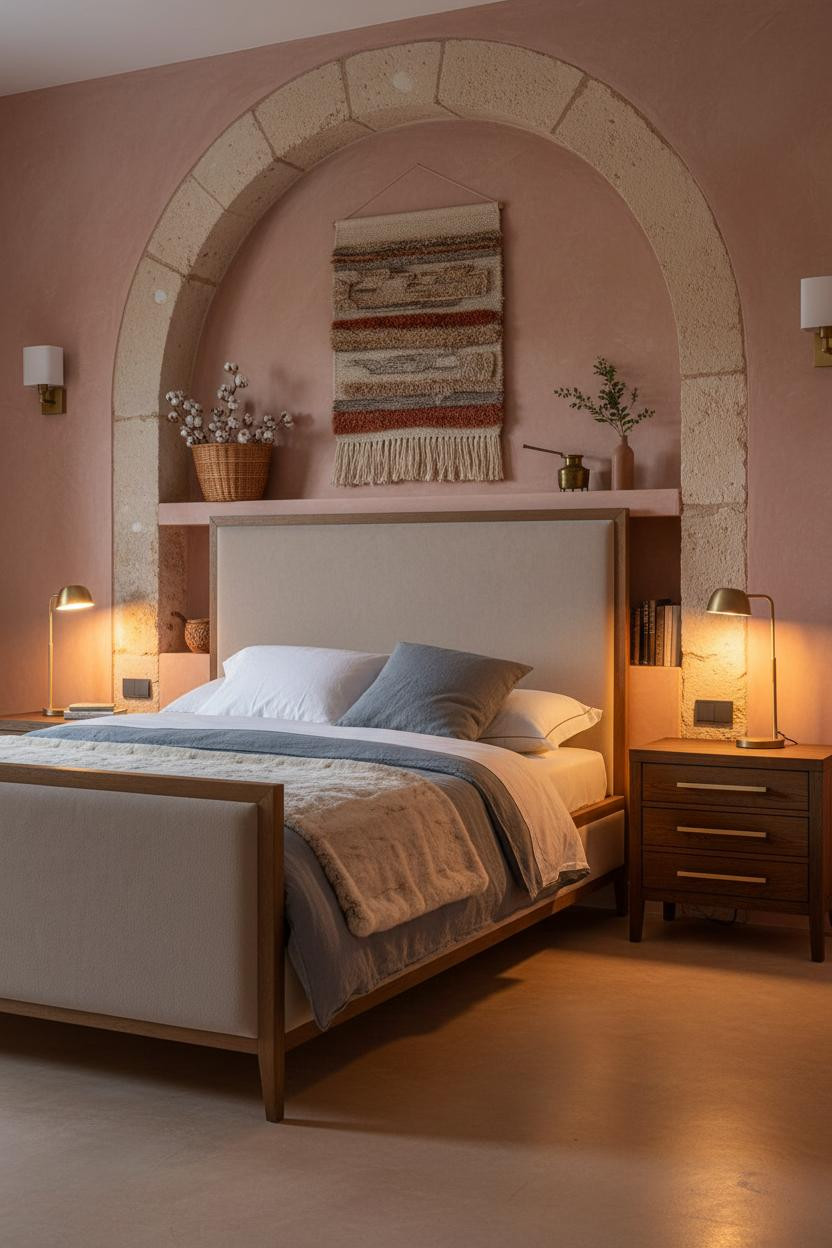

Having a built-in stone alcove beside the bed changes how you actually use the room. It’s not just storage. It’s a reason to sit still.
What carries the look: The rough-hewn limestone surround with its hand-plastered interior holds objects in soft shadow, so styled pieces on the shelf look considered rather than cluttered, especially with warm sconce light pooling across them from the side.
Pro move: Keep the alcove shelf to three objects max. A clay bottle, a dried stem, an aged brass inkwell. Nothing too precious.
How a Limestone Fireplace Anchors the Whole Room
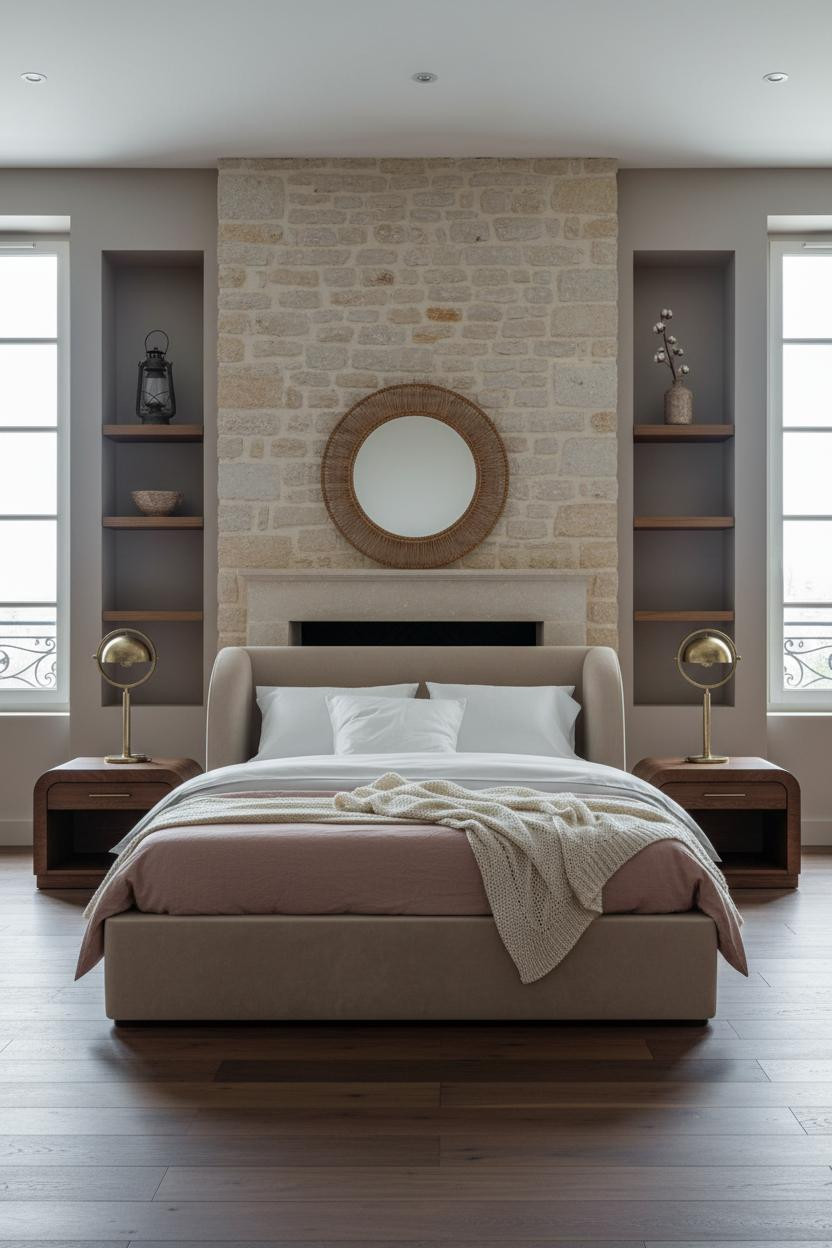


This one is divisive. A fireplace in the bedroom feels indulgent, and it absolutely is.
The real strength: Hand-laid ivory and pale grey limestone blocks catch raking light across every mortar joint, which means the surround reads as texture rather than just mass. It doesn’t overwhelm the room because it’s not trying to.
What to borrow: The flanking recessed natural oak shelving does real work here. It scales the stone down and gives the room somewhere to breathe on either side of it.
Whitewashed Paneling for the Cottage-Refined Look
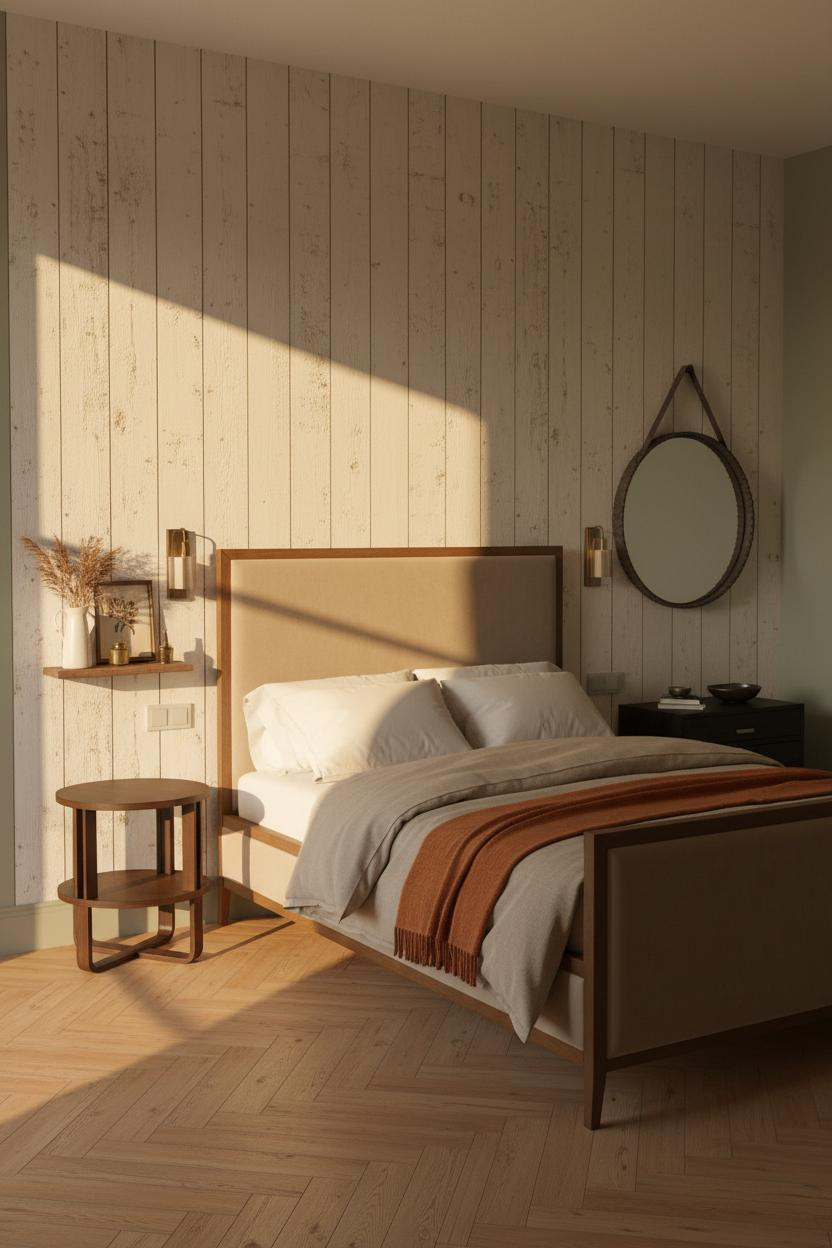
This room somehow pulls off two things at once. Rustic and refined. And it makes both look easy.
Why it looks custom: Floor-to-ceiling whitewashed shiplap paneling in cream and pale sage catches late afternoon light across every weathered groove, while the herringbone parquet below gives the room an order that the paneling deliberately resists.
The easy win: A burnt orange mohair throw draped across the foot breaks the neutral palette in a way that feels like it’s been there forever. One warm accent. That’s all it needs.
Exposed Oak Beams That Make Every Ceiling Feel Like Architecture
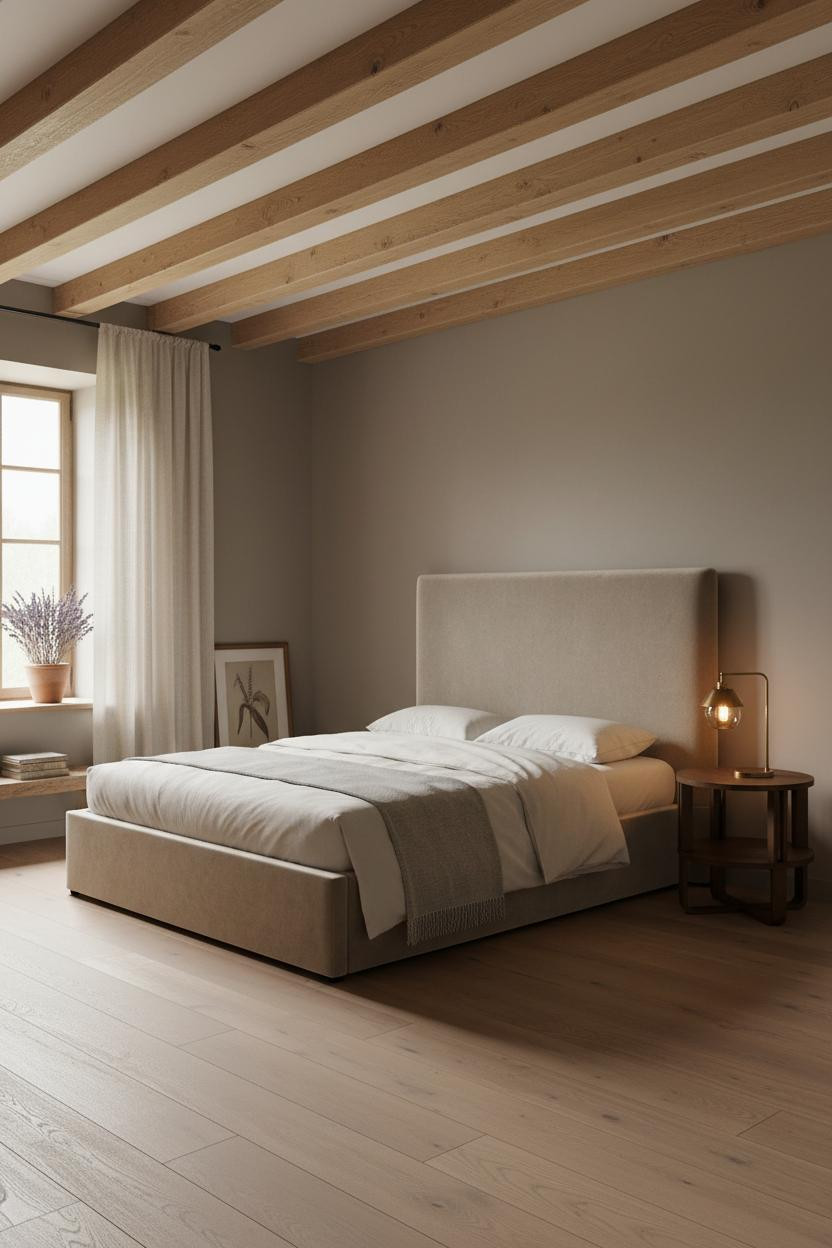
Exposed honey oak beams are, admittedly, a big ask if you’re not already working with old bones. But when they’re there? Don’t touch them.
Where the luxury comes from: The hand-planed grain of substantial oak beams catches morning light filtered through linen curtains, pulling warmth into the upper half of the room while the bleached hardwood floor keeps the lower half airy and open.
What to copy first: A terracotta pot of dried lavender on the windowsill and a botanical print leaning against the baseboard. Not hung. Leaning. The informality is the whole point.

Our #1 Pick
Saatva Classic Mattress
America’s best-selling online luxury innerspring. 365-night trial, lifetime warranty, free white glove delivery.
Shop Saatva Classic
The Foundation Of Every Beautiful Bedroom
A room this considered deserves a mattress that holds up its end of the deal. And that part, honestly, starts before the linen duvet and the dried lavender.
The Saatva Classic runs dual-coil support beneath a breathable organic cotton cover, with a Euro pillow top that feels right whether you’re sleeping or just reading in the grey light of a Sunday morning. It doesn’t trap heat. It doesn’t sag. It stays.
Walls get repainted. Throws get swapped out. The bed is the one thing that carries the room year after year. Start there.

The rooms that stay with you are the ones where nothing looks accidental and nothing looks purchased all at once. Get the foundation right, and the rest of it follows naturally from there. Good design ages well because it’s made well.