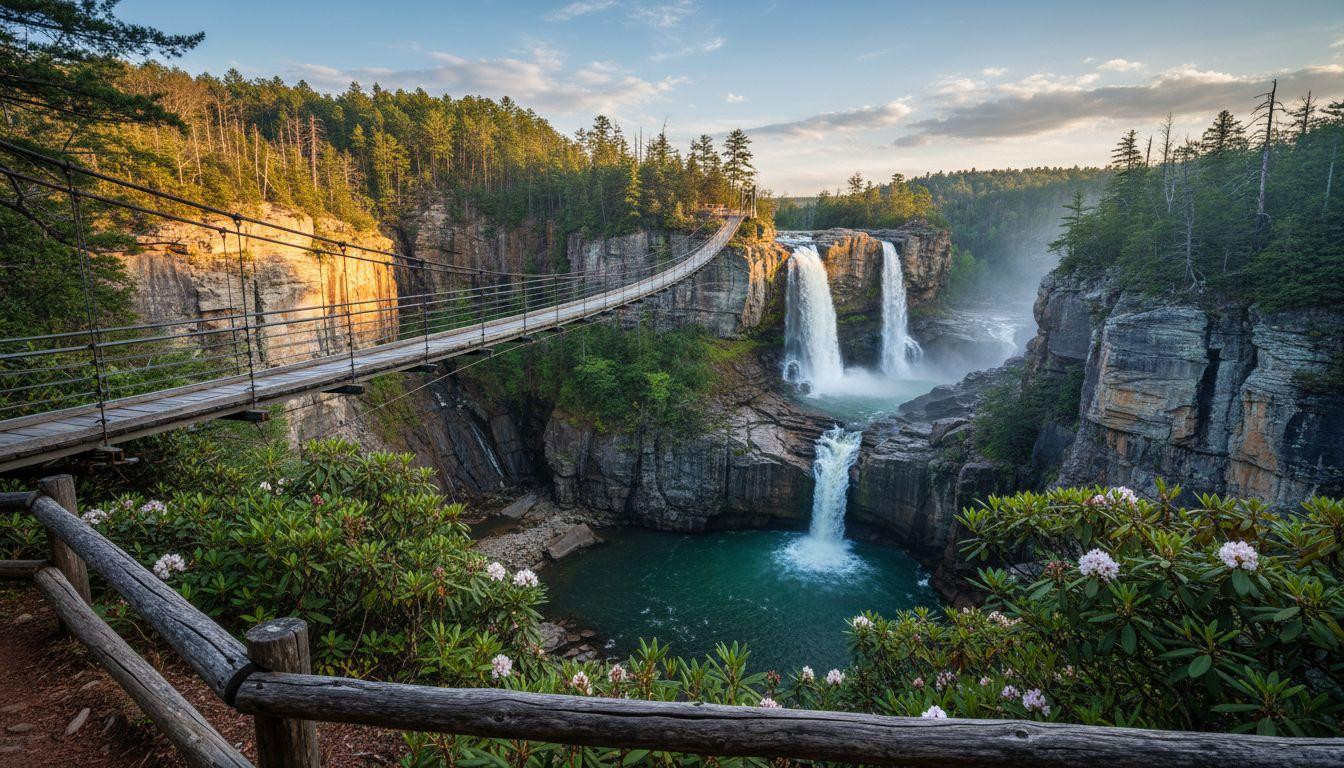
Havasu Falls sold out its 2026 permits in February. All 350 daily spots gone within hours. The lottery drew 340,000 applications for a waterfall you reach after a 10-mile desert hike and $400 in fees. Two hours from Atlanta, Tallulah Gorge drops five waterfalls through 1,000-foot granite walls. The gorge floor opens to 100 visitors daily. First-come permits. Free. No lottery. No helicopter.
Why Havasu became impossible to visit
The Havasupai Tribe manages 350 permits per day. Demand hit 340,000 applications in 2025. Success rate sits below 1%. Winners pay $100-150 reservation fees plus $17 entry. Camping adds $25 per night. The 10-mile trail gains 2,450 feet through Arizona desert. Summer temperatures reach 110°F. Helicopter shuttles cost $150 round-trip when available.
Planning starts a year ahead. Applications open each February for the following season. Most applicants never see the falls. The system favors persistence over spontaneity. Weekend warriors from Phoenix drive 200 miles hoping for cancellations. Few succeed.
What Tallulah Gorge delivers instead
The Tallulah River carved a canyon nearly two miles long through northeast Georgia. Five waterfalls cascade 500 vertical feet. Tallulah Falls drops first. Oceana follows. Then Tempesta, Bridal Veil, and Ledge. The gorge walls rise 1,000 feet. Granite cliffs frame every view. A suspension bridge spans 80 feet above the rapids.
The actual permit process
Tallulah Gorge State Park issues 100 floor permits daily at the Jane Hurt Yarn Interpretive Center. No advance reservations. No lottery. Visitors arrive when the center opens. Permits distribute first-come until gone. Weekend sellouts happen by 8:15am during peak season. Weekdays last longer. Groups max at 20 on weekends, 30 on weekdays. The permit costs nothing. Park entry runs $5 per vehicle.
Water releases close floor access certain days. Georgia Power schedules releases April 4, 5, 11, and 12 in 2026. Flow hits 500-700 cubic feet per second. The river becomes Class V whitewater. Hiking stops. Call ahead before driving. Peregrine falcons nest on cliff faces February through June. Climbing restrictions protect nesting sites.
Five waterfalls versus one
Havasu concentrates visitors at a single 100-foot drop. Tallulah spreads the experience across five distinct falls. The Hurricane Falls Loop connects them all. Hikers descend 1,000 stairs to reach the floor. The trail rates strenuous. Good physical condition required. Children under 8 cannot obtain permits. Dogs stay banned from floor trails. Wet granite turns slick after rain.
Sliding Rock sits midway through the loop. Natural granite chutes funnel water into turquoise pools. Swimmers slide 20-30 feet down polished stone. The pools stay cool year-round. Spring runoff peaks April through May. Flow averages 35-40 cubic feet per second outside release days. For more spring-fed swimming holes, Missouri’s Ozark systems offer similar clarity at higher volumes.
The cost difference that matters
Havasu Falls trips average $400-800 per person. Tallulah costs $5 for parking. Permits stay free. Camping at Tallulah runs $30-40 per night at state park sites. On-site cabins range $125-185. Nearby towns like Clayton and Blue Ridge offer lodging $150-300. No helicopter fees. No lottery anxiety. No year-advance planning.
Atlanta sits 90 miles south. The drive takes two hours on weekdays. Traffic adds 30 minutes Friday afternoons. Greenville, South Carolina lies 60 miles east. Interstate access beats Havasu’s remote Supai Village location. Gas costs from Atlanta run $15-20 round-trip. Meals in Tallulah Falls cost less than remote Arizona pricing. A full day trip totals $50-100 per person including food.
The Great Smoky Mountains draw 12 million visitors annually 120 miles north. Tallulah sees roughly 500,000. The gorge stays quieter. Weekday mornings offer near-solitude on rim trails. Floor permits cap crowds naturally. No reservation chaos. No sold-out seasons stretching months ahead.
When spring makes the difference
April and May bring peak waterfall flow to Tallulah. Recent rain boosts volume. Morning mist clings to granite walls. Rhododendrons bloom along rim trails. Temperatures range 60-75°F. Humidity stays moderate. Arizona desert heat hits 90°F by May. Havasu’s waterfalls flow year-round from springs, but the hike becomes brutal summer through early fall.
Tallulah’s suspension bridge catches sunrise around 7am in early May. Light hits the eastern gorge wall first. Shadows retreat slowly. The river reflects gold for maybe 20 minutes. Most visitors arrive after 9am. Dawn belongs to early risers. The interpretive center opens at 8am. Permits distribute then. Arriving at 7:30am guarantees floor access most weekdays.
Your questions about Tallulah Gorge answered
How hard is the gorge floor hike really
The descent covers 1,000 stairs. Knees take the impact. Ascent requires cardiovascular fitness. Round-trip takes 2-3 hours at moderate pace. Sliding Rock adds 30 minutes. The trail stays well-maintained. Handrails line steeper sections. Wet conditions increase difficulty significantly. Park staff recommend good hiking shoes. Flip-flops fail on wet granite. Bring water. No facilities exist on the floor.
What makes this different from other Georgia waterfalls
Tallulah combines vertical drama with accessibility. Amicalola Falls drops 729 feet but offers only overlook viewing. Cloudland Canyon requires similar stair counts but lacks swimming access. Tallulah permits floor exploration. The suspension bridge provides unique perspective. Karl Wallenda walked a tightrope across the gorge in 1970. The towers still stand. History layers onto geology here.
How does this compare to western gorges
Black Canyon in Colorado drops 2,000 feet but permits only rim hiking. Grand Canyon requires multi-day backpacking for floor access. Tallulah delivers comparable visual scale in a day trip. The 1,000-foot walls rival anything east of the Mississippi. For Appalachian mountain towns with similar accessibility, the Blue Ridge region offers dozens within two hours. None match Tallulah’s gorge depth.
The last visitors leave around 4pm most days. The gorge grows quiet. Rapids echo off granite walls. Shadows fill the canyon floor. The suspension bridge sways empty. Havasu’s lottery winners plan trips a year out. Tallulah takes a morning decision and a two-hour drive. Same waterfalls. Same granite walls. Different access entirely.