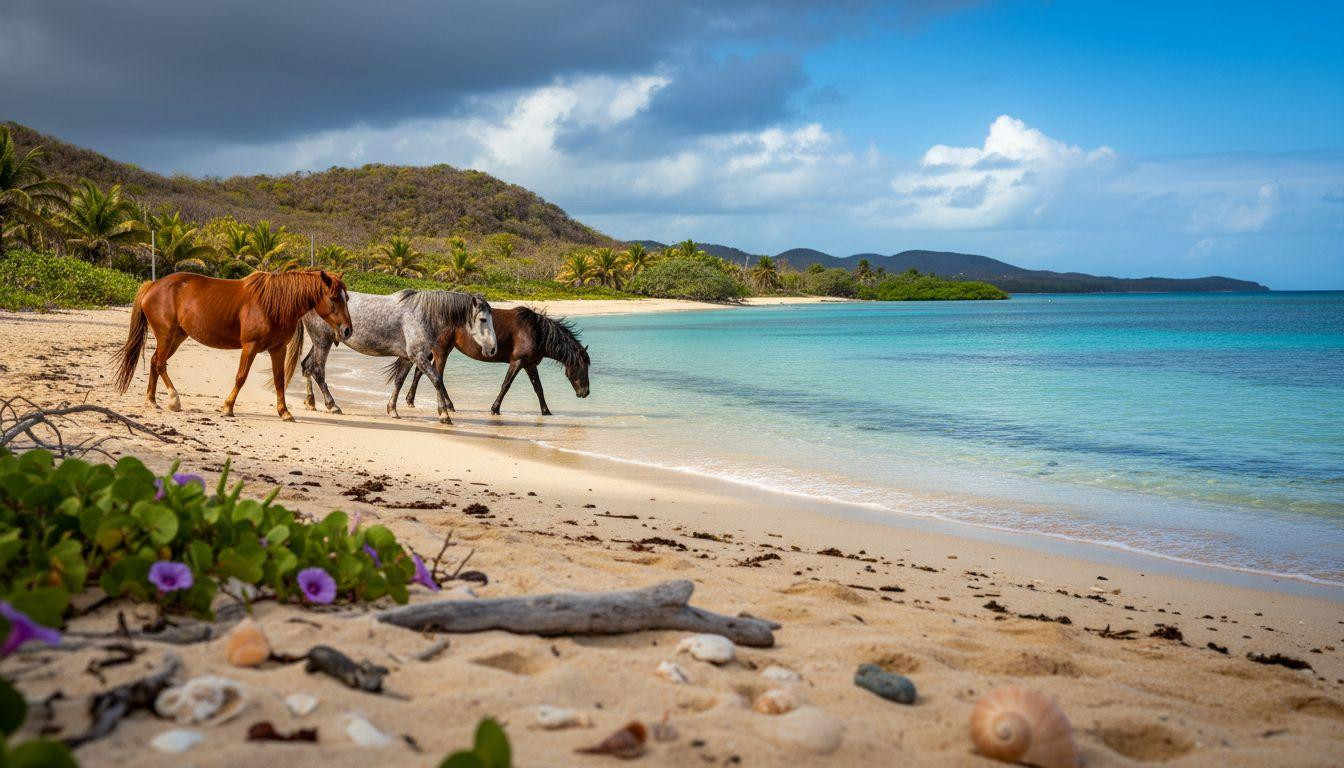
Twenty-three miles of Caribbean water separate Vieques from mainland Puerto Rico. This distance creates something remarkable: beaches where turquoise shallows stretch uninterrupted, wild horses wander golden arcs at dawn, and December visitor counts stay below 500 daily. The former U.S. Navy bombing range has transformed into a 17,000-acre national wildlife refuge, protecting five distinct beaches that offer what most Caribbean destinations have lost.
Ferry schedules limit daily arrivals. Flight capacity restricts island access. These barriers preserve what development destroys elsewhere.
Sun Bay: The golden crescent where refuge meets civilization
Sun Bay curves for one mile along Vieques’ south coast. Golden sand meets water so clear you can count fish at 30-foot depths. December temperatures hold steady at 81°F, with gentle trade winds creating perfect conditions for extended swimming sessions.
Wild horses appear most mornings between 6:00-7:30 AM. The current herd numbers approximately 850 animals, descendants of Spanish colonial stock. They approach the eastern shoreline seeking freshwater seeps that emerge near the mangrove edges.
What makes Sun Bay essential
This remains Vieques’ only beach with full facilities. Restrooms, showers, picnic tables, and parking accommodate day visitors. A small restaurant operates December-March, serving fresh catch and traditional mofongo. The $5 parking fee supports refuge maintenance and trail improvements.
December advantages here
Water visibility peaks during dry season months. Rainfall drops to just 3.5 inches in December, compared to 6 inches in summer. Morning mist creates ethereal conditions for photography, lifting by 8:00 AM to reveal crystal-clear water extending to the horizon.
Red Beach: Where coral sand meets wild surf
Red Beach earns its name from crushed coral fragments mixed with golden sand. This 800-meter stretch faces southeast, catching Atlantic swells that create consistent 2-3 foot waves. December brings optimal surfing conditions with offshore morning winds.
The coral content gives sand its distinctive rusty tinge. Wave action continuously grinds reef fragments, creating new coral sand daily. This natural process has operated for centuries, building beaches that appear nowhere else in Puerto Rico.
Active water experiences
Surfing works best during December’s northeast swell season. Body surfing and boogie boarding suit most skill levels. The reef 200 feet offshore creates protected snorkeling areas during calm periods. Water temperature stays near 79°F throughout winter months.
Wild character preserved
No facilities exist at Red Beach. The unpaved access road requires careful navigation during rain. This isolation keeps visitor numbers low while maintaining authentic refuge character. Similar untouched Caribbean beaches become increasingly rare as development spreads.
Black Sand Beach: Volcanic drama in Caribbean blue
Vieques’ volcanic origins appear dramatically at Black Sand Beach. Dark basalt sand contrasts sharply with turquoise water, creating visual drama unmatched elsewhere in the Caribbean. The 400-meter beach requires a 10-minute hike through dry forest.
Geological surveys confirm this sand originates from Mount Pirata, Vieques’ highest point at 987 feet. Wave action erodes volcanic rock, creating the fine black particles that give this beach its character.
Unique photographic opportunities
Black sand retains heat from morning sun, creating comfortable walking surfaces. The color contrast produces exceptional photography conditions, especially during golden hour. Professional photographers frequently choose this location for Caribbean wedding shoots.
Swimming considerations
Strong currents affect the western end of Black Sand Beach. Swimming stays safer near the center where a natural rock barrier creates calmer conditions. Water clarity reaches 25 feet despite the dark sand, revealing healthy reef systems just offshore.
Caracas Beach: Family sanctuary with pristine snorkeling
Caracas Beach offers Vieques’ calmest waters in a horseshoe-shaped cove. The 600-meter beach features white sand and gentle waves rarely exceeding one foot. December conditions create ideal family swimming with water temperatures near 80°F.
Coral gardens begin just 50 feet from shore. Green sea turtles frequent these reefs, especially during December-February feeding seasons. Hawksbill turtles appear regularly, though in smaller numbers than greens.
Marine life encounters
Snorkeling here reveals healthy coral systems rarely found near populated areas. Brain coral formations reach 8-10 feet in diameter. Schools of parrotfish, angelfish, and sergeant majors populate the reef throughout daylight hours.
Practical family features
Caracas provides the only paved road access among refuge beaches. Standard rental cars handle the approach easily. Natural shade from sea grape trees creates comfortable areas for extended beach days. Caribbean lagoons with similar family appeal require much longer travel times.
Mosquito Bay area: Where beaches access bioluminescent magic
Mosquito Bay holds the world’s brightest bioluminescent waters. The bay’s beaches provide daytime access to mangrove ecosystems while serving as launch points for evening kayak tours. December’s new moon periods create optimal viewing conditions.
Dinoflagellate populations reach concentrations of 720,000 per gallon, creating the blue glow when disturbed. Recent studies confirm brightness levels 3-4 times higher than other bioluminescent locations worldwide.
Evening tour experiences
Kayak tours operate December 15-31 with 7:30 PM and 9:00 PM departures. Tour operators limit groups to 12 people maximum, maintaining the intimate experience. Costs average $65 per person for 90-minute tours including equipment.
Daytime mangrove exploration
The bay’s mangrove channels offer excellent birding opportunities. Brown boobies, frigatebirds, and cattle egrets nest in protected areas. Guided nature walks operate mornings at 8:00 AM, focusing on ecosystem relationships that support bioluminescence.
Your questions about Vieques beaches answered
How do ferry schedules affect beach access?
Ferries from Ceiba operate every two hours from 4:30 AM to 8:30 PM. The 35-minute crossing costs $2 each way for passengers, $15 for vehicles. December schedules add extra weekend departures due to holiday demand. Advanced reservations are recommended for vehicle transport during peak periods.
What makes these beaches less crowded than other Caribbean destinations?
Access limitations naturally control visitor numbers. Ferry capacity restricts daily arrivals to approximately 1,500 passengers. Flight options remain limited to small aircraft from San Juan and Ceiba. These factors keep beach visitor counts at 10-15% of similar destinations like other Caribbean islands with direct flights.
How do December conditions compare to other seasons?
December offers optimal beach weather with average temperatures of 83°F and minimal rainfall. Trade winds provide natural cooling while maintaining calm sea conditions. Water visibility peaks during this dry season, reaching 40-50 feet at most locations. Hurricane risk drops to zero, unlike summer months when tropical systems regularly affect the region.
Morning mist lifts off turquoise shallows as wild horses drink from tide pools. December sunlight filters through palm fronds, casting moving shadows on sand that shifts from gold to silver with each gentle wave. This is Vieques in winter: Caribbean perfection preserved by distance, protected by access limits that keep crowds away while maintaining the magic that draws travelers back year after year to these rare island sanctuaries where time moves differently.