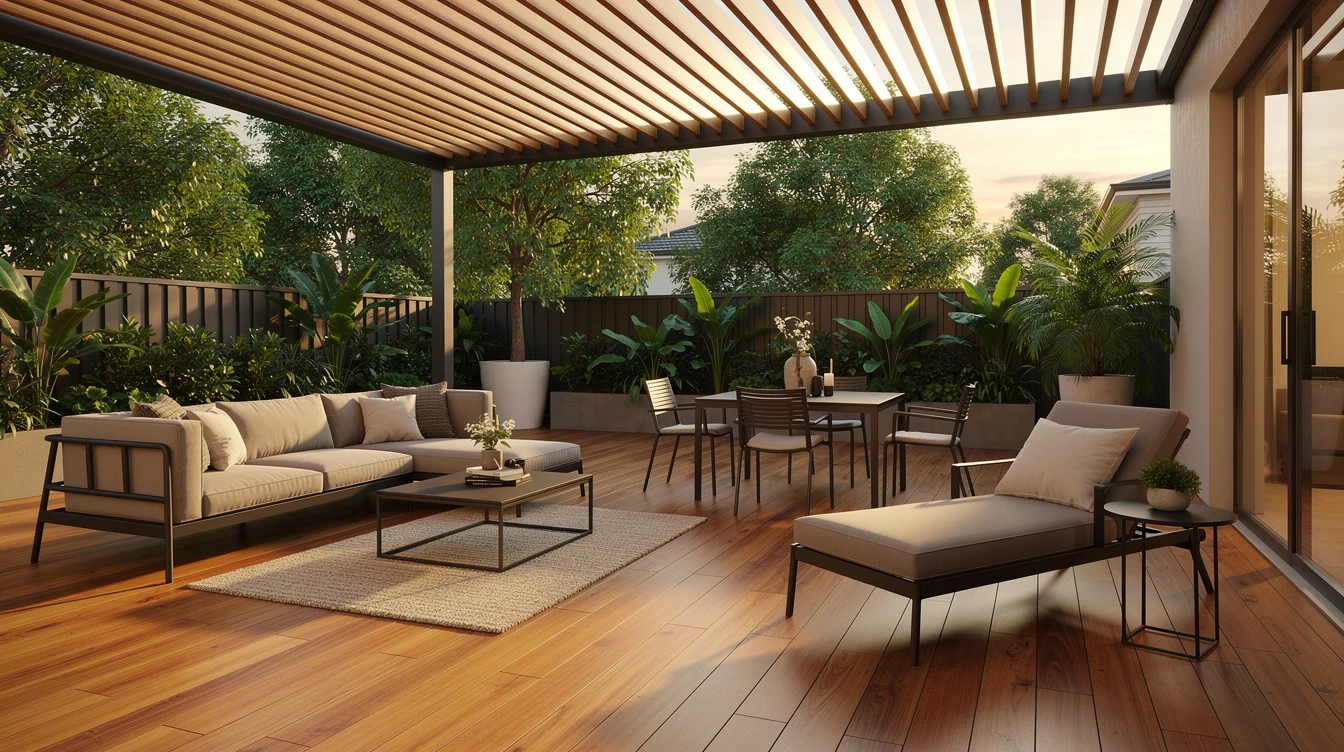
My backyard was a graveyard of gray composite, plastic chairs, and one sagging string of Edison bulbs. I spent three summers pretending it felt finished.
In 2026, designers are making the same call I finally did: the “one-big-deck + gray-everything + plastic furniture” formula is out. Warmth, zoning, functional covers, and integrated systems are in. Here’s what’s actually getting built instead, with real brands, typical dimensions, and 2026 price ranges.
1. Swap All-Gray Everything for Warm Earth Tones and Black Accents
My neighbor’s deck looked like a concrete parking garage. Gray composite, gray cushions, gray LED strips. In 2026, that palette reads cold and finished.
Designers are moving toward Trex Transcend Lineage in “Biscayne” or “Havana Gold” with black railings and hardware. For pavers, Techo-Bloc “Blu 60” in warm beige mixes beats porcelain-gray every time.
Textiles follow the same rule: sand, rust, olive linens with one or two black accent pieces. A $89 Target lantern in matte black anchors the palette without screaming.
2. Replace One Big Flat Deck With Zoned Outdoor Living
The single-level 400-square-foot slab is dead. It becomes a dumping ground for grills, bikes, and soggy cushions.
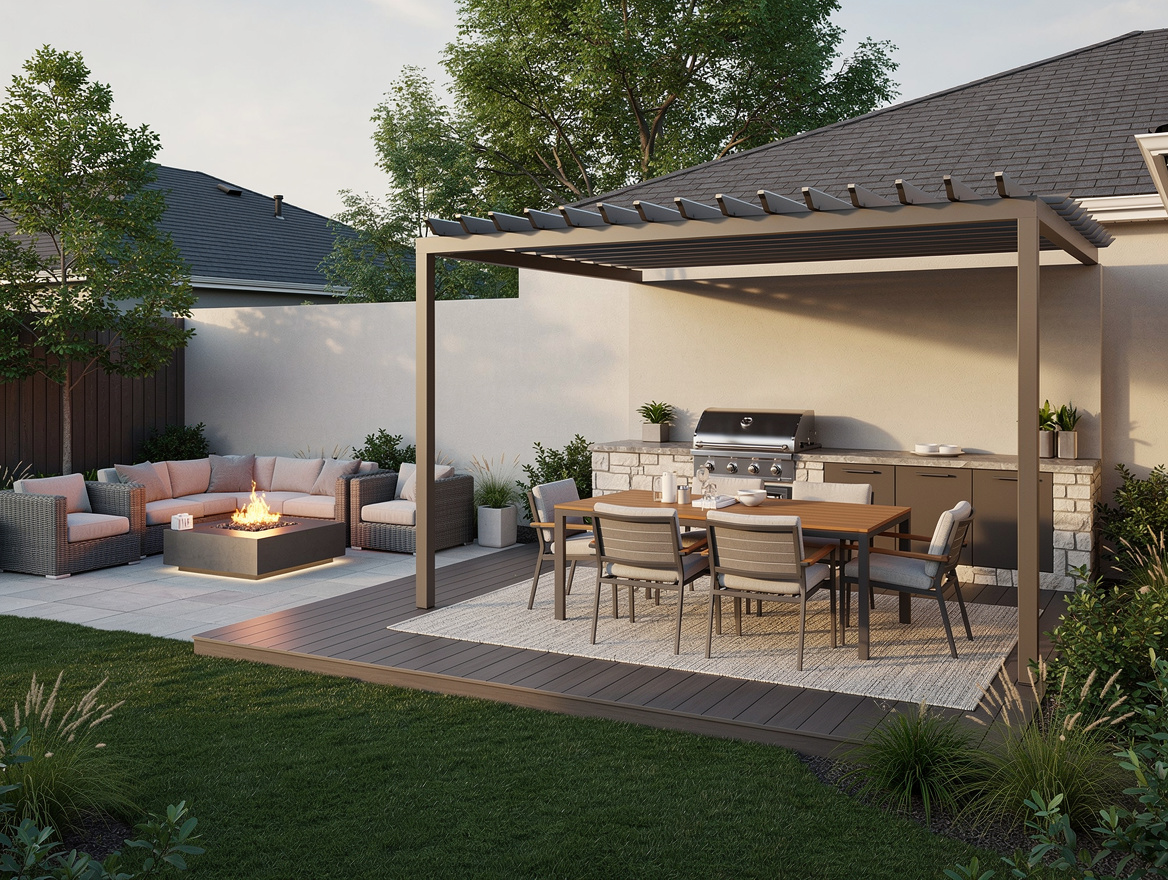
Designers now plan backyards as systems. A typical suburban layout: 10×15 ft covered dining against the house, 10×12 ft lounge with a fire table, 8×10 ft outdoor kitchen wall, and a lower step-down zone for turf or sun.
Multi-level decks with smart elevation and under-deck drainage turn wasted space into usable covered patios. Integrated low-voltage lighting sets different moods per zone.
A mid-range zoned transformation runs $20,000, $45,000 in 2026. Luxury setups with kitchens and premium materials hit $50,000, $100,000+.
3. Ditch Decorative Pergolas for Bioclimatic Covers
Skinny pergolas with fixed slats are garden decorations pretending to be architecture. They shade nothing, drain nothing, and warp within three seasons.
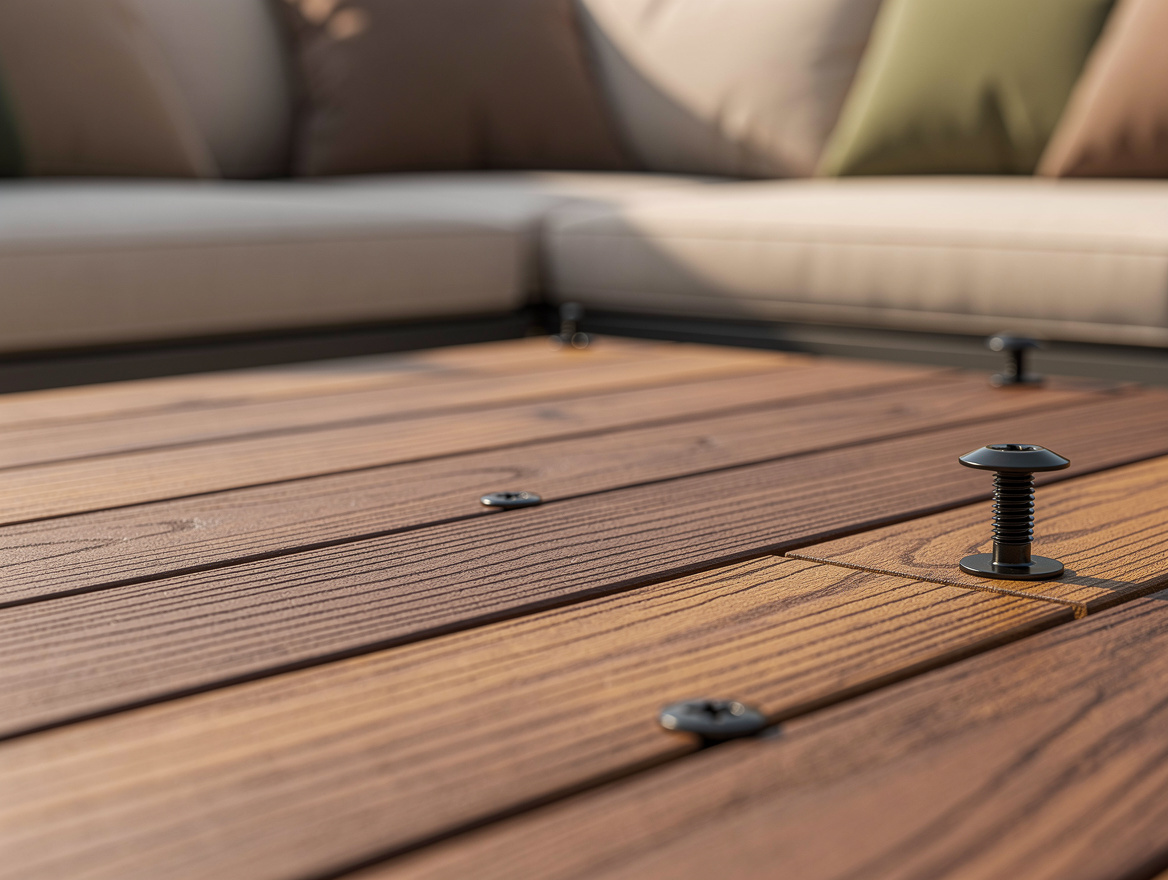
Bioclimatic pergolas with adjustable louvers, integrated gutters, and optional screens are the 2026 standard. Renson gets designer mentions for louvers that close tight in rain and tilt for afternoon sun.
Expect $15,000, $35,000 installed for a quality bioclimatic system over a typical 12×16 ft zone. Cheaper than rebuilding a water-damaged deck every five years.
4. Skip Plastic Furniture for Mixed-Weather Materials
Resin wicker and plastic Adirondacks crack, fade, and feel like a motel pool deck. Designers are done with it.
The replacement is mixed materials: acacia or teak frames with aluminum legs, sunbrella cushions in performance fabrics. Article and West Elm carry solid options, but Wayfair and Home Depot stock comparable lines under $2,500 for a six-piece set.
One rule: no matching sets. A teak dining table. Aluminum sling chairs.
One concrete side table. The mix reads collected, not catalog.
5. Lose the Lone Grill for a Compact Outdoor Kitchen Wall
A freestanding grill on wheels is the equivalent of a hot plate in a kitchen. It works, but it signals temporary.
Designers are building 6, 8 ft kitchen walls with stone or stucco bases, stainless steel inserts, and concrete countertops. Home Depot and Lowe’s stock modular RTA Outdoor Kitchen frames starting around $3,000 for a two-cabinet run.
Key 2026 addition: a small refrigerator drawer and trash pull-out. These two details separate usable kitchens from grill stations.
Total installed with appliances and stone facing: $8,000, $18,000 for a typical 8-foot wall.
6. Abandon String-Light Overload for Integrated Low-Voltage Systems
Fifty feet of Edison bulbs sagging from a fence post. One squirrel, one storm, one summer of UV, and it’s a tangled mess.
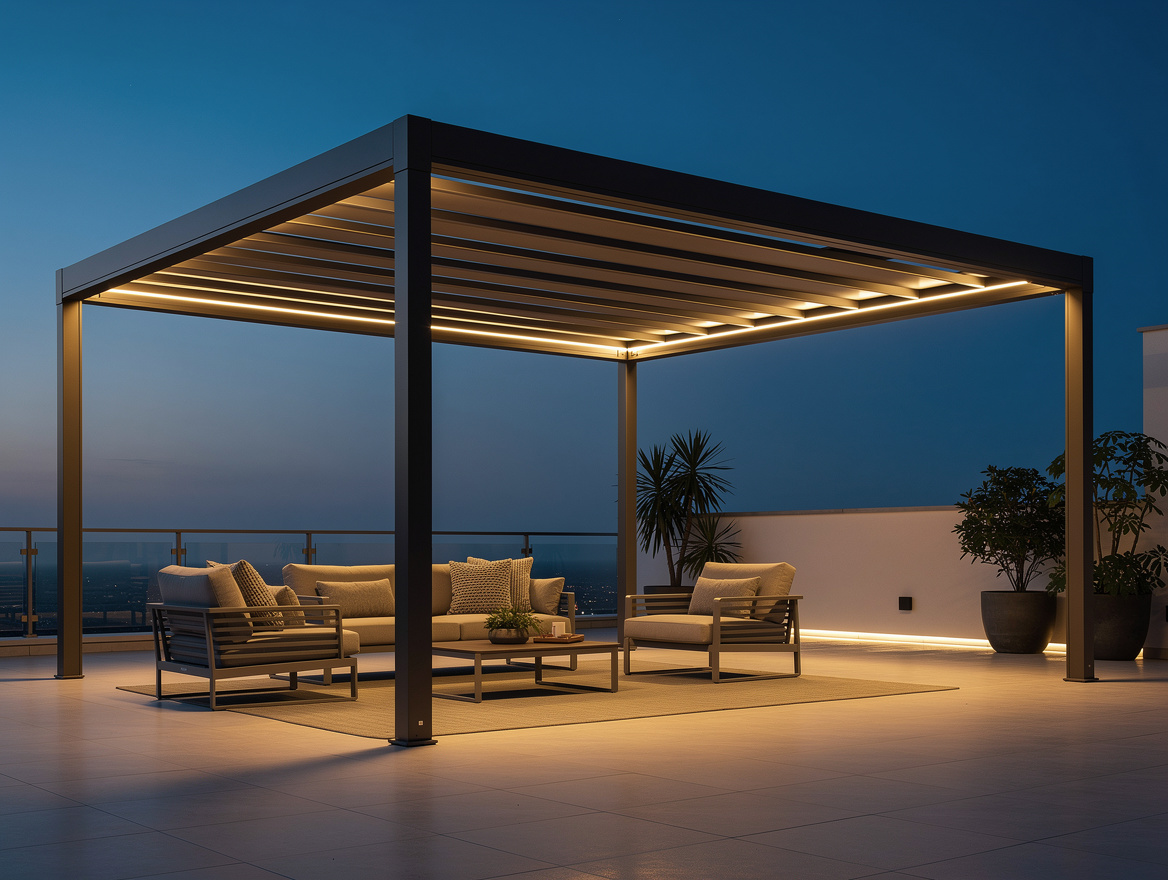
Integrated 12V LED systems with proper transformers, conduit, and junction boxes are the 2026 baseline. Lowe’s and Home Depot carry DEKOR and FX Luminaire compatible lines.
Designers layer three types: path lights at 18-inch height, step and rail accents, and overhead wash lighting under pergolas or soffits. A complete 400 sq ft zone typically needs $800, $2,200 in fixtures and transformers, plus installation.
The result: no visible cords, no seasonal reinstall, and dimming that actually works.
7. Stop Ignoring the Vertical Plane for Living Walls and Screens
Backyards treated as flat carpets miss half the real estate. Fences are borders, not backdrops.
Designers are adding modular living wall systems with drip irrigation, cedar or metal screens with climbing wire, and outdoor-rated shelving for potted herbs and succulents.
Wayfair and Amazon stock Wallgarden and similar modular pocket systems around $25, $45 per panel. A 6×8 ft installation with irrigation runs roughly $400, $700 in materials before plants.
For lower maintenance, powder-coated aluminum screens with geometric cutouts cast shadow patterns and define zones without plant upkeep. IKEA and Home Depot both carry panel options under $200 each.
If I had to pick one place to start, I’d zone the deck first. Even a single step down and a covered corner changes how the whole yard lives. Everything else follows from that decision.
Mia Carter writes about small-space living and budget home makeovers. She has restyled three rentals and tests most ideas in her own 45 sqm flat.