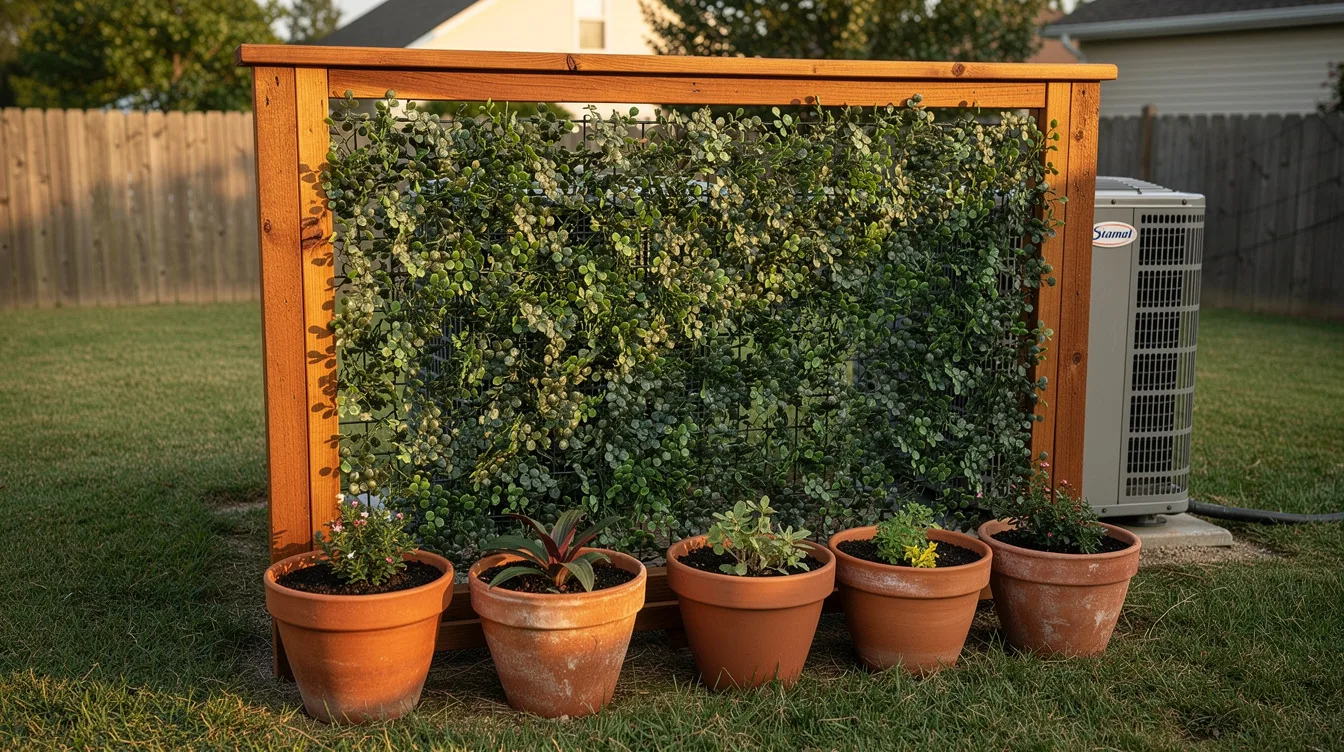
My backyard AC unit looked like a rejected appliance from a dystopian movie. I stared at it through my kitchen window for two years before I finally acted.
One Saturday, $200, and a trip to Home Depot later, I had a faux planter wall that fools guests and keeps my compressor running cool.
Start With the Clearance Rules or You’ll Fry Your Compressor
My outdoor unit sat there like a gray metal tumor. Before I touched anything, I measured twice. 60, 90 cm of side clearance and 1.5 m overhead keeps the compressor breathing and the warranty intact.
I treated my screen as a floating panel, not a sealed coffin. Airflow isn’t negotiable; it’s physics.
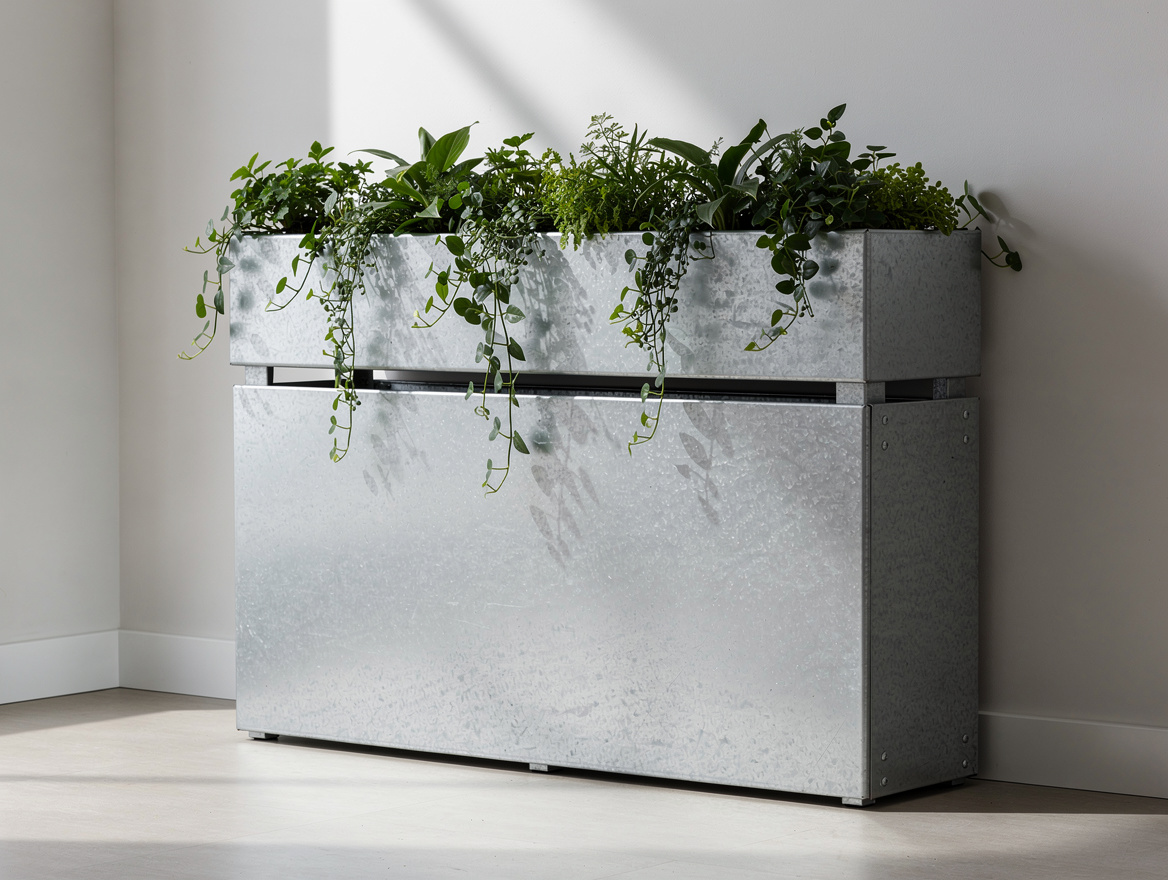
Buy a Ready-Made Galvanized Cover From Wayfair or Amazon
The fastest afternoon fix: a powder-coated galvanized steel cover with integrated planter boxes. Typical run from $250, $500 for units sized around 134, 140 cm wide and 89, 102 cm tall.
I found one with adjustable feet at 47, 56 cm depth on Amazon. Slid it in front, dropped faux boxwood into the top trough, done by 4 p.m.
Build a Shallow DIY Frame Using Treated Pine From Home Depot
Cheaper and more my speed: a shallow wood frame anchored to the wall, sitting 15, 30 cm in front of the AC grille. I used Home Depot pressure-treated 2x2s and exterior screws.
My build was 120 cm wide by 140 cm tall, roughly 1.5 m² of coverage. Cost me about $45 in lumber plus a Saturday morning.
Clip PE Faux Plant Panels Onto the Frame, Not Cheap PVC
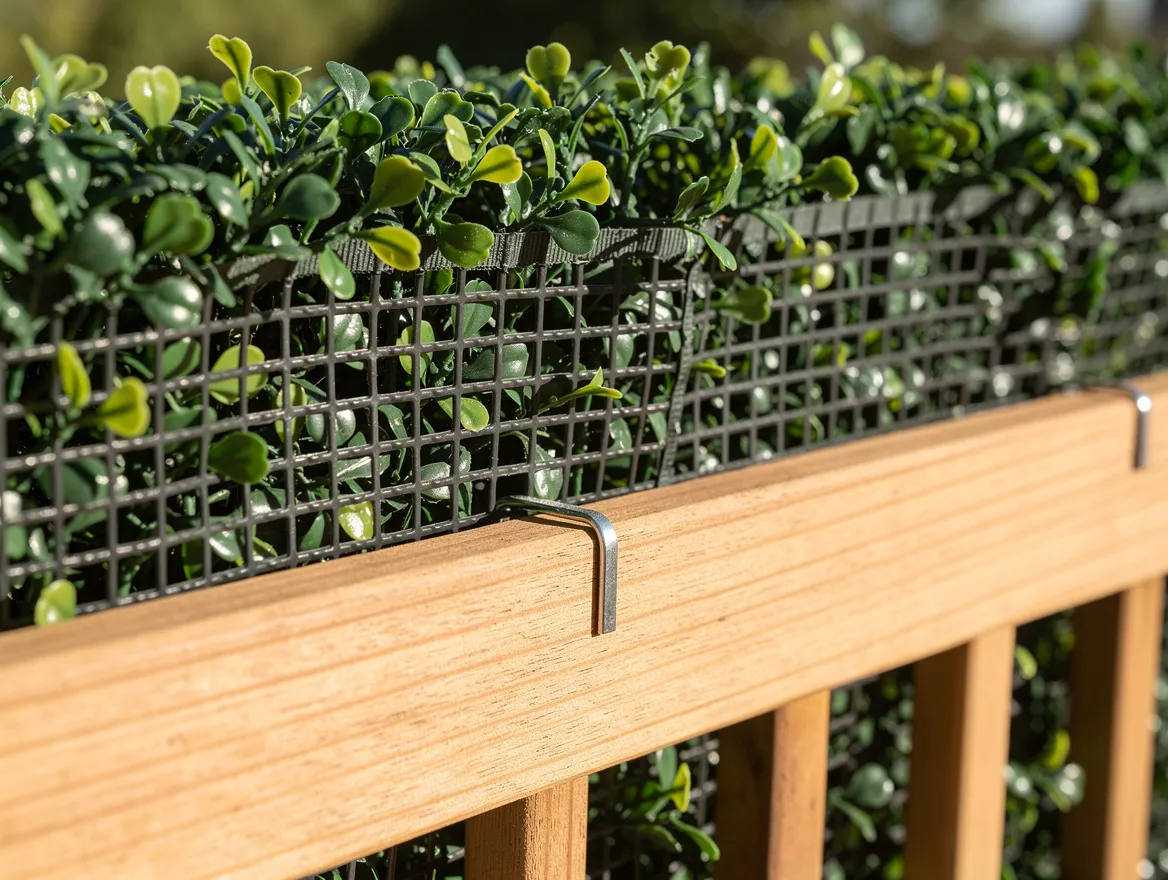
Here’s where the magic happens. I ordered 50 × 50 cm PE modular panels from a vendor on Wayfair. Polyethylene, not PVC.
The difference is daylight-readable: PVC goes glossy and fake in sun; PE holds its matte depth.
Mid-range panels run $80, $150 per m² in 2026. My 1.5 m² wall cost about $140 total. I clipped them on with exterior-grade zip ties through the frame.
Add Real Planter Boxes at the Base for Credibility
The faux wall reads as “real” because I grounded it with actual terra-cotta planters from Lowe’s at the base. Trailing sedum and a few cheap annuals do the heavy lifting.
The eye catches the living stuff first, then assumes the wall above is equally alive. It’s a $25 psychology hack that beats spending $200+ on premium mixed-moss panels.
Maintain the Gap With a Simple Bungee or Prop System
Wind happens. I added two Ace Hardware galvanized L-brackets at the base, angled to stop the frame from tipping into the unit. The 20 cm gap stays consistent year-round.
Every spring I pull the panels, hose off pollen, check the compressor fins. Takes twenty minutes. The faux greenery looks identical to day one, which live ivy never would have.
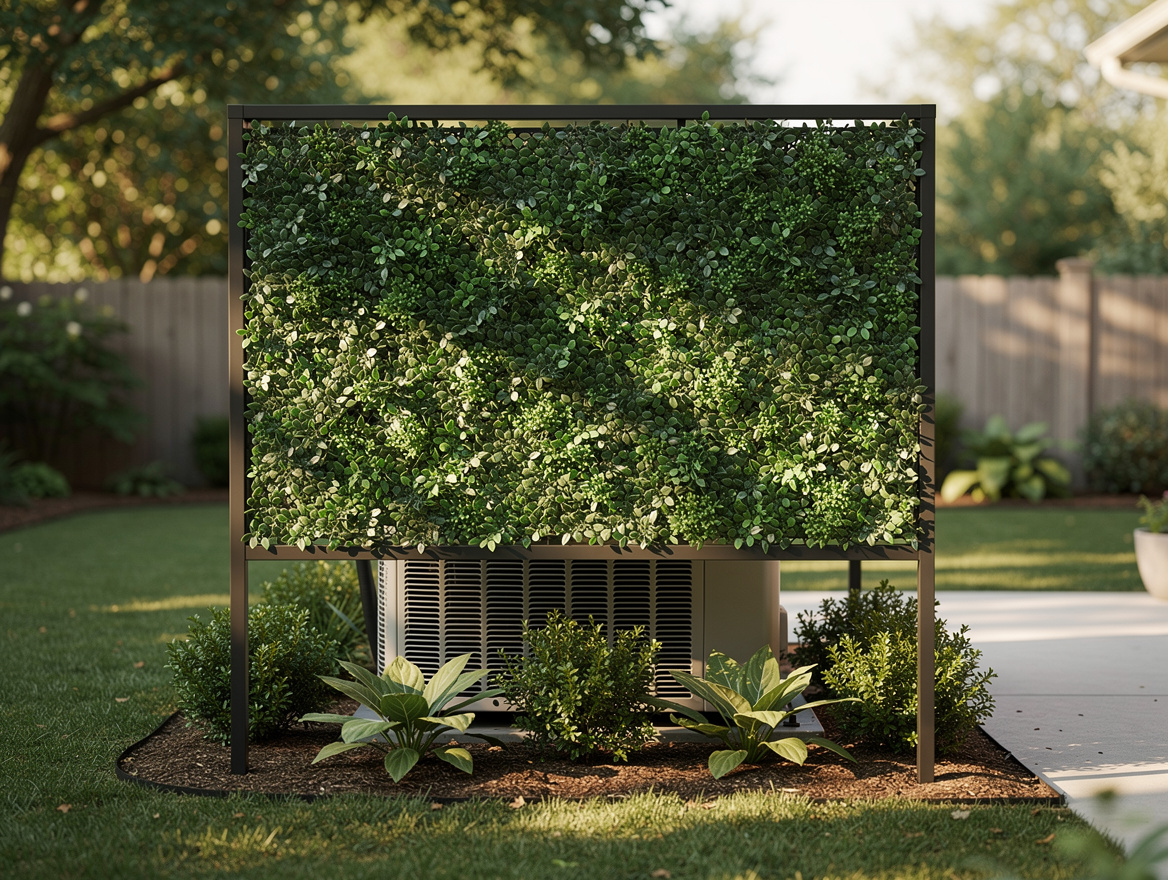
If I had to pick one starting point, I’d build the shallow wood frame first and worry about the panels later. The structure is the commitment; the greenery is just shopping.
Mia Carter writes about small-space living and budget home makeovers. She has restyled three rentals and tests most ideas in her own 45 sqm flat.