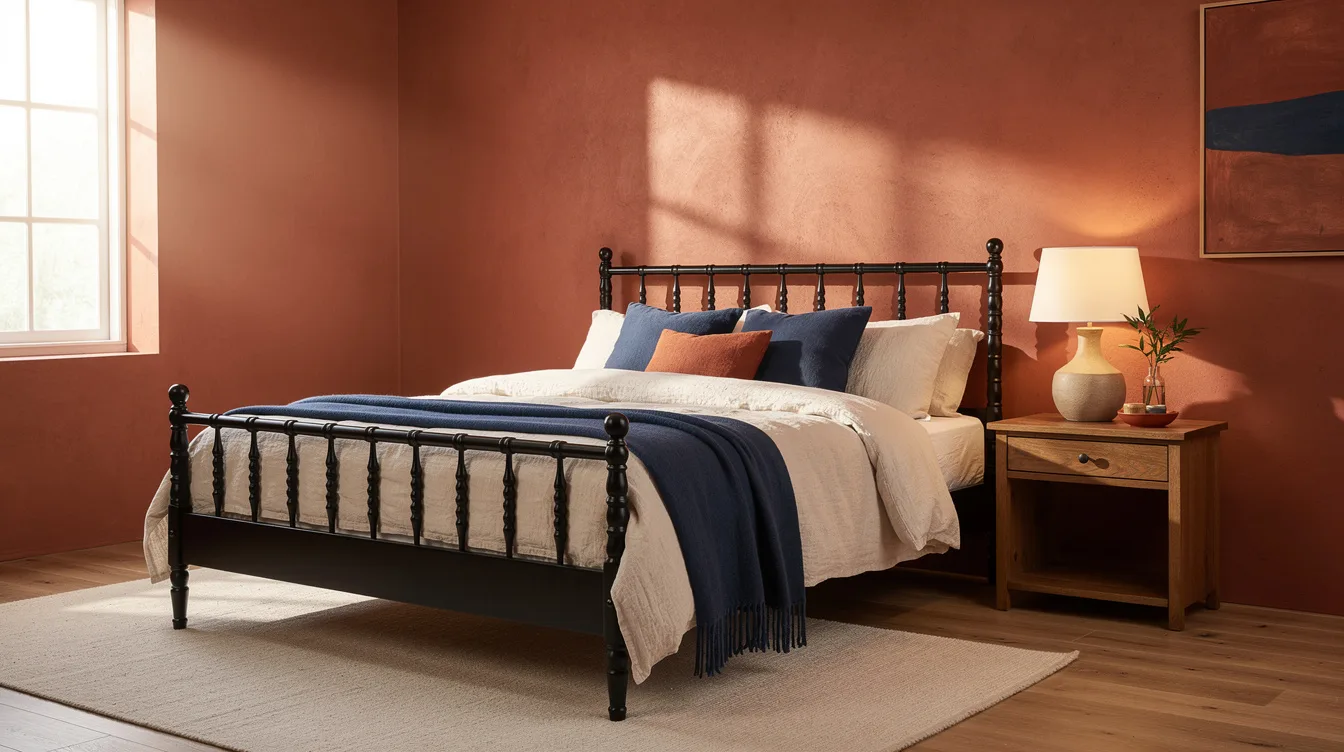
Three rentals in, my bedroom was still builder beige, a roughly 11 by 13 foot box that put me to sleep for the wrong reasons. So I spent one weekend and about $120 on paint and went full terracotta. Some of it worked immediately, some of it I redid twice.
Here’s the honest version.
Commit to One Saturated Wall Color First
My bedroom sat in a sad builder-grade beige for three years, roughly 11 feet by 13 feet of nothing. I finally picked a clay terracotta and painted every wall, plus the trim, in one weekend.
I went with a Benjamin Moore red-brown in the Silhouette family, since that’s their 2026 Color of the Year direction. A gallon runs about $50 to $80 typically, and I needed two.
My honest take: a timid accent wall in a bold color looks worse than beige. Either drench the room or don’t start.
Try the Color-Drenched Trick on the Ceiling
The scariest move was carrying the clay color onto the ceiling. It’s also the one that made the room feel finished instead of half-done.
Color-drenching means walls, trim, and ceiling all in one tone. Designers keep pointing to this enveloping look as the big 2026 bedroom direction, and after living with it, I get why.
One caveat I’ll give honestly: a drenched ceiling eats light. My north-facing room needed a stronger lamp afterward, so budget for that too.
Anchor All That Color With a Dark Bed
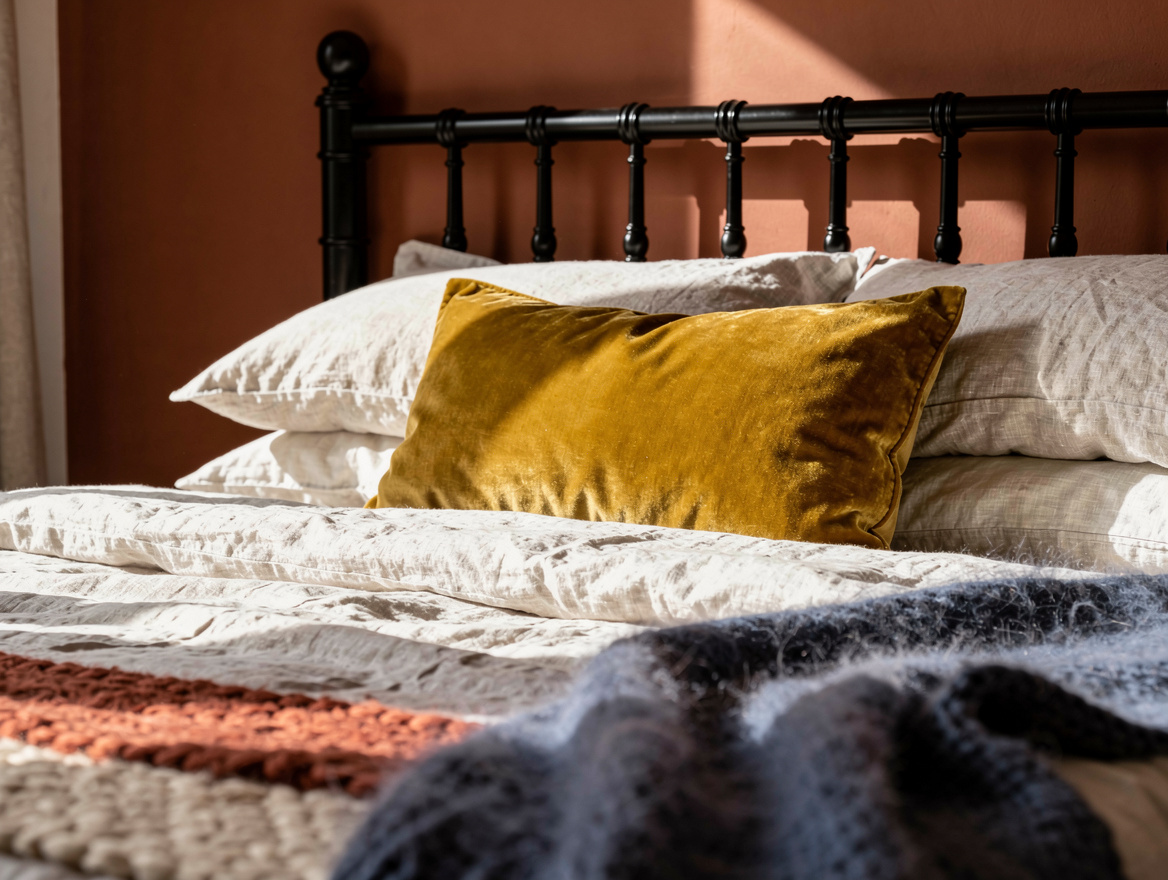
Warm walls need contrast or the whole room turns into a clay pot. My fix was a black spindle-frame bed, and it snapped everything into focus.
A dark wood or matte black frame against terracotta is a classic pairing. Wayfair has solid spindle beds in queen, the standard 60 by 80 inches, typically starting around $300.
If you go green instead of red, the rule holds. Deep olive walls with a walnut or black frame, same effect.
Layer Washed Linen, Then One Tactile Accent
Paint does the heavy lifting, but bedding is what people actually touch. I swapped my old comforter for washed linen in a warm off-white, and the room instantly read softer.
Linen duvet sets at Target usually land around $80 to $120 depending on size, which is reasonable for the upgrade you feel every night. Add one mohair throw at the foot of the bed and you’re done.
Don’t pile on five textures. Linen plus one fuzzy accent is plenty, more reads as clutter.
Size the Rug to the Bed, Not the Room
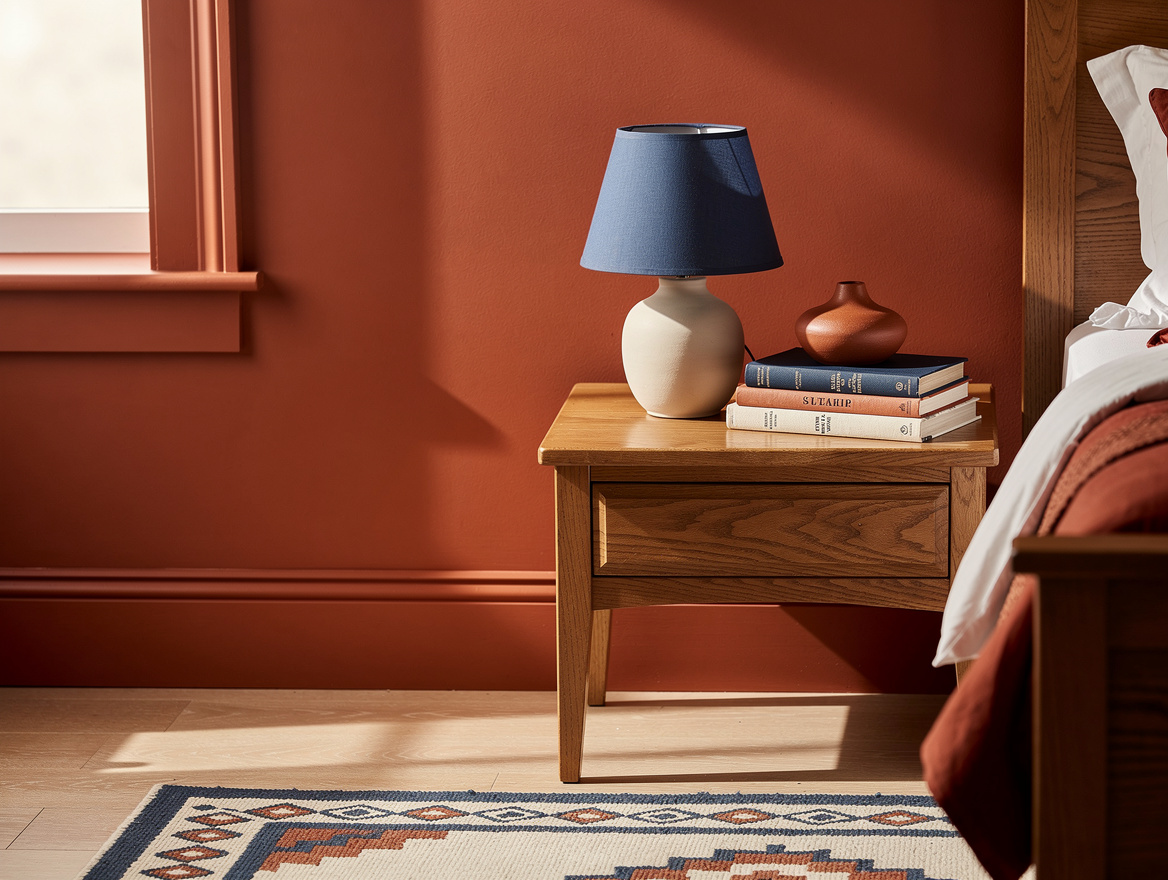
My first rug was a 5 by 7 floating under a queen bed like a placemat. It made the whole room look cheaper than it was.
The rule that actually works: an 8 by 10 rug under a queen, a 9 by 12 under a king (76 by 80 inches). The rug should extend roughly two feet past each side of the bed.
IKEA rugs run from about $25 to $400 depending on size, and their larger flatweaves are a decent budget answer. Mine cost around $180 and survives weekly vacuuming fine.
Add One Punchy Accent Color, Not Five
Once the room was terracotta and cream, it needed one jolt. I chose mustard, in a single lumbar pillow and a small lamp shade.
Designers are using hot pink, chartreuse, and mustard exactly this way in 2026: one bright note against an earthy base. Target accent pillows typically run $15 to $30, so the experiment is cheap.
If you hate the accent after a month, it’s a pillow, not a paint job. That’s the whole point of keeping bold color in small doses.
Match Your Nightstands to the Mood
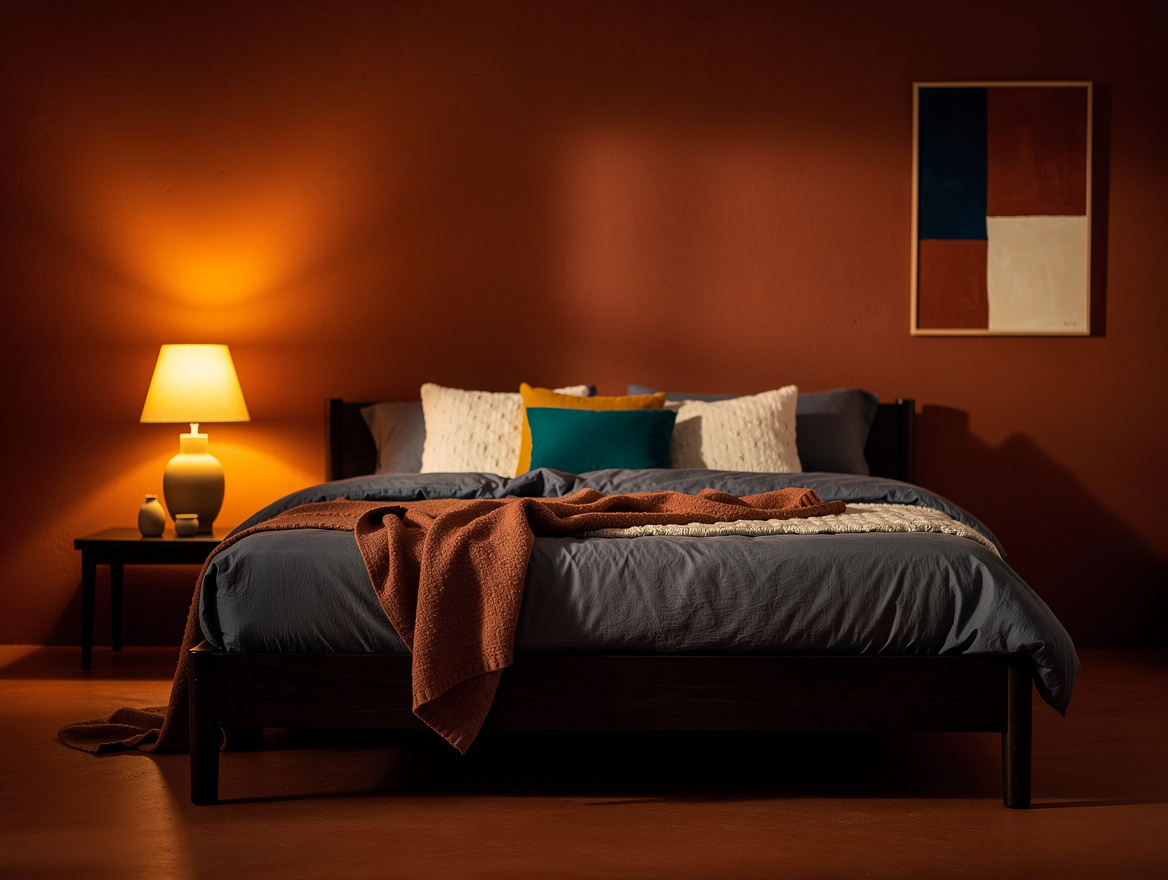
Nightstands around 26 to 28 inches tall sit level with most mattresses, and that height matters more than style. A lamp on a too-short table lights your knees, not your book.
I found simple oak nightstands at IKEA for about $60 each. The warm wood against the clay walls is quietly the best pairing in the room.
Skip the matching bedroom set. Two simple wood tables and one good lamp each side will always beat a showroom bundle.
Start with the paint, because it’s the cheapest square footage of change you’ll ever buy. Order three sample pots, paint big swatches, and live with them a week before you commit to the drench.
Mia Carter writes about small-space living and budget home makeovers. She has restyled three rentals and tests most ideas in her own 45 sqm flat.