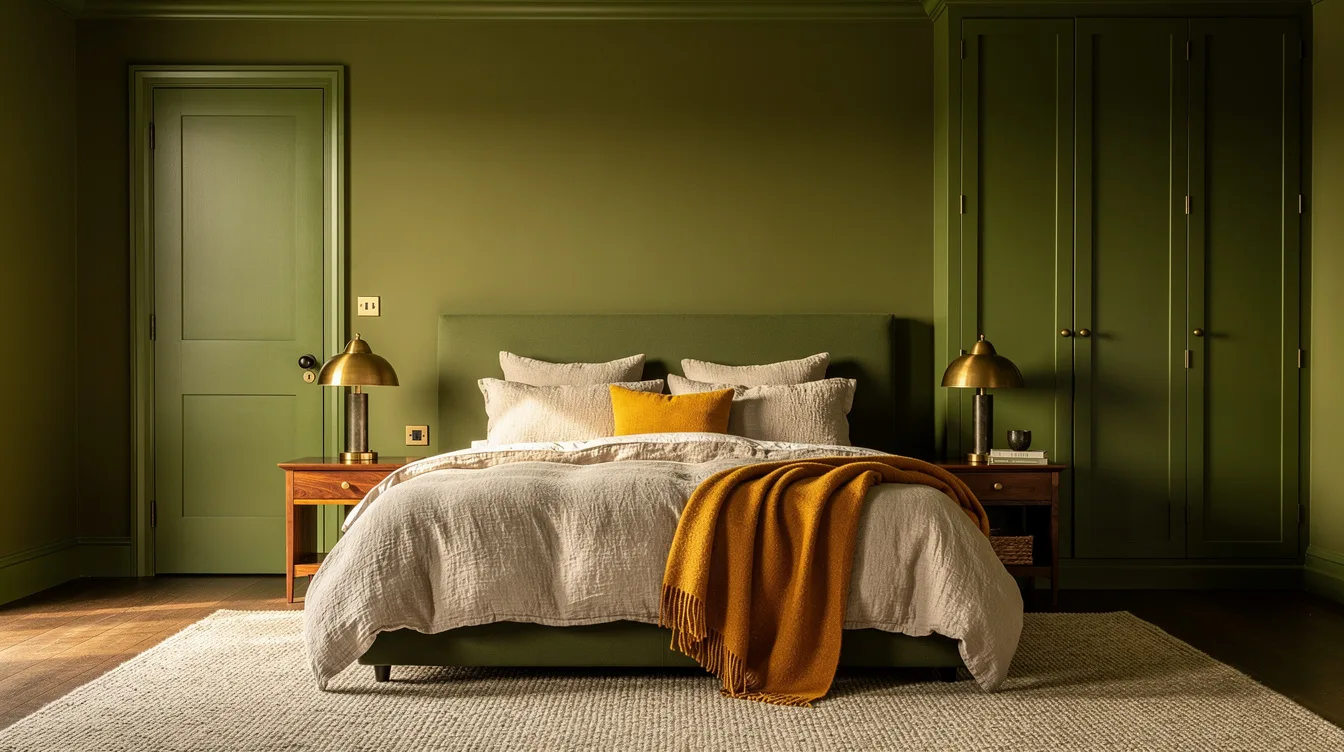
A 10-by-12-foot bedroom can feel oddly chopped up when its ceiling, trim, and closet door each stop at a hard white edge. Color drenching takes one shade across the walls, ceiling, doors, trim, and built-ins, which is why the look still feels so right for a sleep-first room.
The tension is simple: a dark cocoon can feel expensive, or it can feel like a rushed paint job. The difference comes from finish, undertones, and what you allow the color to touch.
Carry the Shade All the Way Up
Stop the paint at the ceiling and the room becomes a box again. Bring a deep olive, smoky blue-gray, or rosy clay onto the ceiling in a flat finish so the corners soften rather than announce themselves.
Behr Premium Plus in a washable matte wall finish is a practical Home Depot route for bedrooms that need easy cleanup. Use the same color family overhead, choosing a ceiling-appropriate flat version when available.
Keep door frames, baseboards, and the bedroom door in the scheme too. A narrow strip of bright white trim is the fastest way to interrupt the enveloping effect.
Shift Sheen Instead of Changing Color
One color does not mean one identical surface treatment. Matte walls absorb light, while a restrained eggshell on trim lets the architecture show up quietly during the day.
Use Benjamin Moore matte paint on walls and a durable eggshell or satin finish for doors, radiators, and painted wardrobes. That tiny sheen shift adds depth without introducing another color.
Avoid glossy paint across every surface. In a bedroom, too much reflection can make a dark shade feel theatrical and expose every uneven wall.

Choose a Shade That Works After Sunset
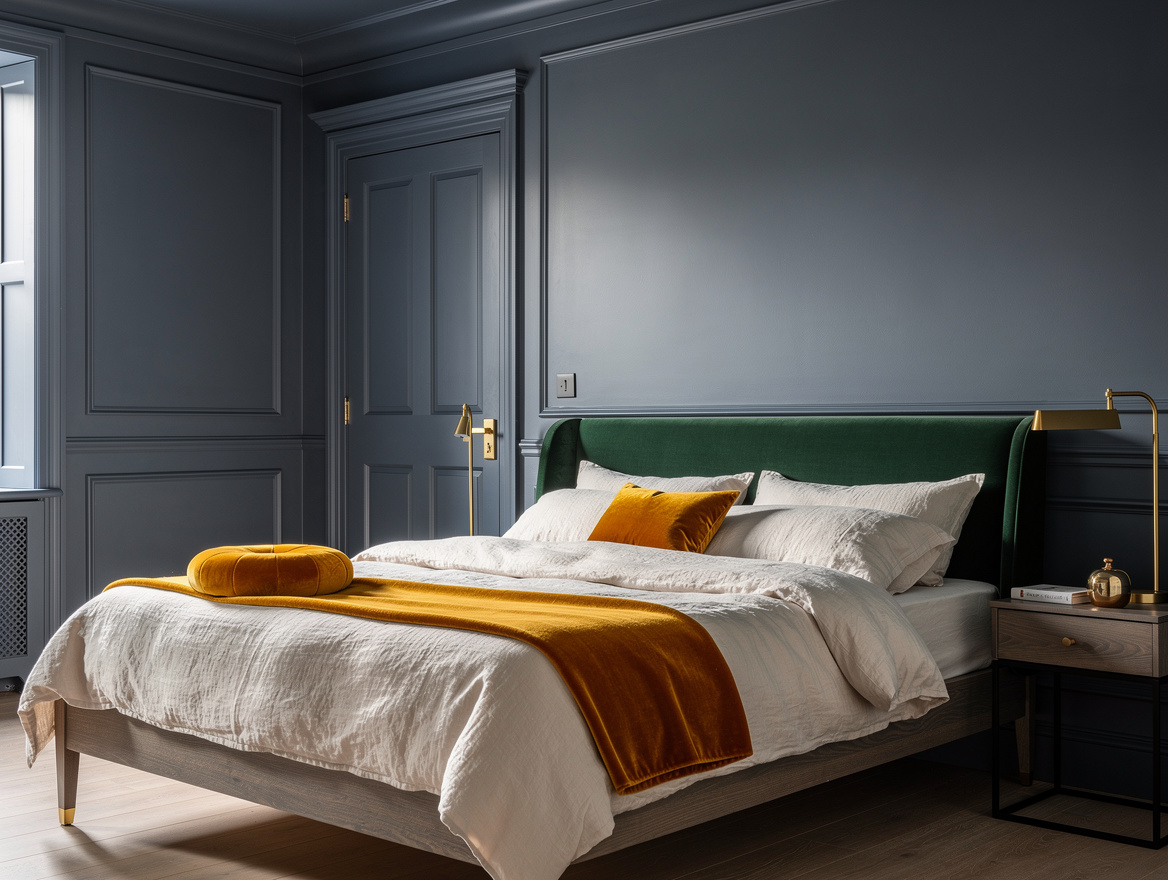
Bedrooms earn their keep at night, so test the color under bedside lamps before committing. Inky navy and deep blue-green can feel wonderfully private after dark, but a north-facing room may need a softer clay or olive to stay welcoming in daylight.
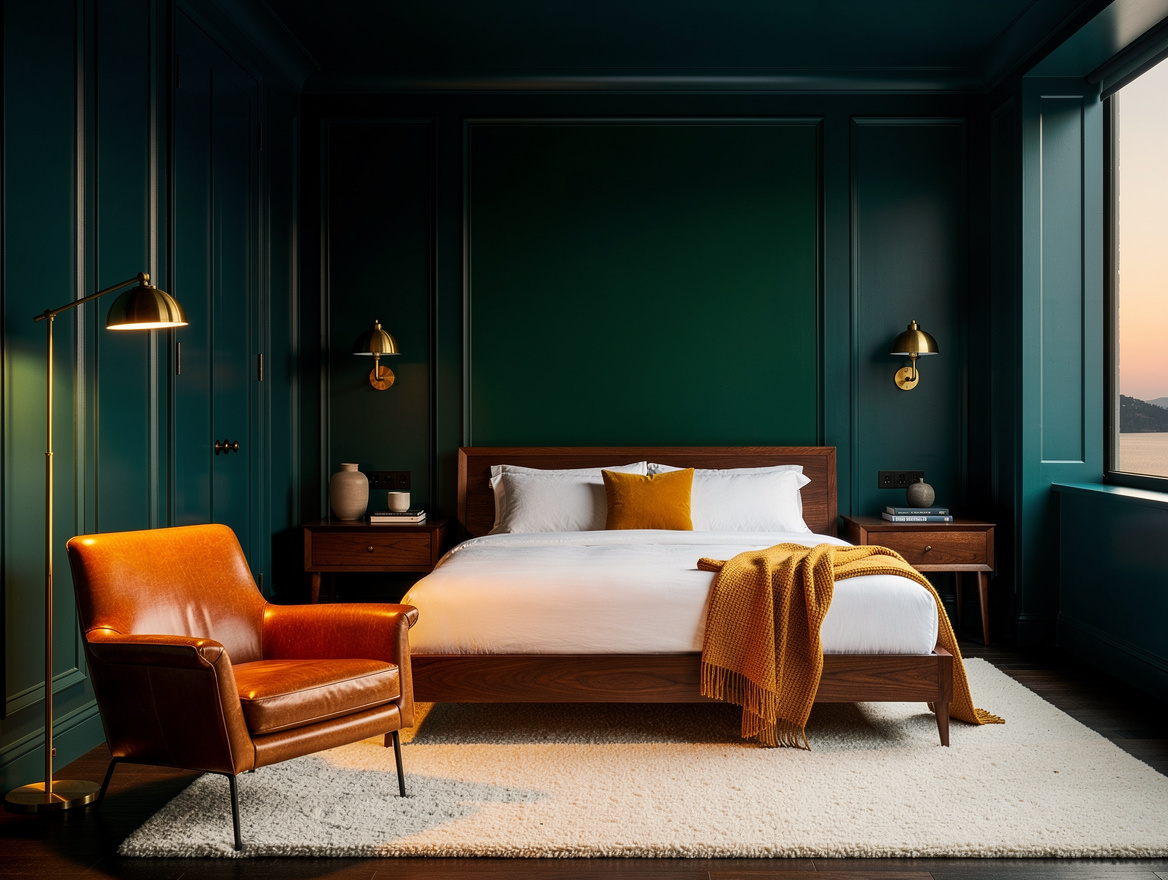
A dark teal wall color pairs especially well with walnut, cognac leather, and aged brass. It gives the room weight without turning fully black when the lights are low.
For a small or low-light bedroom, muted terracotta and dusty pink are more forgiving than a dense blue-black. The goal is a held, quiet mood, not a cave.
Let Bedding Blend Into the Palette
Pure white sheets and bright-white curtains can punch holes through a drench. Choose tonal bedding in ecru, mushroom, tobacco, olive, or softened navy so the bed belongs to the room.
Start with oatmeal linen bedding, then add one rust velvet cushion or a tobacco-colored throw. A few related tones keep the bed from looking flat while preserving the cocoon.
Skip the reflexive pile of matching decorative pillows. A well-made duvet, two sleeping pillows, and one tactile accent usually look more considered.
Warm Up Dark Paint With Honest Materials
Dark paint needs materials that have some visual warmth. Walnut, dark oak, wool, leather, and aged brass all give an olive or midnight scheme a lived-in hotel mood.
Try aged brass lamps on dark-oak bedside tables, with a wool or jute rug underfoot. Their warmer cast prevents blue, green, and brown drenches from reading cold.
Shiny chrome is rarely the best partner here, especially when it appears on every lamp, handle, and curtain rod. Choose brass, bronze, or blackened steel hardware and let it repeat sparingly.
Paint Built-Ins and Doors With Purpose
A closet door left white can look accidental in a color-drenched bedroom. Paint wardrobes, paneling, and built-ins in the same shade, using a tougher cabinetry finish where hands will touch them often.
Cabinet-grade eggshell paint is worth the extra attention for drawer fronts and closet doors. It holds up better than wall paint and gives the room a subtle change in texture.
Do not paint every piece of furniture to match. Leave a wood bed frame, an upholstered headboard, or one antique chest visible so the color has something grounded to play against.
Begin with the ceiling and trim, because those are the surfaces that make the drench believable. Then bring in one warm wood piece and tonal bedding before adding any small decor.
Mia Carter writes about small-space living and budget home makeovers. She has restyled three rentals and tests most ideas in her own 45 sqm flat.