By midafternoon, the black slide was too hot to touch and my dog kept pacing from one patch of shade to another. That’s the moment a yard stops feeling easy and starts needing fixes fast.
The good news is you can make it noticeably safer in a day or two. I’d focus on shade first, then ground surfaces, then water and access control.
Hang Shade Where Kids Actually Stop
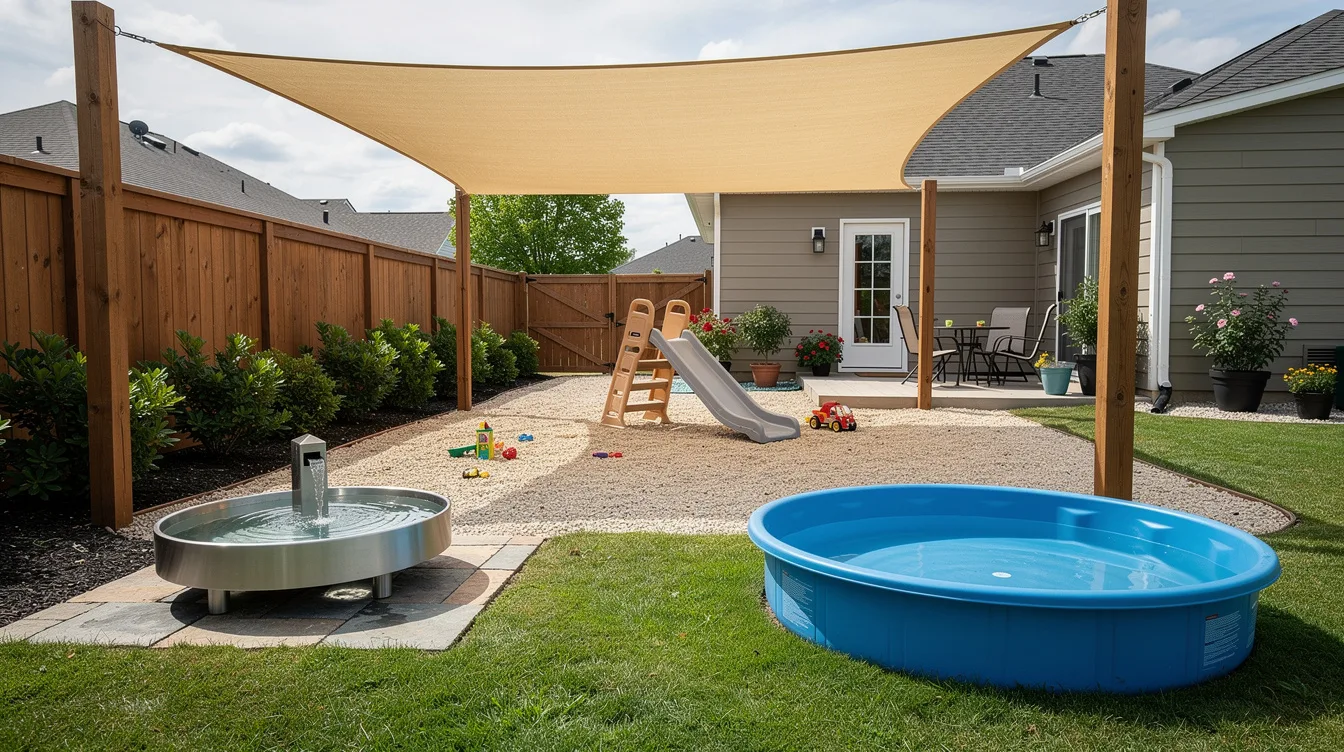
A shade sail over the playset or sandbox is the fastest upgrade I’d buy first. A typical 12 x 12-foot triangle shade sail sold through Home Depot or Amazon usually lands around $45 to $100, with a stainless hardware kit often adding another $20 to $35.
Mount it about 8 to 10 feet high and give it a visible tilt so heat can move out instead of getting trapped underneath. I strongly prefer HDPE fabric here because airflow matters more than making the area feel sealed up.
If the hottest spot shifts during the day, a Walmart or Target pop-up canopy in a typical 10 x 10-foot size is a smart backup. Those usually cost about $90 to $220, and they work especially well over a kiddie pool, a dog bed, or a patch of grass that gets hammered after lunch.
Cover Burn-Prone Play Areas With a Cooler Surface
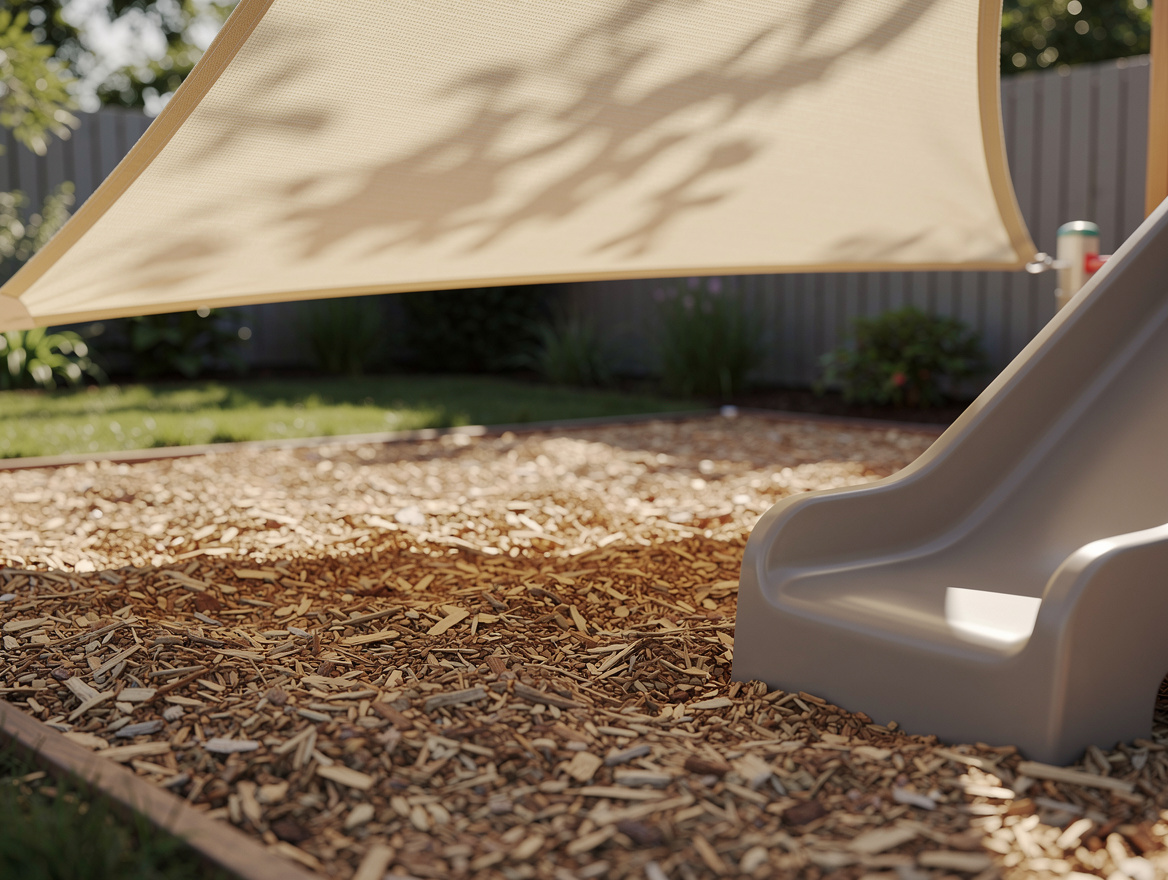
Under swings, slides, and trampoline exits, I would not leave bare dirt, concrete, or dark rubber exposed during a heat wave. A deep layer of play-grade wood chips is still one of the best fast fixes because it is cheaper than tile and easier to spread in one afternoon.
For a small 10 x 10-foot play zone, a typical safe depth is about 12 to 16 inches. Bulk material often runs around $40 to $75 per cubic yard, and bagged options at Lowe’s or Ace Hardware are commonly around $9 to $16 per bag, depending on size.
If you want a cleaner edge and more cushion, rubber tiles are practical for slide landings. A common 20 x 20-inch tile usually costs about $16 to $32 at Wayfair or Amazon, and I think they make the most sense in small, high-impact spots rather than across the whole yard.
Build a Path That Won’t Roast Bare Feet or Paws
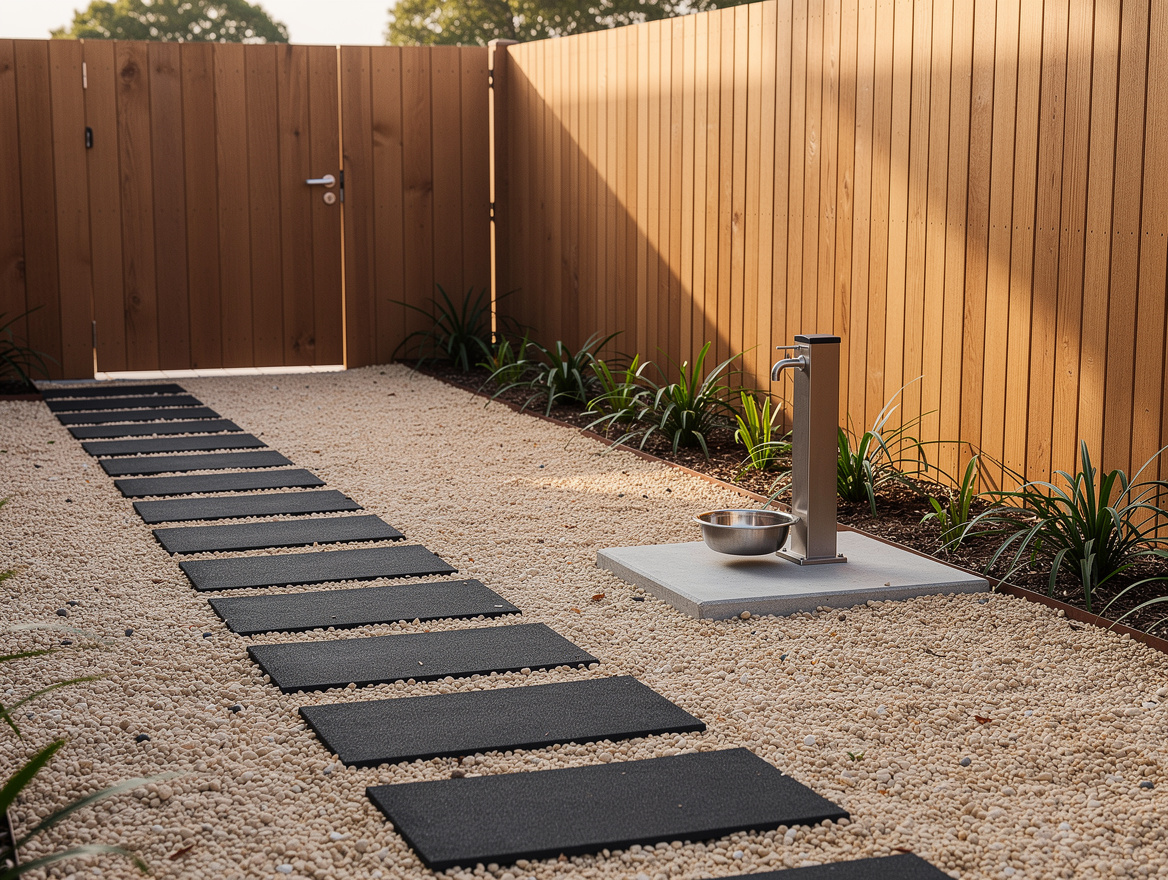
The route along the house usually gets hotter than people expect, especially if it bounces heat off siding or a fence. A 3 to 4-foot-wide path in pea gravel, rubber pavers, or pet-safe wood chips is a much kinder option than plain concrete when the air temperature climbs.
A typical rubber paver is about 12 x 12 x 1 inch, and many options sold through Home Depot or Amazon cost roughly $8 to $13 each. For a 3 x 16-foot path, that can add up quickly, so I’d reserve rubber for the highest-traffic strip and use gravel elsewhere.
I like smooth pea gravel in the 8 to 10 mm range for side-yard runs because it drains well and stays more forgiving underfoot. It is not the prettiest choice, but in a heat wave I care more about safety than matching the patio furniture.
Set Up Water That Stays Cool and Easy to Reach
Every heat-wave yard needs a dedicated pet fountain in full shade, not a bowl that turns warm by noon. Outdoor models sold through Amazon or Wayfair with a typical 2 to 2.25-gallon capacity often cost about $85 to $145, and I’d place one on a stable 16 x 16-inch paver with the cord fully covered.
For kids, a hard-plastic kiddie pool in the 47 to 59-inch range is still the simplest cooling station. At Target or Walmart, a typical price is about $30 to $60, and it needs level ground, shade, and fresh water daily.
A splash pad can work for both kids and dogs if you supervise closely and keep it shaded. Common 59 to 67-inch models at Amazon often run around $40 to $80, and I’d take that over a slippery patch of hose spray every time.
Create a Real Shade Rest Zone for Pets
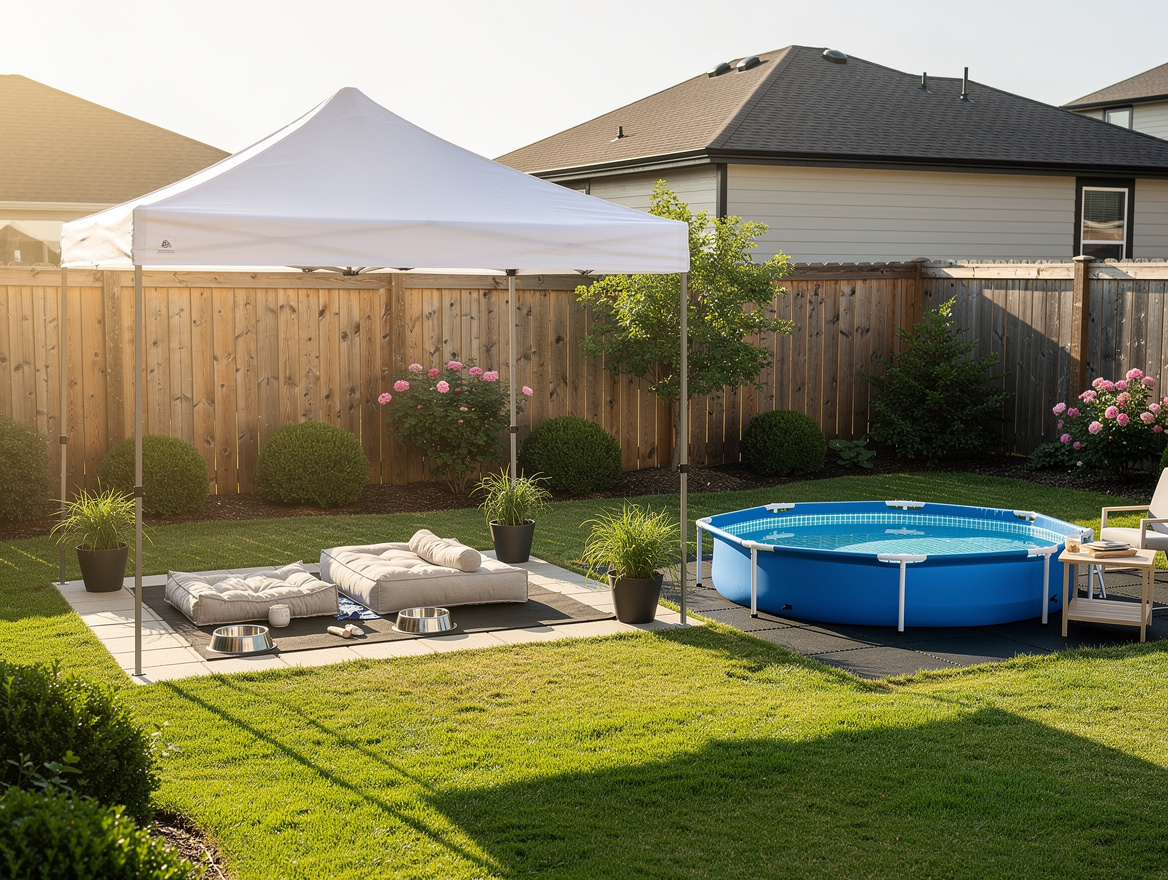
Dogs need a place to cool down that is not just the thinnest shadow near a fence. I’d make one obvious resting zone with a pop-up gazebo, a raised bed, and a water source nearby so your pet is not wandering back onto hot ground every ten minutes.
A 10 x 10-foot canopy from Costco or Walmart usually has enough coverage for a dog bed, a fountain, and a little open floor area. This is one of those fixes that looks temporary, but function beats style when the yard is running hot.
Add a light-colored outdoor mat or a few rubber pavers under the bed so the resting spot is not sitting directly on baked soil. I would skip dark fabric and black mats here because they hold heat too aggressively.
Tighten Gates and Block Off Dangerous Zones
Heat safety is also about containment. A solid gate latch and a clear fence line keep kids and pets away from driveways, pool edges, grills, and the strip of pavement that gets brutally hot in late afternoon.
If your existing fence is fine but the gate drifts open, this is where I’d spend money before buying extra decor. Basic latch and hinge hardware at Ace Hardware or Home Depot is usually inexpensive compared with the risk of a child or dog slipping out onto hot concrete or the street.
You can also use a temporary freestanding barrier to close off one side yard or patio edge while you finish bigger fixes. It is not glamorous, but I trust simple control measures more than telling everyone to remember the rules when the yard is already stressful.
Start with the hottest square footage, not the whole yard. Shade the play area, cool the path people use most, and put water in the exact spot your dog already tries to claim.
Mia Carter writes about small-space living and budget home makeovers. She has restyled three rentals and tests most ideas in her own 45 sqm flat.