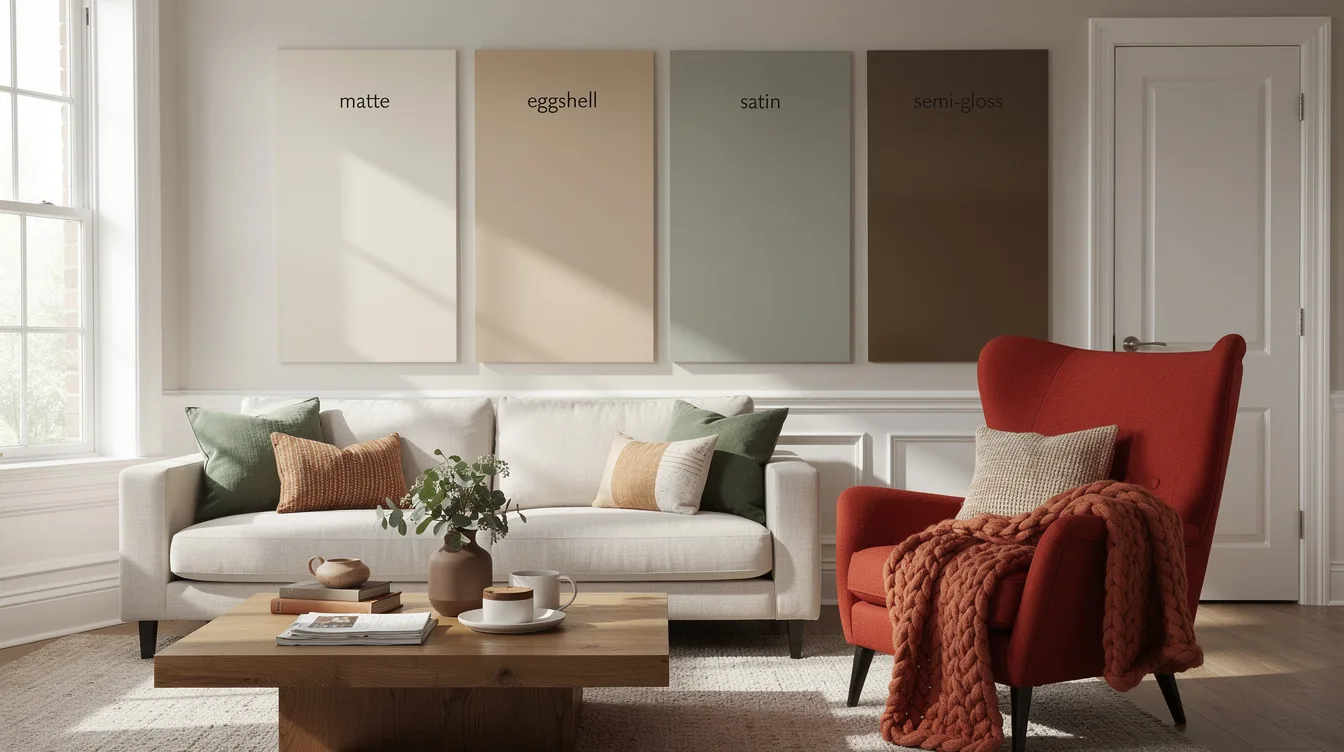
Choosing paint by color alone is how a calm-looking sample becomes a shiny, hard-to-clean wall two weeks later. In a typical 12-by-15-foot room with 8-foot ceilings, you are painting roughly 432 square feet of wall before subtracting openings, so the finish deserves as much thought as the shade.
The useful rule is simple: lower sheen conceals wall flaws, while higher sheen stands up to moisture, fingers, and scrubbing. Buy for the room’s actual wear pattern, not the tiny swatch under store lighting.
Flatten the Ceiling Finish
A ceiling should disappear visually, which is why designers favor flat paint or matte overhead. Its low reflection softens drywall seams, roller marks, and the minor unevenness that becomes obvious under a glossy finish.
Save sheen for surfaces you touch. A reflective ceiling can throw glare from recessed lights across the room and make an ordinary 8-foot ceiling feel busier than it needs to.
Match Living Room Walls to Real Life
For a living room, choose eggshell paint when you want a slight glow and workable cleanability. It gives standard walls more resilience than flat paint without turning every lamp into a reflection.
Matte still works beautifully in a low-contact room with patched plaster or older drywall. At Home Depot or Lowe’s, compare samples vertically near a window, because the same finish looks far shinier when light hits it sideways.
Keep Bedrooms Soft Instead of Shiny
Bedrooms benefit from matte walls because the finish keeps color quiet in morning and bedside light. It also forgives the small patches left by picture hooks, especially in rentals where walls have had a few previous lives.
Choose eggshell if children, pets, or frequent furniture moves make wipeability necessary. Satin is usually too alert for a sleeping space, and it can make a rich navy or warm clay color look oddly plastic at night.
Upgrade Hallways for Scuffs
Hallways and stairwells need a tougher surface than a formal living room. Use satin paint for walls that collect backpack marks, handprints, and the occasional scrape from a moving box.
Eggshell is a sensible compromise for a quieter entry, but satin earns its keep where people brush past daily. A gallon typically covers about 350 to 400 square feet for one coat on smooth walls, and two coats are the safer plan for color changes.

Choose Moisture-Ready Kitchen and Bath Paint
Kitchen walls deserve kitchen enamel or satin because splatters and regular wiping are part of the job. A soft matte wall behind a breakfast table may survive, but it is a poor bet beside a range or a sink.
In bathrooms, use satin, bathroom eggshell, or a bath-specific formula with mildew resistance. Typical interior paint runs about $25 to $40 per gallon at the budget end and roughly $50 to $80 or more for premium options, so spend the extra money where steam is constant.
Give Doors and Trim Their Own Finish
Doors, baseboards, and window trim should get semi-gloss paint because these surfaces take the most direct abuse. It dries into a durable finish that handles cleaning far better than wall paint.
Gloss can work on exceptionally smooth trim, but it exposes every brushstroke and dent. For most homes, semi-gloss is the sharper choice: polished enough to define the architecture, practical enough for muddy shoes and sticky hands.
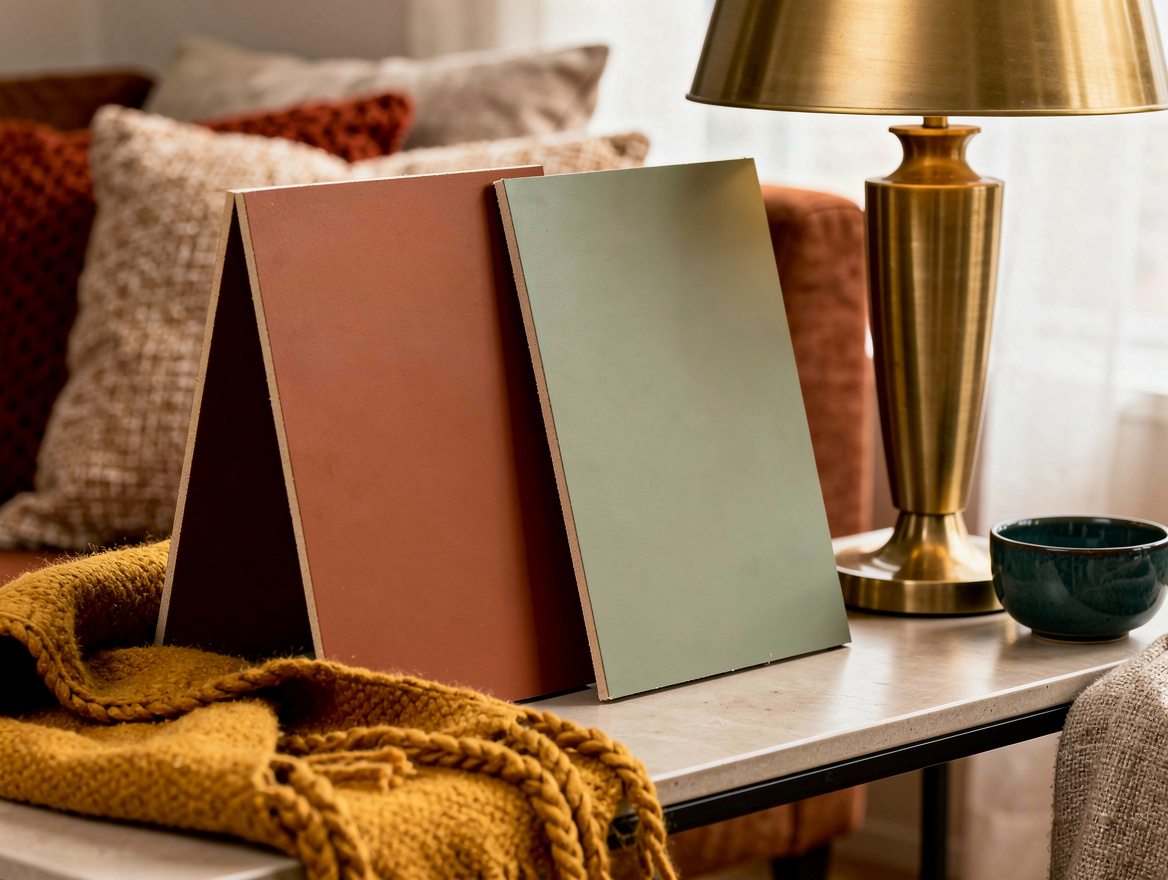
Start with the room you clean most often, then choose its finish before picking a color. Get one sample each in matte, eggshell, and satin, paint them on poster board, and move them from daylight to evening lamps before committing.
Mia Carter writes about small-space living and budget home makeovers. She has restyled three rentals and tests most ideas in her own 45 sqm flat.