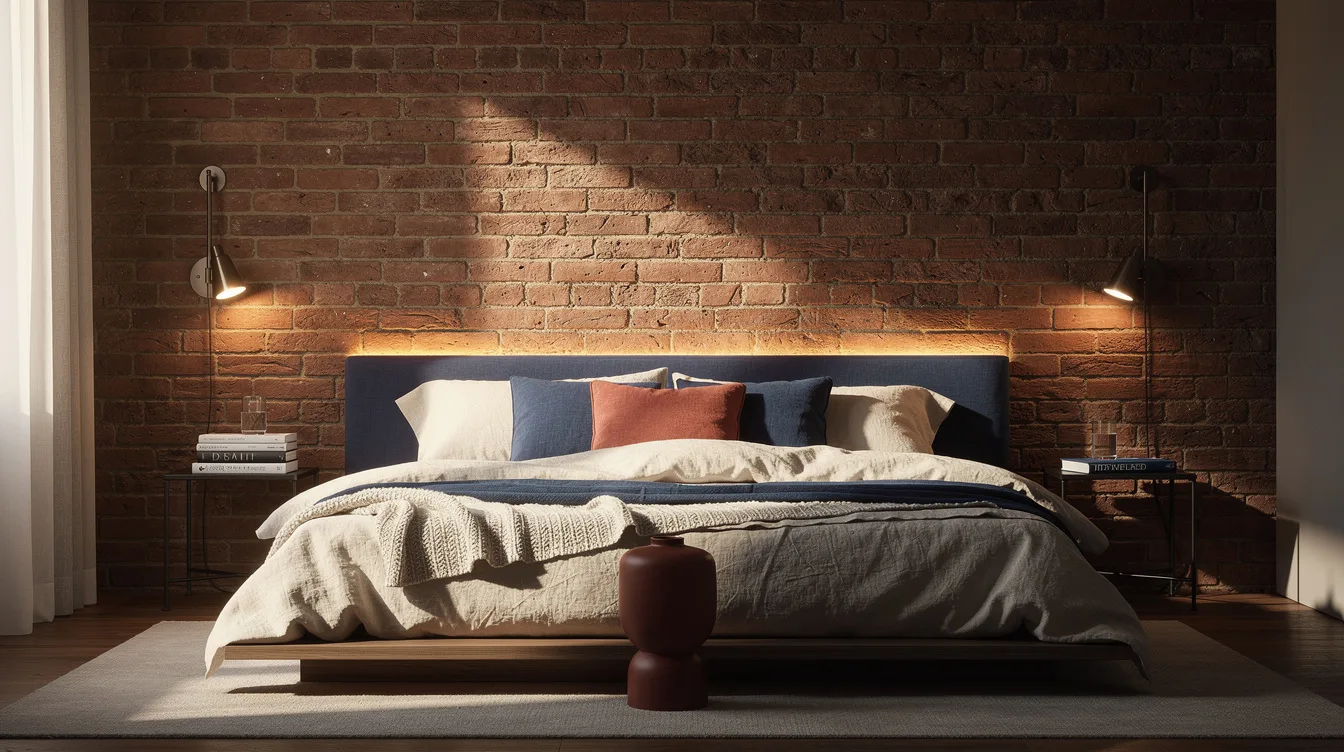
At night, exposed brick can look rich and dimensional or harsh and oddly flat. The difference often comes down to where the beam lands: a roughly 63-inch bed needs light that travels across the wall, not a bare bulb aimed straight at it.
The most dependable setup pairs warm general lighting with two bedside reading fixtures and one hidden or grazing accent source. Keep the area around the bed near 2200 to 2700 K, and move closer to 2700 K when the same light must handle practical tasks.
Designers also specify dimming and CRI 90 or higher where possible. Those details préservé the brick’s natural color and let the room settle down after reading time.
Skim Narrow Beams Across the Brick
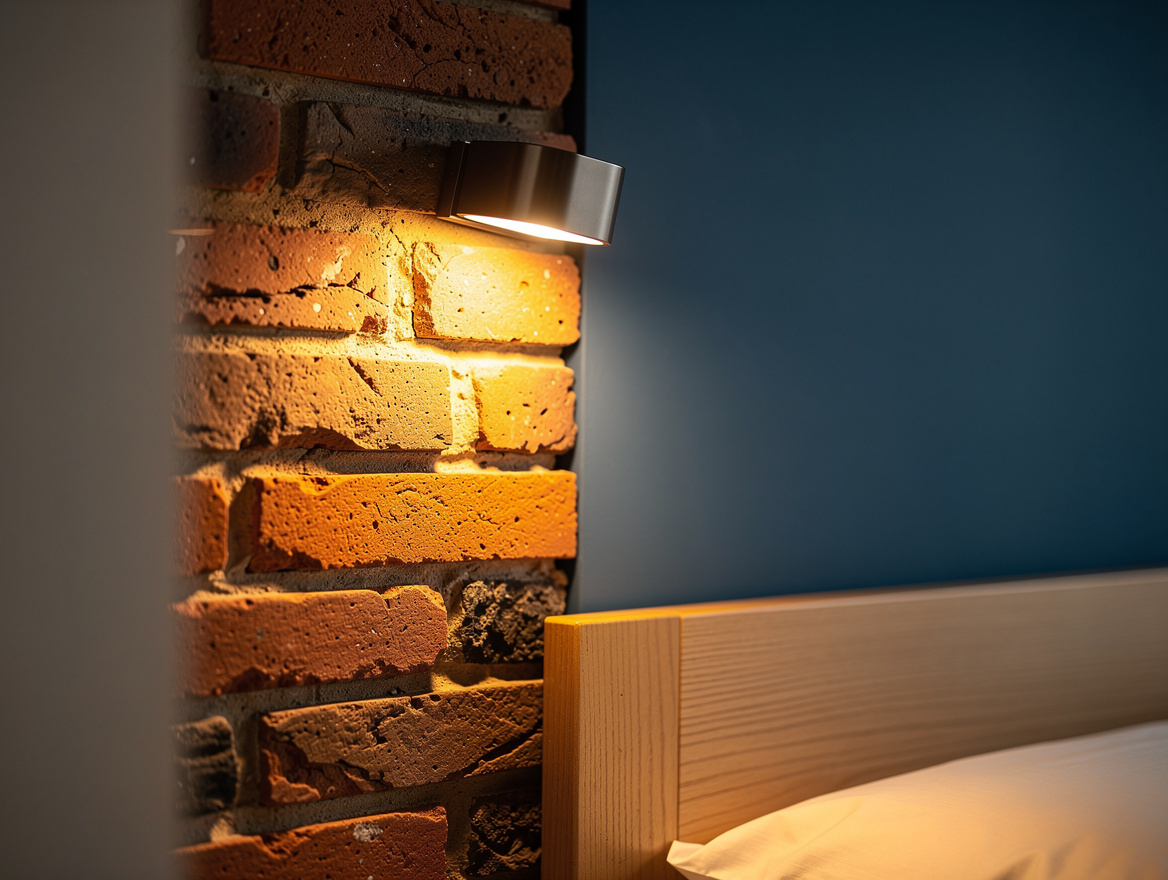
Start with the wall, not the ceiling fixture. A track or adjustable spot set roughly 12 to 20 inches from the brick can send a narrow beam across the surface, revealing mortar lines and texture without turning the bed into a stage.
Choose matte-black steel or aged brass for the track, then use dimmable GU10 LED lamps around 2700 K with CRI 90 or higher where possible. A basic rail with heads typically costs about $100 to $300, while premium hardware and installation can run several hundred dollars more.
Aim each head downward at roughly 15 to 25 degrees, keeping the beam away from the pillow line. One cool-white ceiling lamp aimed straight down flattens the brick and makes the room feel sharper than it needs to.
Place Bedside Light Beyond the Pillow Line
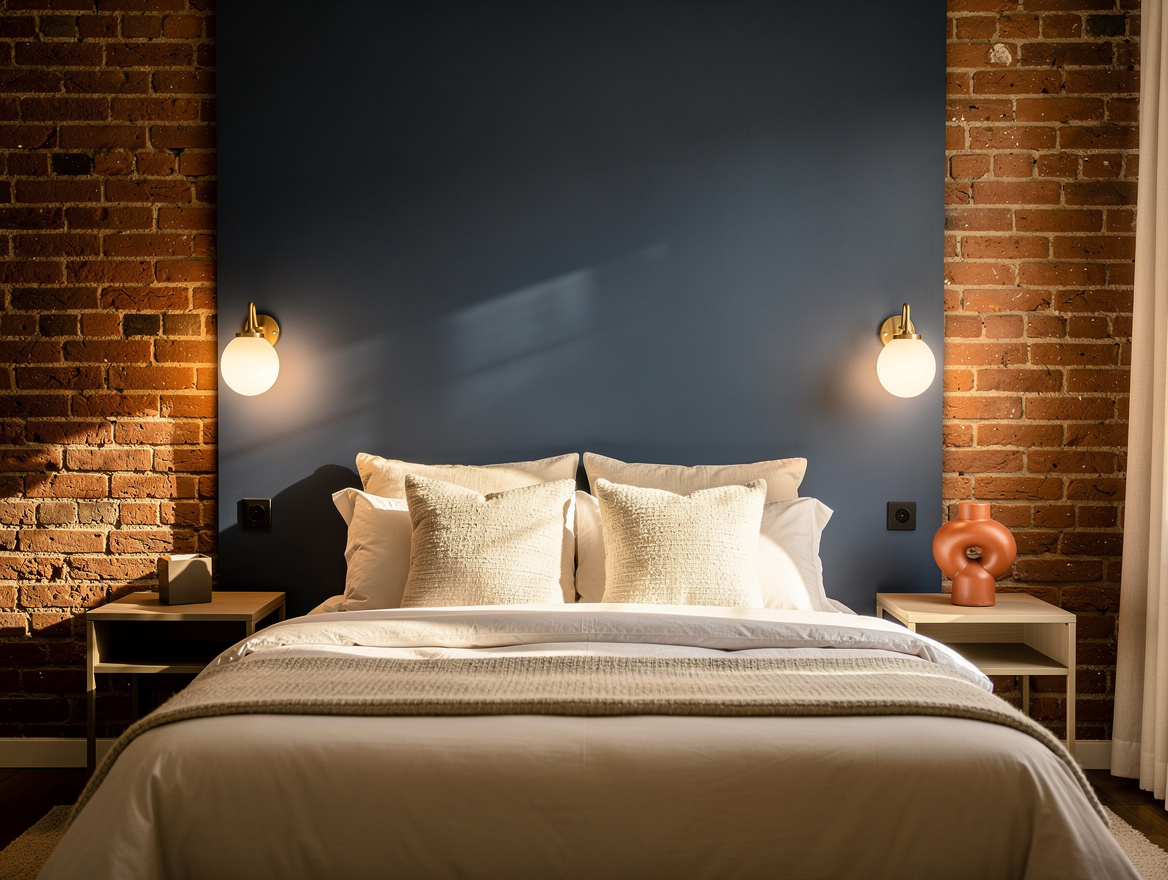
Reading light belongs beside the bed, but its glow should land on the page rather than directly across your eyes. Mount each sconce center about 37 to 45 inches above the finished floor, or roughly 8 to 14 inches above the mattress, depending on the bed frame.
Black powder-coated steel gives exposed brick a crisp architectural counterpoint, while an adjustable arm keeps the light useful for reading. Place each fixture about 6 to 12 inches outside the pillow zone, and use a dimmer so the room can shift from practical to restful.
Opal glass softens the contrast beautifully, especially when the wall has dark mortar or uneven coloring. Mainstream sconces typically cost about $40 to $100 each, while solid-brass or designer versions can reach several hundred dollars.
Hide a Warm Glow Behind the Headboard
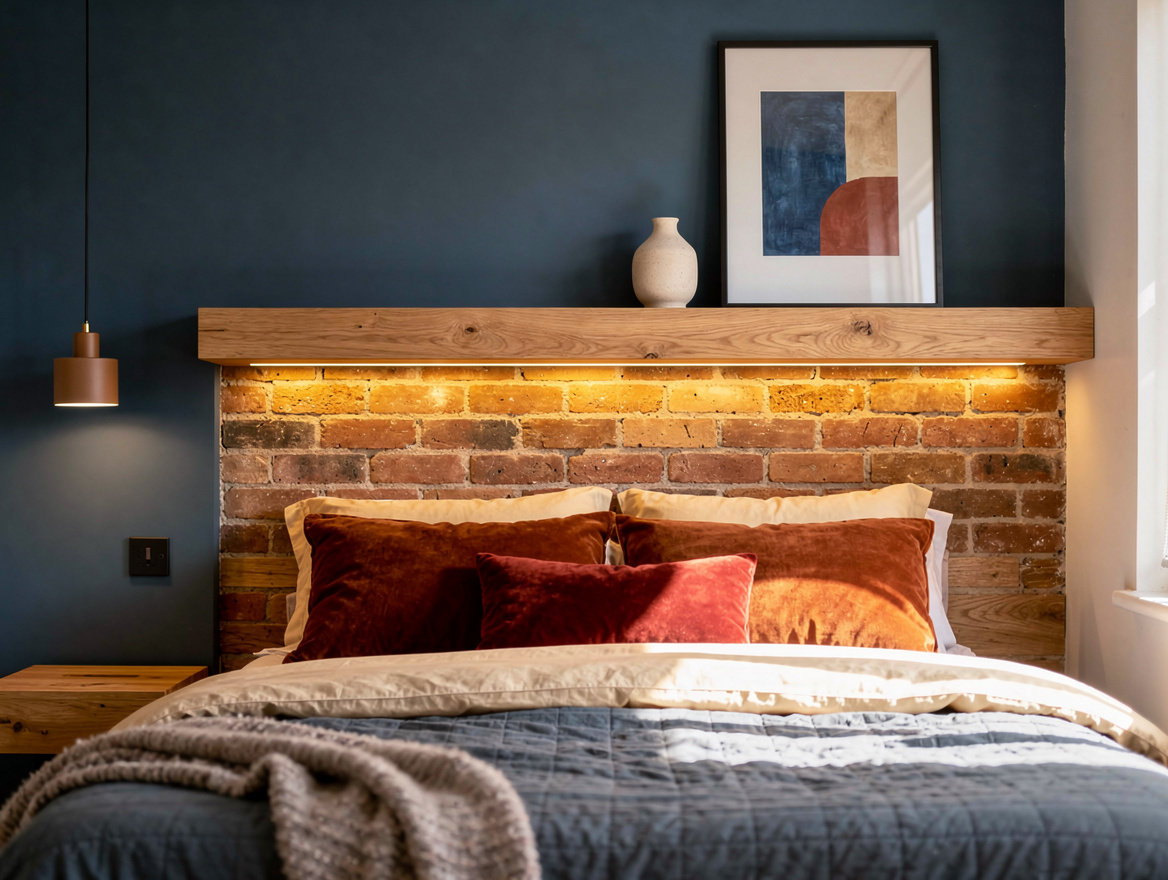
A concealed strip gives the brick a quiet halo and keeps the light source out of sight. Leave roughly 2 to 3 inches behind the headboard edge, allowing the glow to wash upward and sideways instead of shining into the room.
Use 24-volt COB LED tape in warm white around 2700 K, with dimming built into the setup. A typical 63-inch bed needs about 6 to 10 feet of strip, depending on whether you want light along one edge or around most of the headboard.
An aluminum profile with an opal diffuser protects the strip and keeps the line of light even. A comparable 2-meter smart light strip costs around $59.99, while an installed concealed system typically costs more because the channel, wiring, and controls become part of the work.
Build a Shelf-Wash Layer Above the Bed
A floating shelf adds useful depth when the exposed brick feels visually busy. Install it roughly 8 to 14 inches above the headboard, then hide the light toward the wall so the brick receives a small, controlled wash.
Oak brings warmth to red or weathered brick, while walnut makes the arrangement moodier and more tailored. A shelf around 5 to 7 inches deep is usually enough for a small lamp, framed art, or one restrained object without creating a second headboard.
Use warm COB tape in a 45-degree aluminum profile, then connect it to the same dimming system as the bedside lights. DIY materials typically run about $80 to $300, while custom shelving and electrical work can cost several hundred dollars more.
Lift the Wall From the Floor
Floor uplights are the safest answer when drilling into old brick is risky or a rental agreement limits changes. Set each fixture about 6 to 12 inches from the wall, aim it upward, and keep it outside the walking path.
A low-glare black metal cylinder uplight works especially well against rough masonry because its simple shape disappears after dark. Use a narrow-beam 2700 K lamp and keep the intensity low enough that the texture remains visible without creating a bright patch near the floor.
Hide the cord along the baseboard with removable cable clips, or choose a fixture with a braided textile cord that can look intentional beside a wood nightstand. Basic uplights typically cost around $30 to $100 each, with integrated LED versions reaching about $250.
Finish With Pendants and Picture Lights
Pendants beside the bed free the nightstands and give the brick wall a boutique-hotel rhythm. Hang the bottom of each shade roughly 18 to 24 inches above the tabletop, choosing a compact shade around 5 to 8 inches wide.
Opal-glass pendants provide the softest reading atmosphere, while linen or rattan adds a quieter natural note. An IKEA Sinnerlig-style pendant can suit relaxed rooms, but keep the silhouette modest so the fixture does not compete with the masonry.
When the wall includes framed art, a mirror, or a vintage sign, add an antique-brass picture light about 4 to 8 inches above the frame. Choose a light roughly half to two-thirds the width of typical artwork, and connect it to the same warm dimming plan instead of adding a separate cool-white source.
The full composition should include warm dimmable general light, two controlled bedside reading lights, and one concealed or grazing accent source. That combination gives the brick depth at night while keeping the bedroom comfortable for actual use.
Begin by installing the bedside reading lights, then add one grazing or concealed source aimed at the brick. Test the dimmer after dark before buying anything else, because the wall will tell you exactly where the room still feels too bright.
Mia Carter writes about small-space living and budget home makeovers. She has restyled three rentals and tests most ideas in her own 45 sqm flat.