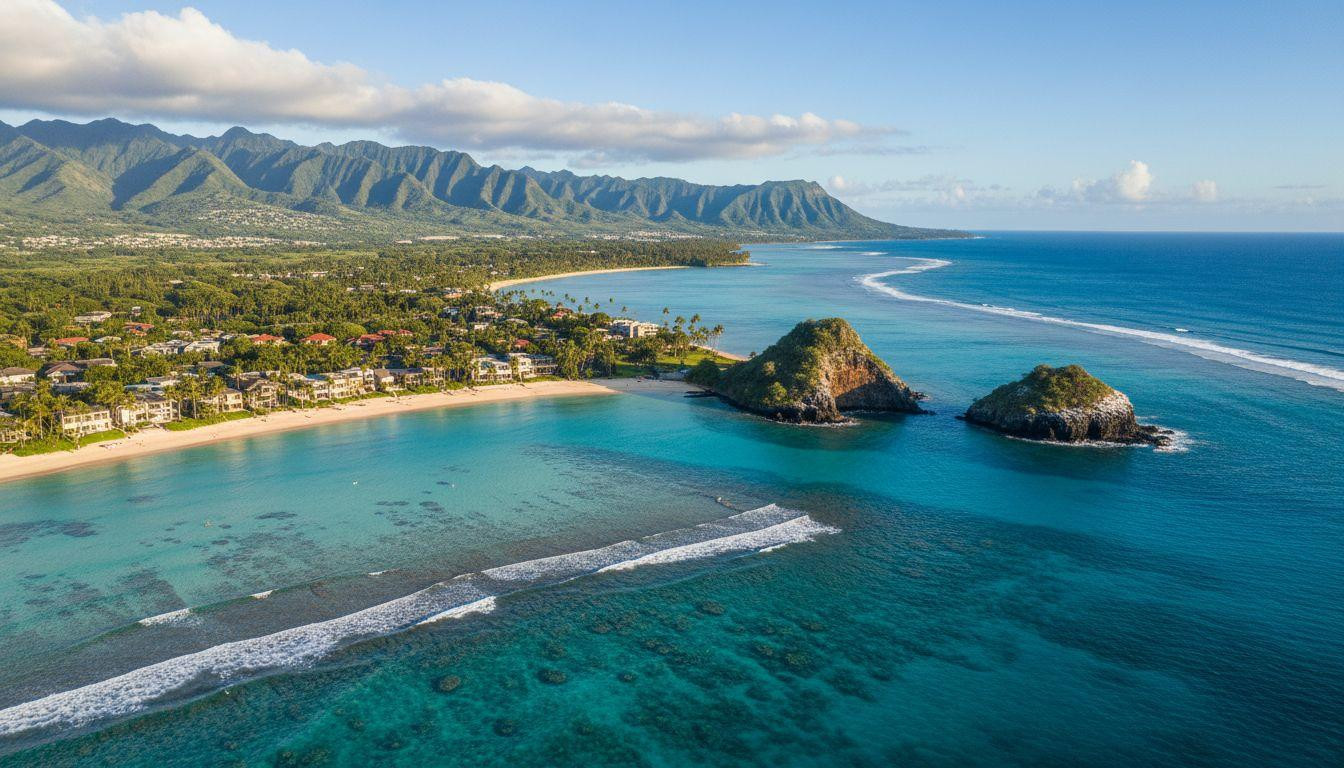
The kayak slides off Lanikai Beach at 6:47am. Two volcanic islands sit 1 mile offshore, close enough to see detail in the lava rock. The water between here and there runs turquoise over white sand, then shifts to deeper blue where coral begins. Most visitors paddle to one island and turn back. Six distinct spots wait within this small sanctuary zone, each offering something the others don’t.
Kailua sits 16 miles from Honolulu on Oahu’s windward coast. Population 40,000. The twin Mokulua Islands anchor a state seabird sanctuary that draws roughly 50,000 kayakers annually, compared to Hanauma Bay’s 1 million snorkelers. March brings calm trade winds at 5-10 mph, water temperatures of 74-76°F, and crowds 40% lighter than summer peaks.
Moku Nui landing: where seabirds own the rocks
The larger island rises from turquoise shallows with black lava cliffs reaching 50-100 feet. Wedge-tailed shearwaters nest in burrows from April through October, their calls echoing across the rocks at dusk. The protected cove on the windward side allows beach landings during calm conditions. Visibility runs 20-30 feet through water so clear you count individual coral heads from the kayak.
What makes this spot different
State sanctuary status limits human impact. No commercial development exists on either island. The lava formations create natural tide pools where ocean water cycles through with each swell. Queen’s Bath sits on the backside, an 8-foot deep pool carved into coastal rock. Locals cliff-jump here on calm days, but rough seas have claimed lives. The pool fills and drains with wave action, creating moments of glass-calm water between sets.
How to experience it safely
Landing permits cost $3 per person, included with most kayak rentals. Respect the 100-foot buffer around nesting areas. The scramble to Queen’s Bath takes 5-10 minutes over jagged lava rock. Go with someone who knows the route. Multiple deaths occur here yearly when swells surprise swimmers. Check ocean conditions before attempting the backside pools.
Lanikai Beach launch: the quieter start
This residential beach sits 2 miles from Kailua Beach Park. The paddle to Moku Nui measures 1 mile versus 1.5 miles from the main park. Street parking fills by 9am on weekends. Arrive before 7am and you’ll launch with maybe 10 other paddlers instead of 50. The Lanikai Pillbox Trail starts nearby, offering summit views of both islands in 20-30 minutes.
Launch logistics that matter
Kailua Beach Adventures delivers rentals to Lanikai for free. Single kayaks run $74 for four hours, doubles $89. The beach narrows to about 50 feet at high tide. Coral sand mixed with lava pebbles creates textured landings. Residents prefer early launches to minimize parking overflow. Stick to designated public access points on Mokulua Drive.
Why locals choose this route
The shorter distance means less time fighting wind on the return paddle. March trade winds blow 5-10 mph, pushing you back toward shore. Summer winds hit 15-25 mph, turning the return into work. The residential setting keeps commercial tour groups away. You paddle in the company of people who live here, not buses of tourists dropped for three hours.
Popoia Island: the turtle swim
Flat Island sits 0.5 miles from Kailua Beach Park. Green sea turtles feed on the north side reef in morning and late afternoon. Fifty percent of paddlers report turtle sightings. The island circumnavigation takes 20-30 minutes. No landing allowed due to seabird sanctuary rules, but you can anchor offshore and swim.
What you’ll find in the water
The north reef drops to 5-15 feet, shallow enough for snorkeling without scuba gear. Coral formations shelter tropical fish in water that stays glass-clear on calm days. Snorkel rentals add $25 to kayak packages. Visibility matches Moku Nui at 20-30 feet. Turtles surface to breathe every few minutes, unbothered by swimmers who keep respectful distance.
Easier for first-timers
The half-mile paddle suits beginners better than the full Mokulua crossing. Calmer water near shore means less swell exposure. You can test your paddling skills here before committing to the longer route. The island blocks wind from the east, creating a protected zone on the lee side. Circle it twice and you’ve still paddled less than most Moku Nui trips.
Kailua Beach Park: the main hub
Free parking fills 200 spots by 9am on weekends. Three rental operators work the beach: Kailua Beach Adventures, Hawaiian WaterSports, Windward Watersports. Lifeguards patrol 9am to 4:30pm. The 2-mile beach stretches wide enough that launch zones never feel crowded. Food trucks park 0.2 miles away, serving $10-20 plates after your paddle.
Restrooms and outdoor showers handle post-paddle cleanup. Gear storage happens on the beach under visual watch, though theft stays rare. The protected bay lets you practice strokes before heading to open water. Molokai’s remote beaches offer similar calm, but Kailua puts everything within walking distance of your car.
Twin Islands channel paddle: the blue-water crossing
The 60-80 minute round trip crosses open ocean between Kailua and Moku Nui. Coral reefs sit 10-20 feet below, visible through your kayak hull on clear days. Forty percent of paddlers spot turtles during the crossing. Dolphins appear maybe 10% of the time. Seabirds fly overhead constantly, heading between feeding grounds and nesting sites.
March through May offers ideal conditions. Water stays relatively flat at 1-2 feet. Winter swells from November through February can hit 3-6 feet, closing the route. Trade winds blow strongest June through August at 15-25 mph. The outbound paddle fights wind. The return ride home takes 15-20 minutes with wind assistance. Time your departure for morning calm before winds build.
Planning your Mokulua journey
Self-guided kayak rentals cost $74-119 depending on kayak size and duration. Guided tours run $179-285, with the high end including e-bike rides and lunch. Hanauma Bay charges $48 entry for less wildlife and more crowds. Kailua prices run 10-15% below Oahu averages.
Rental cars from Honolulu cost $50-80 daily. The 30-45 minute drive hits traffic during rush hours. Book kayak reservations 9 days ahead for best selection. March 2026 sees shoulder-season pricing with summer-level water temps. Arrive before 7am for parking and calm launch conditions. Mexico’s cenotes offer similar turquoise water, but require cenote-hopping tours instead of self-guided access.
Your questions about Mokulua Islands answered
When should I avoid paddling to the islands?
November through February brings winter swells of 3-6 feet that make the crossing dangerous. Shearwater nesting season runs April through October, when landing restrictions tighten around bird colonies. Weekend mornings see 3x the paddlers of weekday launches. Wind speeds above 15 mph create challenging return paddles for beginners.
How does this compare to other Hawaii kayak spots?
Big Island’s Na Mokua requires a 2-hour paddle through rougher seas. Costa Rica’s calm reefs offer easier snorkeling but lack the volcanic island drama. Mokulua delivers sanctuary-level wildlife in beginner-friendly conditions. The 1-mile distance from Lanikai makes it accessible to average paddlers, not just athletes.
What gear do I actually need?
Rentals include kayak, paddle, life jacket, whistle, and dry bag. Add $25 for snorkel gear if you want to swim the reefs. Bring reef-safe sunscreen, water bottle, and waterproof phone case. The $3 landing permit comes with most rentals. No special skills required beyond basic swimming ability and willingness to paddle for an hour.
The paddle back to Lanikai happens with wind behind you. The twin islands shrink in your wake. Turquoise fades to the deeper blue of Kailua Bay. Six spots explored in one morning, each one different from the last, none of them requiring a guide to tell you where to look.