I used to lie in bed staring at a white ceiling that made my 10 by 12 foot bedroom feel shorter, colder, and somehow more temporary. The room had enough color at floor level, but the empty plane above the bed swallowed every bit of atmosphere.
Once I treated the bedroom ceiling as a surface with weight, the room gained depth without a renovation. Color, directional pattern, real relief, and grazing light all change what your eyes think the ceiling is doing.
Drench the Upper Envelope in One Color
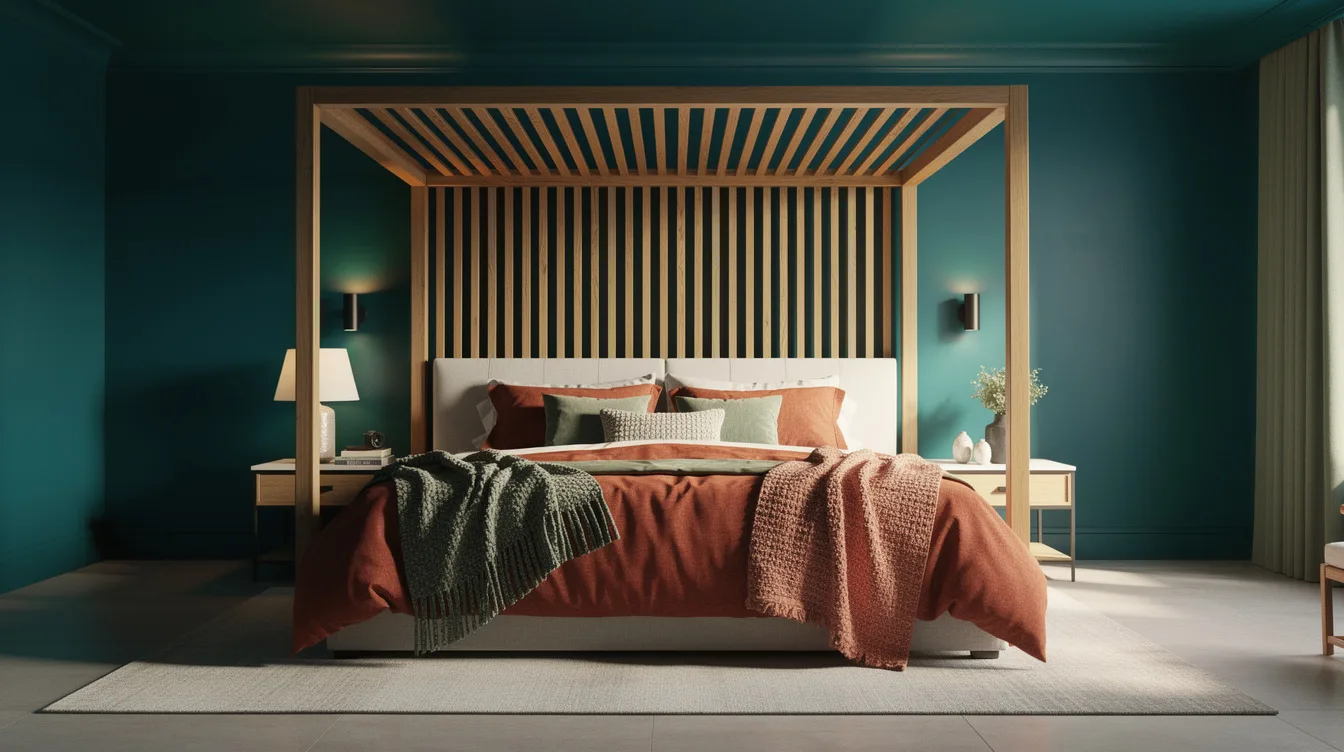
I stopped treating the ceiling as the room’s leftover white surface and carried deep teal paint across it and roughly 18 inches down each wall. That softened the sharp corner line that had been making my modest bedroom feel like a box.
A matte finish matters here because matte interior paint absorbs glare and lets the color feel continuous after dark. For a roughly 120 to 180 square foot ceiling, a typical DIY paint budget runs about $40 to $120, and I’d spend more on a good roller before buying another decorative pillow.
Low-chroma shades such as inky blue, tobacco, plum, and olive work best when you want a bedroom to feel enclosed. I’d skip a bright primary blue overhead unless the rest of the room is deliberately graphic.
The payoff is depth without construction work: the ceiling recedes, wall edges blur, and the bed gets the hotel-room presence it deserved.
Frame a Colored Center With a Halo
My favorite option for people nervous about full color drenching is a halo ceiling: a saturated center surrounded by a lighter band of warm white paint. It reads like a shallow tray even when the ceiling is perfectly flat.
I like a roughly 12 to 24 inch perimeter band, wide enough to look intentional from the bed rather than like a painter’s accident. A terracotta center with creamy walls feels warmer than a standard beige bedroom ever will.
Use painter’s tape and measure from each wall before committing to the shape, especially in an older room with corners that are slightly off. A typical DIY halo costs about $80 to $300 in paint and supplies, depending on how many colors you bring home.
Keep the frame quiet with ivory trim, then let the center do the talking. This is a strong choice for a tall bedroom that needs its ceiling to feel closer and more personal.
Send Overscale Pattern Across the Bed
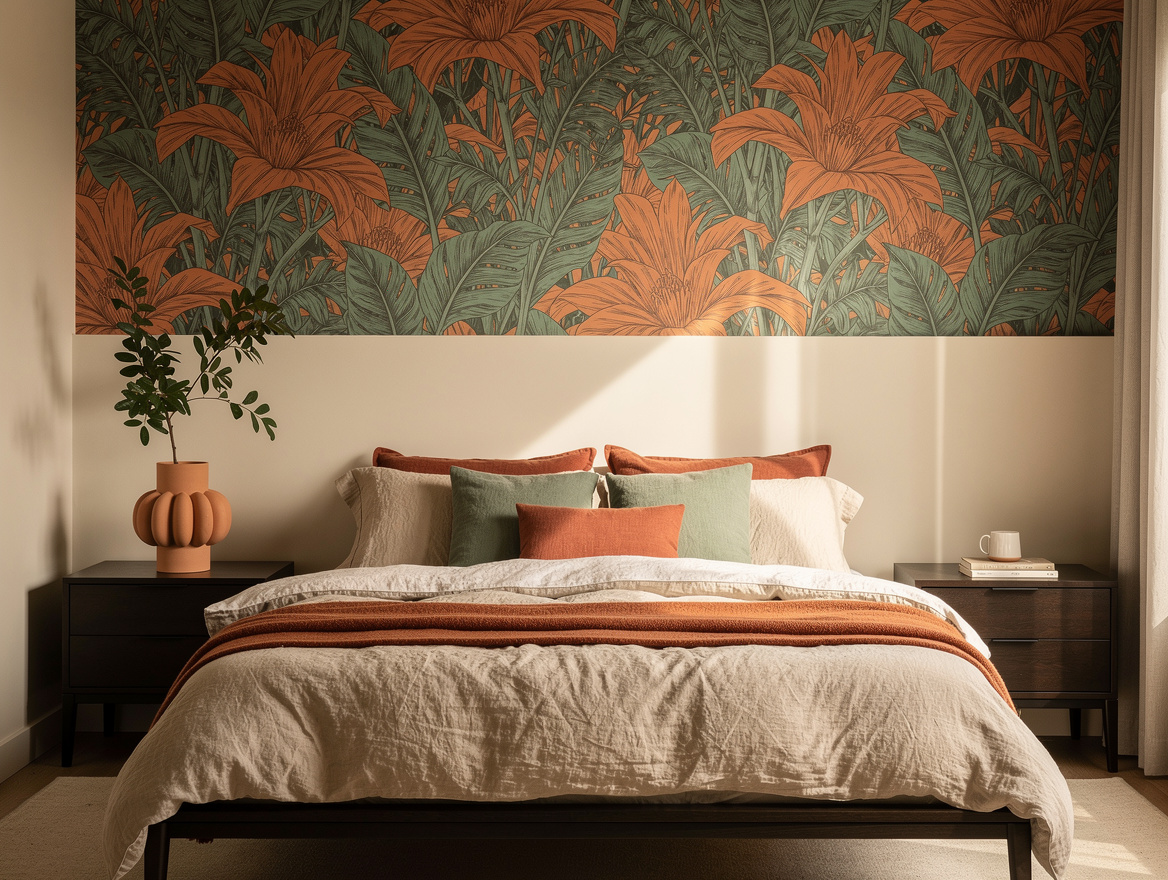
Wallpaper overhead sounds dramatic because it is, and that is precisely why it can make a plain bedroom memorable. A large-scale botanical wallpaper turns the ceiling into a canopy instead of another blank plane.
Choose a pattern roughly 20 to 40 percent larger than you would use on a wall, because the viewing distance from the bed shrinks its apparent scale. Clouds can make a low room feel more open, while a dark floral pulls the eye upward and inward.
For a 10 by 12 foot room, plan coverage for about 120 square feet plus around 10 to 15 percent extra for matching and cuts. Installed ceiling wallpaper typically runs about $6 to $14 per square foot, making a typical 120 to 180 square foot bedroom about $700 to $2,500.
Buy a sample first from Wayfair wallpaper or another retailer and tape it above the bed for a few evenings. A pattern that looks charming at eye level can feel restless when it is the last thing you see before sleep.
Pull the Room Longer With Tonal Stripes
Stripes give a ceiling direction, which is more useful than random contrast in a narrow bedroom. I ran close-toned bands of petrol blue paint parallel to the longest wall, and the room immediately seemed less squat.
Keep stripes around 12 to 24 inches wide and use colors that share an undertone, such as olive and sage or rose and oxblood. High-contrast candy stripes can tip from tailored to children’s-party fast.
The work is fussy, so mark every band before painting and burnish the tape edge with a plastic card. A typical DIY materials budget falls around $60 to $200, mostly depending on paint quality and how much masking tape you waste learning patience.
Pair the treatment with a plain linen duvet cover and simple bedside lamps. The ceiling already has movement; the bed does not need competing pattern.
Build a Slatted Canopy Above the Bed
For literal depth, I would choose a partial canopy of oak acoustic slats over the bed and continue it a short distance down the headboard wall. Repeating battens create real shadow lines, so the effect holds up far better than painted imitation.
A warm wood tone makes saturated walls feel grounded, while black-stained ash works with plum or muted cobalt. I prefer covering the bed zone instead of every inch of ceiling because restraint makes the installation look architectural.
Check panel dimensions and ceiling clearance before ordering, then map light fixtures and smoke detectors on paper. Pre-made slat systems can be expensive, but a targeted panel field gives you the depth effect without turning the bedroom into a recording studio.
Let soft light skim the wood battens from the side rather than aiming a bright fixture straight down. Texture disappears under harsh overhead light, which defeats the whole reason to add it.
Layer Cove Light Around Saturated Color
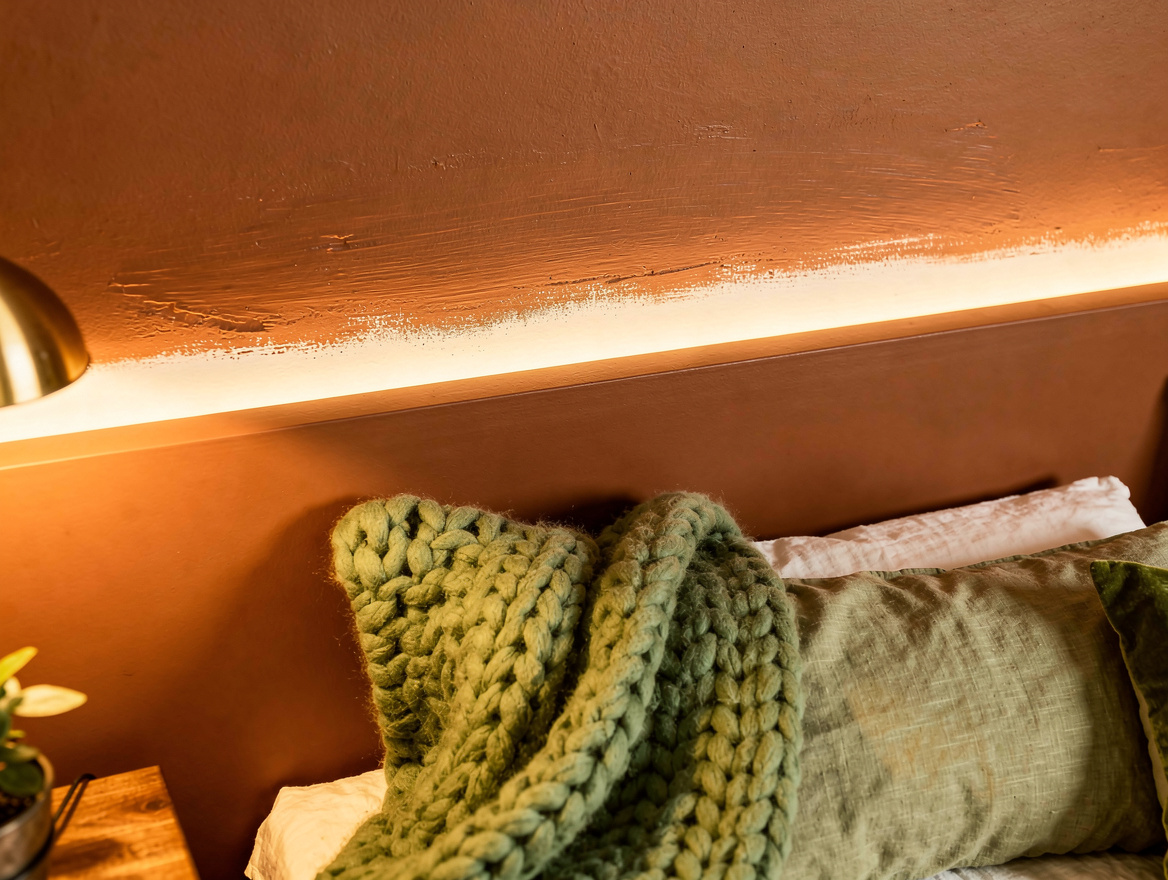
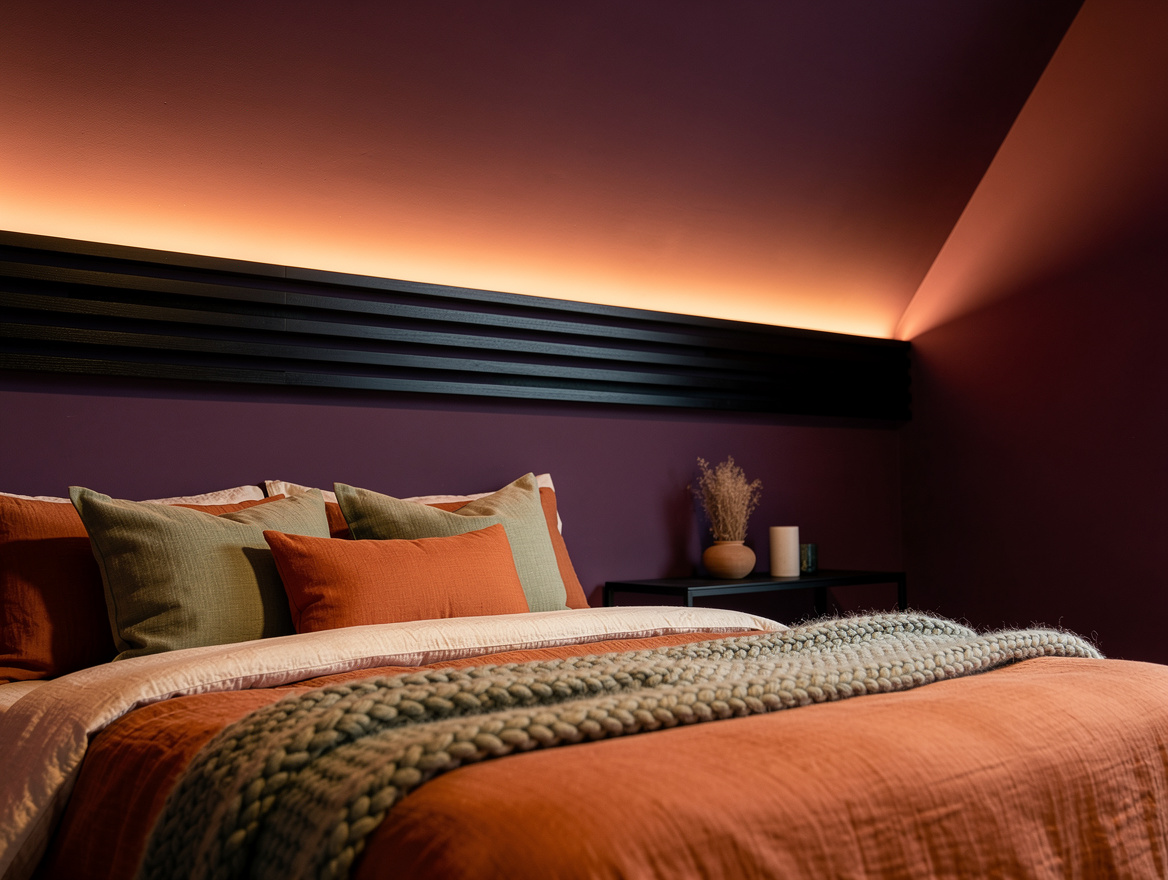
Color looks flatter at night when one ceiling fixture blasts everything from the center. A shallow cove with hidden warm LED strip lighting lets light graze the ceiling edge and gives a painted plane a believable second layer.
I’d use this with rust, saffron, or clay pink in a bedroom that feels cold or overly lofty. Those warmer colors visually come forward, so the glow makes the room feel intimate without lowering the actual ceiling.
Keep the electrical work professional when wiring is involved, and choose dimmable low-glare lighting so bedtime does not feel like a retail fitting room. Add a pair of shaded bedside lamps before adding more ceiling brightness.
The final touch can be one tactile item, such as a brass picture light above art or a wall washer near the headboard. The ceiling should have a glow, not compete with every surface below it.
Start with a paint sample on a foam board and view it from your pillow in daylight and at night. The right ceiling color should make the bed feel anchored before you spend a dollar on wallpaper, slats, or lighting.
Mia Carter writes about small-space living and budget home makeovers. She has restyled three rentals and tests most ideas in her own 45 sqm flat.