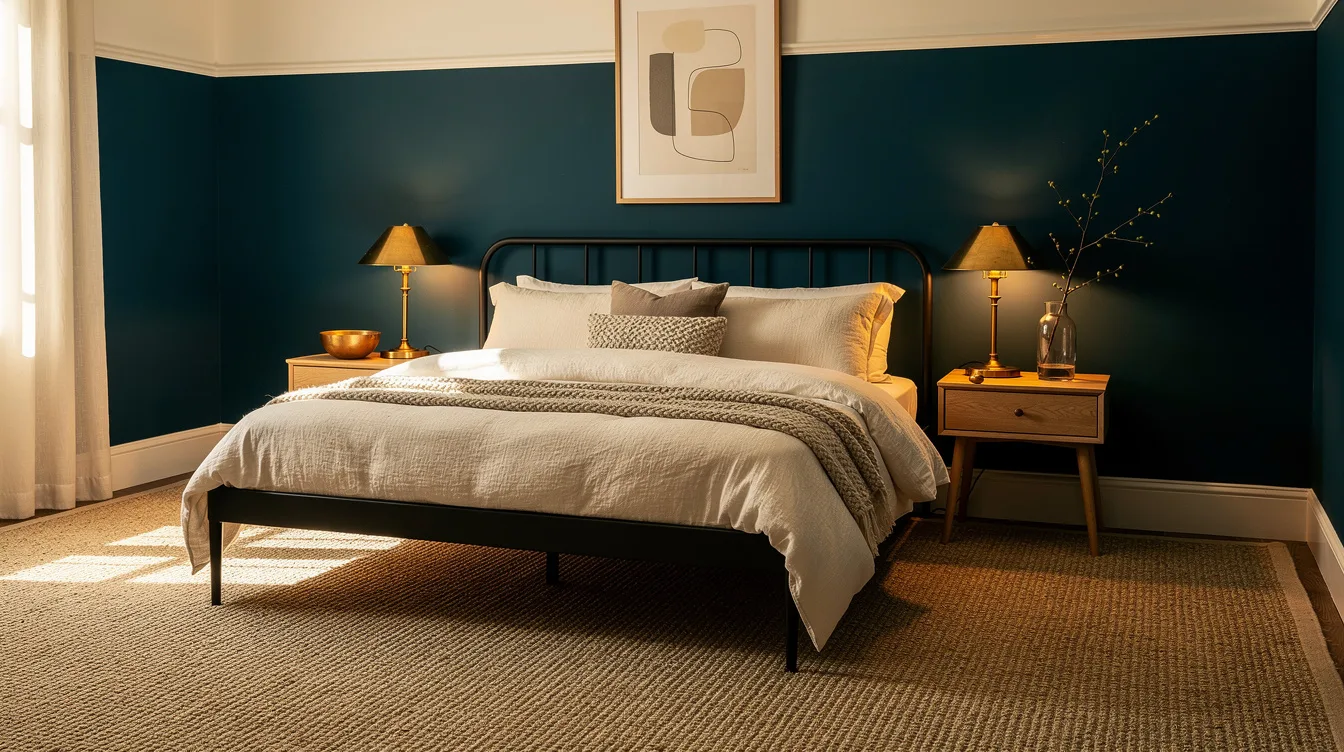
Black-and-white bedroom ideas often fail at the bed: a dark frame meets bright walls, plain cotton, and a floor with no texture between them.
For a 160 × 200 cm bedroom, the fix is simple but specific: let black act as the graphic frame, then build warmth through wood grain, woven fibers, and creamy textiles.
The result feels crisp enough for a modern room and comfortable enough for slow mornings.
Build the Palette Around Warm White
A black-and-white bedroom needs a soft landing. Start with warm off-white plaster, ivory cotton, oatmeal linen, or greige curtains instead of optical white.
Use a roughly 70 / 20 / 10 balance: 70% quiet light tones, 20% wood and woven warmth, and 10% black structure.
That ratio keeps the room bright while giving black a clear job. It should frame the bed, windows, or artwork rather than cover every large surface.
North-facing rooms usually need a creamier base, while south-facing rooms can handle a more neutral chalk white.
Frame the Bed With Controlled Black
A black bed gives the room its graphic outline, especially when the walls and bedding stay soft. The IKEA MALM in a black finish is a practical example for a 160 × 200 cm room.
The frame measures about 176 cm wide and 209 cm long, with a headboard roughly 100 cm high and about 21 cm of clearance underneath.
Its listed frame price is €249, or €309 with the LURÖY slatted base. The open space below keeps the dark finish from reading as one heavy block.
Keep the rest of the black accents slim: a curtain rod, picture frames, one bench detail, or a pair of small lamps is enough.
Bring In Oak Before Adding More Decor
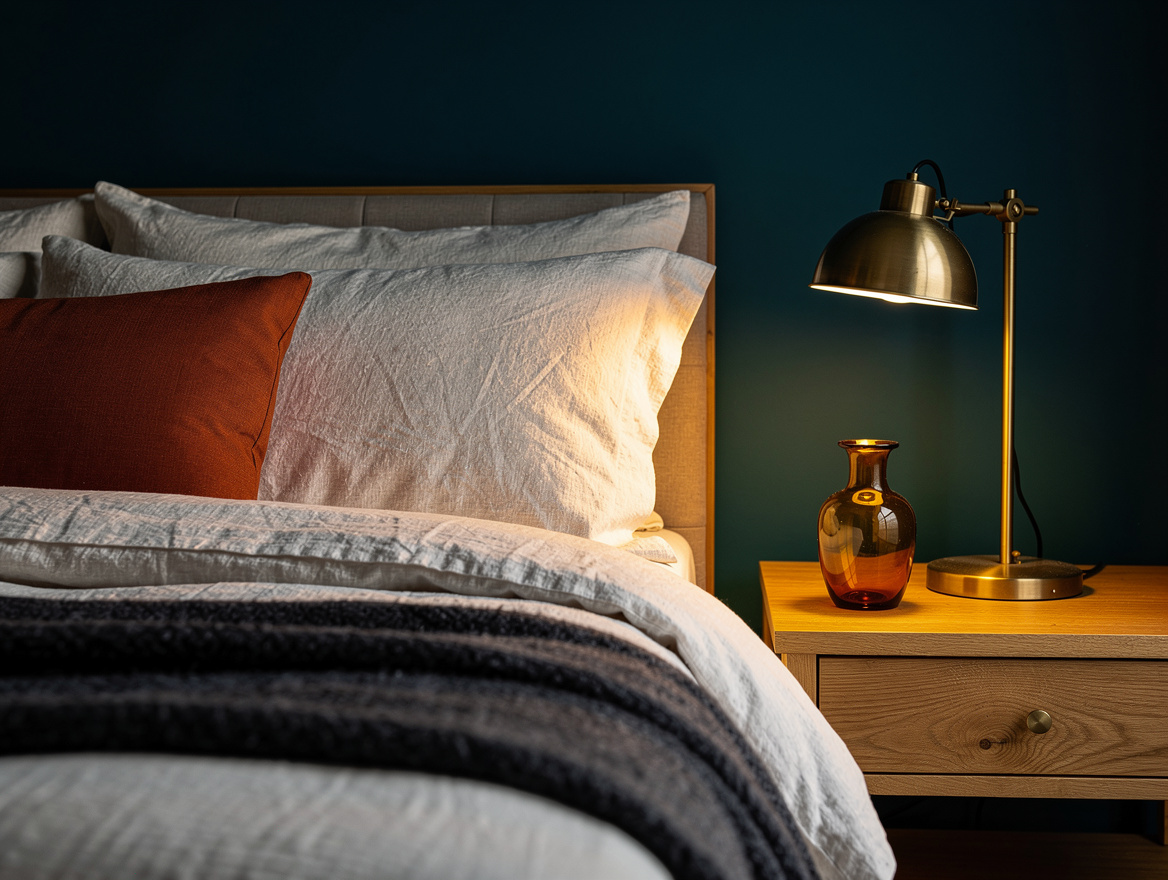
Natural wood does more for this palette than another decorative object. Choose natural oak nightstands with visible grain instead of gray-washed wood effect.
For a typical 160 cm bed, nightstands around 40 to 55 cm wide and 35 to 45 cm deep give the bed useful breathing room without crowding the walkway.
If you want a moodier bedroom, switch oak for walnut and pair it with ivory or tobacco linen. The deeper grain makes black furniture feel quieter and more settled.
Keep each tabletop purposeful: a lamp, a book, and one small tray can be plenty.
Layer Linen, Cotton, And Wool
Flat white bedding exposes every hard edge in a black-and-white room. A washed oatmeal linen duvet cover adds movement and takes the chill out of the contrast.
For a 160 cm bed, use a duvet around 240 × 220 cm, then layer roughly 65 × 65 cm European pillows with 50 × 70 cm sleeping pillows.
Fold a charcoal wool throw across the foot of the bed for a low, dark note that feels tactile rather than severe.
Add ivory cotton sheets underneath, and let a little of the softer material show at the edge. That small reveal makes the bed look finished without making it fussy.
Ground the Contrast With Natural Fiber
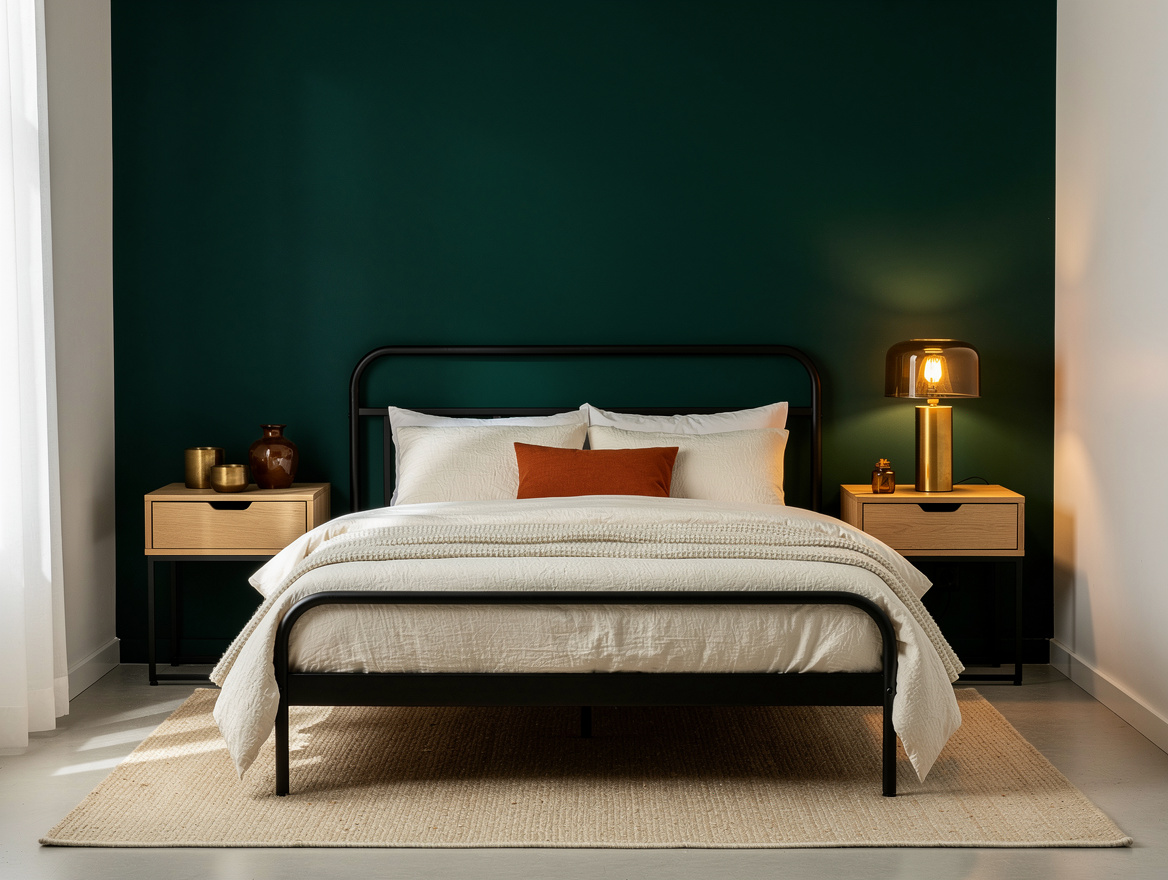
A large rug is the fastest way to stop black furniture from feeling visually sharp. Choose a wool-jute rug or dense jute in a natural oat shade.
A rug around 200 × 300 cm works well beside a 160 cm bed, placed horizontally so it projects roughly 60 to 75 cm on each visible side.
Let it extend about 80 to 100 cm beyond the foot when the room allows. That extra field of texture connects the bed to the floor instead of leaving it floating.
Skip a tiny mat tucked only under the lower edge. It breaks the composition and leaves the strongest black element surrounded by bare flooring.
Warm the Light With Aged Metal
Lighting decides whether the palette feels calm or stark after sunset. Use compact black-and-aged-brass lamps with ivory linen or pleated shades.
Lamps around 45 to 60 cm high usually give a substantial bedside presence without competing with the headboard.
A small travertine tray or lamp base can add another warm mineral note, but keep the stone to one controlled accent.
Choose aged, antique, or burnished brass for handles and frames. Shiny yellow gold makes the room feel louder, while softened metal supports the oak, wool, and linen.
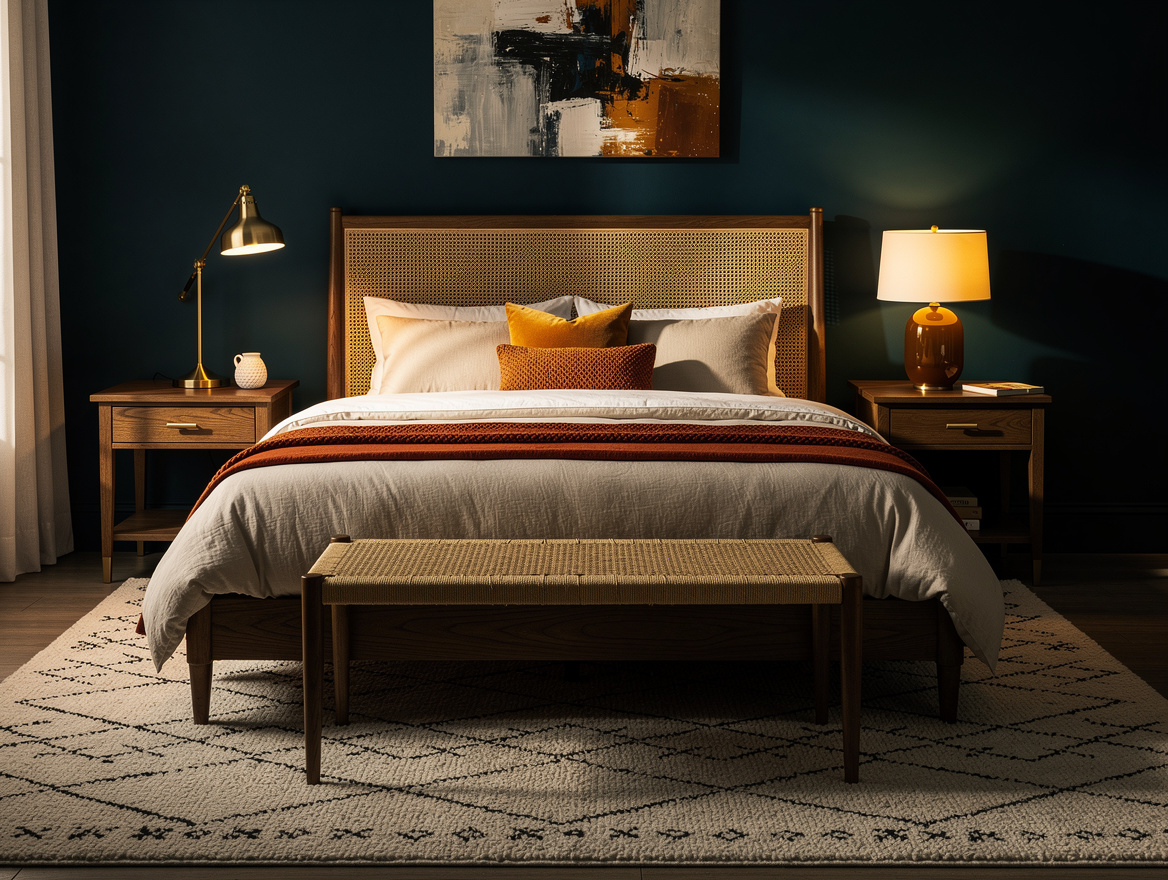
Start with the bed frame and rug, then bring in oak, linen, and one aged-brass light. Once those large surfaces feel warm, the smaller black accents will look intentional instead of harsh.
Mia Carter writes about small-space living and budget home makeovers. She has restyled three rentals and tests most ideas in her own 45 sqm flat.