I know the exact renter backyard problem: patchy grass, one cracked slab by the door, and a lease that makes even one screw feel risky. You want the yard to feel finished, but you also need every single piece to leave with you.
That usually means skipping permanent builds and leaning hard on movable layers. The good news is that portable furniture, containers, lighting, and temporary floor fixes do more than most people expect.
Break the Yard Into Clear Zones
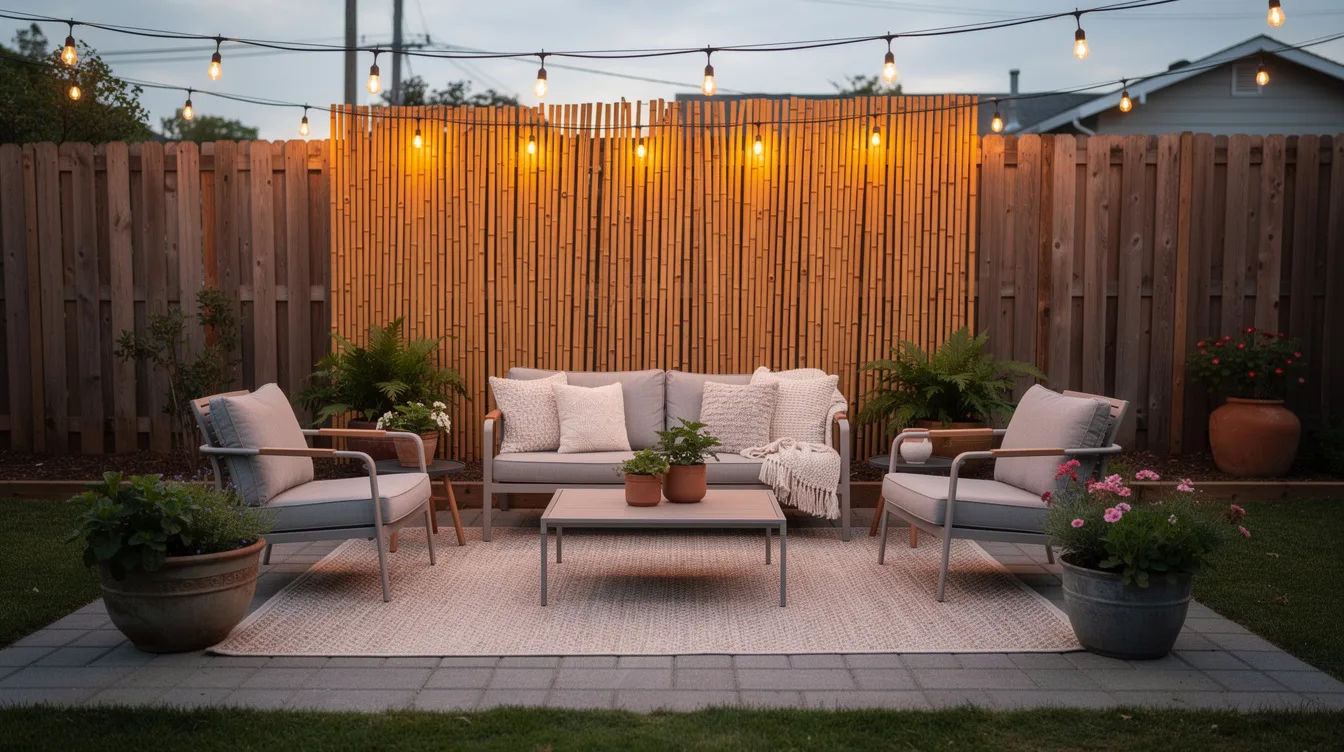
My favorite first move is simple: stop thinking about the yard as one empty rectangle and give it jobs. A 5 ft x 7 ft outdoor rug under two chairs creates a lounge zone fast, and a 30 in to 36 in café table sets up a separate dining spot without eating the whole yard.
For renters, lightweight pieces win every time. Walmart and Target usually have folding steel or aluminum chairs, and a starter mix of seating, a small table, and a rug typically lands around $150 to $600 depending on how much you buy secondhand.
I would not start with a big sectional unless the yard is truly large. Small zones look more deliberate, and they’re much easier to rearrange when you realize the sunny corner is miserable by 4 p.m.
Use Containers to Add Height and Greenery
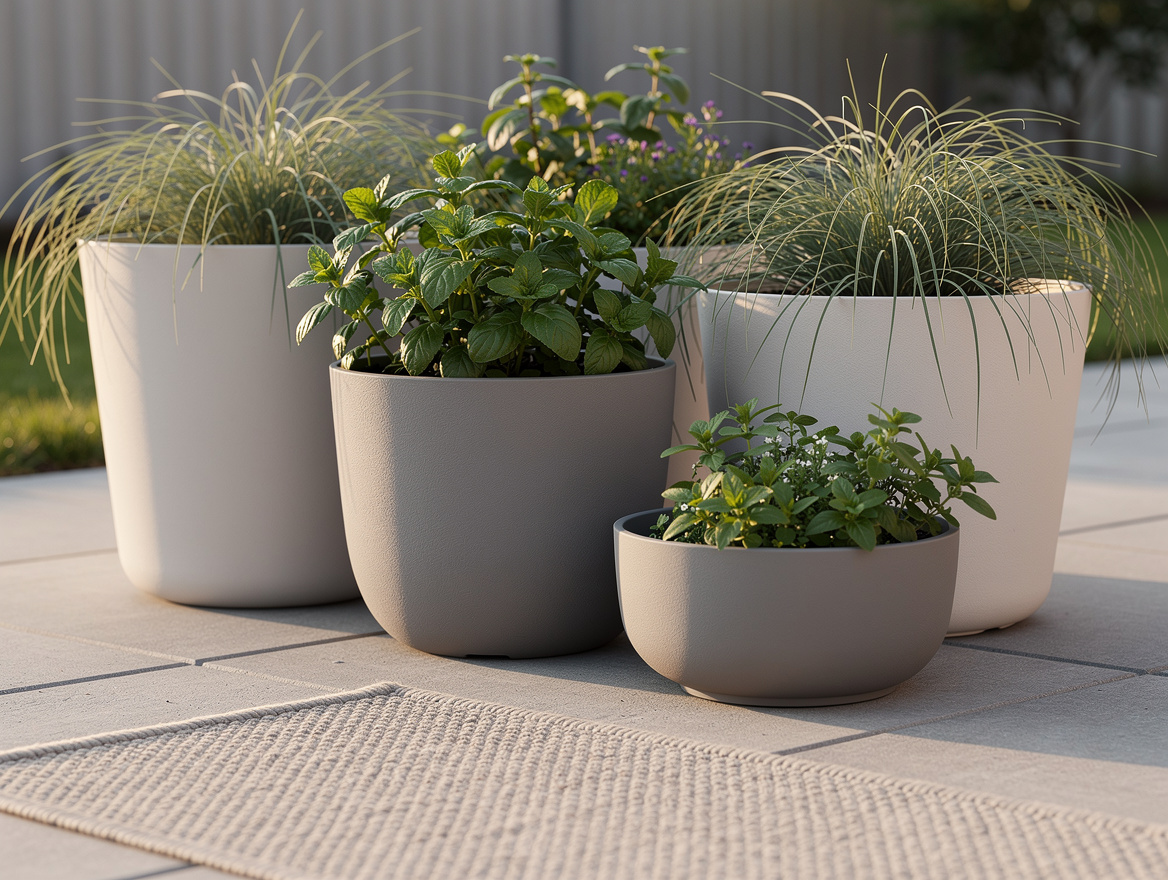
Containers are the safest way to make a rental yard feel alive because nothing touches the property permanently. A good-looking setup is usually 3 to 5 planters in the 12 in to 24 in range, with one or two taller fiberglass planters around 18 in to 24 in wide for height.
I strongly prefer lightweight materials over terracotta in a rental. Home Depot and Lowe’s both carry resin, HDPE, galvanized metal, and fiberglass options, and typical pricing runs about $20 to $80 for smaller pots and $80 to $250 for larger statement planters.
Mixing herbs, one tall grass, and one trailing plant is enough. Too many tiny pots can make a backyard look busy instead of calm.
Create Privacy With Roll Screens and Vines
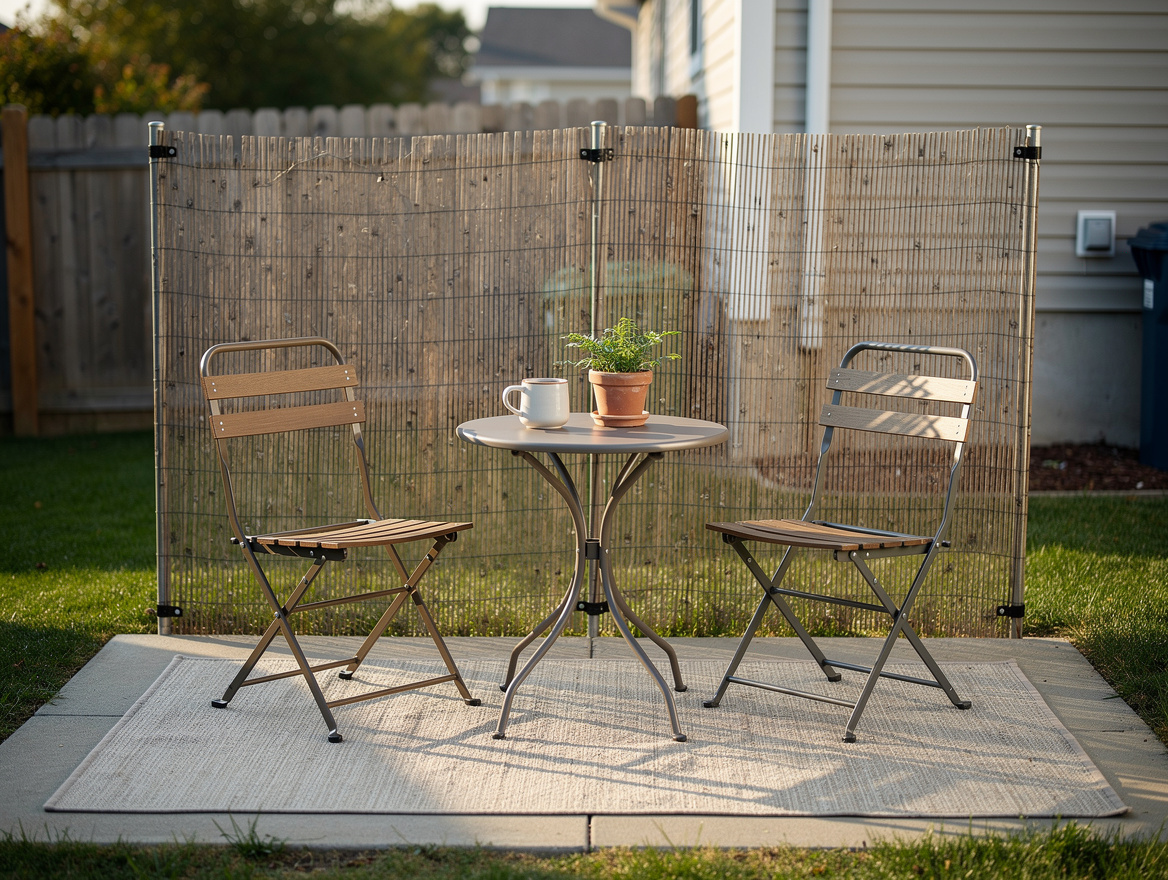
If the real problem is that neighbors can see straight into your dinner plate, skip any fantasy about building a fence. A bamboo or reed screen attached with zip ties to an existing railing or fence is one of the cleanest temporary fixes I know.
A common roll is about 6 ft high by 16 ft long, which is enough to cover a short run or one exposed edge. Amazon and Ace Hardware options usually fall in the $30 to $120 range per roll, depending on thickness and finish.
For a softer look, I like adding vines in large pots with a slim trellis. Expect about $10 to $40 per plant, and use that move only where you actually need screening, because privacy everywhere can make a small yard feel boxed in.
Cover the Ground Before You Buy More Furniture
Ugly ground ruins outdoor spaces faster than cheap chairs do. If the concrete is stained or the soil is bare, lay down a polypropylene outdoor rug first, because that single layer makes the whole yard feel intentional.
IKEA has some of the most useful renter-friendly sizes right now: 2 ft 7 in x 4 ft 11 in for $39.99, 5 ft 3 in x 7 ft 7 in for $59.99, 6 ft 7 in x 9 ft 10 in for $114.99, and 7 ft 10 in x 10 ft for $149.99. Those sizes map well to small chairs, a compact dining set, or a full lounge area.
If your lease allows a loose surface treatment, pea gravel or a tight grouping of concrete pavers can also work. I still think a rug is the smarter first purchase, because it solves the visual mess instantly and moves out with zero drama.
Make Lighting the Main Feature at Night
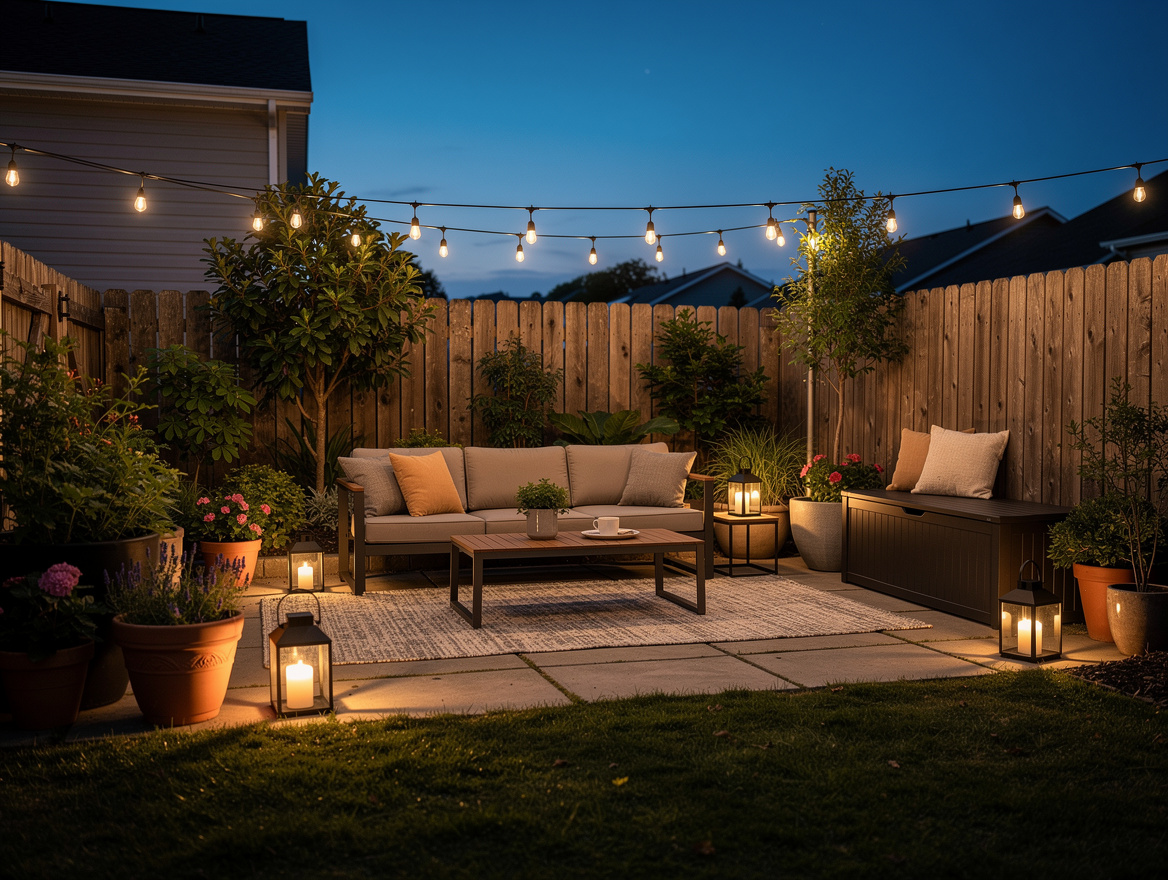
Lighting is where renters can get the biggest mood upgrade with the least commitment. A 25 ft to 48 ft string-light run usually covers a seating area, while a larger yard may need 96 ft or more to look complete instead of skimpy.
I would shop this by retailer, not by trend color. Amazon, Target, and Costco all carry outdoor string lights and solar lanterns, and recent pricing shows long outdoor light sets can land around $80 on sale for a 96 ft run, while shorter decorative options cost more per foot.
Solar lanterns are worth adding if outlets are awkward. One lantern on a table and a pair near the path is often enough, because too many little lights can tip a backyard into theme-park territory.
Choose Storage That Works as Seating or a Side Table
Renters usually need a place to hide cushions, citronella, and stray garden tools, but I hate wasting space on a box that does only one job. A resin deck box or sturdy storage bench can hold supplies and still work as extra seating or a drink perch.
Wayfair, Home Depot, and Amazon regularly stock weather-resistant deck boxes, and typical smaller options start around the low $100s while larger bench-style pieces run higher. I like this buy more than an extra chair, because clutter is what makes most rental yards feel unfinished.
Keep the top flat, add one outdoor cushion if needed, and you’re done. That gives you storage, a landing spot for a tray, and backup seating without adding another bulky furniture shape.
Start with the ground, then place furniture, then add plants and light. That order keeps you from buying random pieces that fight each other, and it usually gives renters the best-looking result for the least money.
Mia Carter writes about small-space living and budget home makeovers. She has restyled three rentals and tests most ideas in her own 45 sqm flat.