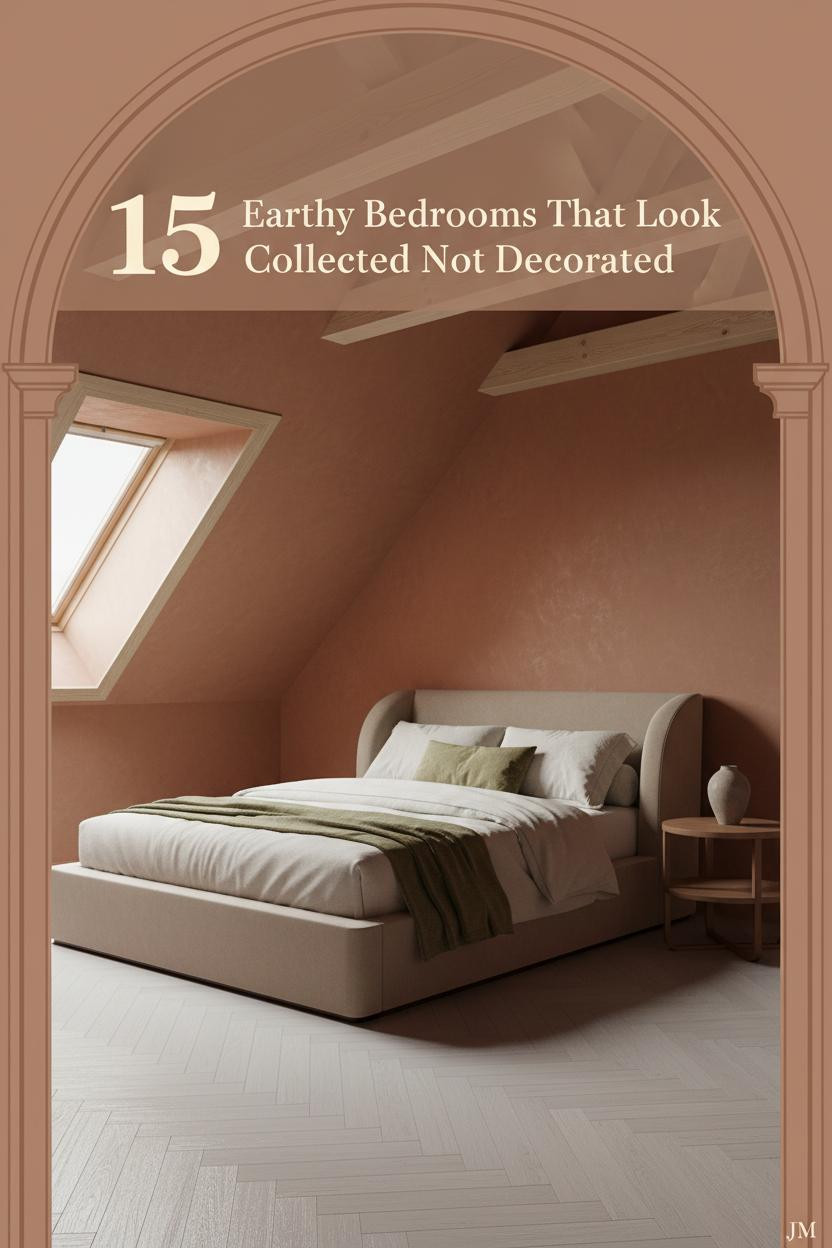
The first thing I notice in the best Modern Earthy Bedroom rooms isn’t the furniture. It’s the feeling that nothing was chosen in a hurry.
These fifteen attic spaces lean into sloped ceilings, raw plaster, and honest materials. Collected, not decorated. Here’s what makes each one work.
The Terracotta Niche That Changes the Whole Room
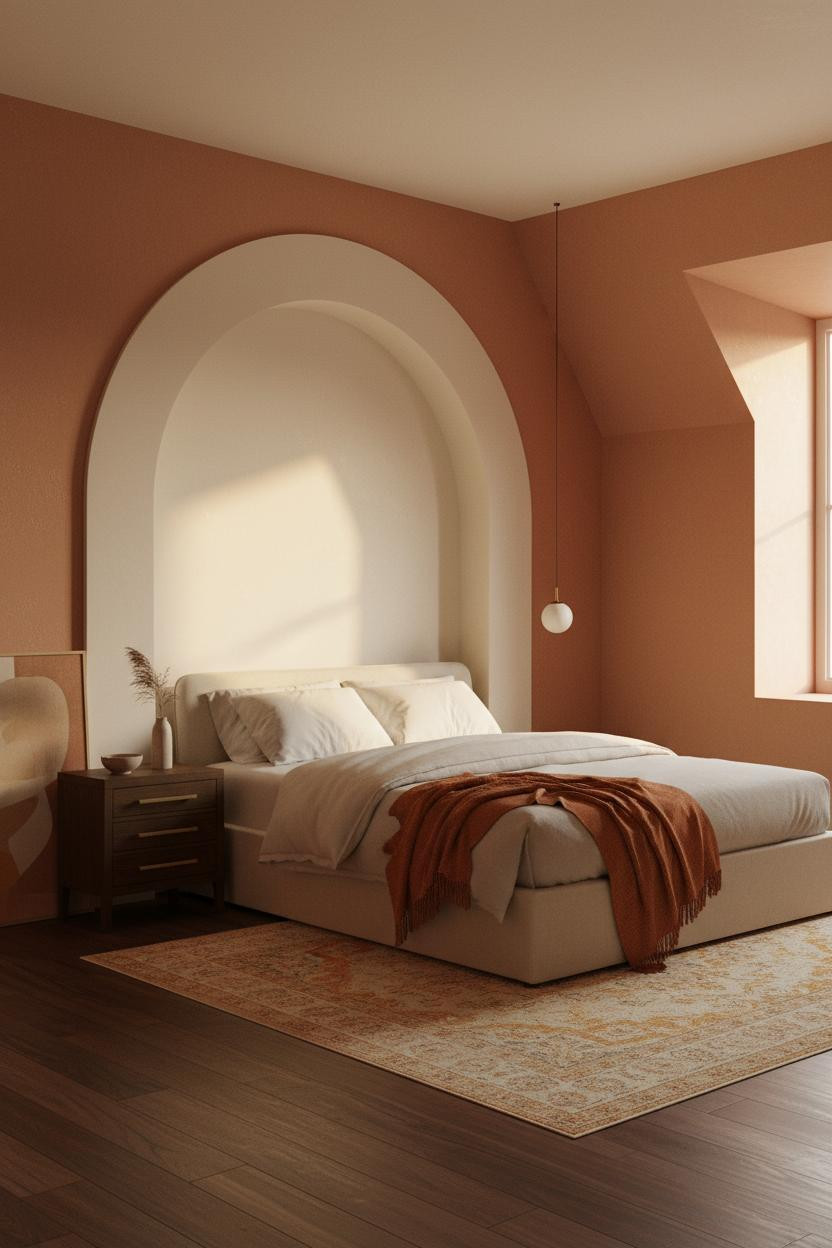


I keep coming back to this one. The arch does something that paint alone never could.
Why it anchors the room: A floor-to-ceiling arched plaster niche in ivory catches warm light along its inner curve, making the whole head wall feel sculpted rather than flat.
Steal this move: Pair the niche with terracotta matte plaster walls and a vintage Persian rug. The warm tones hold each other up.
Dusty Rose Plaster in an Attic That Earns It
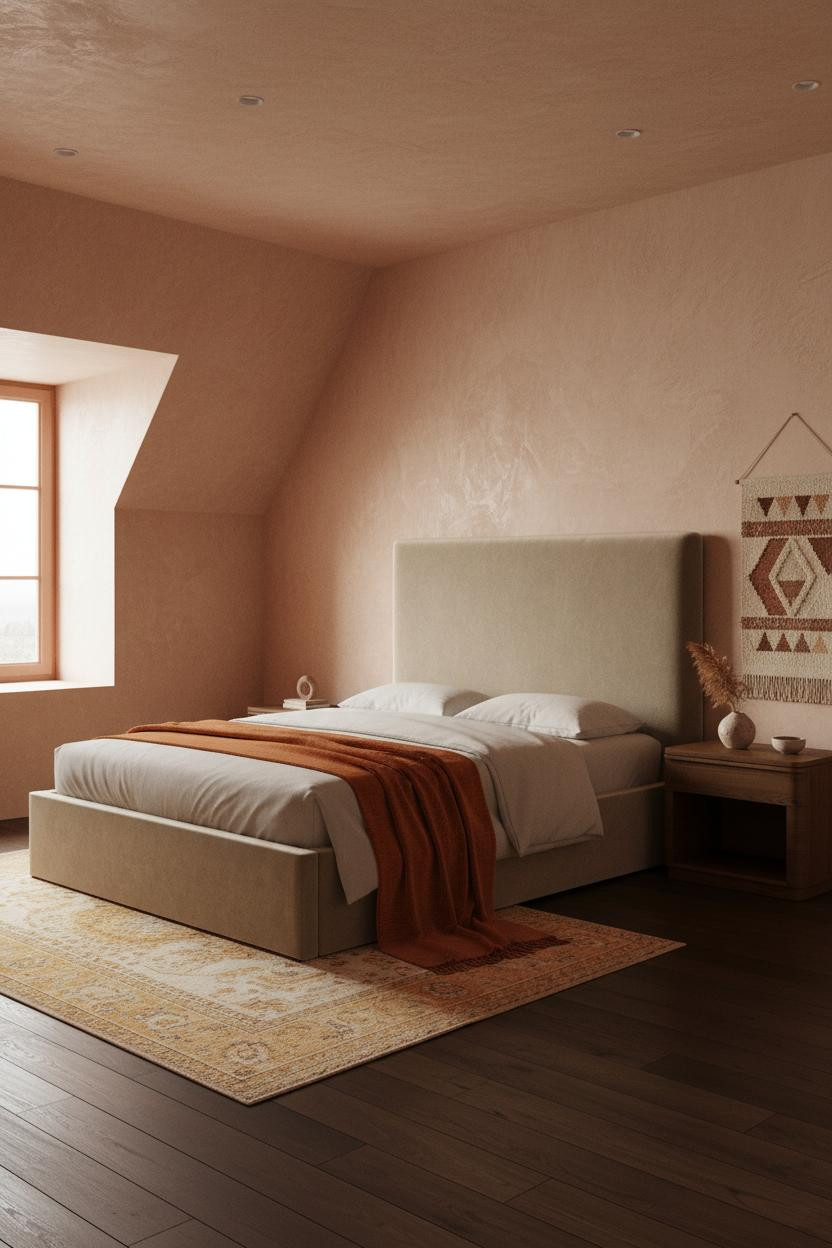

Dusty rose could have gone wrong here. It didn’t.
But the reason it holds is the hand-applied plaster surface. The dry-brush ridges catch raking morning light in a way smooth paint never would, giving the dusty rose plaster real depth rather than a flat blush tone.
Worth copying: Layer a flat-weave rug in faded ochre and cream over dark-stained floors. The contrast is quiet but it keeps the warmth from reading too sweet.
The Wainscoting Trick That Makes Attics Feel Taller
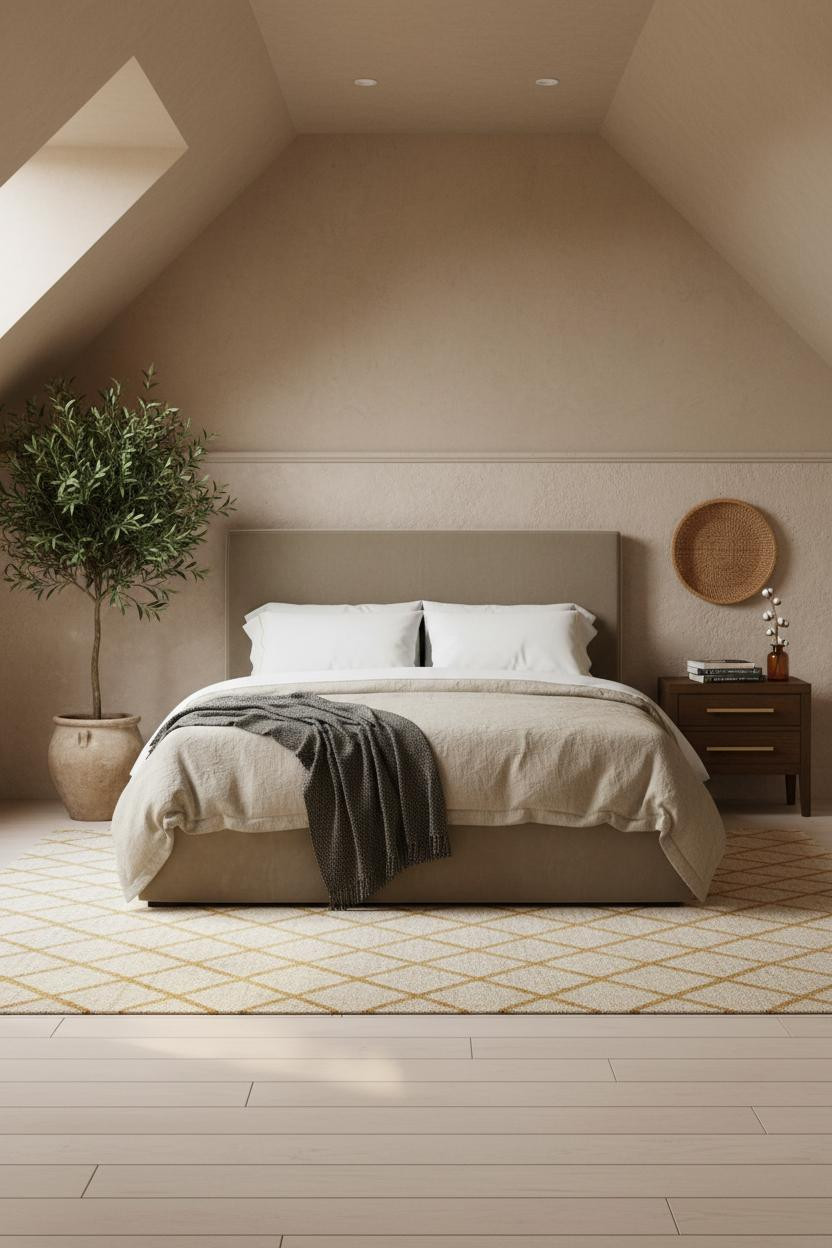

Not what I expected. A painted plaster wainscoting panel on a gable wall sounds heavy. Here it reads bold and graphic.
The raw dry-brushed texture catches flat cool light and creates just enough tonal relief to give the angled ceiling somewhere to land, which keeps the muted camel walls from feeling like a wash of nothing.
The smarter choice: Bleached ash flooring and a Moroccan rug in ochre and cream let the wainscoting be the feature without competition.
Why Honey Oak Herringbone Works Under Warm Plaster
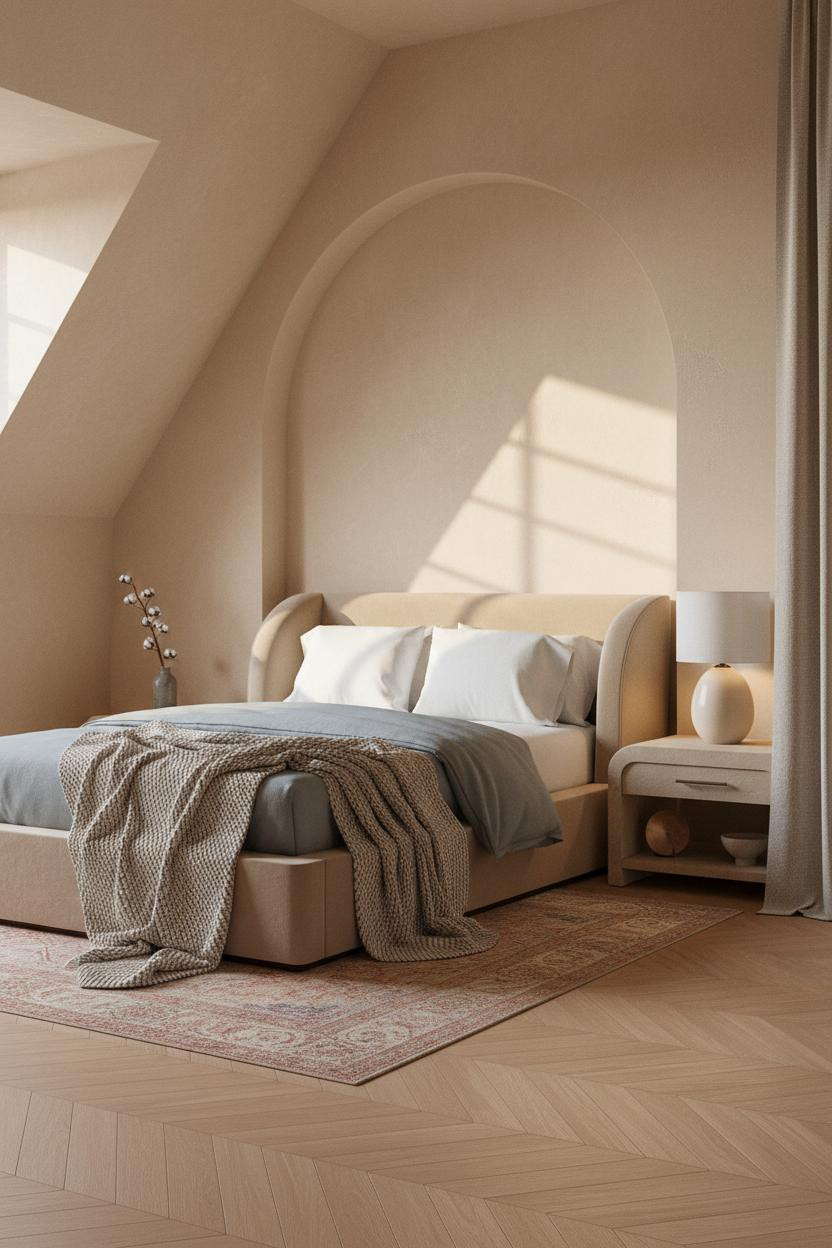


This is the kind of attic room that makes you slow down just looking at it.
Why the materials matter: Herringbone parquet in pale honey oak moves the eye across the floor in a pattern that feels intentional without tipping into formal. Under warm fawn plaster walls, the whole floor plane glows.
The easy win: A bedside lamp pooling amber across a raw clay nightstand display gives the evening version of this room just as much warmth as the afternoon light does.
Vertical Pine Slats That Draw the Eye Up the Slope
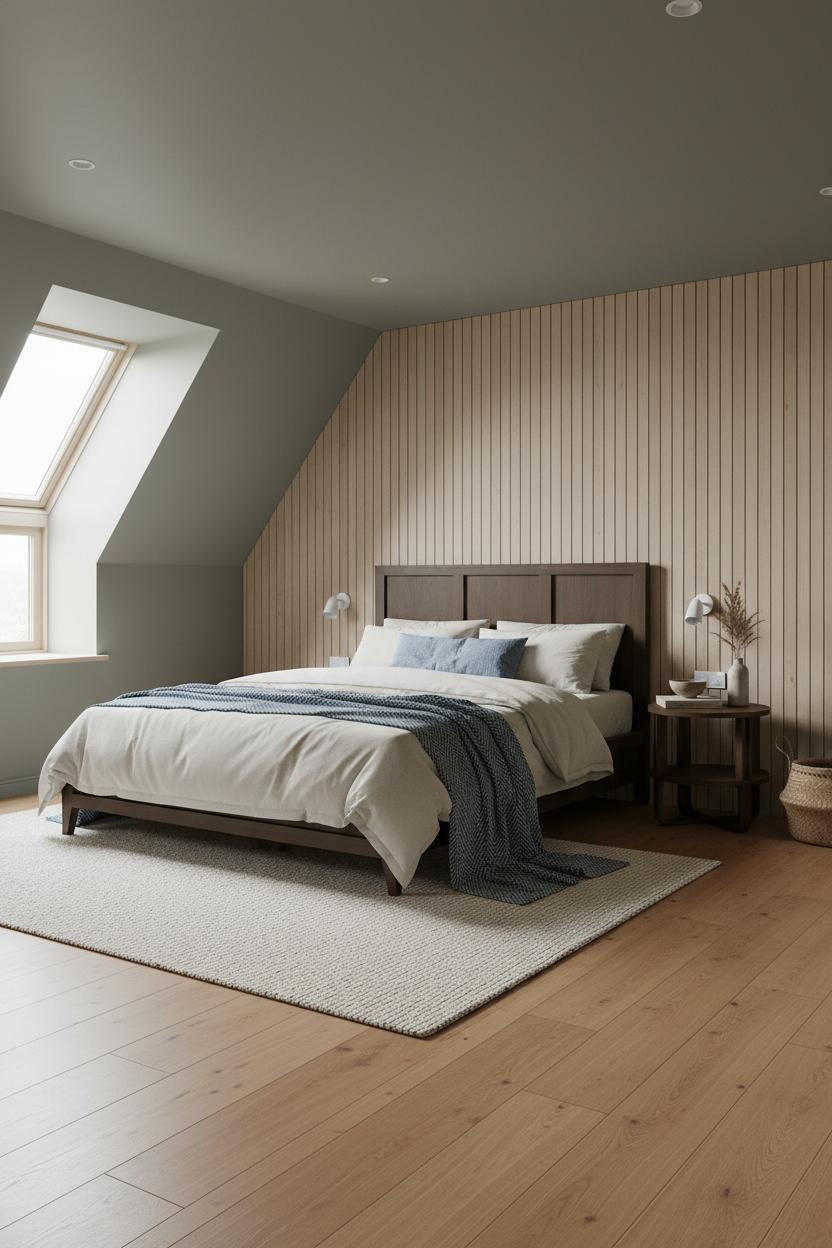

Nothing fancy. That’s the whole point of this one.
What carries the look: A floor-to-peak slatted pine wall panel casts fine parallel shadow lines that pull the eye upward, making the attic slope feel like a feature instead of a constraint.
Pro move: Keep the rest of the room spare. Olive-grey plaster walls and a chunky cream wool rug are all you need. Adding more would compete with the slats.
Dark Walnut Beams Against Indigo Walls
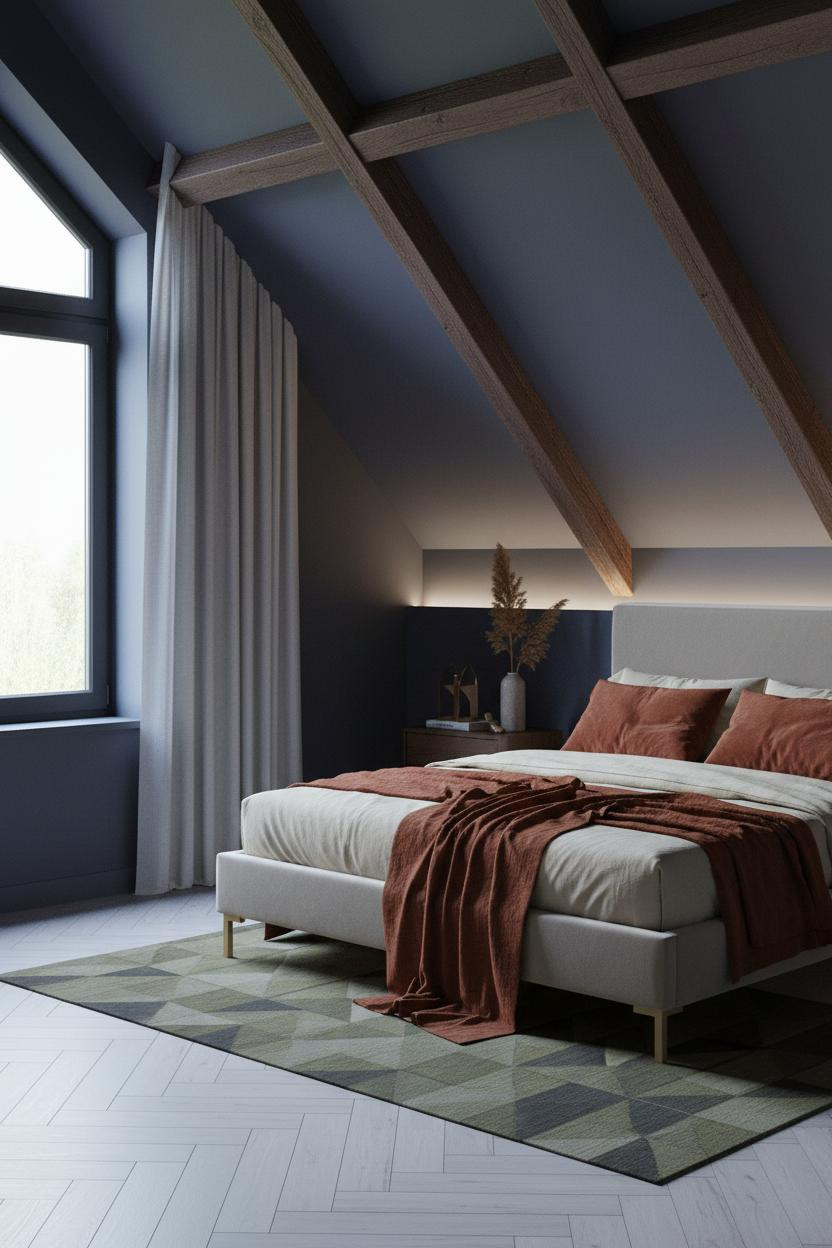

This one is divisive. Indigo-charcoal walls in an attic sounds claustrophobic.
But the dark weathered walnut collar ties spanning the ceiling peak change everything. The deep grain catches sidelight and pulls the overhead plane into sharp relief, so the room feels dramatic rather than closed in, especially when paired with pale birch herringbone below.
Don’t ruin it with warm-toned overhead lighting here. Cool silver-blue pre-dawn light through the gable window is what makes the beams read as structure, not clutter.
I Keep Saving This One for the Oak Ridge Beam
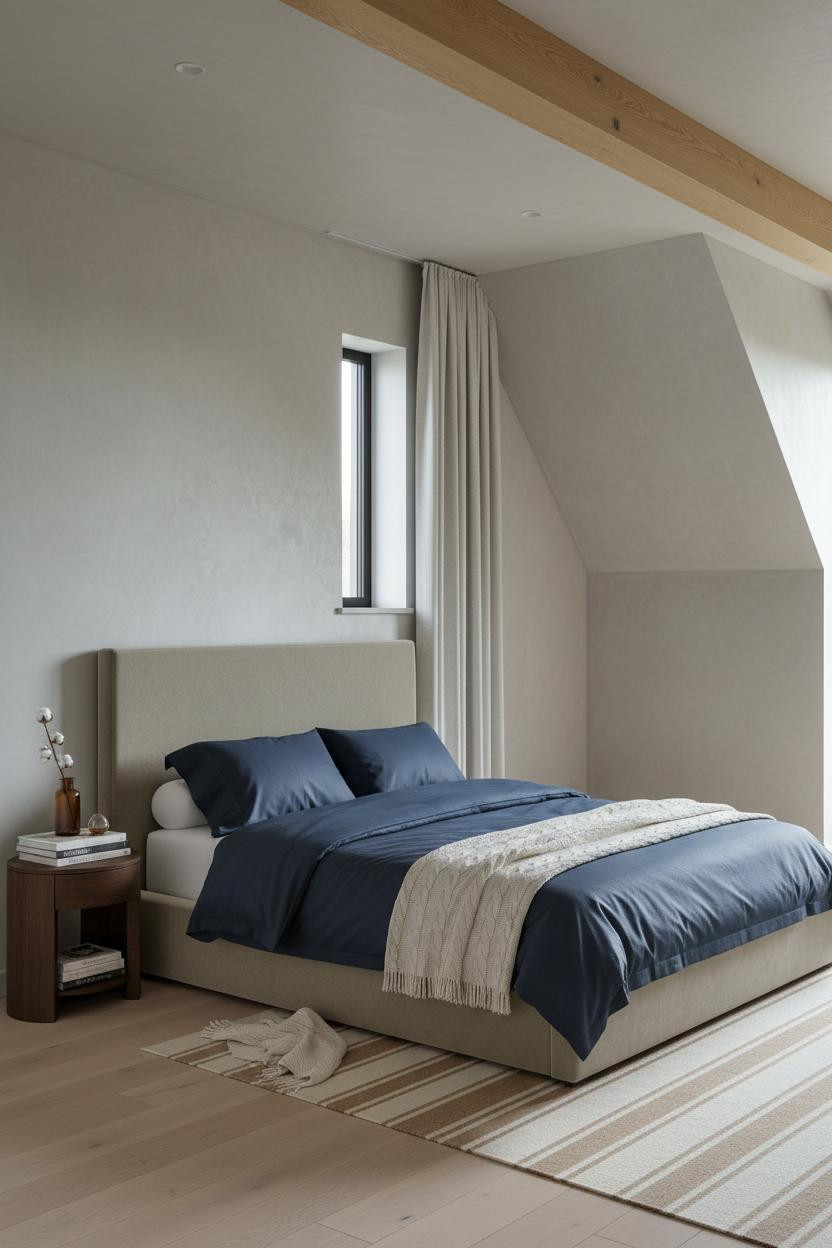
I almost scrolled past this one. Glad I didn’t.
The real strength: A single honey-washed oak ridge beam running apex to apex frames the bed below in a way that feels like architecture, not decoration. The warm amber grain glows against cool greige plaster slopes on either side.
What to borrow: Hang a floor-to-ceiling undyed linen curtain on the window wall. It keeps the room warm without fighting the beam for attention.
Board-and-Batten That Works in a Warm Clay Room

Fair warning. Board-and-batten in an attic can look like a ski lodge if you get the details wrong.
What saves it here is scale. Raw pine battens run floor to ceiling on the full gable end, and the muted overcast light reveals the shallow vertical relief without hardening it. The room feels warm and cohesive rather than rustic.
Where to start: Paint the boards and battens the same tone as the surrounding clay walls. No contrast, just texture. That’s the Scandi version of this idea.
Pale Oak Rafters Make a Small Attic Feel Considered
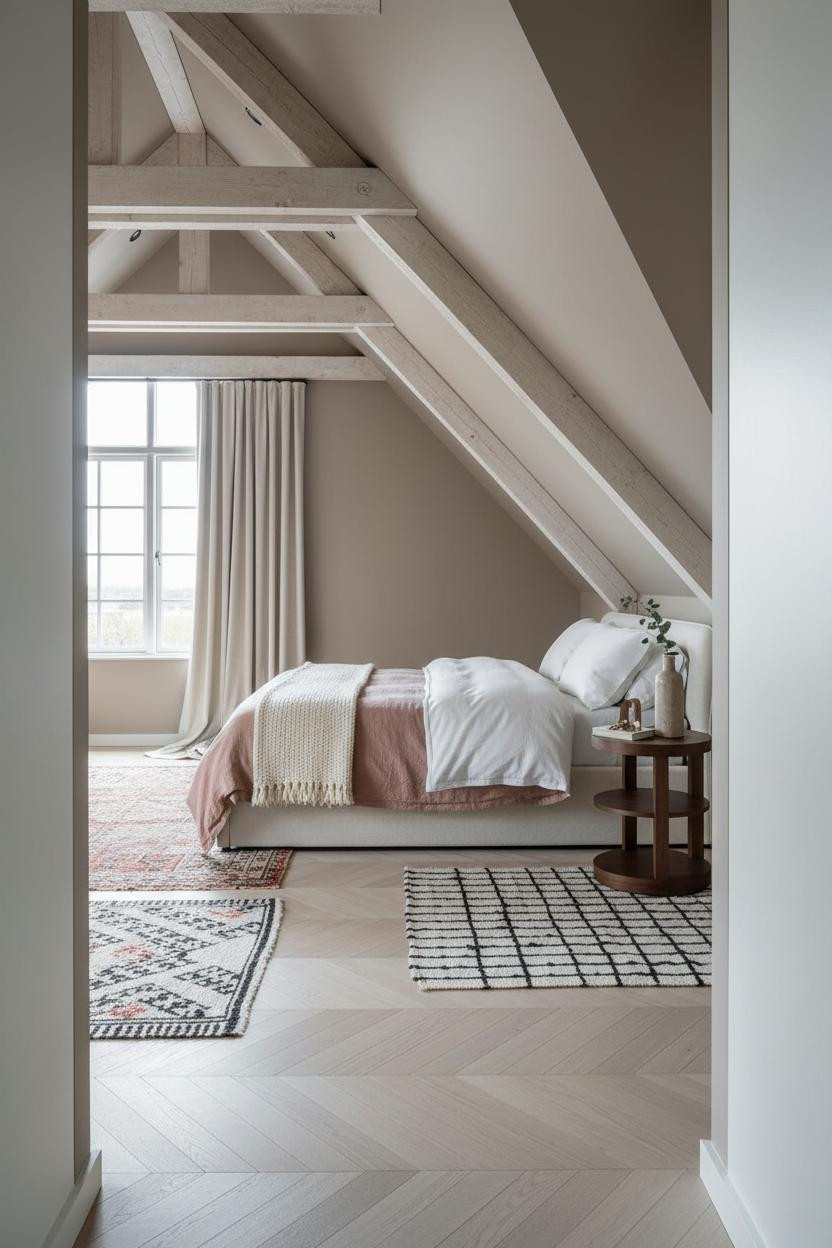
I honestly wasn’t sure the pale rafter system would hold this room together. It does.
What makes it work: Weathered oak rafters in geometric rhythm give the angled ceiling a structural grid that reads clearly from the doorway, so the room feels planned from the threshold. The warm sand taupe plaster sits quietly behind them.
A Japandi-inspired nightstand display keeps the energy low. Nothing too precious. Just a dried branch, a wooden tray, stacked books.
Honey Pine Beams Warm an Ochre Attic Room
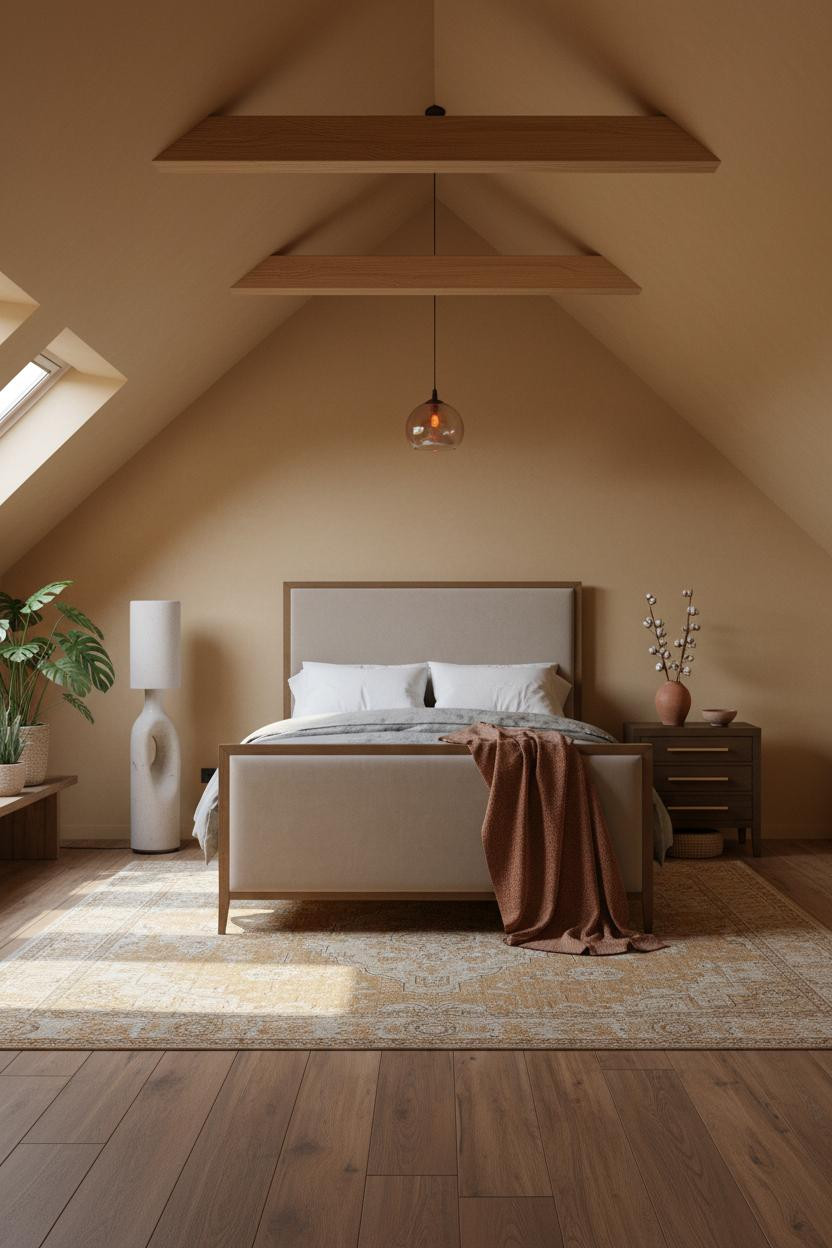

Warm ochre-clay walls and honey-finished pine collar ties is a combination I’d repeat in almost any attic.
Why the palette works: The warm grain of the pine picks up the amber in the ochre plaster, which makes the room feel cohesive across every surface while still having something to look at overhead.
The finishing layer: A rust linen throw at the foot of the bed and a terracotta vase on the nightstand tie the ceiling palette down to floor level. The room feels lived-in and intimate because it’s all one warm conversation.
Sage Walls and a Dark Oak Beam. Full Commit.
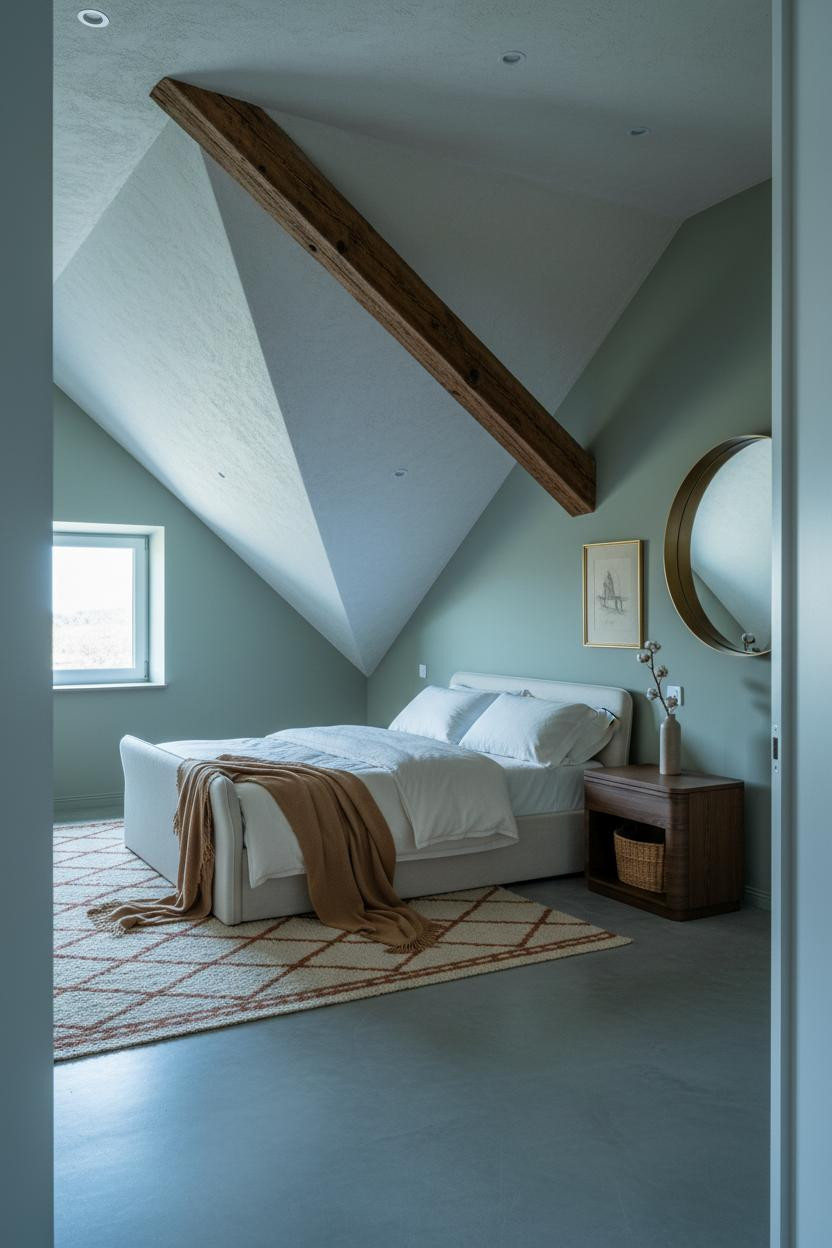
This is one of those rooms where the contrast does all the talking.
The hand-hewn dark oak ridge beam cuts a bold diagonal shadow line across the angled ceiling, and the sage matte plaster underneath makes the grain read even darker. It’s a pairing that somehow stays calm rather than aggressive.
Avoid this mistake: Don’t bring in too many warm brown tones at floor level. A Moroccan rug in rust and cream is enough. Keep the polished concrete showing. That’s what keeps the earthy tones from collapsing into one muddy register.
Whitewashed Shiplap That Holds a Warm Room Together
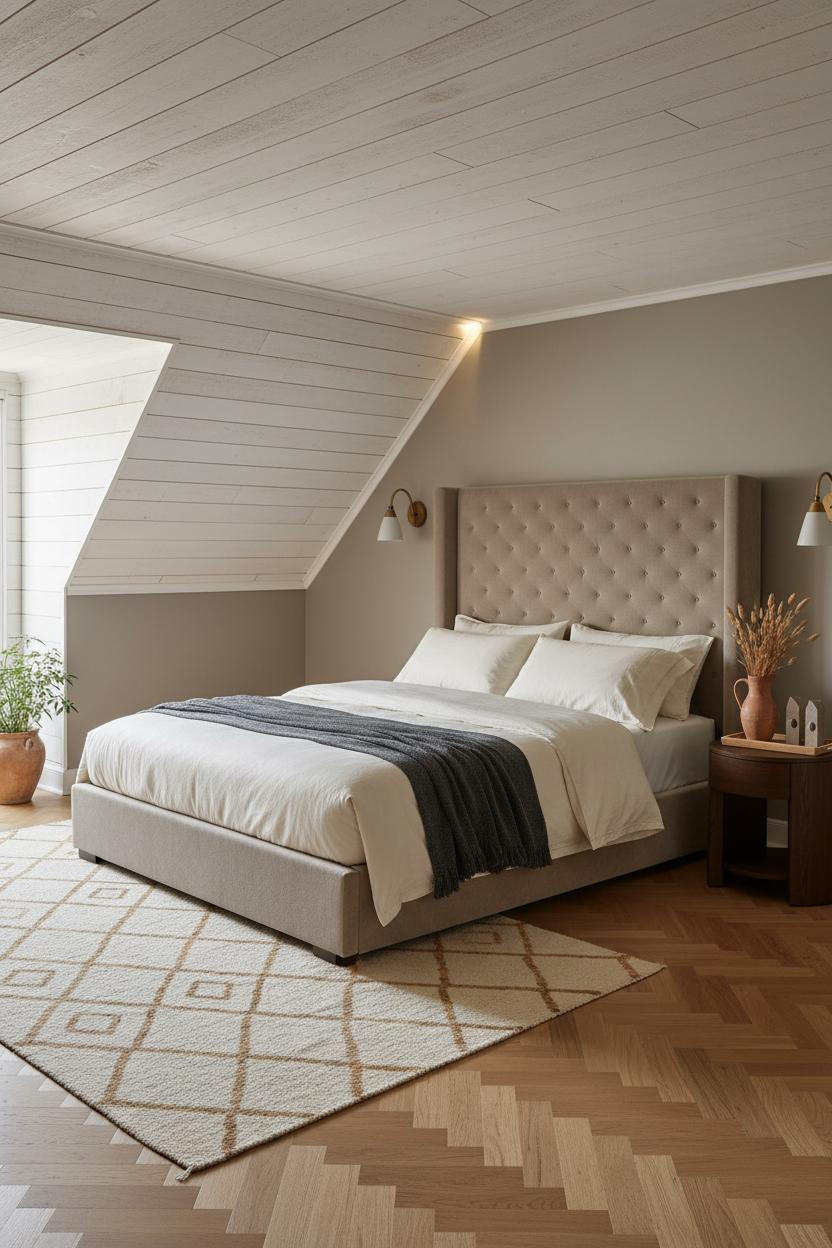

Admittedly, whitewashed shiplap is everywhere. But this version earns it.
What gives it presence: Raw wood grain surfaces through the wash in diffused light, meaning each plank edge pulls a hair-thin shadow that makes the whitewashed horizontal shiplap read as texture at any scale. It’s not painted wood. It’s something older.
Herringbone honey oak below and dove grey walls on the sides keep the ceiling from getting all the credit. The practical move: Ceramic wall sconces flanking the bed bring the warmth back down to eye level.
Exposed Raw Pine Collar Ties Against Stone Grey Plaster
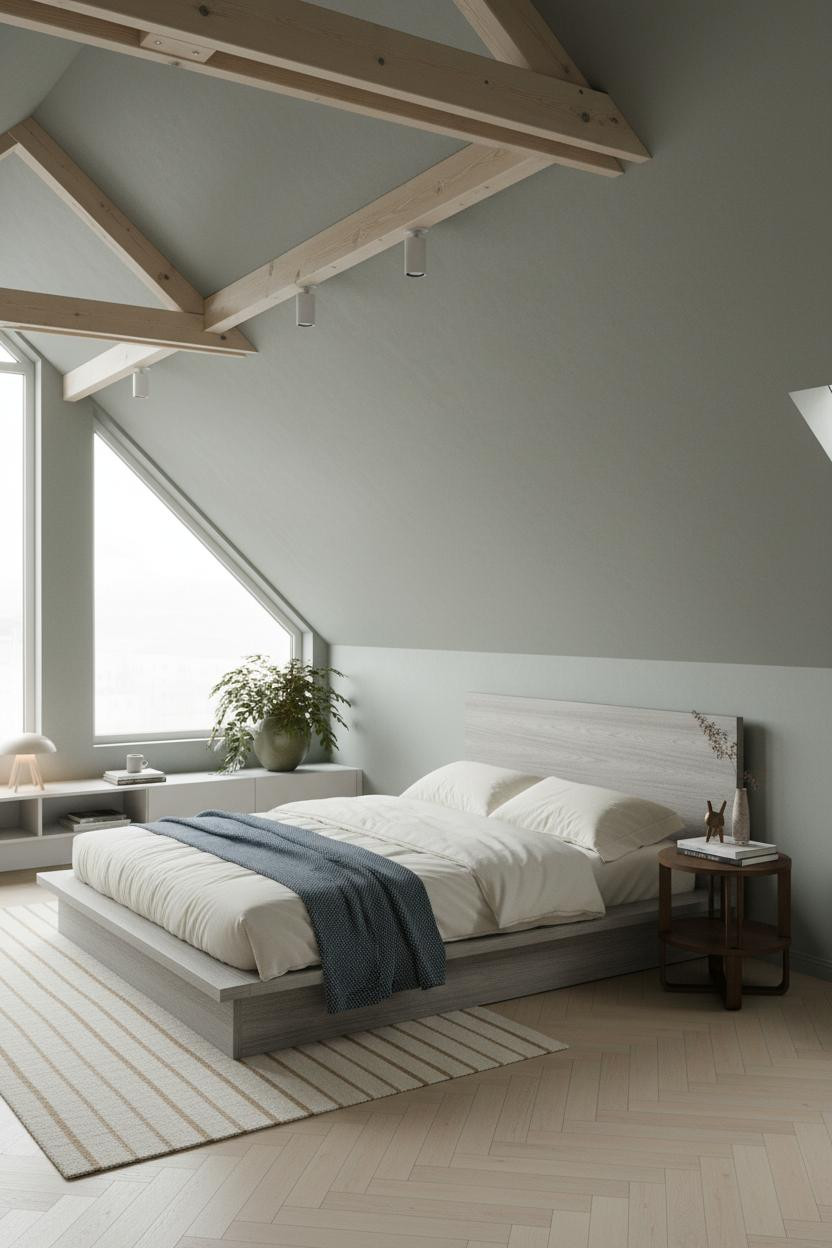

The coolest rooms I’ve seen in this earthy minimalist category share one thing: restraint at the wall level, detail at the ceiling.
Design logic: Unfinished pine collar ties in pale grain against stone grey plaster with a faint sage note creates a temperature contrast that’s enough to give the ceiling visual interest, while still feeling calm and cohesive below.
A trailing plant in a matte olive ceramic pot anchors the corner. One smart swap: Replace a floor lamp at 2700K with a corner lamp pooling warmth near a low shelf. That low amber light is what makes this warm minimalist bedroom feel like a retreat after dark.
Honey Shiplap Ceiling in a Low Attic That Really Works
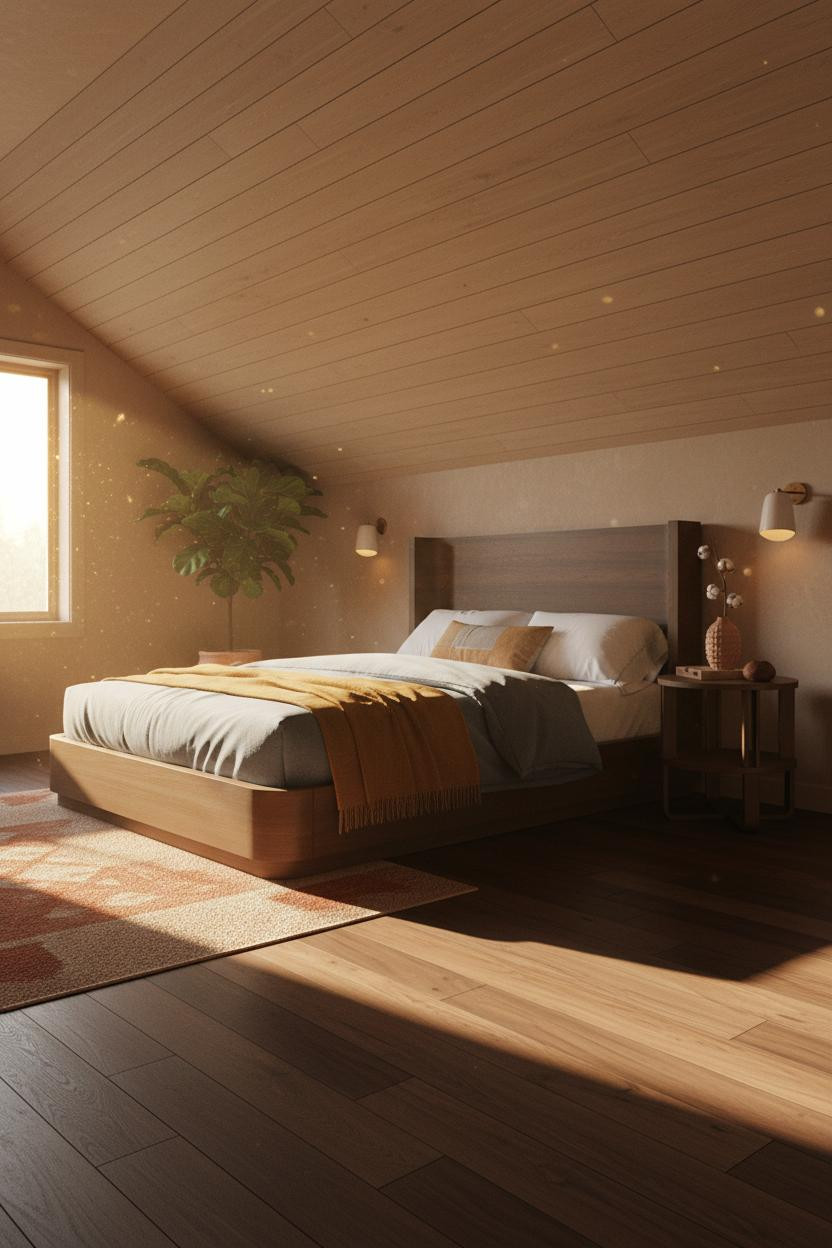

Low pitch. No apologies.
And the honey-toned shiplap planks running the full ceiling width actually make the intimacy feel intentional. Raking afternoon light catches the horizontal grain at the ridge and pulls the eye inward toward the bed wall with a clarity that taller rooms can’t replicate.
What to copy first: Dark walnut floors under a warm mushroom plaster wall. The contrast grounds the whole room so the ceiling can be the warmth and the floor can be the weight.
Weathered Grey Beams That Make Terracotta Feel Serene
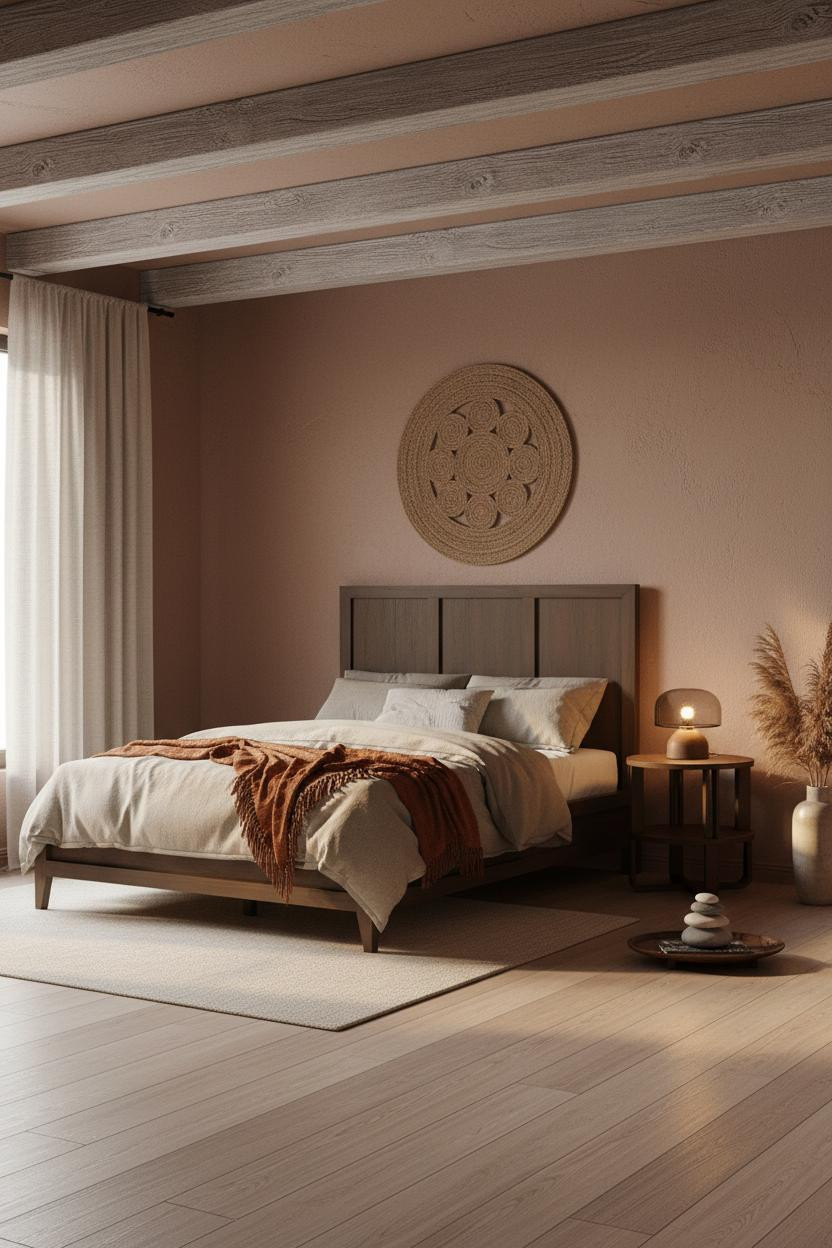
It might seem risky to combine terracotta-taupe plaster with weathered grey beams. The warmth and the cool pulling in opposite directions.
But the exposed grey-finish wood beams at low pitch actually soften the terracotta, pulling just enough cool contrast into the ceiling plane that the walls stop reading as intense. The room feels warm and cohesive rather than saturated.
A woven jute wall hanging above the bed and an organic modern bedroom approach to the nightstand (stacked river stones, dried pampas, nothing fussy) finish the Japandi balance. The key piece: bleached oak floors, not dark. Keep the ground plane light and the beams do the heavy work overhead.

Our #1 Pick
Saatva Classic Mattress
America’s best-selling online luxury innerspring. 365-night trial, lifetime warranty, free white glove delivery.
Shop Saatva Classic
The Foundation Of Every Beautiful Bedroom
Every room in this list gets the ceiling right, the plaster right, the rug right. But the one thing you actually feel every single night is what you sleep on.
The Saatva Classic is what I’d put under all of it. Dual-coil support that doesn’t transfer movement, breathable organic cotton that doesn’t trap heat, and a Euro pillow top with enough give to feel genuinely restful. It holds up the way good materials do. Quietly, for years.
Walls get repainted. Linen gets swapped. The mattress stays.

The rooms people actually live in are the ones where the comfort matches the design. Good design ages well because it’s made well. Start with the bed. The rest figures itself out.