
The first thing you notice in the best clean minimalist bedroom isn’t what’s there. It’s what isn’t. And somehow that restraint is the hardest thing to pull off.
These 15 rooms prove it’s possible. No white-box sterility, no performance of simplicity. Just calm that actually holds.
Sage Walls and Concrete That Make Stillness Look Easy


I keep coming back to this one. The sage matte plaster and polished concrete floor shouldn’t feel warm together, but they do.
Why it works: Cool surfaces paired with a single amber bedside lamp create contrast that makes the room feel grounded rather than clinical.
Steal this move: Add one raw terracotta vessel in the corner. It’s a small move, but it pulls the whole palette toward something human.
Why a Low Platform Bed Changes How the Room Breathes
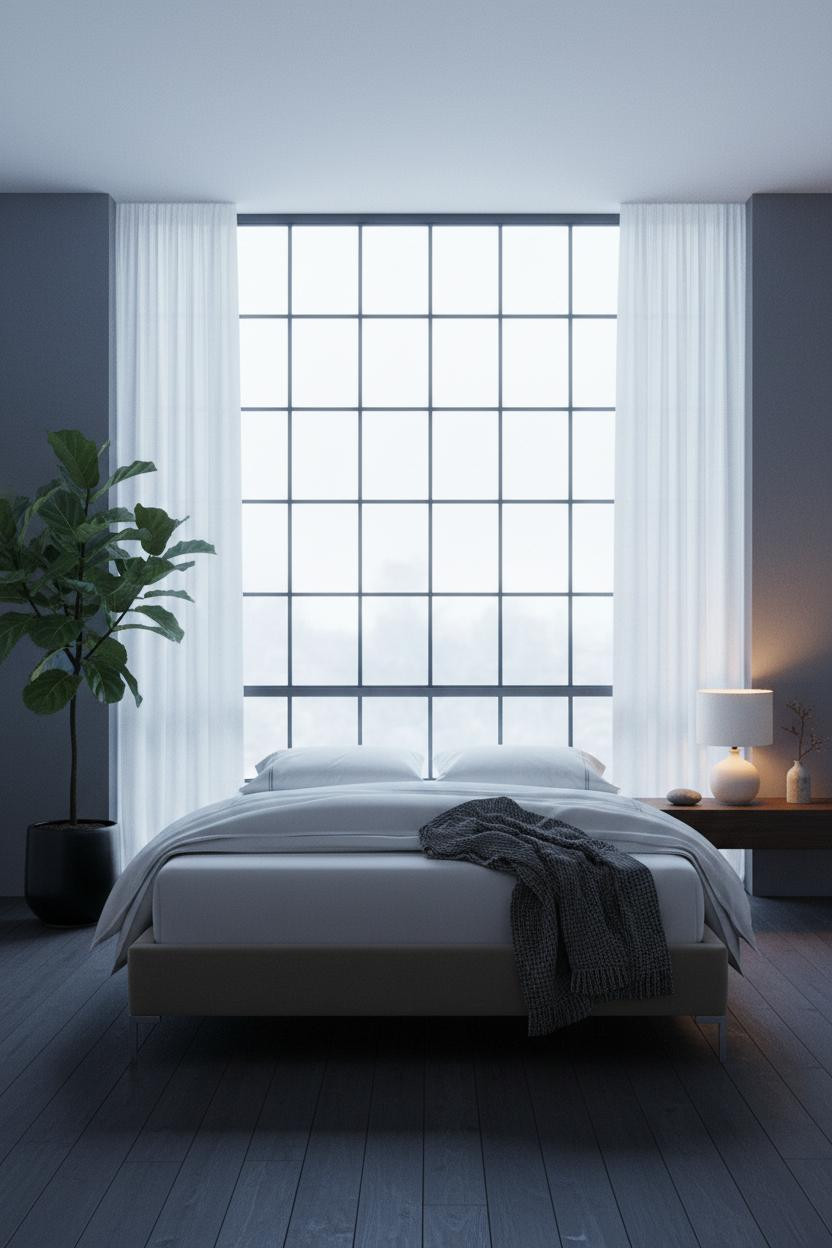

Scale matters more than style. And in a room this spare, going lower with the bed is almost always the right call.
A low-profile platform bed keeps the visual weight close to the floor, which helps balance the height of dark stained planks without the room feeling top-heavy.
The smarter choice: Keep the bedding in cream percale and let the indigo plaster wall do the heavy lifting. No artwork needed.
The Herringbone Wood Wall That Does All the Work
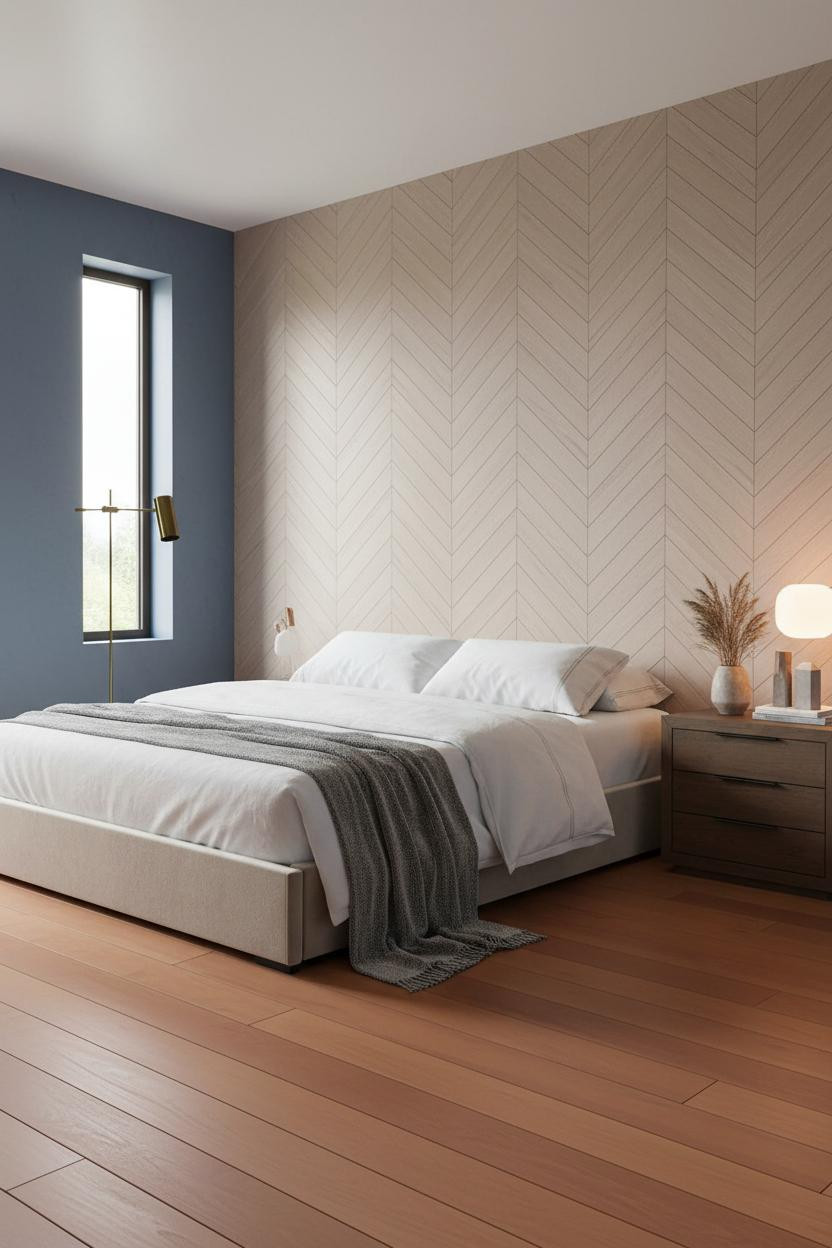

This is the kind of room that makes you want to leave everything else out.
Why it looks custom: Raw pale ash in a herringbone pattern creates graphic rhythm without paint, and the unpainted grain keeps it from feeling precious.
Avoid this mistake: Don’t cover the floor with a rug here. The wide-plank terracotta flooring is doing real work, and a rug would bury half the composition.
Painted Brick That Earns Its Keep in a Minimalist Room
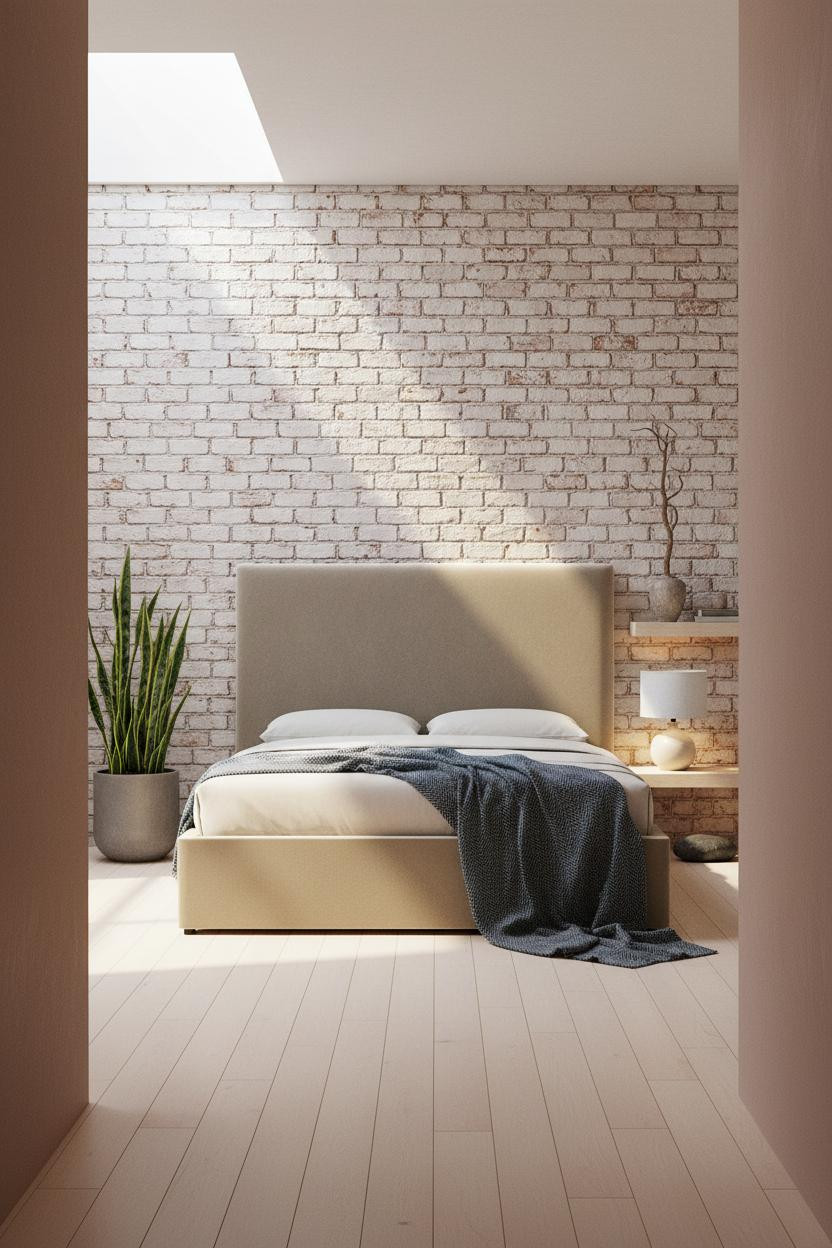

Exposed brick in a minimalist room sounds like a contradiction. Honestly, it isn’t, if you paint it flat.
What makes it work: A full-width brick wall in flat dove white keeps the texture without the visual noise, and clerestory light catches every mortar joint in a way that feels deliberate rather than industrial.
Pro move: Keep the flanking walls in dusty rose plaster to stop the whole room reading as stark.
Built-In Shelving That Actually Stays Minimal
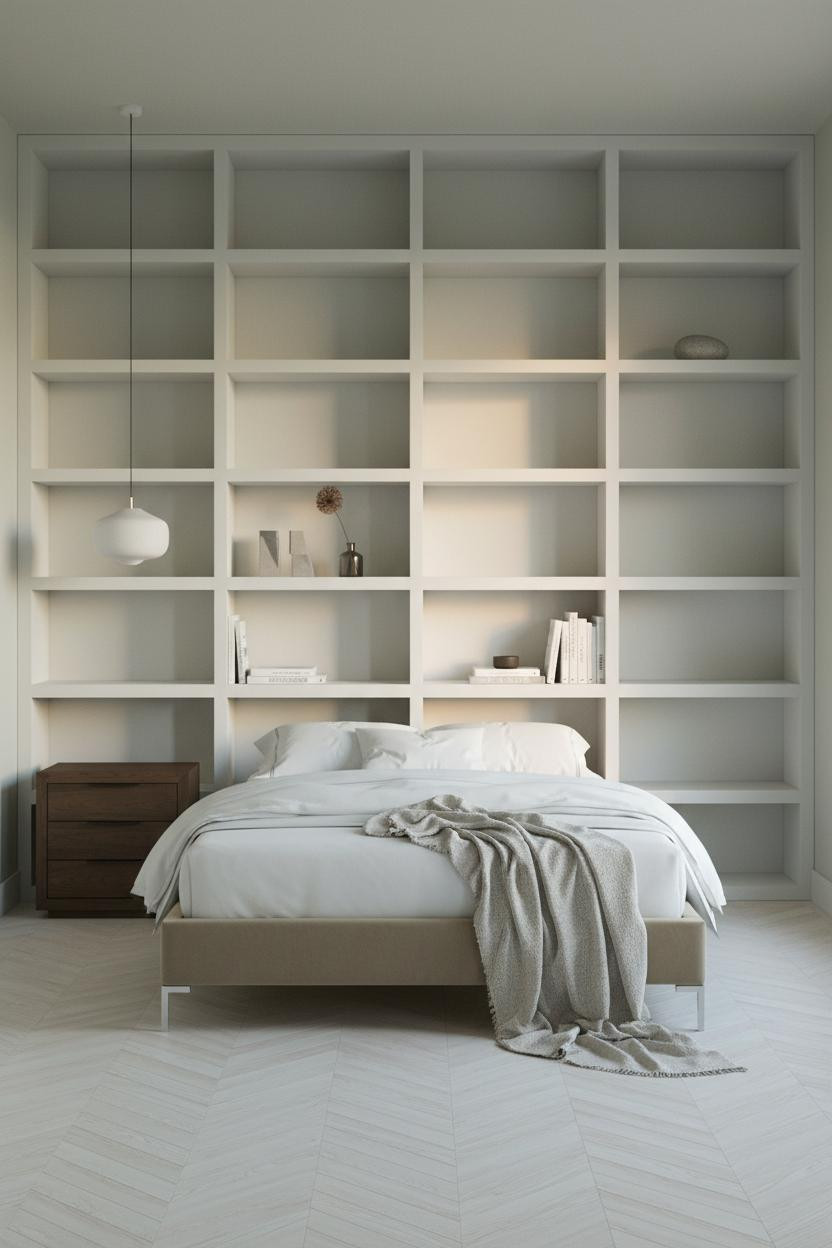
Built-in shelving can go wrong fast. Too many objects and the room feels like a shop. Too few and it reads as unfinished.
The real strength: Floor-to-ceiling matte white timber shelving creates visual rhythm through the compartment spacing itself, so the objects inside don’t have to work as hard.
What to borrow: Three objects per shelf zone, max. A concrete bookend, one dried stem, one smooth stone. That’s enough.
Concrete Board Walls That Feel Warm, Not Cold
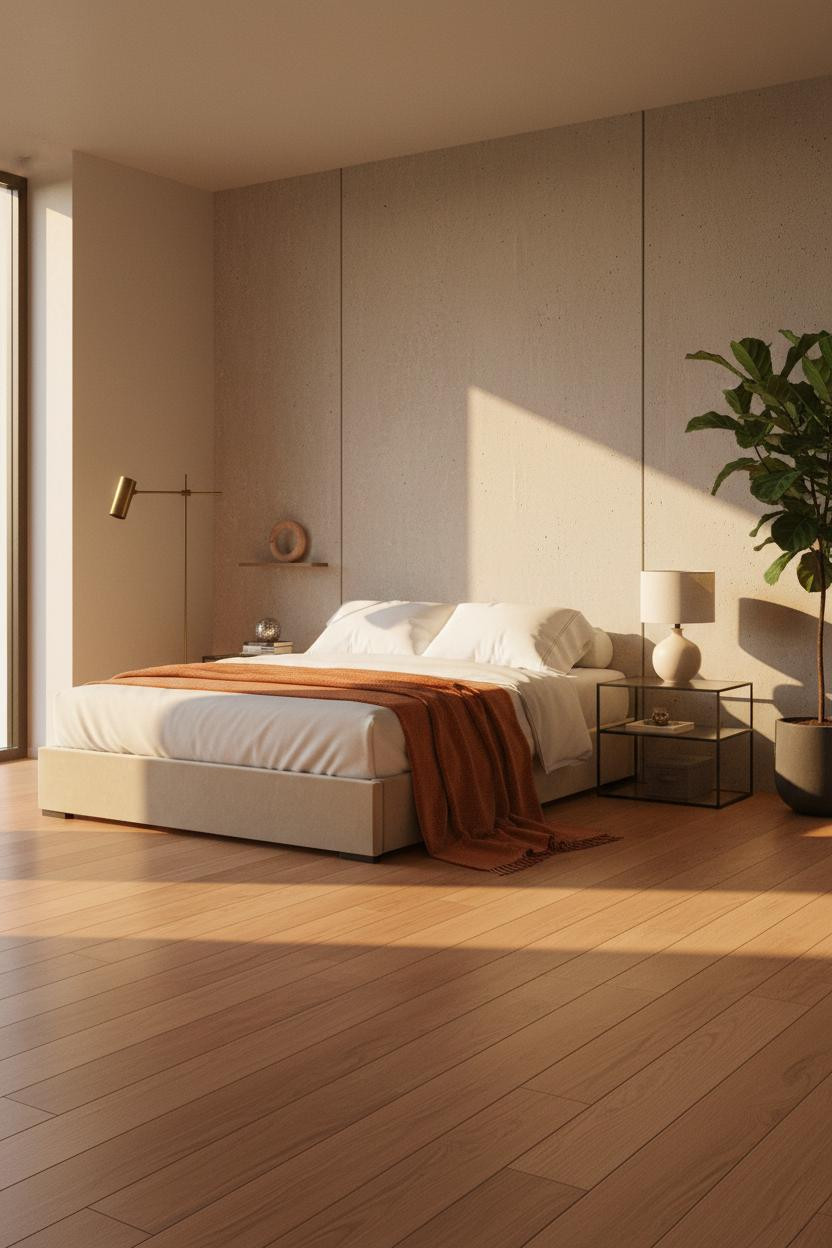
Raw concrete behind a bed sounds harsh. But paired with honey maple flooring and a warm bedside lamp, the room feels grounded, not cold.
Why it holds together: The linen-textured concrete board catches afternoon light along every panel seam, which adds depth while still feeling quiet enough for a simple minimalist bedroom.
One smart swap: Trade bright white bedding for oatmeal cotton. The mineral wall pulls warm, and you want the bedding to follow.
The Arched Plaster Niche That Changes Everything
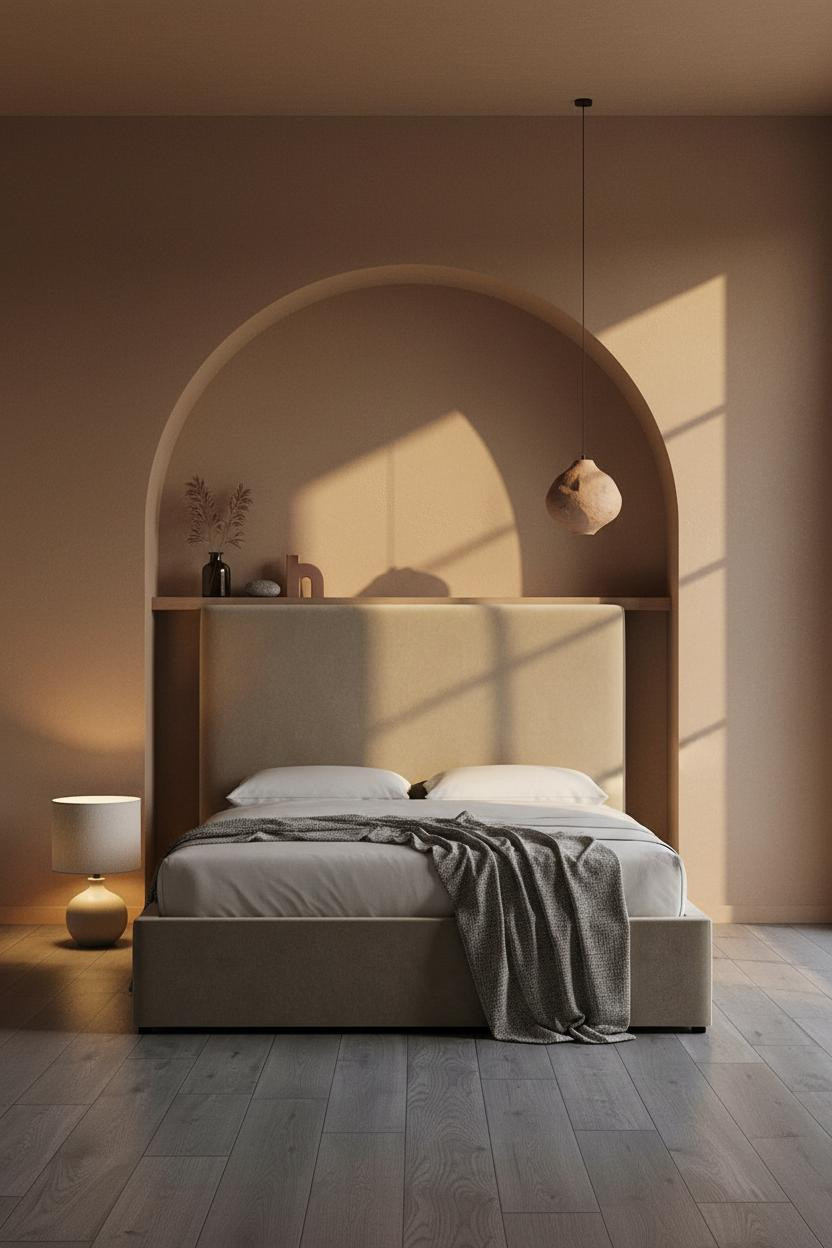
One architectural gesture. That’s all this room needed.
A full-width arched niche built into warm clay plaster anchors the entire composition, its curved crown catching direct light while the recess below pools in cool shadow.
Why it feels intentional: The arch means you don’t need a headboard, artwork, or a shelf gallery. One move, everything resolved.
Worth copying: Put just three objects inside the niche. A dried stem, a granite pebble, and one spun clay pendant. Nothing more.
Shiplap Walls That Stay Warm Instead of Going Farmhouse
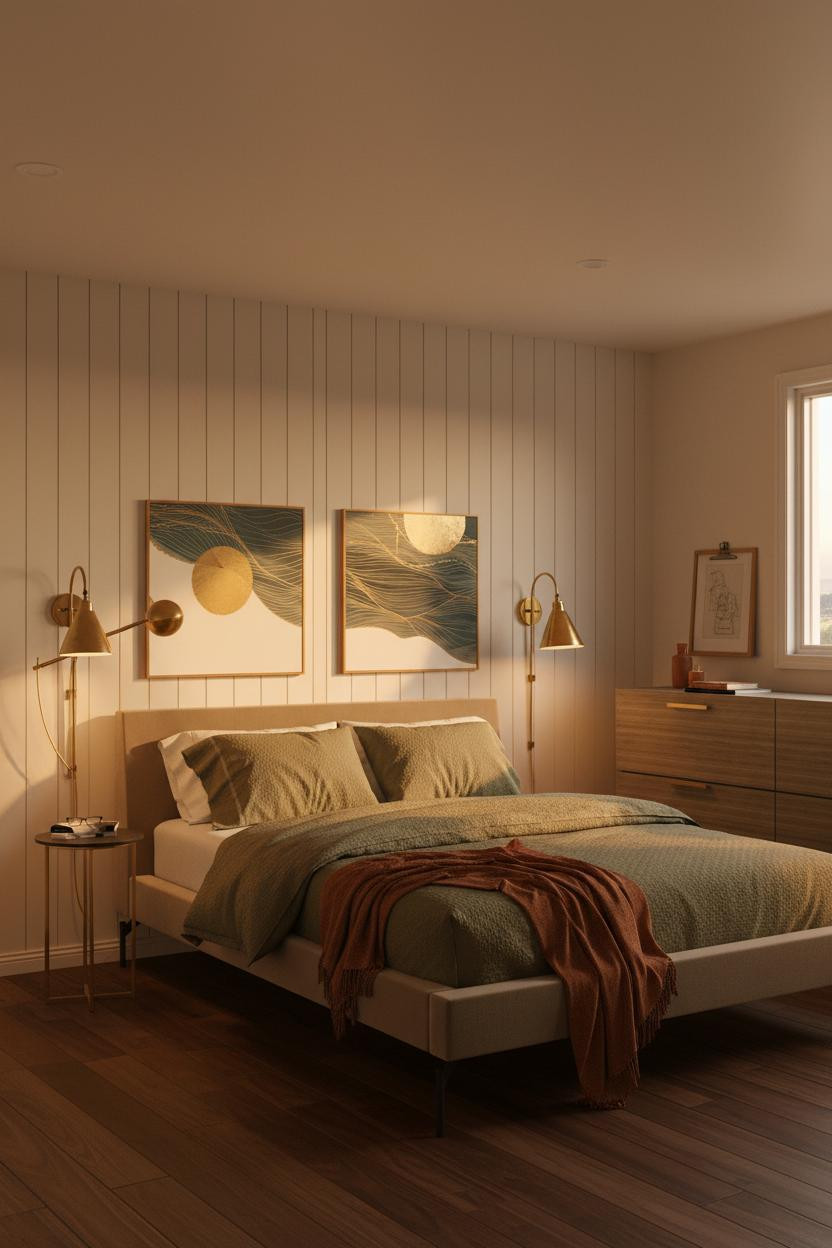


Fair warning: shiplap tips into farmhouse territory the second you add too much white. The fix is the flanking wall color.
What keeps it elevated: Cream-painted vertical shiplap against camel-toned walls reads warm and modern, in a way that feels collected rather than themed.
Pair it with a rust linen throw and dark walnut floors. The contrast does the work. You don’t need anything else on the walls.
The Scandi Shelf Wall That Earns Its Emptiness
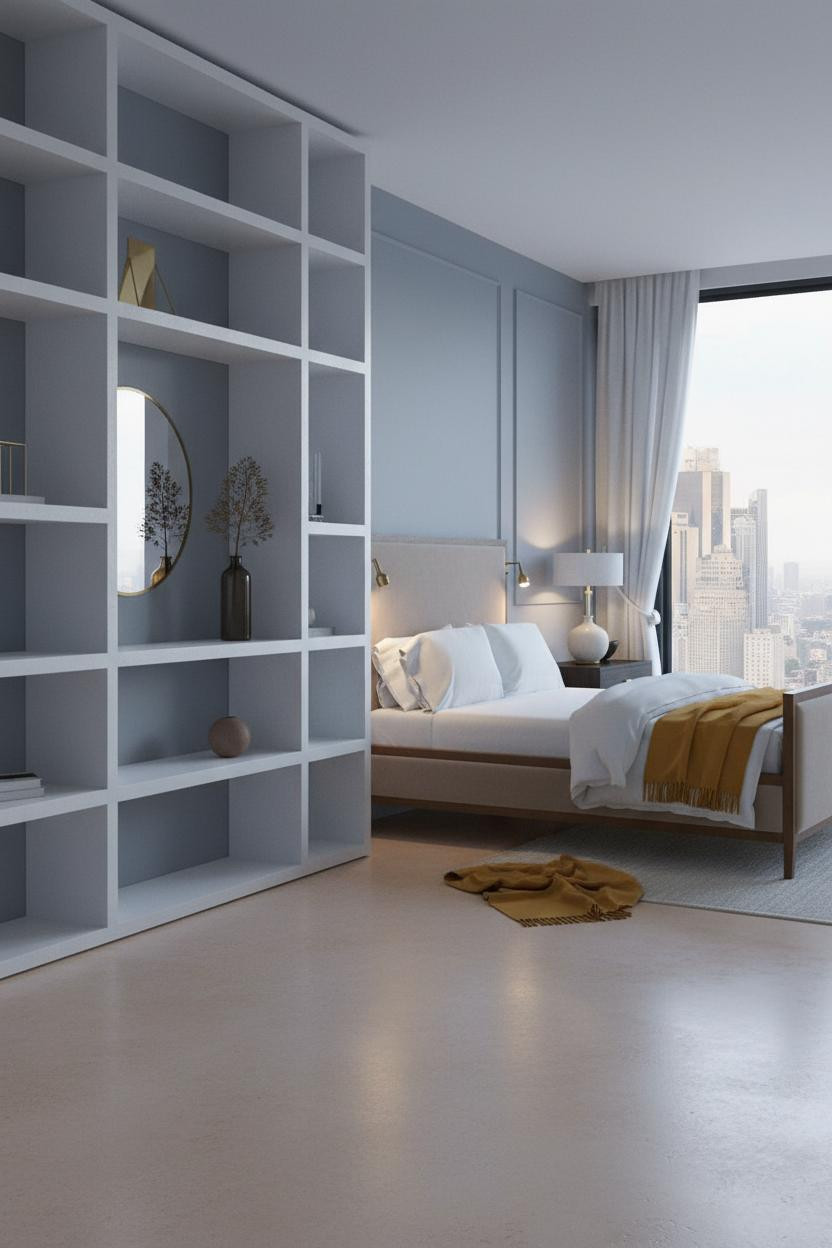

I almost scrolled past this. Glad I didn’t.
What creates the mood: Matte blue-grey walls behind open white shelving make the empty compartments feel purposeful rather than half-finished, and the polished concrete floor keeps the whole thing from feeling too soft. The room feels calm and cohesive without a single rug.
Wainscoting That Makes a Neutral Room Feel Considered
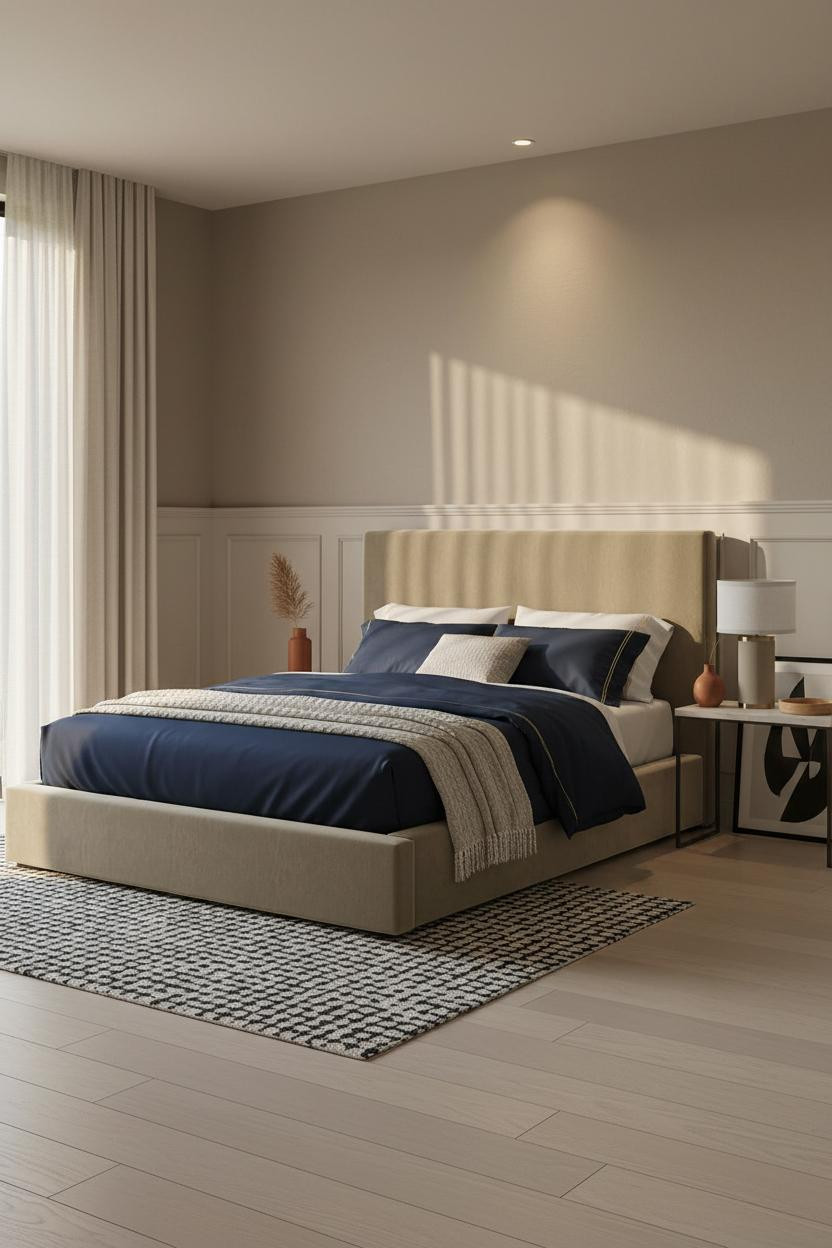

Greige walls alone can feel like an apology. But run recessed wainscoting panels around the full perimeter and suddenly the room has a point of view.
Design logic: The horizontal shadow line at waist height creates measured rhythm that makes the space feel taller, while the warm birch flooring keeps it from reading as formal.
The finishing layer: Navy sateen bedding against all that warm neutral is the one contrast move that lands every time. Don’t overthink it.
Japandi Slat Walls That Pull Off Both at Once
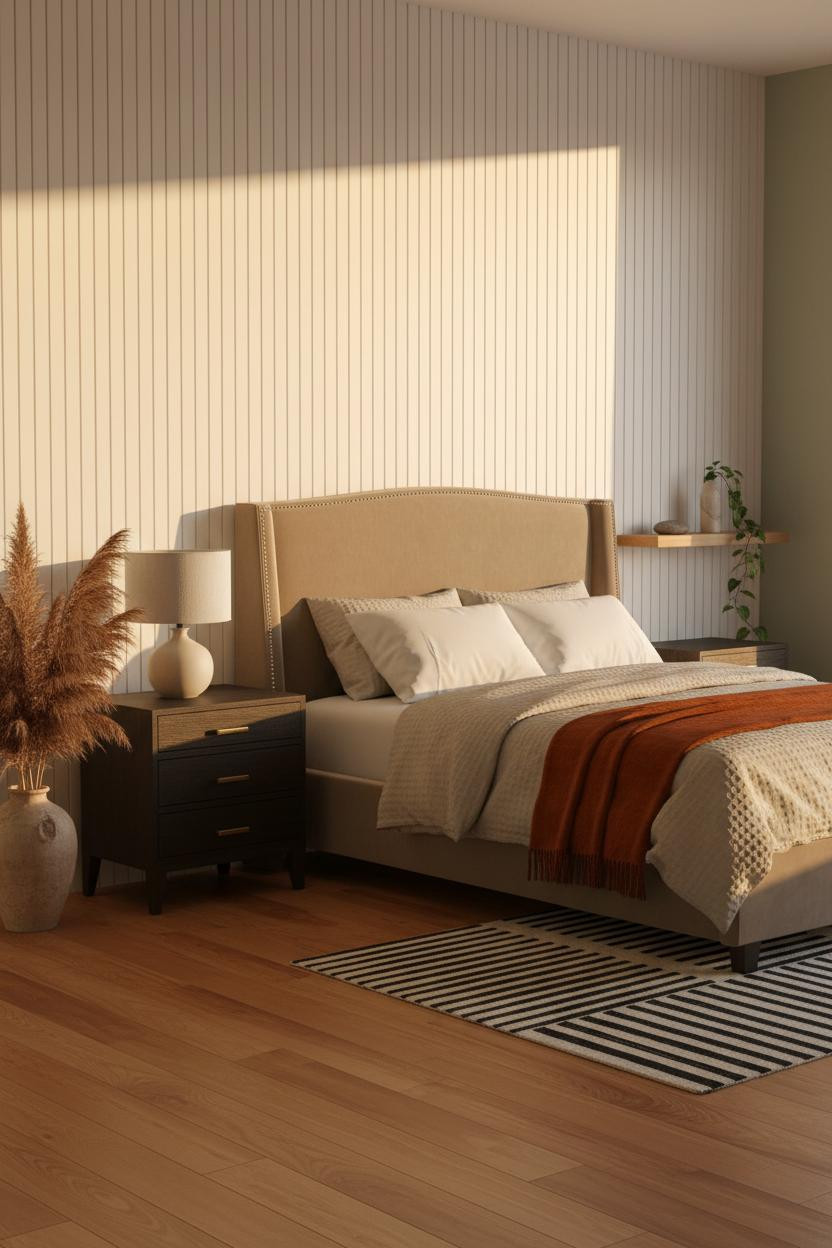
This is one of those warm minimalist bedroom setups I come back to whenever someone tells me minimalism feels cold.
What gives it presence: Whitewashed vertical wood slats cast a soft shadow gradient across the full wall width, just enough texture to keep things interesting, while the sage green walls on either side add color without competing.
Try this: A burnt orange mohair throw over oatmeal waffle-weave bedding. Warm, spare, resolved.
One Floating Shelf, Used Correctly
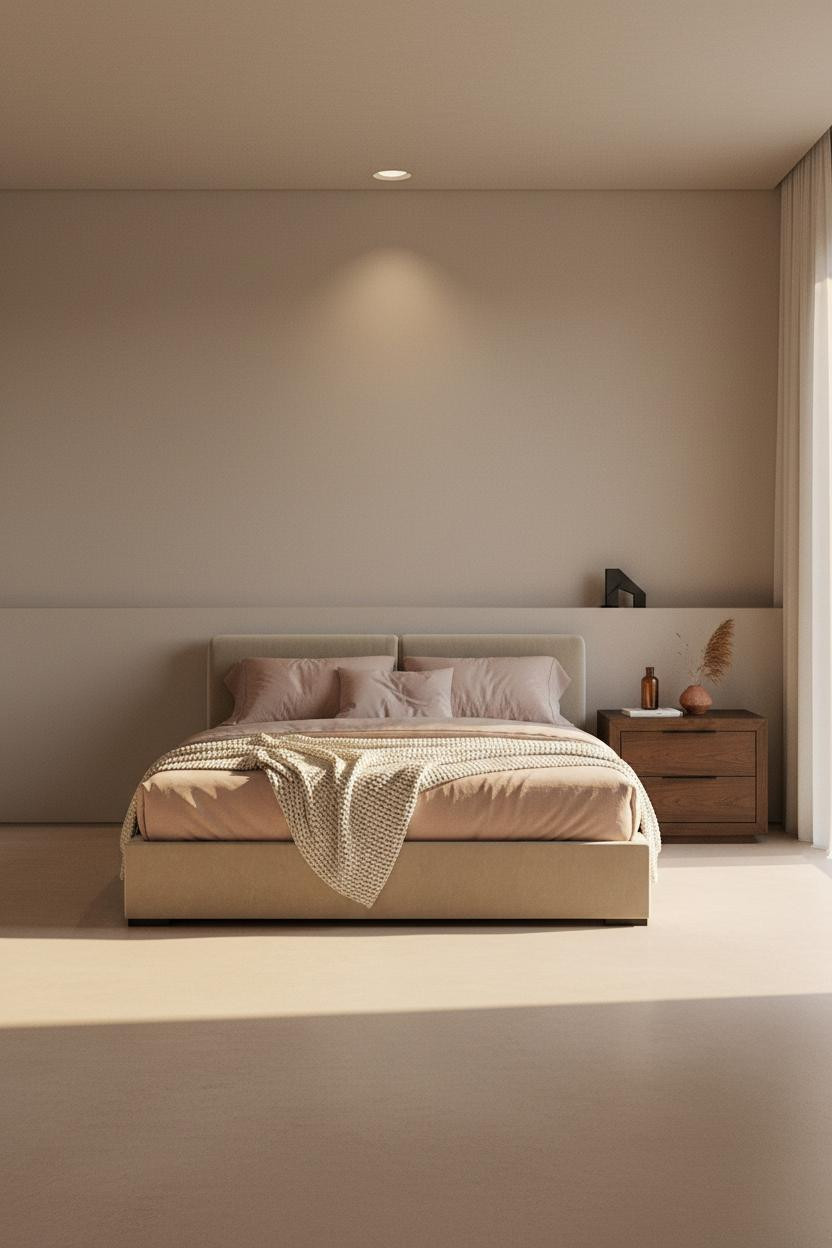
Nothing fancy. That’s the point.
What carries the look: A wall-to-wall floating shelf in matte white acts as a compositional horizon line above the bed, which is why the room reads as considered rather than bare. The slim shadow it casts does more than any piece of art.
The key piece: Dusty pink linen bedding against soft taupe plaster. The room feels lived-in and intimate, and you didn’t need a single gallery wall to get there.
Stone Grey Plaster and Herringbone That Age Together Well
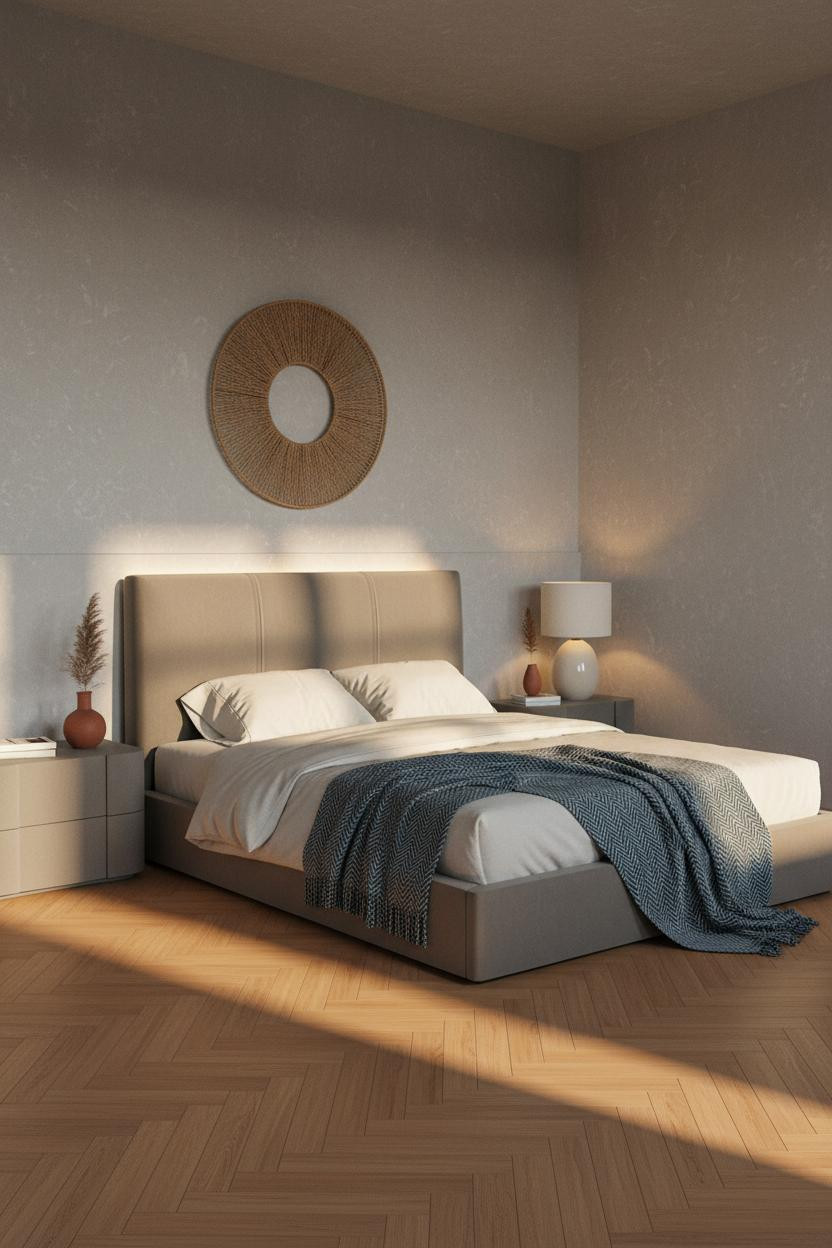

I think this is the most underrated combination in a minimalism bedroom design: stone grey plaster and honey herringbone parquet. They shouldn’t feel this quiet together, but they do.
Why the materials matter: The textured plaster catches raking afternoon light along every slight imperfection, which adds depth without a single piece of decor on the wall.
Where to start: A woven wall hanging centered above the bed is enough. Skip the sconces, skip the shelf gallery. One textile, done.
Board-and-Batten That Feels Modern, Not Cottage
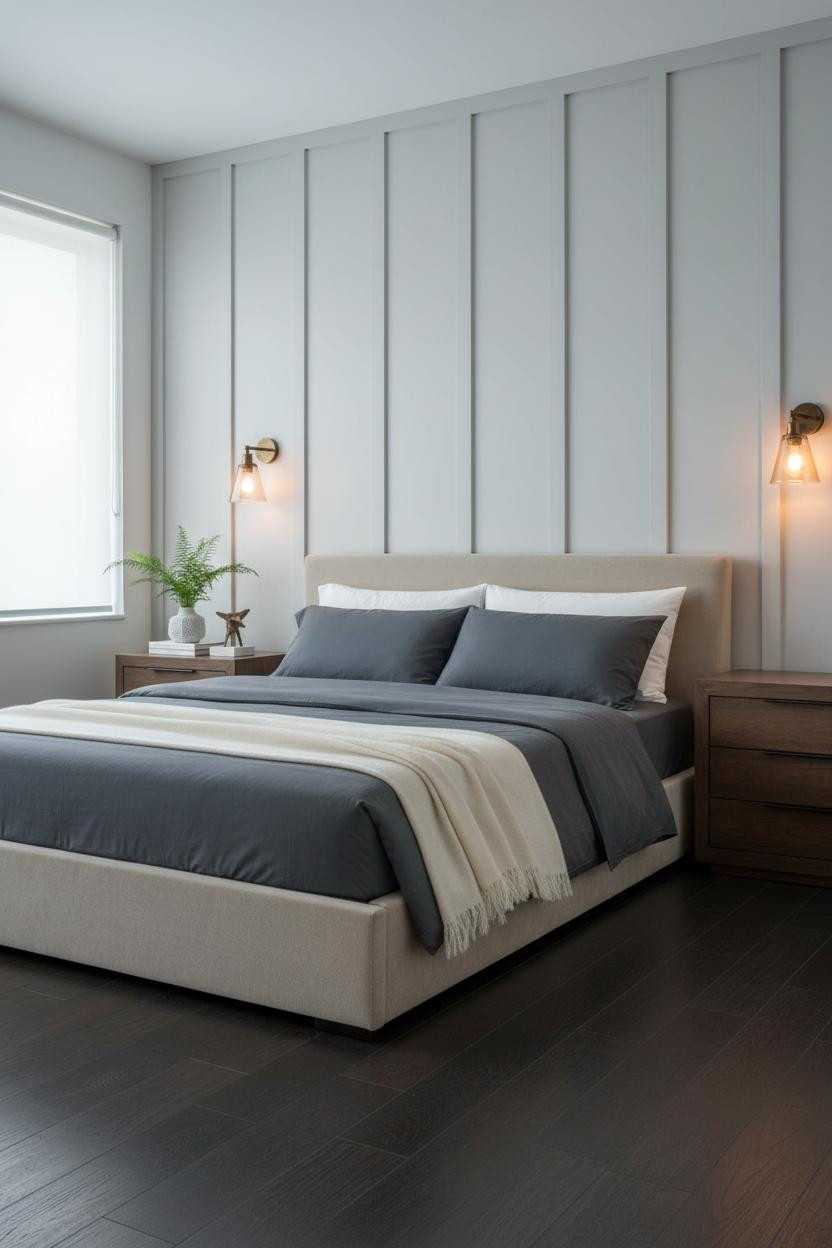
Board-and-batten is divisive. But in pale dove grey with paired sconces instead of a pendant, it stops reading as traditional entirely.
What sharpens the room: The vertical batten rhythm against dark stained narrow-plank flooring creates tonal contrast that makes the whole thing feel graphic rather than quaint, especially under cool diffused light.
Don’t ruin it with: Too many shelf objects. One potted fern and a geometric bookend pair. Full stop.
Warm White Walls and Bleached Oak That Never Dates
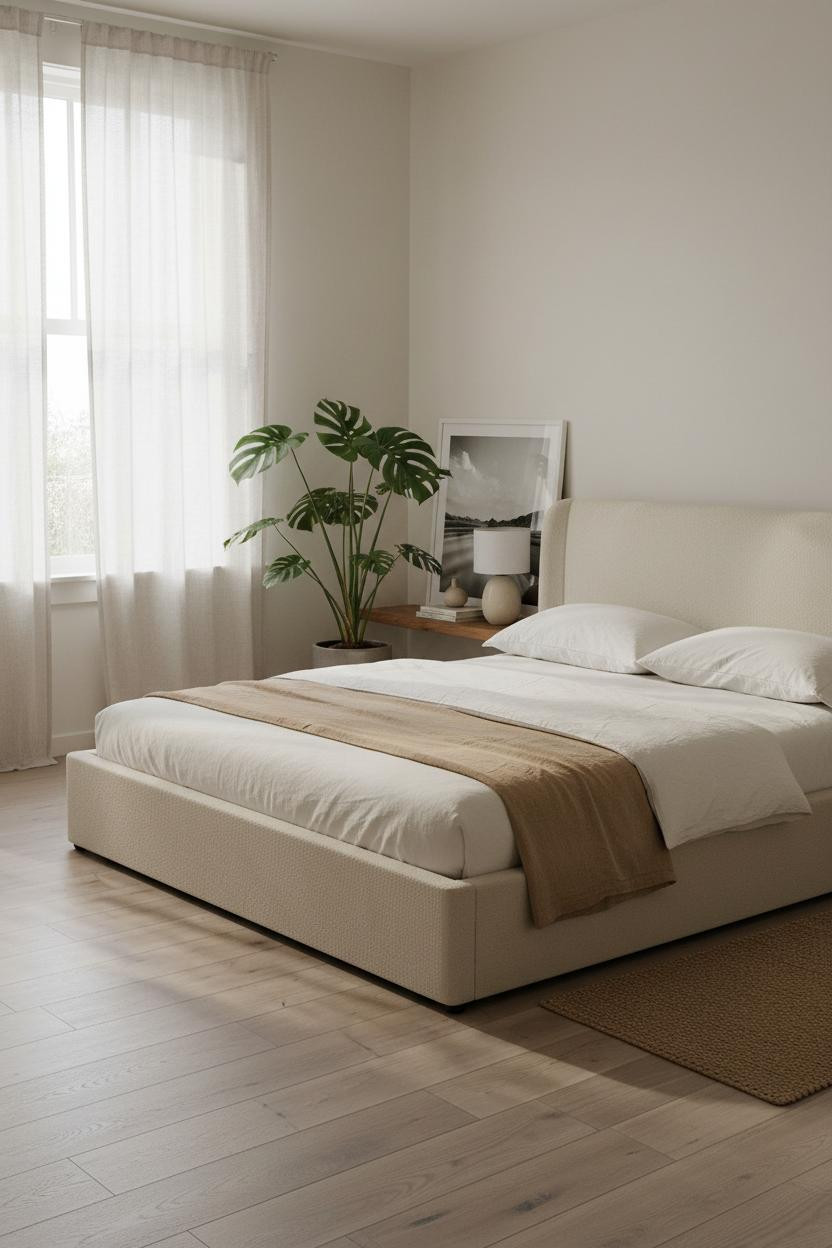

This one is the most achievable room in the whole list. And somehow the hardest to pull off without it looking like a rental.
Why it feels expensive: Bleached oak wide-plank flooring with a single natural jute rug at the foot gives the room texture without pattern, in a way that feels organic rather than styled.
The easiest upgrade: Lean an oversized unframed photograph against the wall instead of hanging anything. It keeps the simple minimalist bedroom feeling relaxed rather than finished.

Our #1 Pick
Saatva Classic Mattress
America’s best-selling online luxury innerspring. 365-night trial, lifetime warranty, free white glove delivery.
Shop Saatva Classic
The Foundation Of Every Beautiful Bedroom
Walls get repainted. Linen gets swapped. But the mattress stays, and in a clean minimalist bedroom that values what each piece earns, the bed is the one place where cutting corners actually shows.
The Saatva Classic is the one I’d put under every room in this list. Dual-coil support that holds its shape over years, a breathable organic cotton cover that doesn’t trap heat, and a Euro pillow top that’s soft without losing structure. It feels like the good hotel kind. Not the business hotel kind.
And once the mattress is right, the rest of the room figures itself out.

The rooms people save are the ones where nothing looks accidental. Start with what you sleep on. Build outward from there.