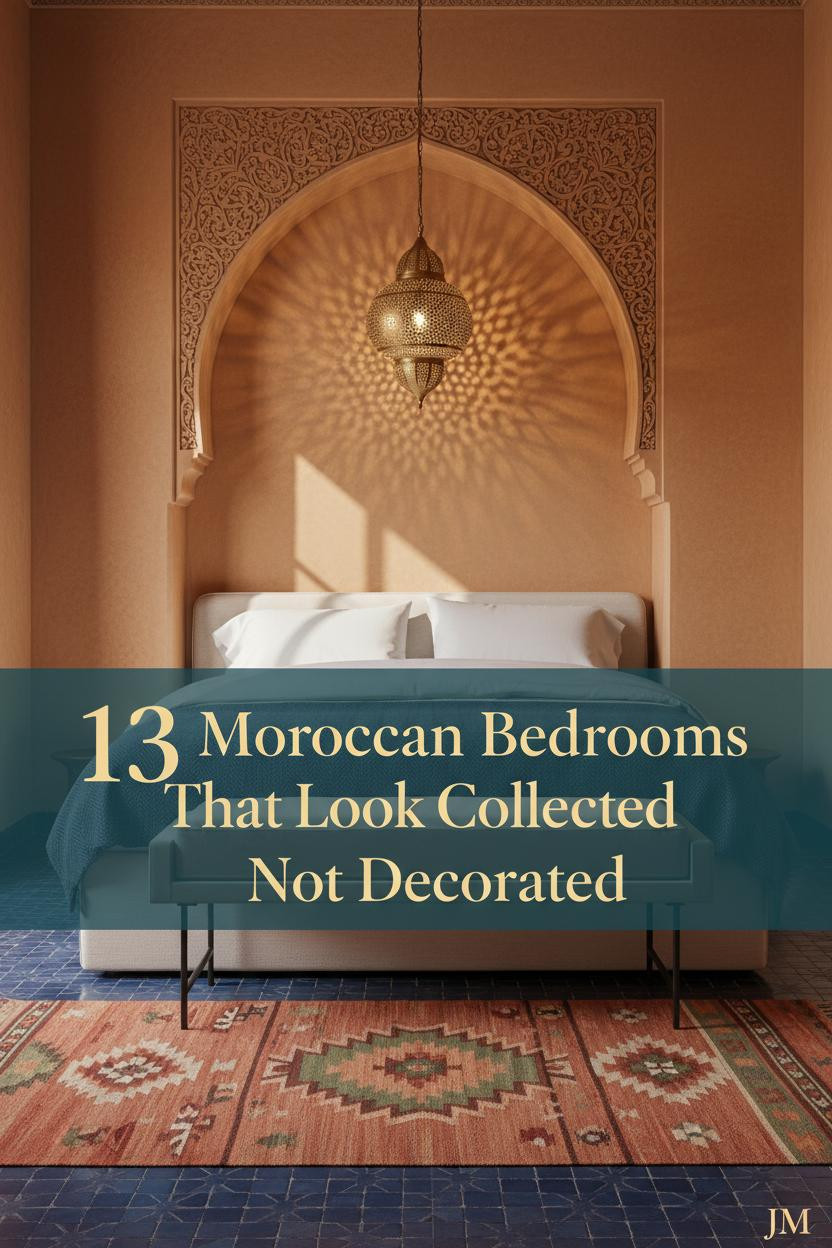
Think your bedroom can’t hold pattern and warmth at the same time? A Moroccan bedroom proves otherwise. The rooms that actually work aren’t trying to look like a souk. They feel collected, layered, and honestly just very lived-in.
These 13 designs pull from zellige tile, hand-carved plaster, brass, and kilim in ways that feel personal rather than themed. I keep coming back to them.
The Zellige Wall That Earns Its Drama
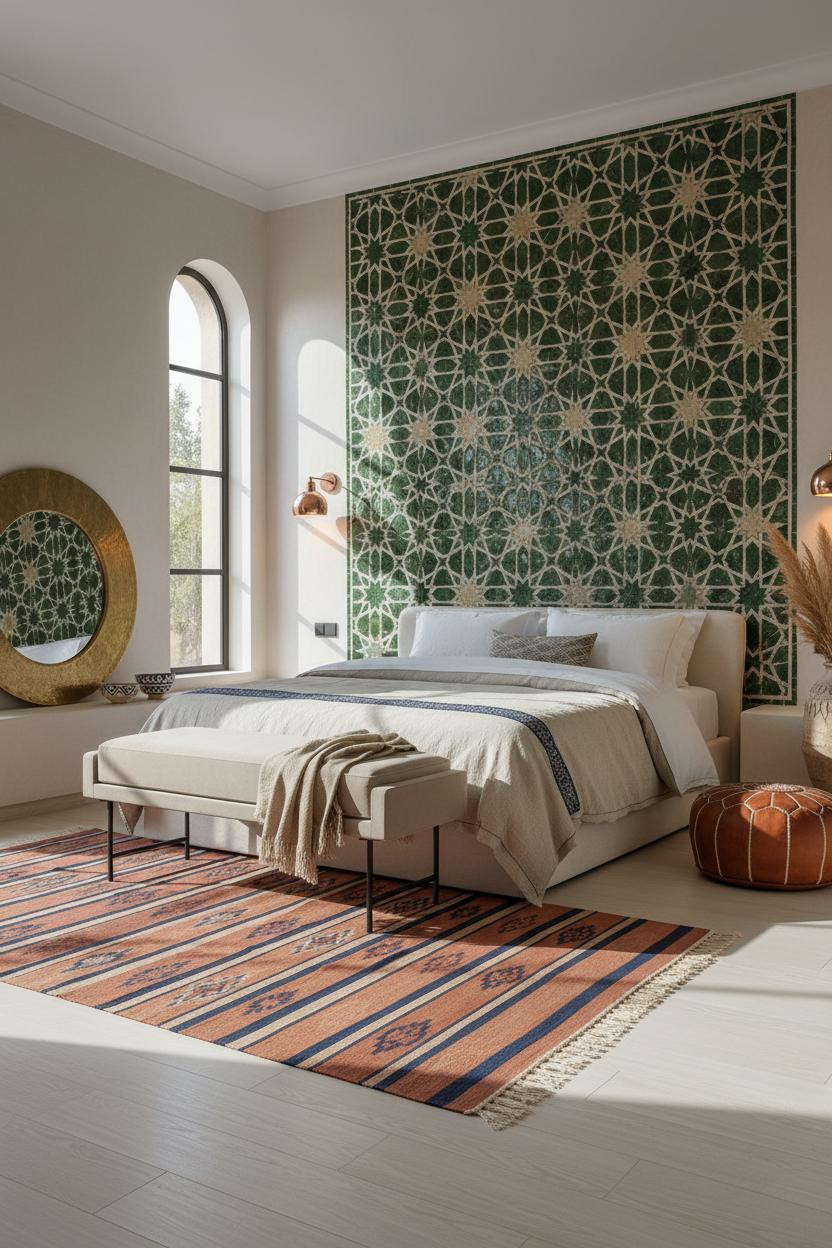

Full-height zellige behind the bed sounds like too much. It isn’t.
But here’s what makes it work: the hand-cut forest green mosaic tiles catch raking light differently on every surface, which means the wall reads as texture, not just color. It moves.
The part to get right: Keep the floor pale and the bedding neutral. A bleached birch plank with a kilim runner carries the pattern without competing with it.
Dark Plaster Walls Done Without Regret
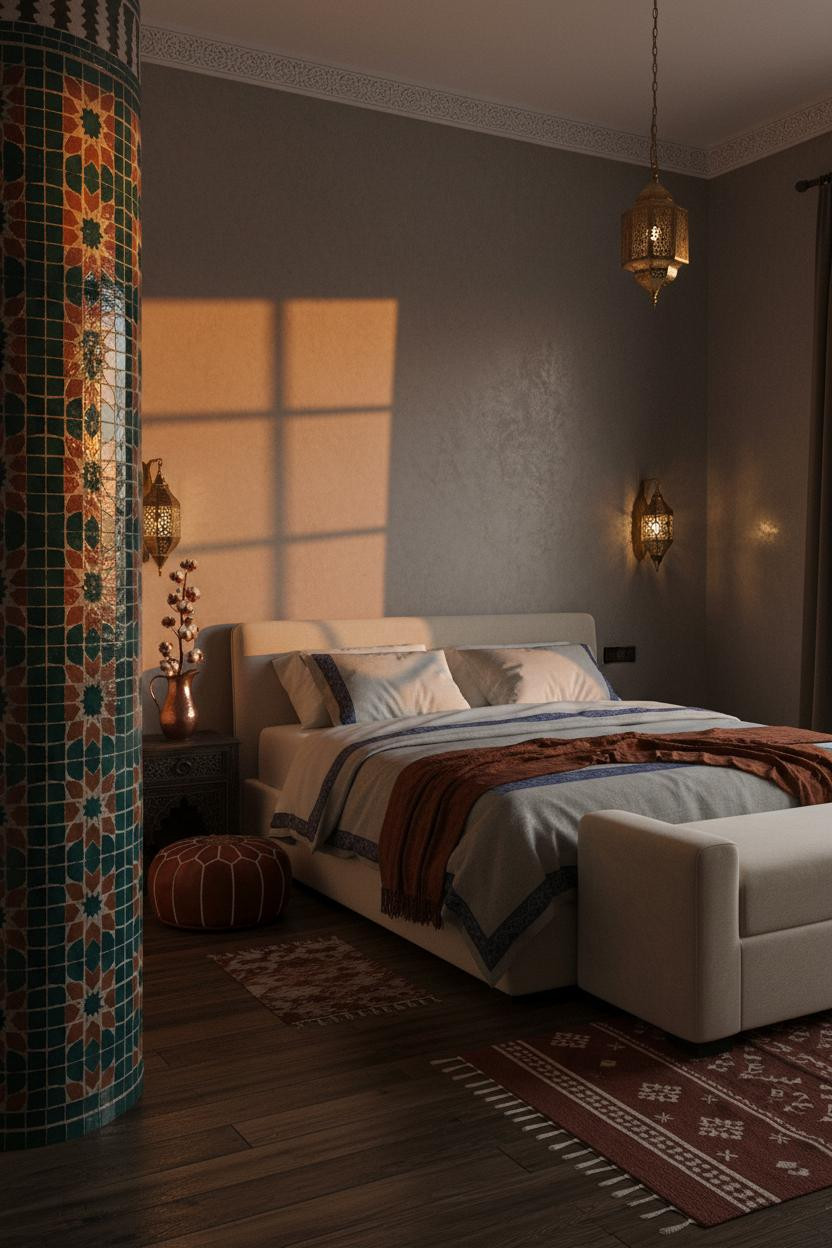
I’m a warm-tones kind of person, so charcoal plaster was a hard sell. But the zellige column changes the math entirely.
Why the palette works: Charcoal hand-troweled plaster absorbs light in a way that makes the teal and sienna mosaic tiles glow rather than compete. The room feels cave-like in the best way. Warm, not heavy.
Steal this move: Pair hammered brass sconces flanking the bed with a deep rust mohair throw. The metal picks up the tile, and the throw stops the room from feeling too polished.
Terracotta And Indigo Is Basically A Masterclass
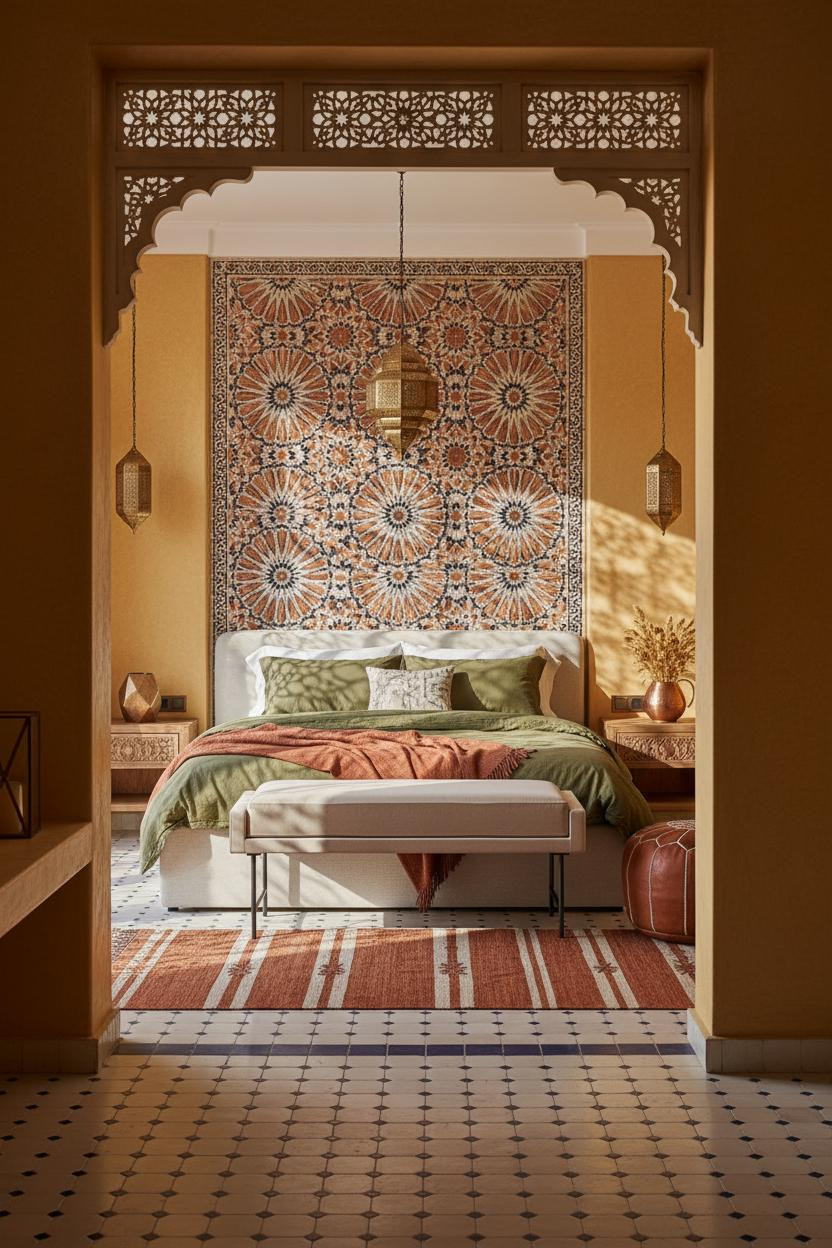
The color combination is ancient for a reason. It works.
What carries the look: Saffron-gold tadelakt plaster is warm enough to hold the mosaic’s weight while staying calm behind the pattern. The result is rich without being loud. And a geometric pierced brass pendant overhead keeps the light ceremonial, not practical.
Pro move: Lay a flat-weave kilim in burnt sienna on polished encaustic cement tile. The layers of pattern actually settle each other down.
When Carved Plaster Does All The Work
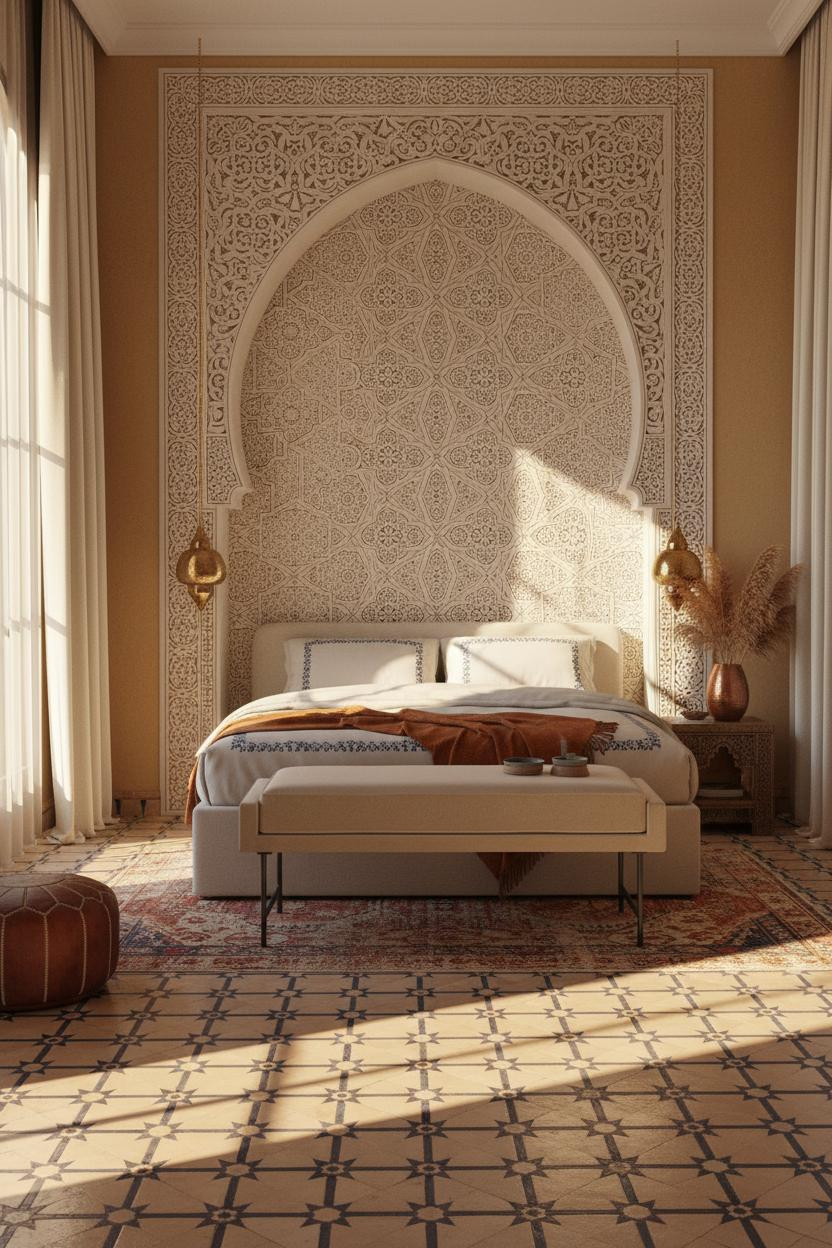
Bold choice. But the rooms that commit to a floor-to-ceiling carved arch never look back.
The arabesque relief plaster here catches afternoon light along every geometric lozenge and floral rosette, which creates shadow depth that flat paint simply can’t replicate. The room feels ancient and intimate at the same time.
Avoid this mistake: Don’t try to accessorize around an arch this strong. Let the deep indigo encaustic tile floor and a simple oatmeal bedding do the supporting work.
Where to start: Ivory silk curtains pooling at the tile edge frame the arch without shortening it. Full floor length or nothing.
I Didn’t Expect To Love The Lattice Screen This Much
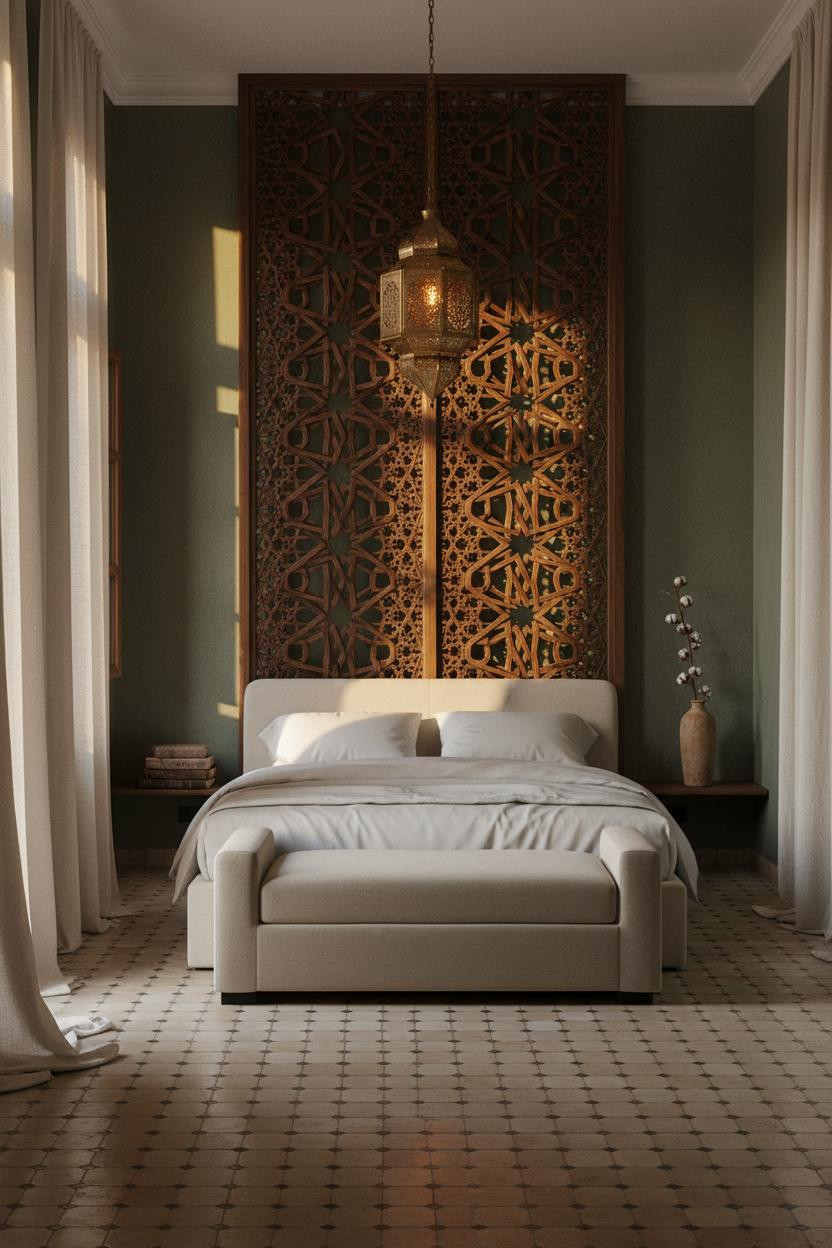
A floor-to-ceiling walnut lattice screen with six-pointed star cutwork projects shadow geometry that moves across the walls as the light shifts. And somehow it never feels fussy. The deep moss green plaster behind it absorbs enough light to let the shadows read clearly, in a way that feels intentional rather than theatrical.
The smarter choice: Leave the encaustic tile floor bare. No rug. The geometric pattern underfoot echoes the screen overhead, and the repetition grounds the whole room without adding visual noise.
Rust Clay Walls With Hand-Applied Stars
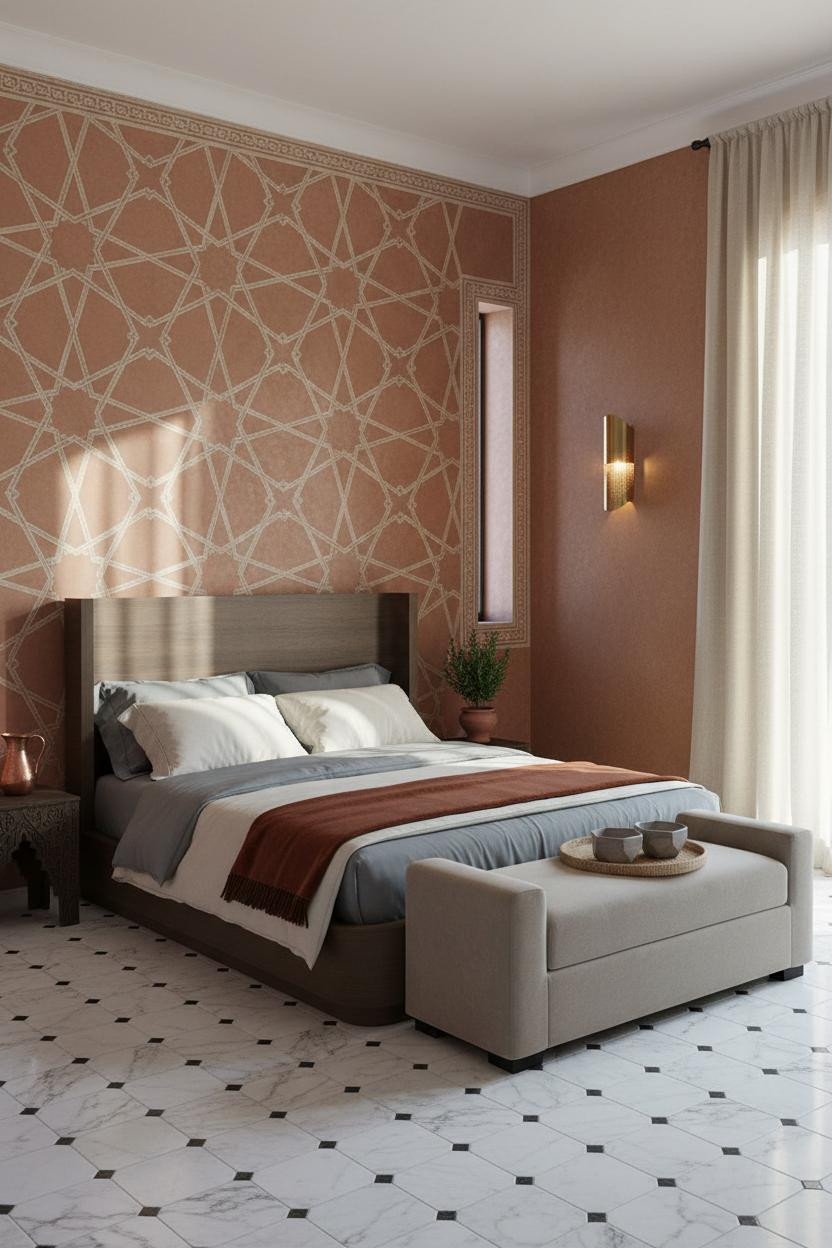

This one is divisive. But it’s also the most achievable version of modern Moroccan decor in this whole list.
Why it looks custom: Hand-applied ivory stencil stars on rust-clay textured plaster catch raking morning light across every surface irregularity, making the wall feel carved rather than painted. That surface quality is everything.
In a room like this, the easy win is keeping the floor bare white marble-effect tile. Let the wall carry the pattern. Slate bedding and a deep rust throw hold it together without competing.
Plum Plaster Makes Every Other Color Pop
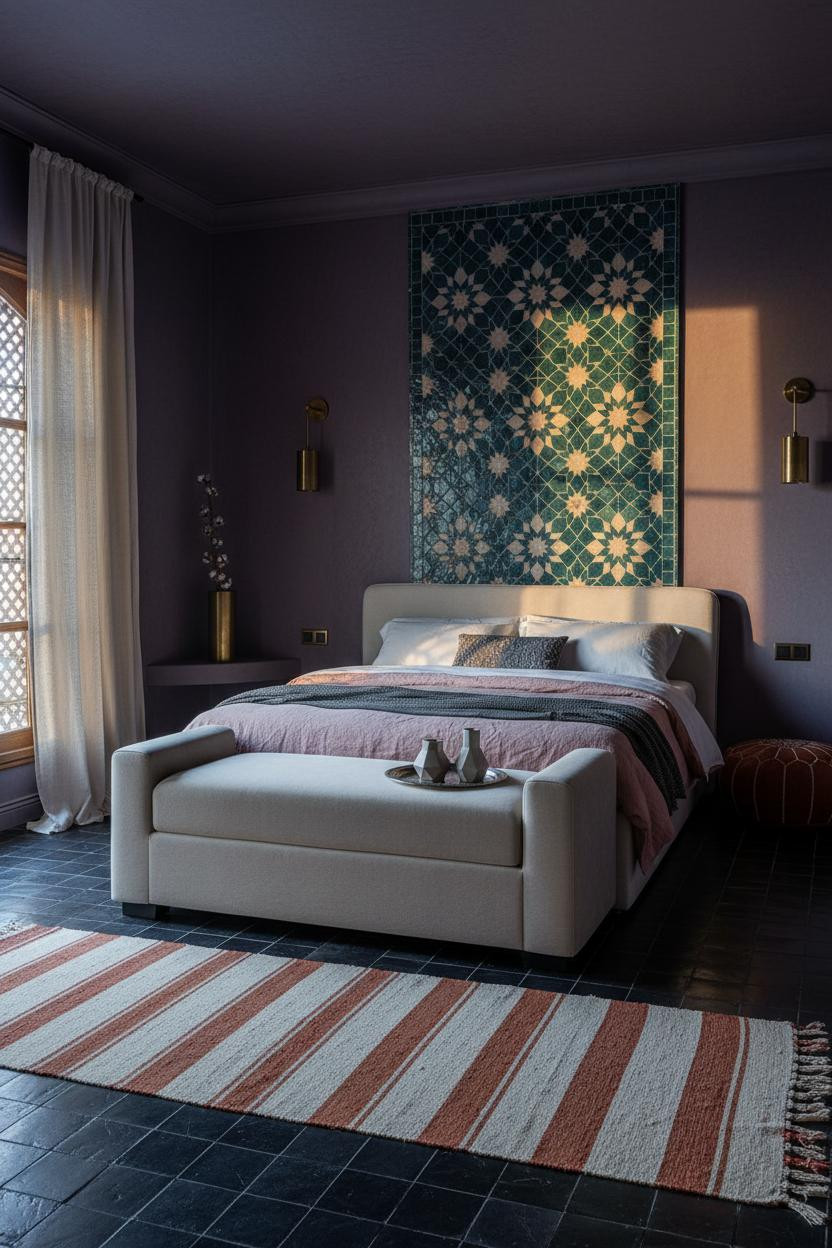
Admittedly, deep plum matte plaster is a commitment. But the reason the teal and cream zellige mosaic column reads so dramatically here is because the wall behind it is dark enough to frame it. The column practically glows against the plum surface, while still feeling like it belongs.
Worth copying: A black slate tile floor with a vintage flat-weave runner in ivory and burnt sienna keeps the palette from going too precious. The dusty pink linen bedding lifts the mood without breaking the spell.
Sage Green Plaster In A Riad-Inspired Room
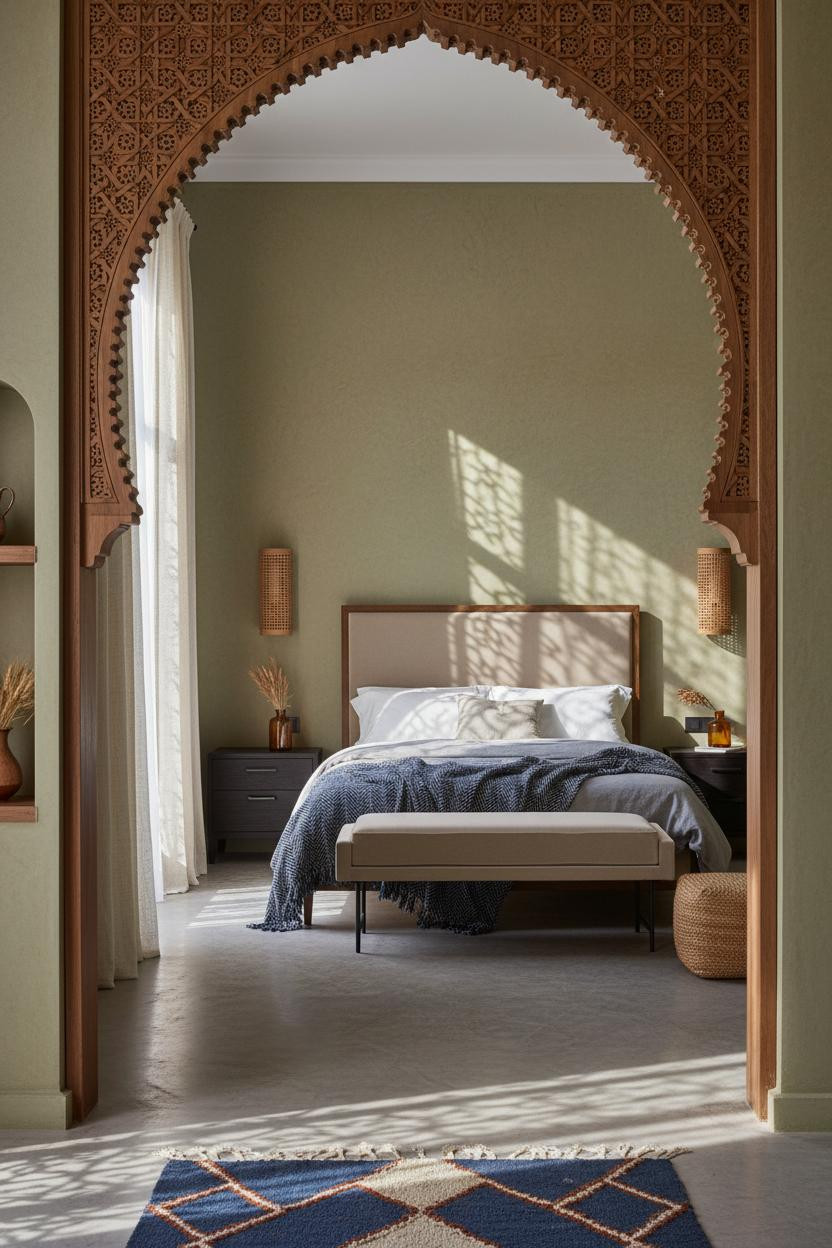

Nothing fancy. That’s the point.
Why it feels balanced: Warm sage green plaster is soft enough to let the carved walnut arch do the talking, which keeps the room from feeling like it’s trying too hard. The arch throws crisp dappled shadows at different heights throughout the day, and the room feels alive because of it.
What to borrow: A deep indigo herringbone wool throw on stone-washed linen. The contrast of rough weave against smooth percale is what makes the Moroccan bedroom aesthetic feel collected rather than styled.
Cobalt Walls And A Mashrabiya Screen
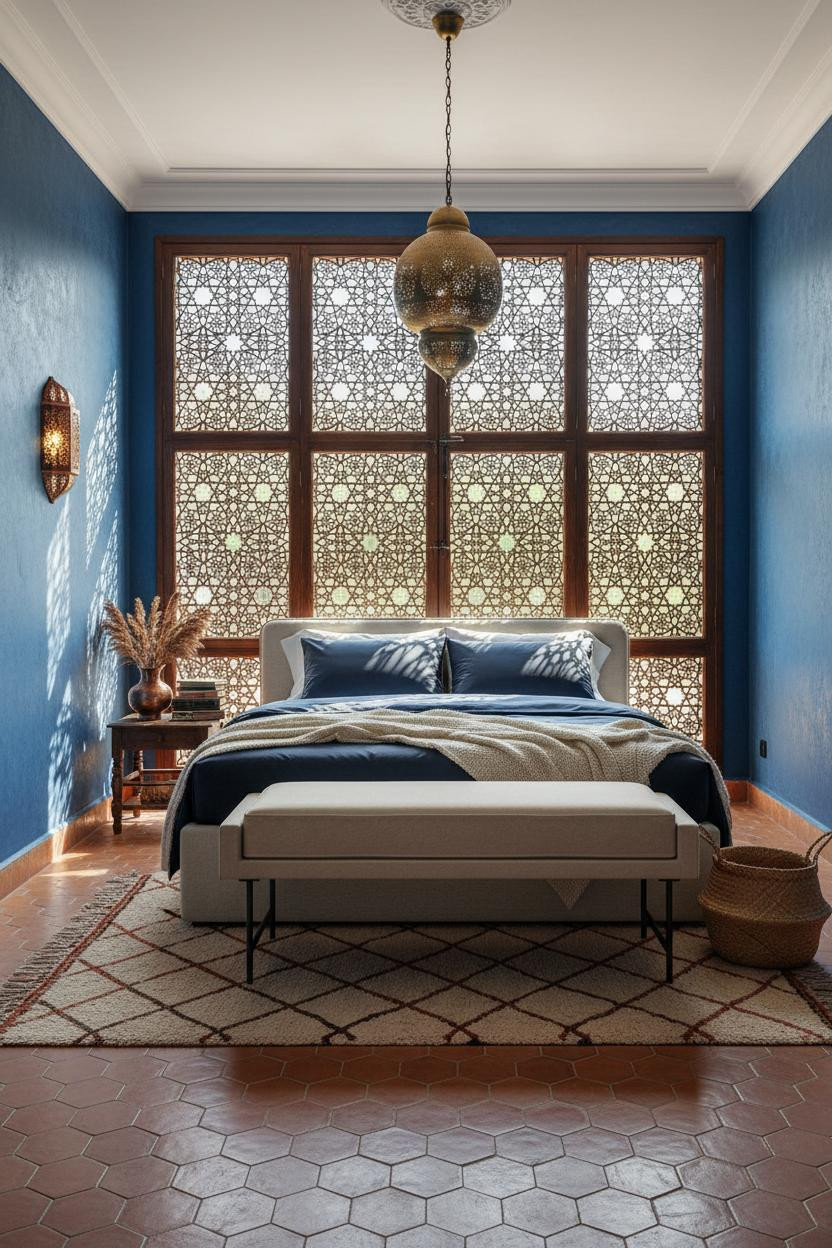
The dark walnut mashrabiya screen projects crisp lace-shadow geometry across every surface when midday light hits it. Alive is the right word for it.
What creates the mood: Cobalt plaster walls absorb the geometric projections without flattening them, which makes the shadow pattern read like decoration rather than an accident. Just enough contrast to feel lively without tipping into sensory overload.
A pierced brass pendant lantern overhead bridges the daytime light show and the evening warmth. Skip this: overhead recessed lighting in a room this atmospheric.
The Muqarnas Panel That Reframes The Whole Headwall
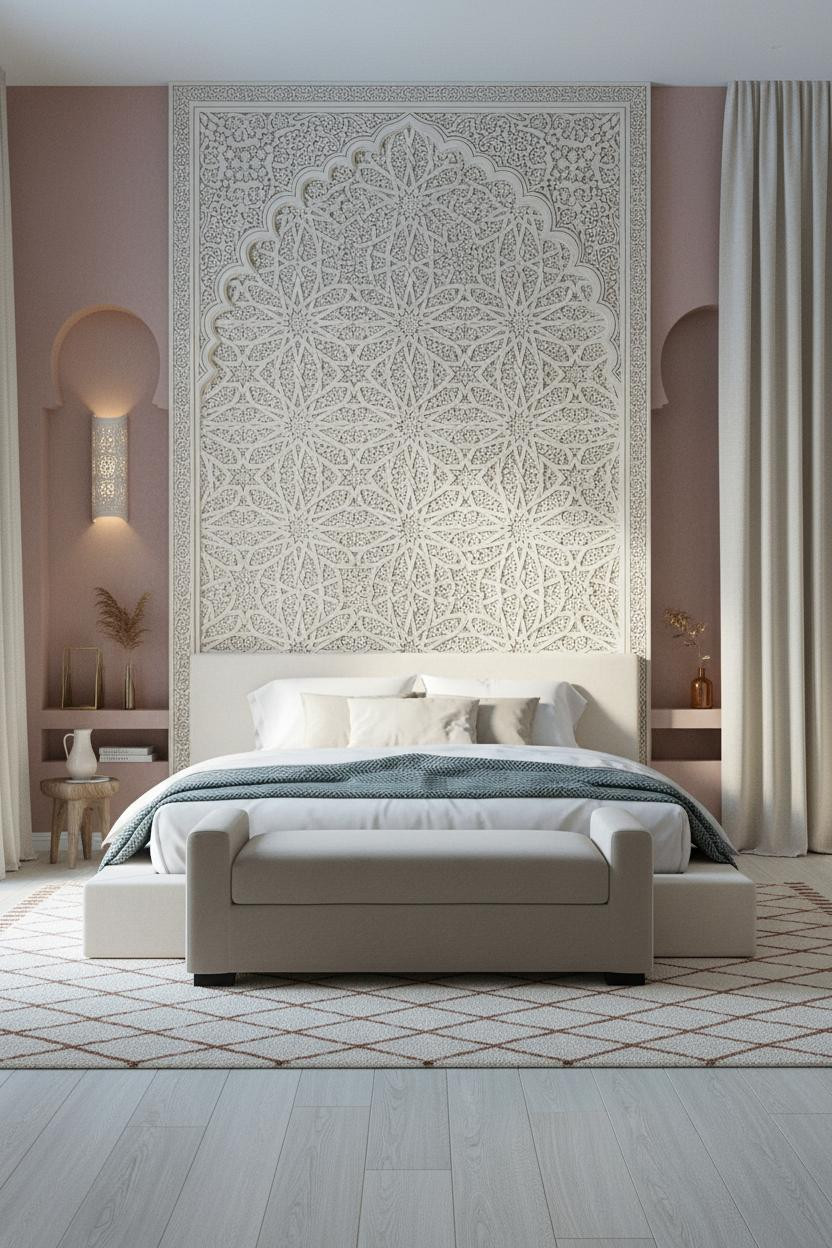
I almost scrolled past this one. Glad I didn’t.
What makes this one different: The ivory carved plaster muqarnas panel has honeycomb relief nine feet tall, and each cell casts its own small shadow in early morning light, creating a density of pattern that no wallpaper or tile can replicate. And the dusty rose flanking walls keep the ivory from feeling stark. The room feels ceremonial and soft at once.
The finishing layer: A bleached oak plank floor with a cream and rust Moroccan diamond rug grounds the pale palette. Steel blue throw at the foot. Nothing too matchy.
Cobalt Zellige At Night Is Something Else
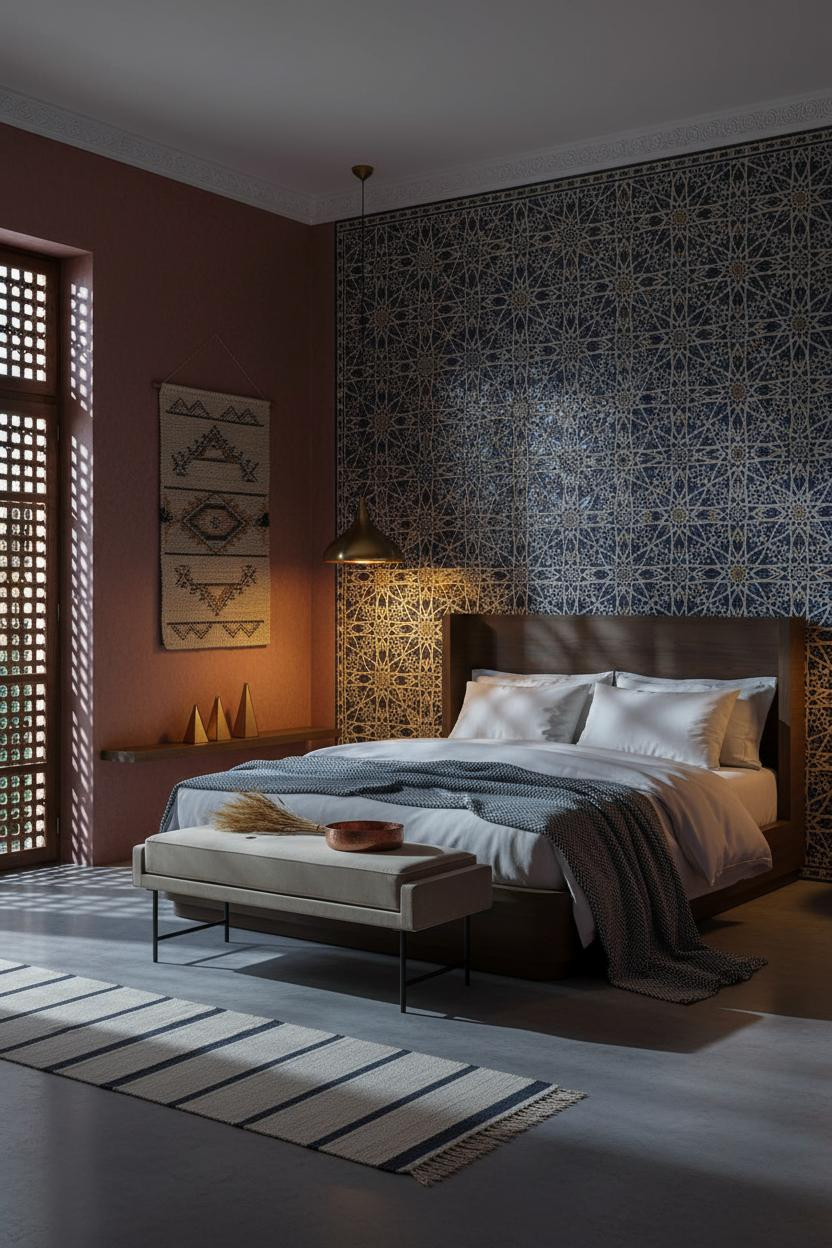
This room has two completely different personalities depending on the hour. Daytime: graphic. Night: ceremonial. Both are correct.
What makes the evening mood so specific is how a single brass pendant pools warm gold across the ivory percale while moonlight rakes across the cobalt and ivory zellige mosaic wall from the louvered window. The grout lines catch just enough light to keep the pattern alive. The common miss here is overhead recessed fixtures: they flatten the mosaic completely.
Forest Green Board-And-Batten Gets A Moroccan Remix
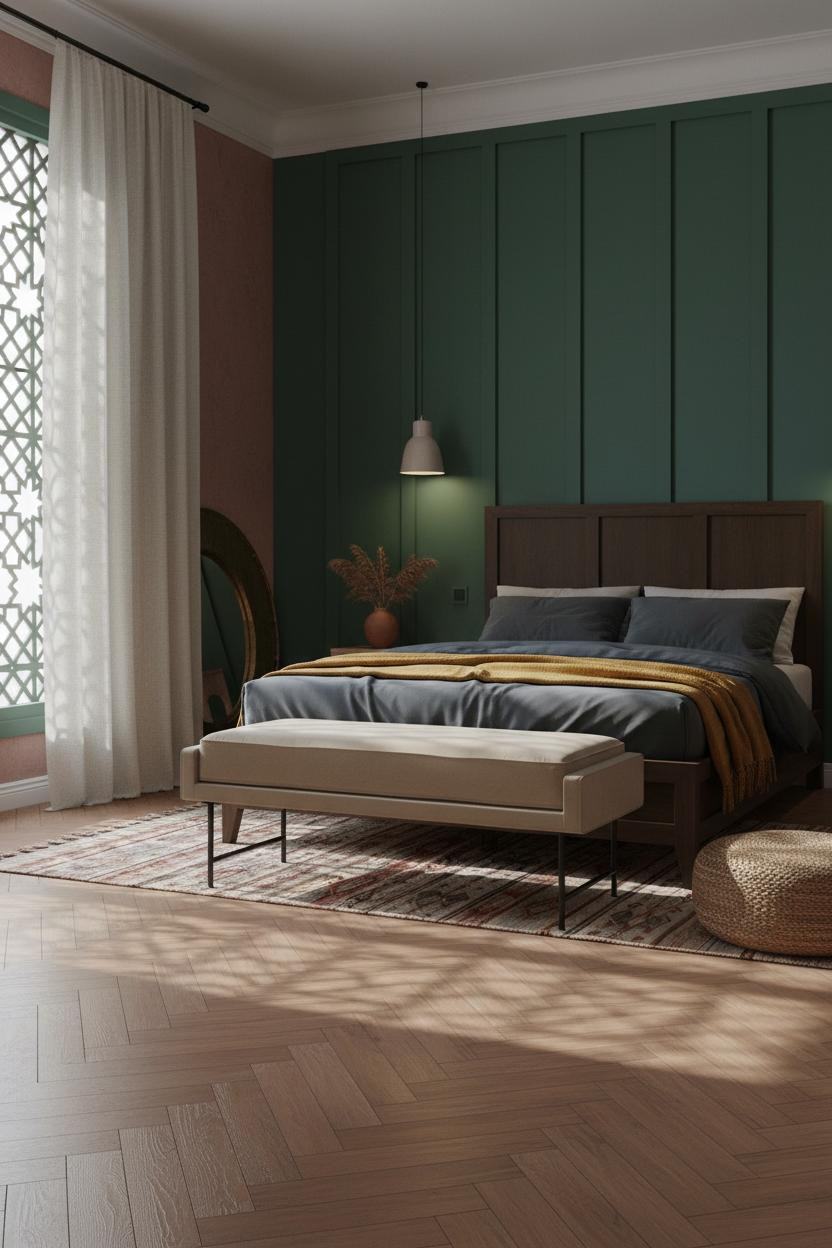
This one surprised me. It shouldn’t work, but it does.
Why it lands: The deep forest green board-and-batten wall gives the kilim runner and brass accents a darker, moodier backdrop than the usual pale plaster, which makes the whole room feel more globally eclectic and less North African pastiche. The vertical grooves catch diffused morning light in a way that adds real texture. And the dusty rose flanking plaster stops it from feeling too heavy.
One smart swap: Replace any generic bedside lamp with a terracotta wall sconce at a low height. The warmth pools differently on a dark wall, and the room feels lived-in and intimate because of it.
Ochre Plaster And An Arched Alcove Headwall
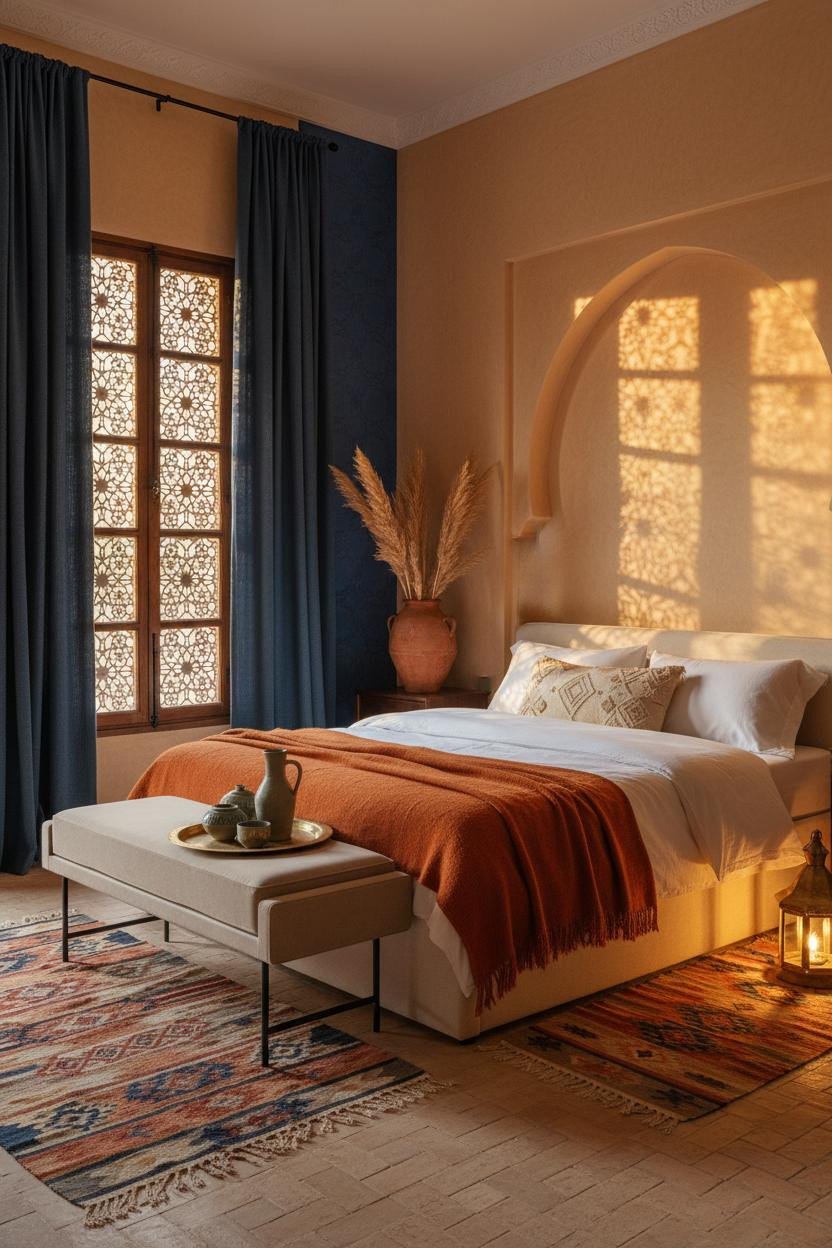
The arched alcove recesses the headwall eighteen inches, and that depth is what makes this a middle-eastern bedroom reference point rather than a Pinterest exercise. Raking afternoon light catches every ridge of the hand-troweled warm ochre plaster, which creates shadow depth that flat walls never achieve. The room feels earthy and genuinely old.
The foundation: A deep indigo accent wall with subtle geometric stencil facing the ochre pulls the two halves of the palette together. Pair floor-to-ceiling indigo linen curtains with a burnt orange mohair throw and you have just enough warmth against all that earth tone. Nothing too precious.
Our #1 Pick
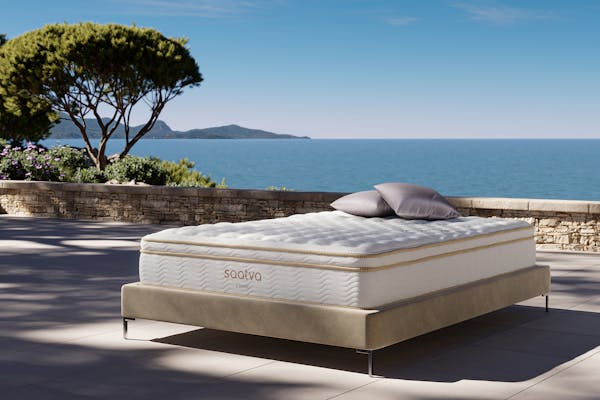
Saatva Classic Mattress
America’s best-selling online luxury innerspring. 365-night trial, lifetime warranty, free white glove delivery.
Shop Saatva Classic
The Foundation Of Every Beautiful Bedroom
Walls get repainted. Kilims get swapped out. The mattress stays. So it’s worth getting that part right.
The Saatva Classic uses dual-coil support that holds its shape over years, not months. The cotton cover breathes through warmer nights. And the Euro pillow top has enough give to feel genuinely comfortable without losing its structure.
A Moroccan bedroom this layered deserves a bed that actually matches it.

The rooms worth saving are the ones where nothing looks accidental. And that starts long before the zellige tile. It starts with what you sleep on.