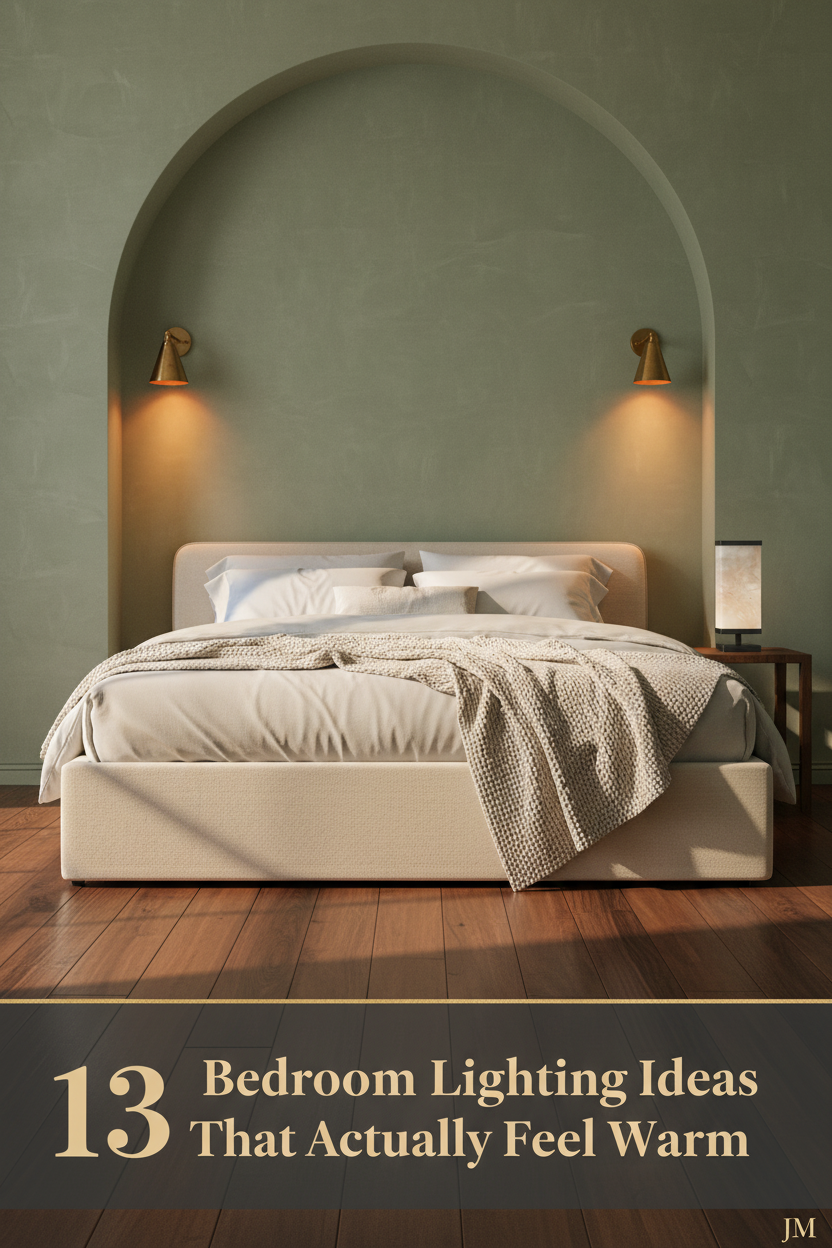
The first thing you notice in a bedroom with great cozy bedroom lighting isn’t the furniture. It’s the feeling. Warm, unhurried, like the room exhaled.
These 13 ideas cover every approach, from amber bedside lamps to layered sconces and rattan pendants. Pick one or combine a few. Either way, the room gets warmer.
The Curved Plaster Niche That Changes Everything
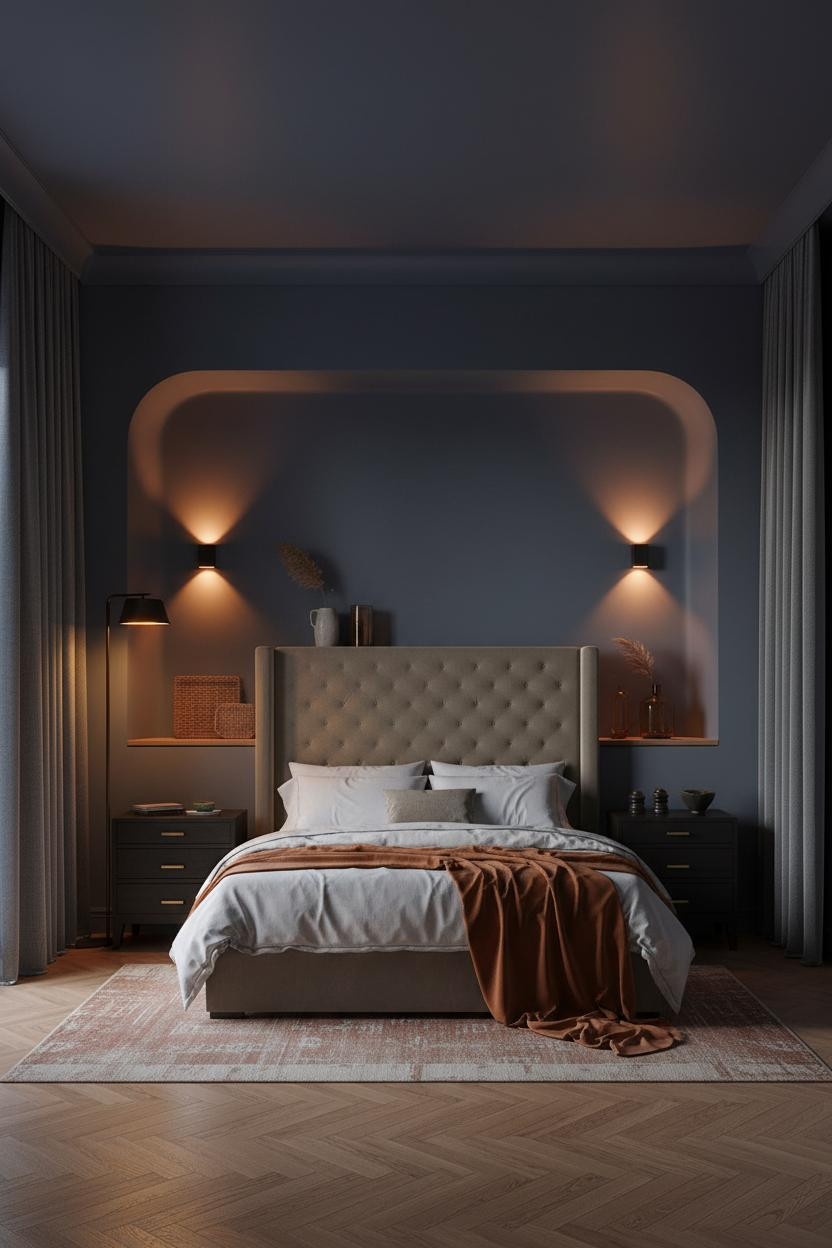

I keep coming back to this one. The architecture does most of the work before the lamps even turn on.
Why it feels expensive: That curved matte plaster niche catches amber lamplight in gradients, shifting from warm gold at center to deep shadow at the edges. It makes a flat wall feel sculptural.
Steal this move: Pair deep indigo walls with warm amber sources and the contrast goes from cold to intimate fast.
Why Shiplap Works Better With Warm Lamps
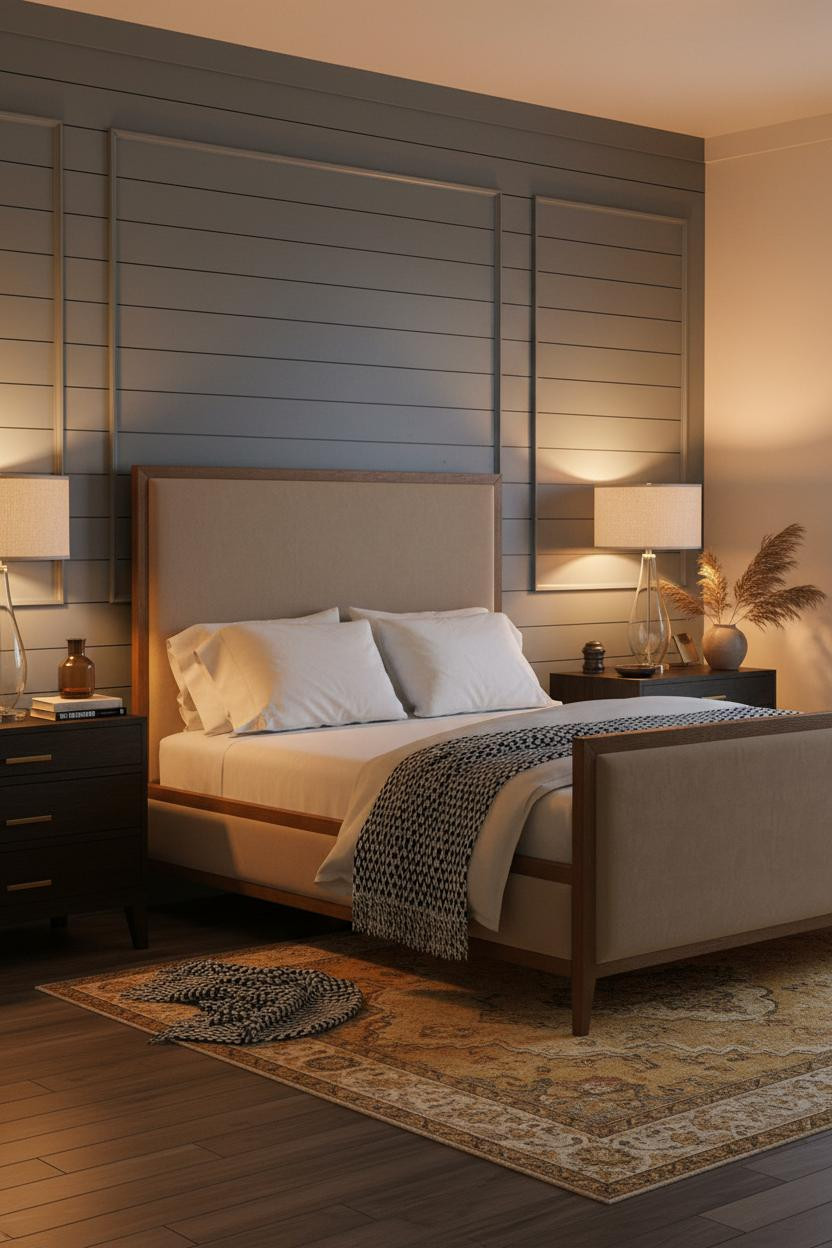


Bold choice. Slate blue shiplap is divisive. But with the right lamp temperature, it settles into something that feels sheltered rather than cold.
Warm lamp glow catches the upper ridge of each horizontal shiplap plank, casting a thin shadow stripe below it. The room feels layered and whole because of those repeated lines, not despite them.
Forest Green Walls Make Warm Lamps Hit Differently
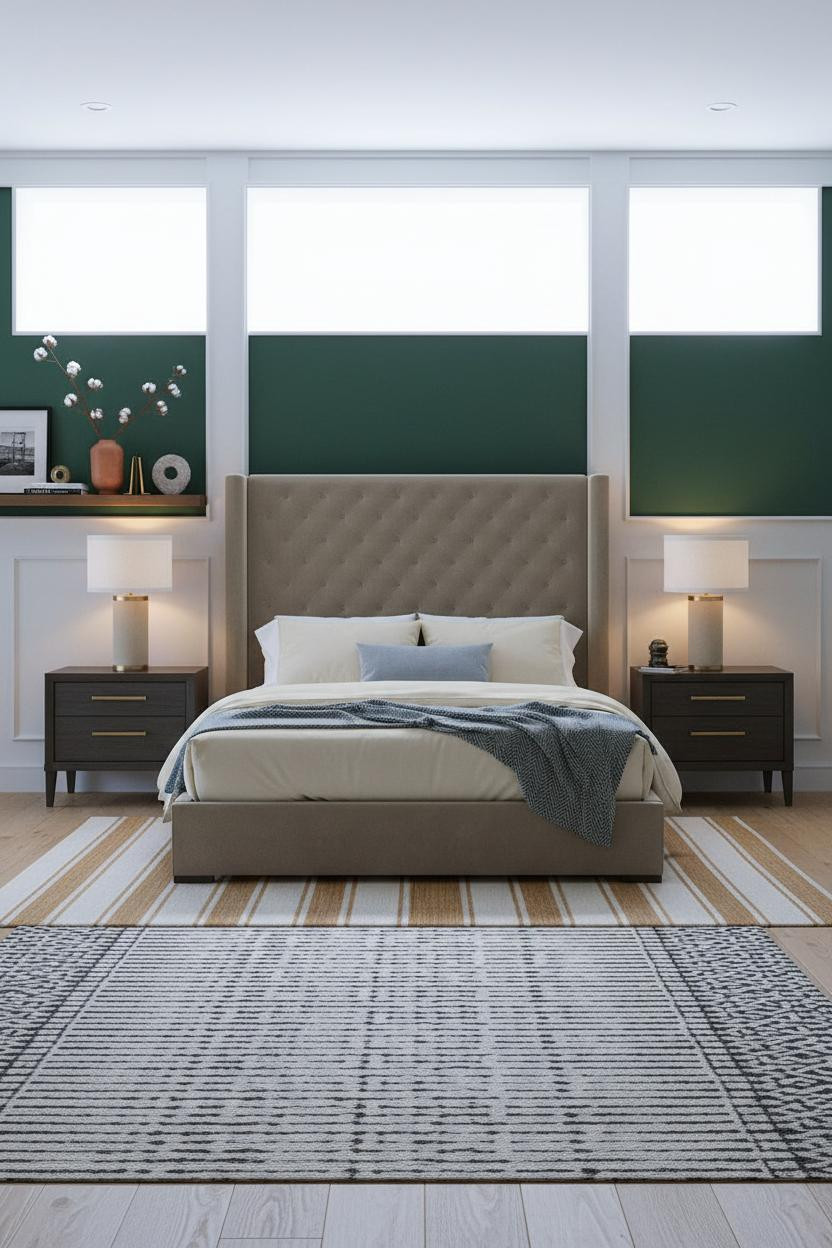
Deep wall color and warm lamp glow is a combination that honestly never gets old.
What makes it work: The forest green upper wall absorbs daylight while the amber lamps pull out its warmth at night. Two completely different rooms in one, depending on the hour.
The white wainscoting below keeps the whole thing from feeling like a cave. That horizontal line is load-bearing for the composition.
I Didn’t Expect to Love a Dark Room This Much
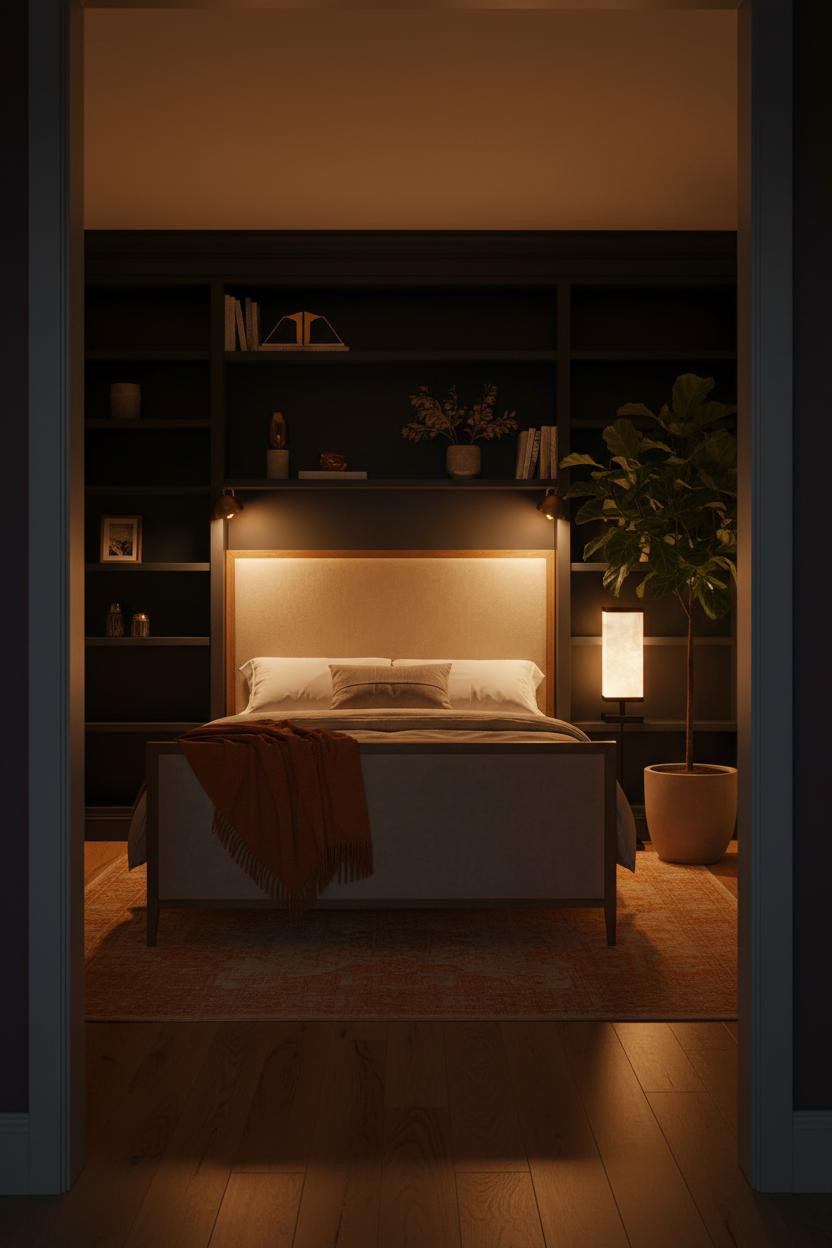
A full-wall built-in bookshelf painted in inky tones sounds like a commitment. It is. But the payoff at night is real.
In a dark scheme like this, the smarter choice is sparse shelf styling. Objects with visual weight (a burnt orange mohair throw, an amber glass sculpture) catch lamplight and hold the darkness without fighting it.
Where to start: A corner floor lamp throwing warm light upward into the shelves does more than overhead fixtures ever could here.
What a Coffered Ceiling Actually Does for Lamp Light
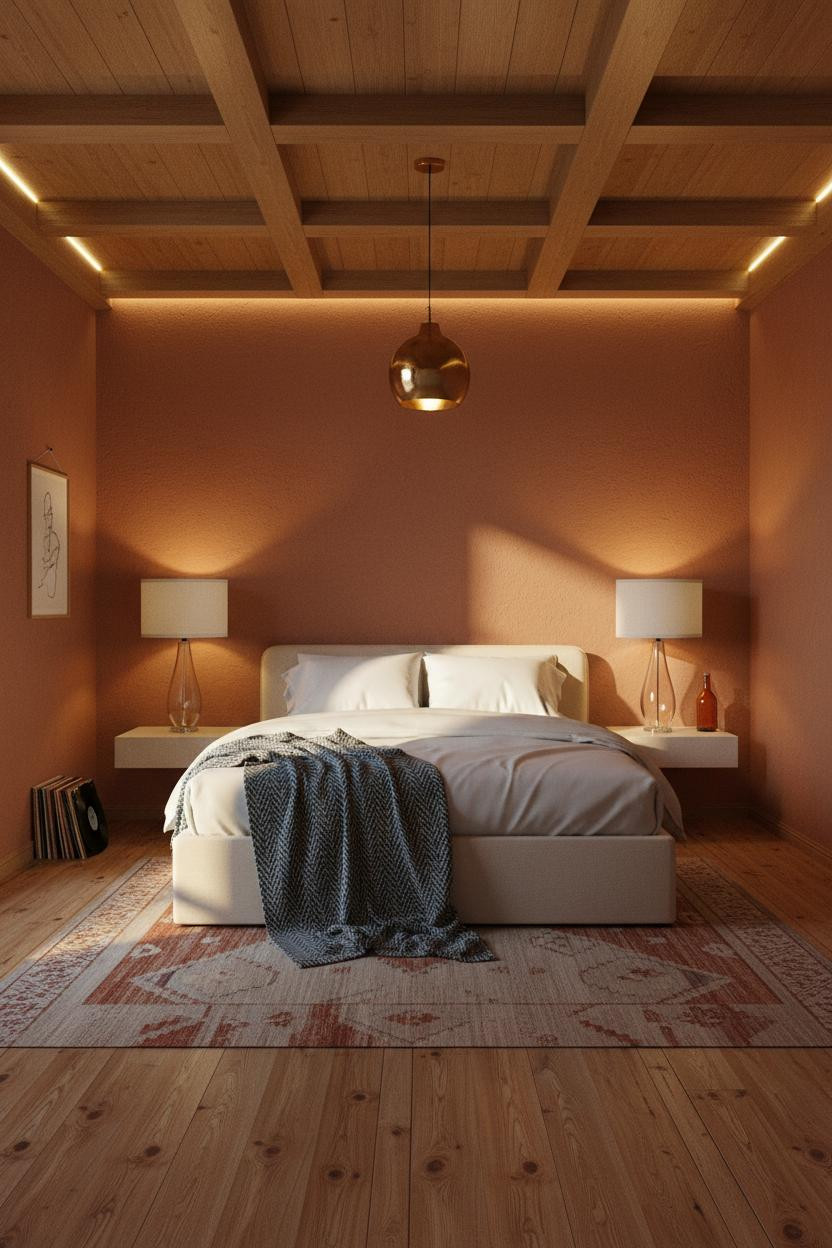

Most people think about ceiling architecture and wall color separately. This room treats them as one system.
Design logic: The natural oak coffered ceiling traps and reflects warm lamp glow between each recessed panel, so the light source multiplies upward without a single extra fixture. Terracotta walls underneath pull the amber even further.
The practical move: Add a backlit cove detail above the coffers to wash the grid from above. The room feels taller and warmer at the same time.
Exposed Brick Is Still the Warmest Accent Wall There Is
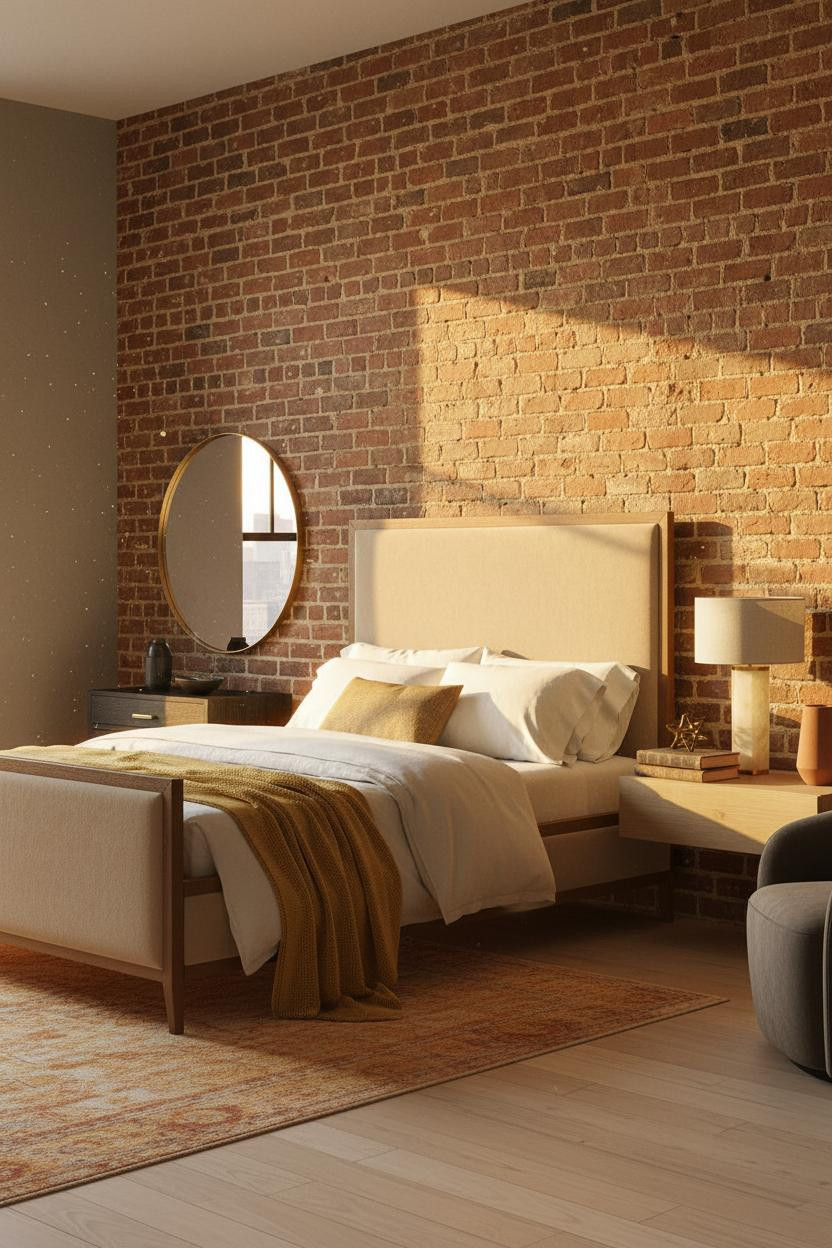
Nothing fancy. That’s the point.
Raking morning light across deep terracotta brick does what no paint color can replicate. Each mortar line casts its own micro-shadow, and the whole wall becomes a texture rather than a backdrop. Pair it with warm amber bedside lamps and the room feels like it has real age to it.
The easy win: Lean an oversized round mirror against a side wall to reflect the brick warmth back into the room.
Why a Steel-Framed Window Makes Warm Light Feel Warmer
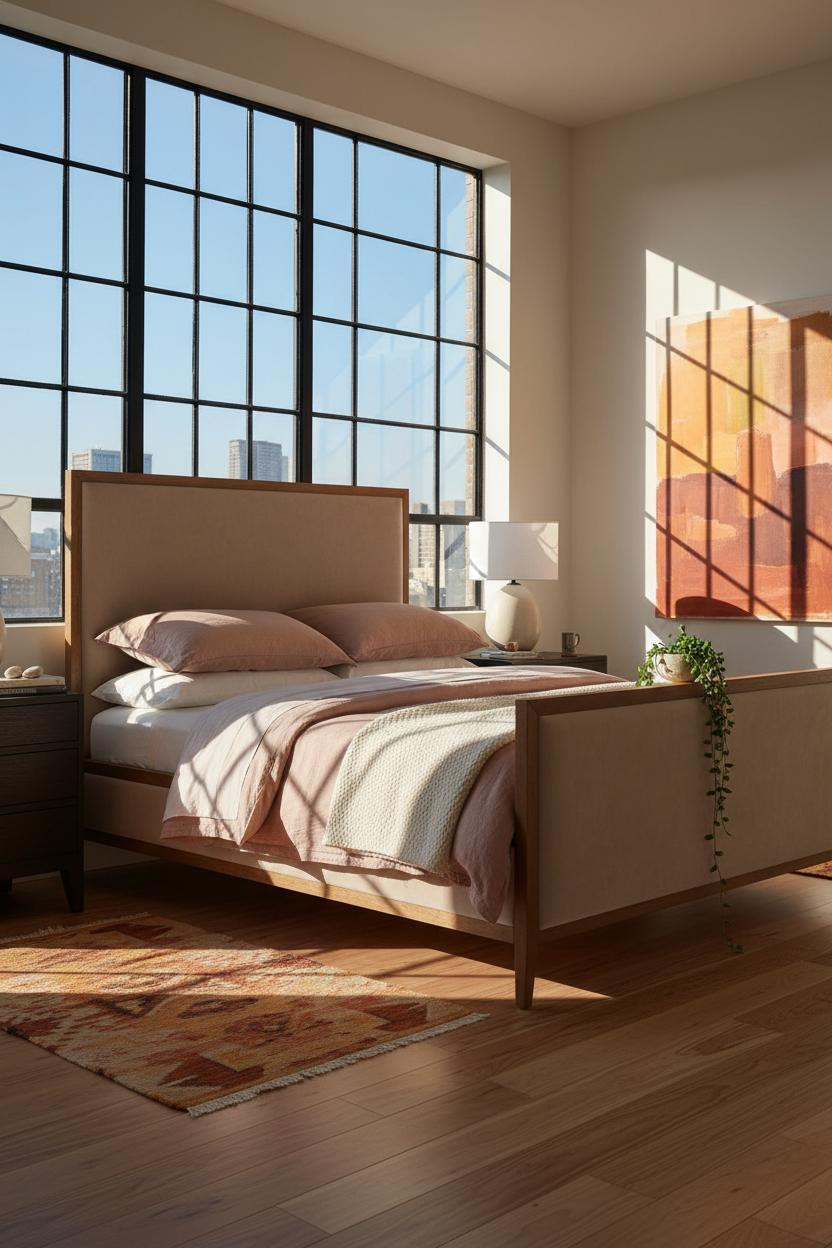
I almost scrolled past this. Glad I didn’t.
The Crittall-style steel window frame casts crisp ladder shadows across the room that could easily read as cold. But warm amber lamps on the bedside table pull everything back. The contrast between cool geometry overhead and soft pooled light at bed level is what makes this one feel so alive (without either source canceling the other out).
Board-and-Batten Walls Need Morning Light to Really Land
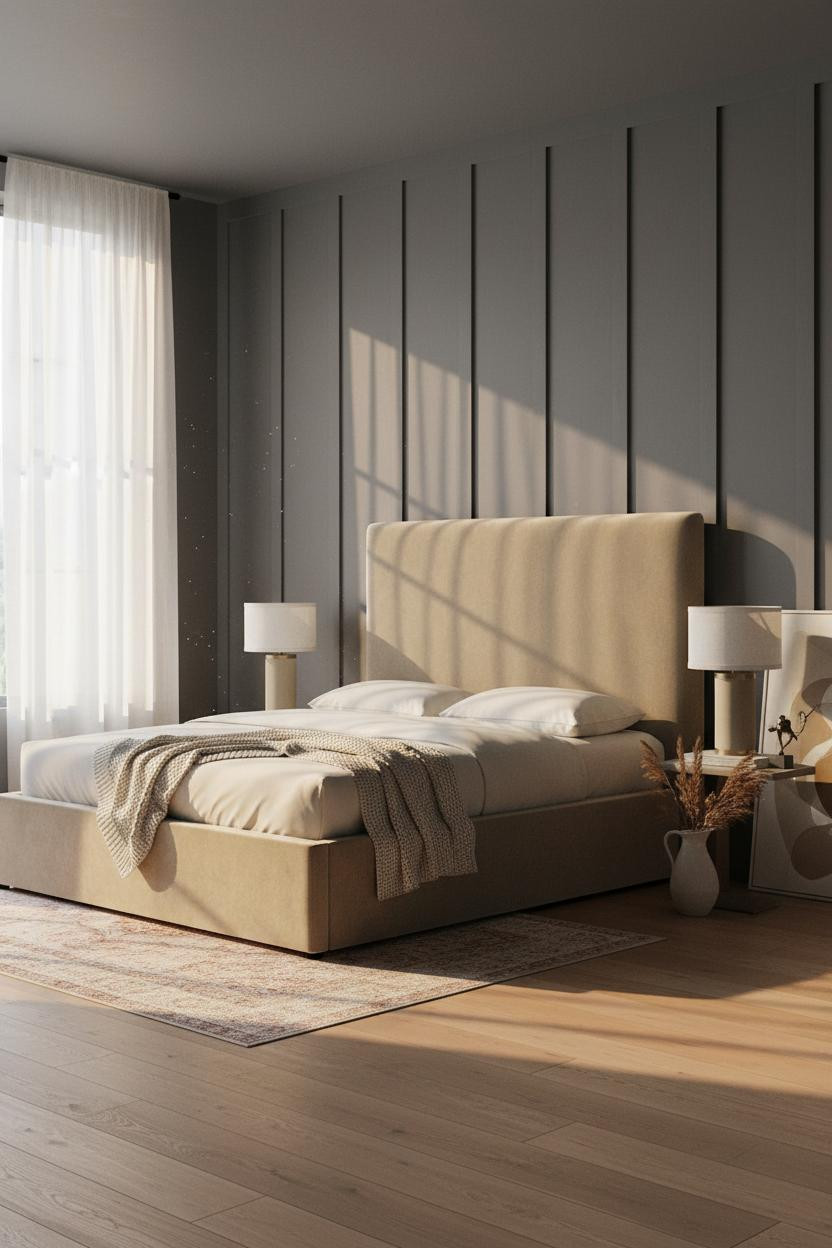

Having raking morning light hit a dove grey board-and-batten wall changes how you actually use the room. The vertical planks multiply in the light, making the whole surface feel textured and deliberate rather than just painted.
What carries the look: Warm amber bedside lamps at night hold what the morning light does during the day. The wall reads completely differently at each hour, which keeps the room interesting over time.
Avoid this mistake: Don’t use cool-toned lamps here. They fight the batten shadows instead of deepening them.
Slatted Wood Panels Make Soft Lighting Dramatic
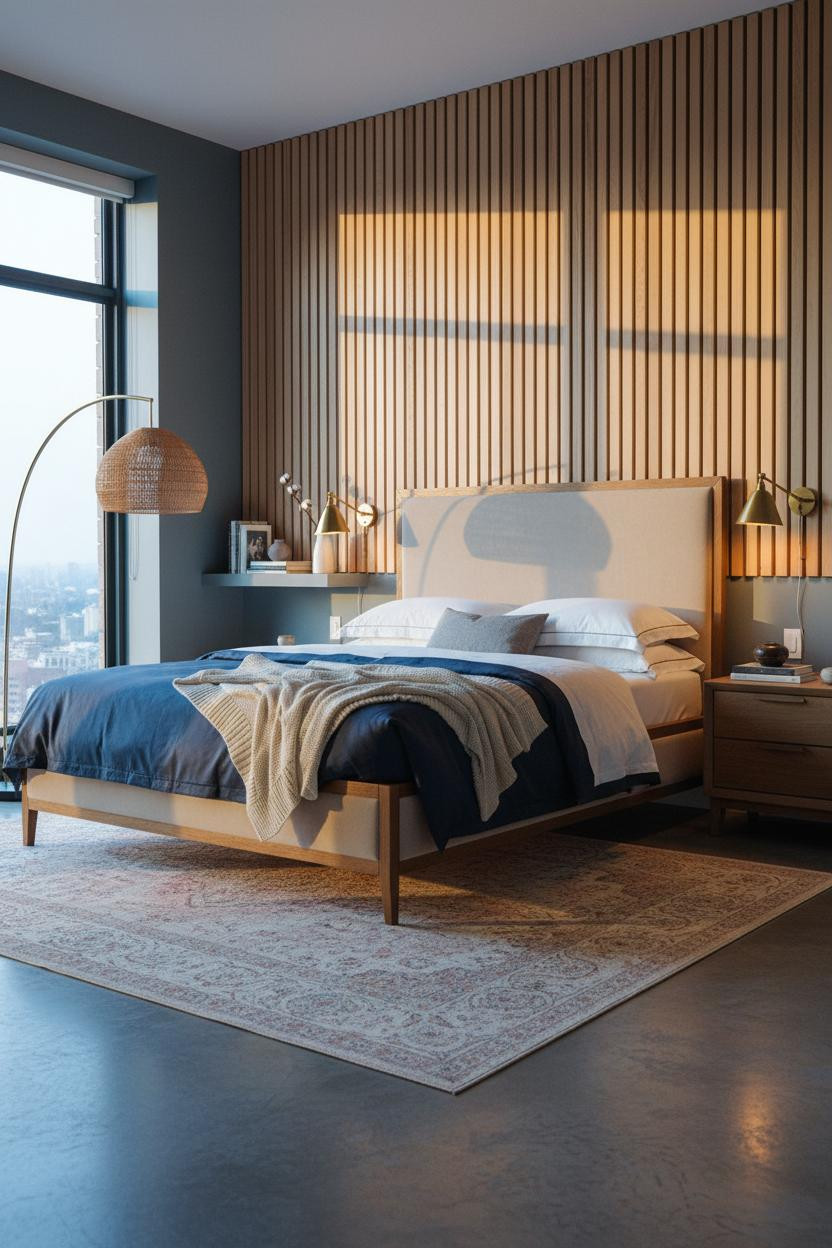
This one is quieter than it looks at first, but the effect builds fast.
Why it holds together: Warm lamp glow catches the face of each vertical ash slat and throws a stripe shadow behind it, so the panel reads as three-dimensional rather than flat. The room feels calm and cohesive, with just enough texture to keep things interesting.
In a small bedroom, the smarter choice is going full-height with slatted panels rather than a headboard alone. The scale makes the room feel larger, not smaller.
The Arched Plaster Alcove That Makes Sconces Look Custom
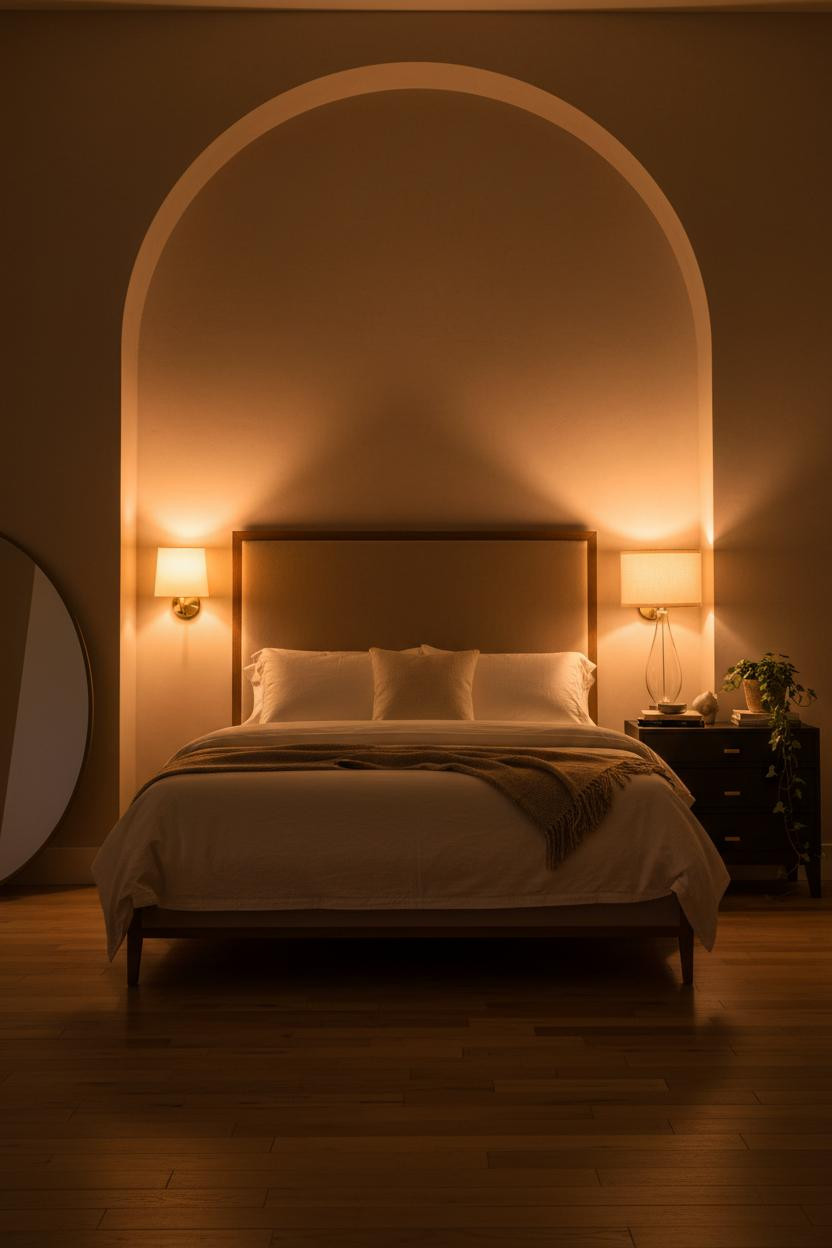
Sconces flanking a flat wall look fine. Sconces flanking an arched plaster alcove look intentional in a different way entirely.
What gives it presence: The smooth mushroom plaster alcove curves light inward, shifting from warm amber at the center to deep shadow at the rim. Two sconces become four because of the reflection, while still feeling like one cohesive glow.
The finishing layer: A round mirror leaning against the far wall bounces sconce light back across the room. The room feels sealed and warm without any additional fixtures.
Brass Sconces on Sage Plaster Is a Combination That Always Works
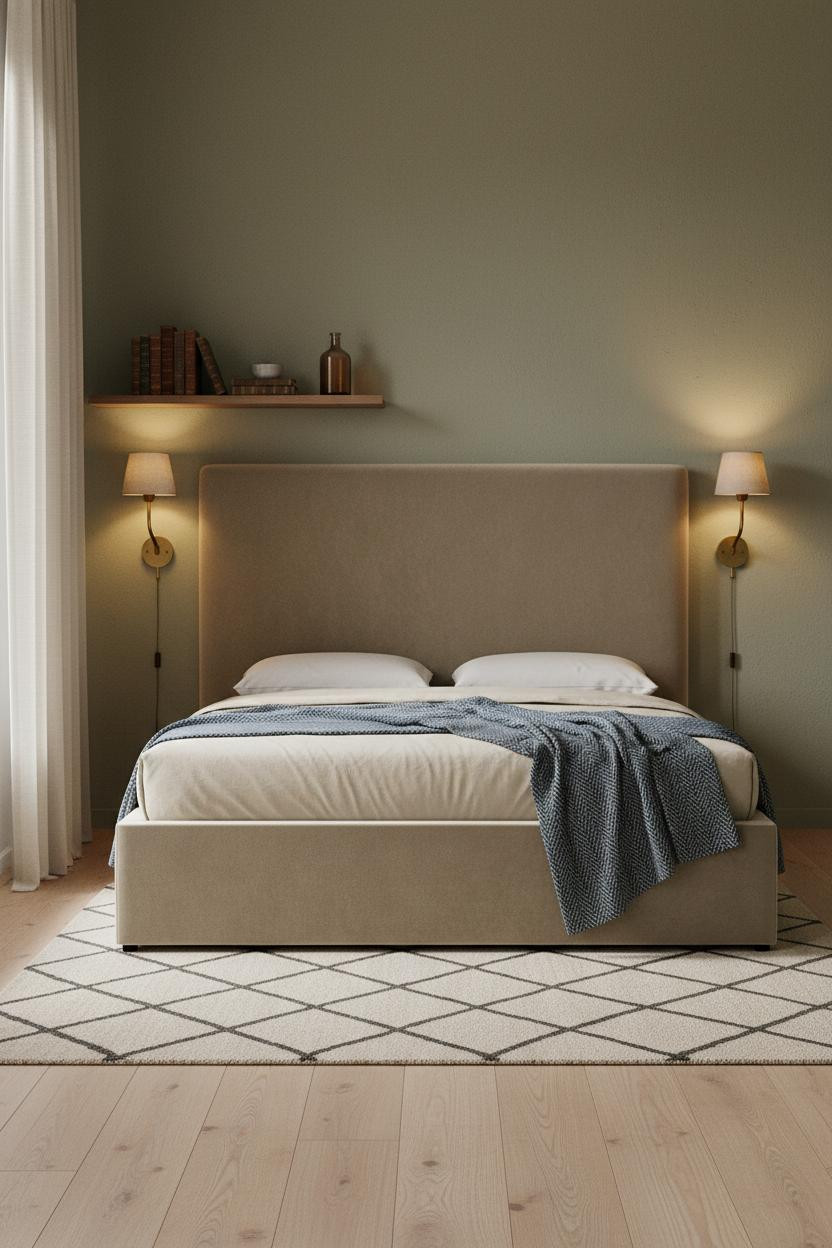
Admittedly, I’ve seen this combination done badly. But when the wall color is right, brushed brass sconces with linen shades on warm sage plaster is somehow one of those pairings that makes a room feel finished without trying too hard.
Why the materials matter: The matte sage plaster absorbs overhead daylight softly, so when the brass sconces come on in the evening, the amber cone shadows they cast upward read as deliberate rather than incidental.
What not to do: Don’t use chrome or nickel here. The warmth of the brass is the entire reason this works.
How Rattan Pendants and LED Strips Work Together
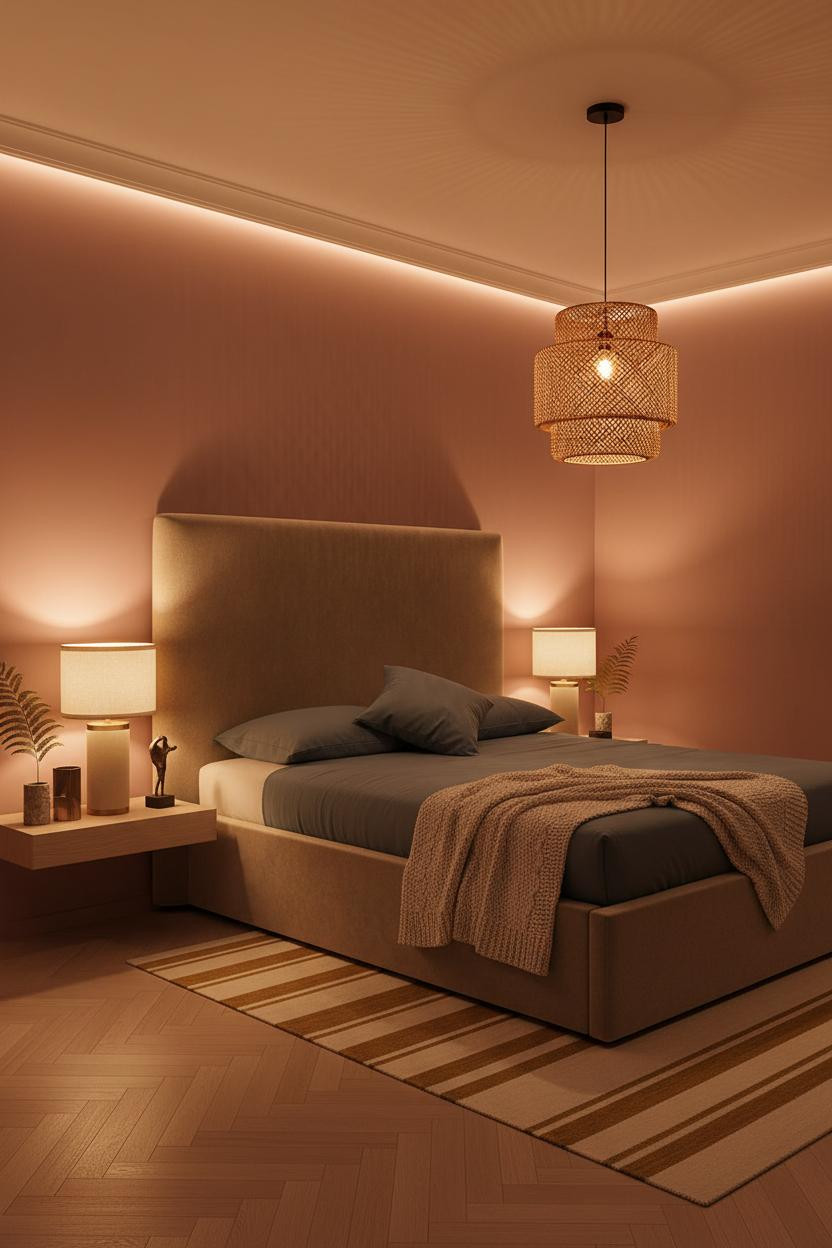
Two ambient sources at different heights is a small move with a big difference.
What creates the mood: Crown molding LED strips wash the upper walls in a continuous amber band while a woven rattan pendant catches and scatters the glow just above the bed. The room feels lit from everywhere and nowhere specific, which is exactly what makes ambient bedroom lighting feel relaxed rather than staged.
Pro move: Dusty rose walls amplify warm light in a way that cream or white simply don’t. The color absorbs the glow and gives it back softened.
Linen Roman Shades Do More for Warm Light Than You’d Think
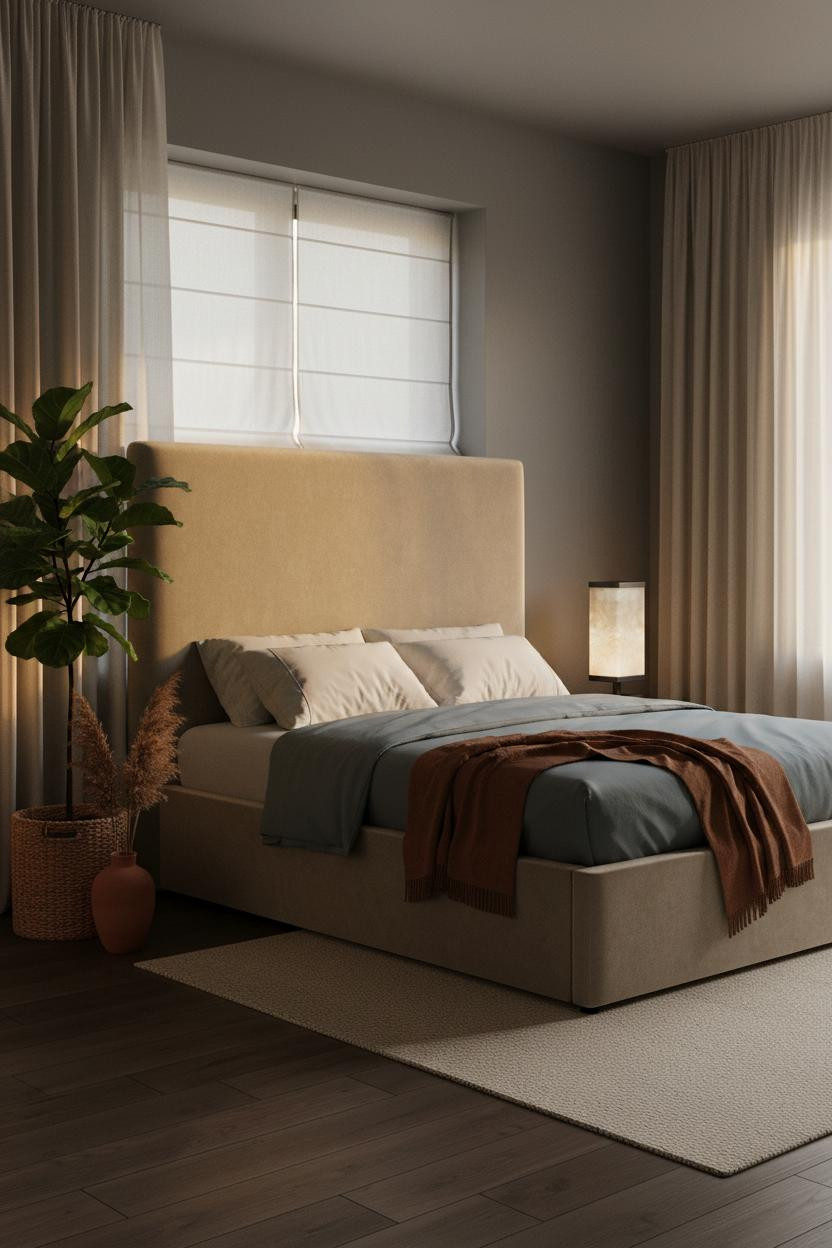
The window treatment is doing half the lighting work in this room. I don’t think people account for that enough.
A floor-to-ceiling linen roman shade recessed into a greige wall doesn’t block light so much as translate it. Each fold diffuses honey-toned glow across the full wall in gentle gradients, which means the room has soft ambient light during the day without a single lamp on.
The key piece: Pair the shade with a warm amber bedside lamp at night and the transition from day to evening is completely seamless. Two sources, one warm family.

Our #1 Pick
Saatva Classic Mattress
America’s best-selling online luxury innerspring. 365-night trial, lifetime warranty, free white glove delivery.
Shop Saatva Classic
The Foundation Of Every Beautiful Bedroom
Get the lighting right and the room feels warm. But the warmth stops at the mattress if what’s underneath doesn’t match.
The Saatva Classic is what holds everything together at the end of the day. Dual-coil support means the structure doesn’t bottom out over time, the organic cotton cover breathes through the night, and the Euro pillow top is soft in a way that feels considered rather than just cushioned. It’s the kind of thing you feel on the first night and still feel right years later.

Good design ages well because it’s made well. And the best cozy bedroom lighting in the world lands differently when the bed underneath it is actually worth sleeping in.