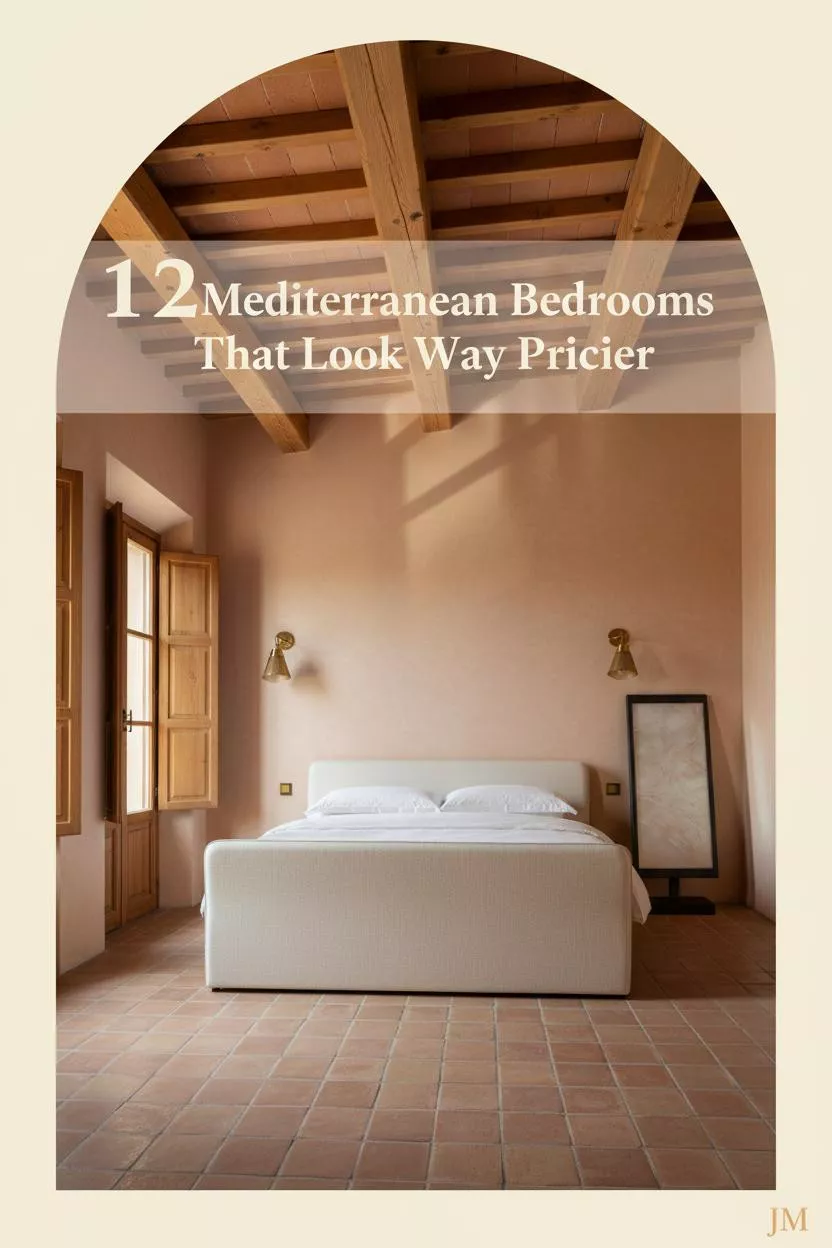
The first thing you notice in the best Mediterranean bedroom decor is that nothing looks bought all at once. It feels like a room that grew slowly, piece by piece, the way a real villa does.
These twelve rooms prove it. Some lean Spanish modern, some pure coastal, some quietly Tuscan. But they all share that same unhurried quality.
Zellige Tile Behind The Bed Changes Everything
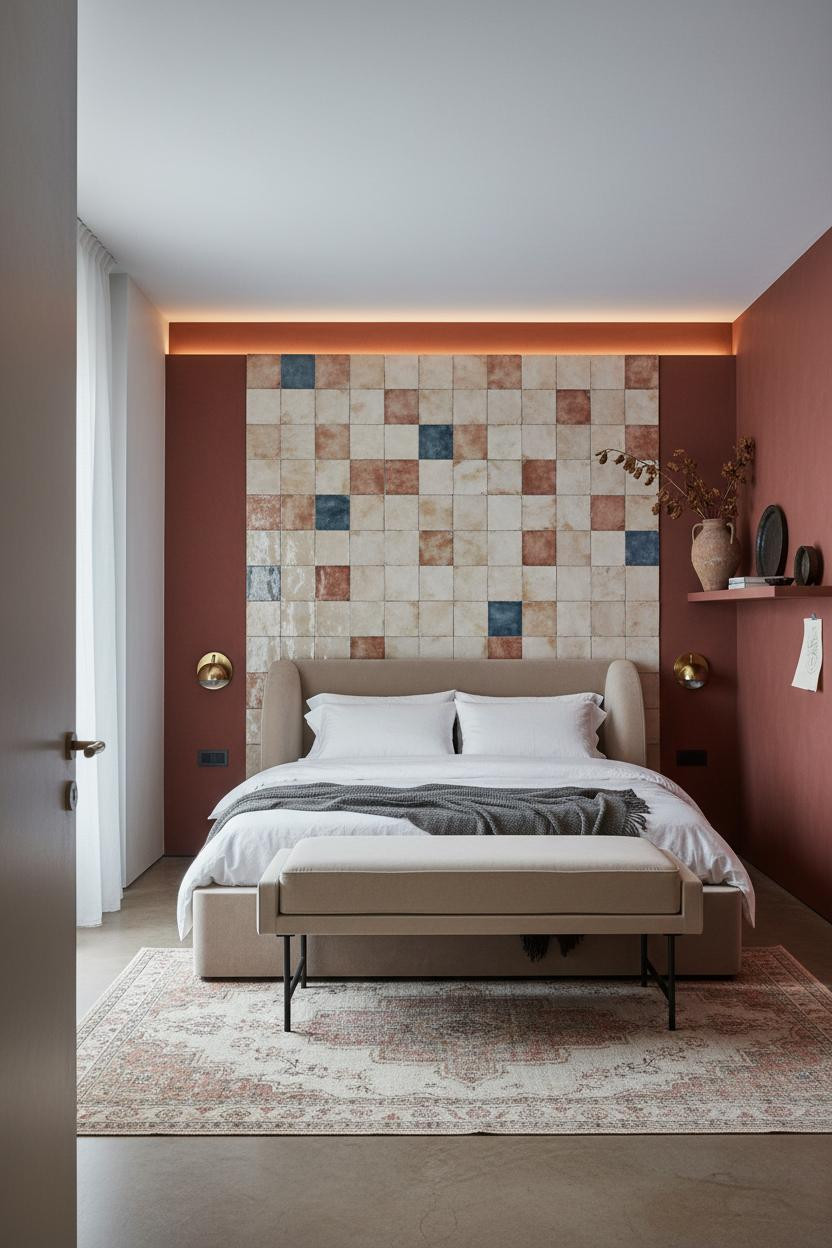

I keep coming back to this one. The tile work is the kind of thing you can’t fake.
Why it feels expensive: Hand-glazed zellige tiles catch light unevenly across the surface, which means the wall looks different at noon than it does at dusk. That’s the whole trick.
The part to get right: Flank the tile panel with deep rust plaster walls, not white. White makes it look like a bathroom. Rust makes it look like Marrakech.
Pale Apricot Plaster And A Steel Window Wall
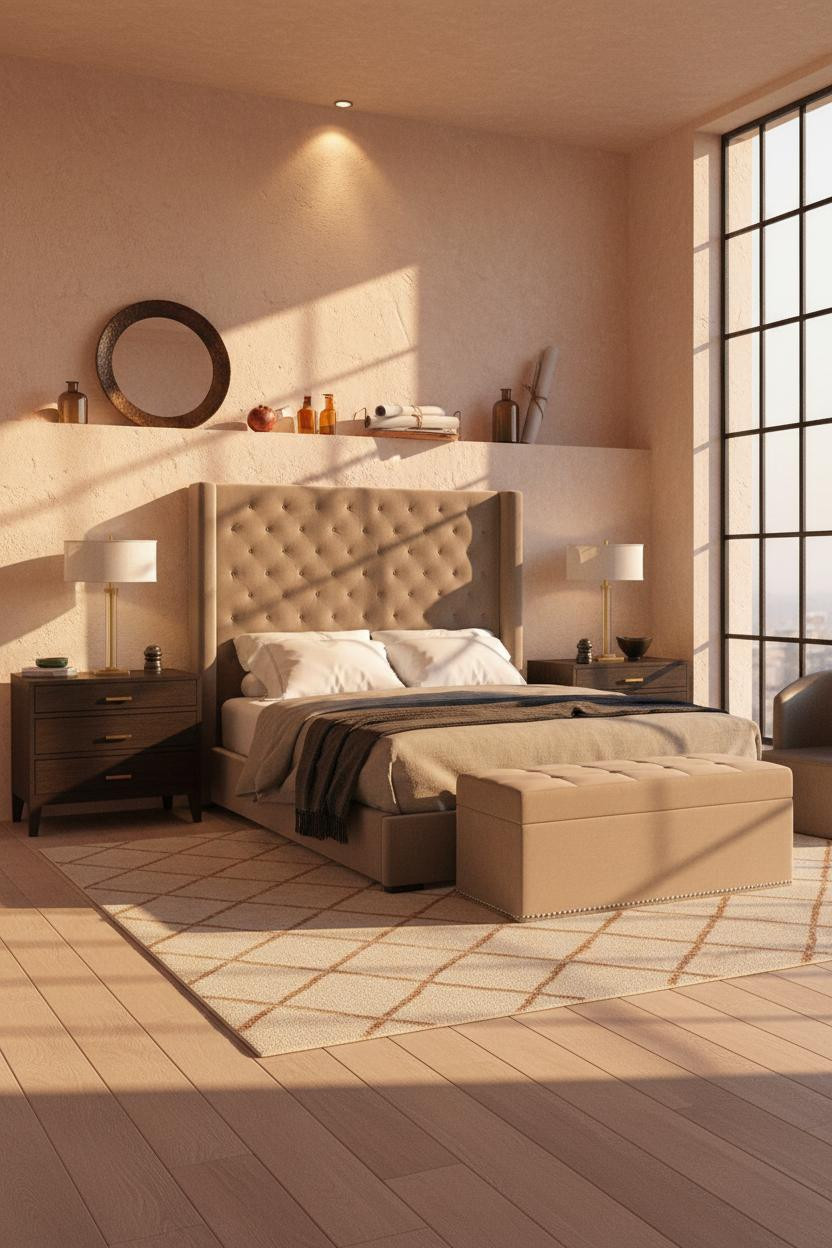

The contrast here is the point. Organic plaster against slim black steel frames.
What makes it work: Hand-troweled lime plaster in pale apricot reads warm against the industrial Crittall geometry, so the room feels artisan rather than cold. Neither surface fights the other.
Steal this move: Lean an oversized hammered-iron mirror against the plaster wall opposite the window. The reflection doubles the grid pattern, and the room feels twice as considered.
A Moorish Arch That Actually Earns Its Place
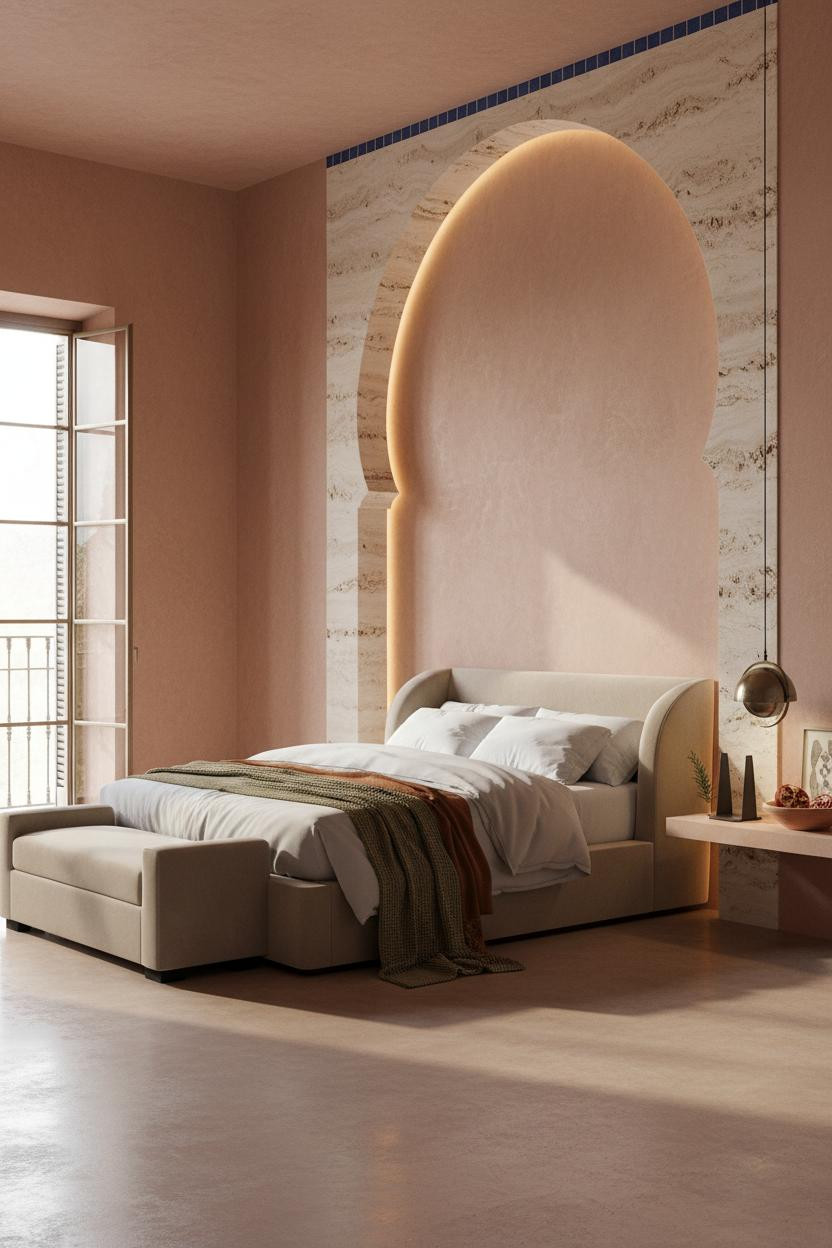
This one is divisive. Arches can tip into theme-park territory fast.
But deep-set jambs surfaced in raw travertine slabs keep this firmly on the right side of that line. The fossil inclusions in the stone do more work than any decorator trick.
Avoid this mistake: Don’t finish the arch in smooth paint. The texture of the material is the whole story. Lime plaster or raw stone only.
The Tuscan Alcove Nobody Expects To Love
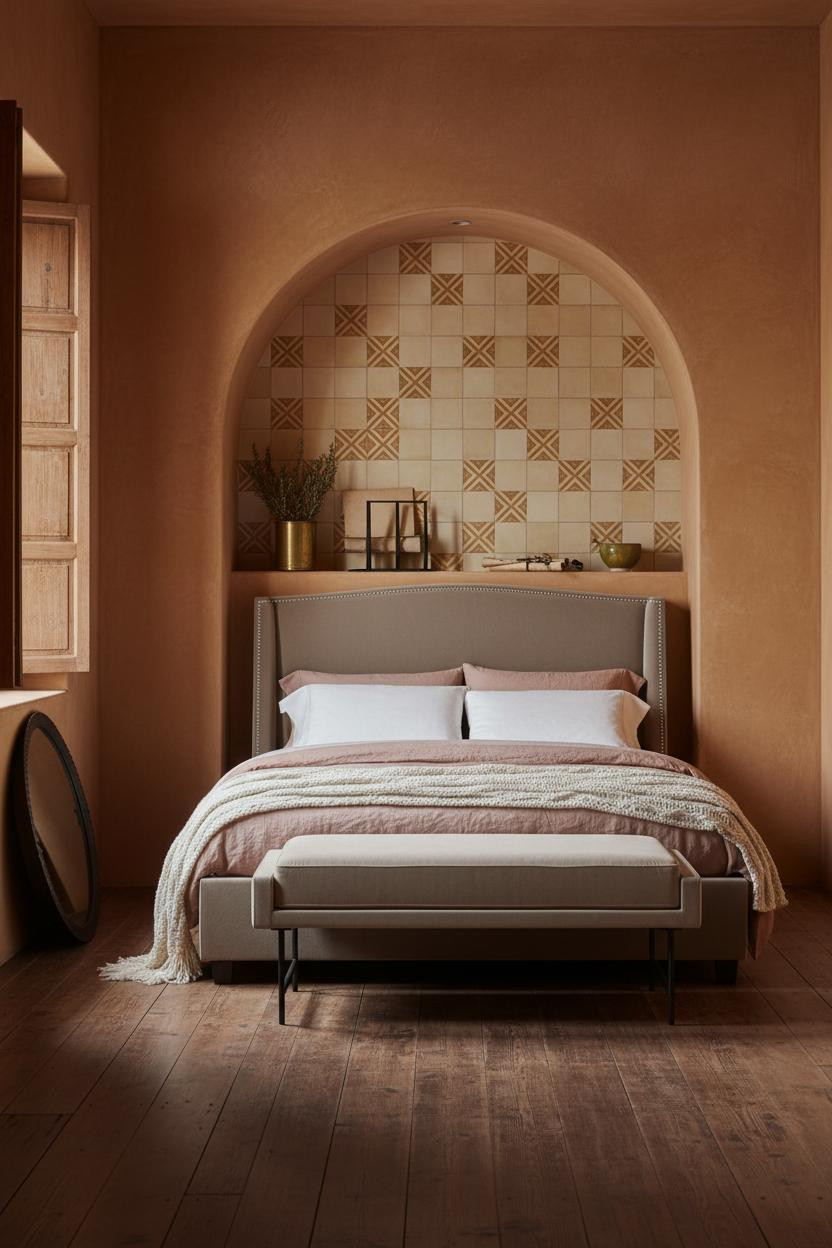

I almost scrolled past this. Glad I didn’t.
A curved alcove niche lined in hand-painted azulejo tiles in ochre and cream frames the bed the way a window frames a view. The reclaimed chestnut floor pulls the honey tones from the tile, and the whole room feels warm without any effort.
What to borrow: Warm an alcove interior with a recessed sconce at low wattage. The shadow it casts on curved plaster is the best free upgrade in this style.
Portuguese Azulejo On A Coastal Sand Wall
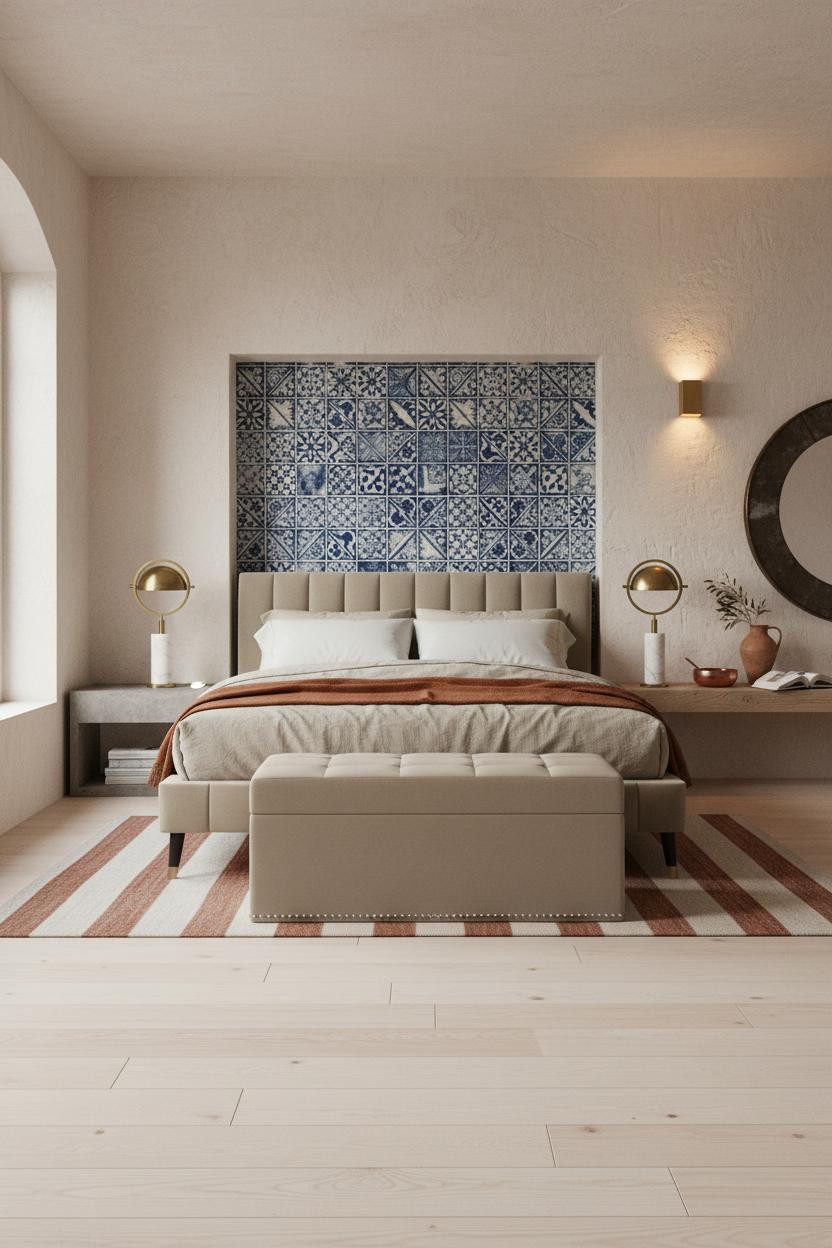

Cobalt and white on a sand wall. It shouldn’t feel restful. But it does.
Why the palette works: The hand-painted cobalt azulejo panel reads as graphic art, not ceramic, because the matte glaze keeps it quiet against the sand-white plaster. Enough contrast to feel alive, while still feeling coastal.
The easy win: A burnt sienna wool throw at the foot grounds the cool tile tones and keeps the palette from tipping icy.
Hand-Carved Corbel Beams Worth The Splurge
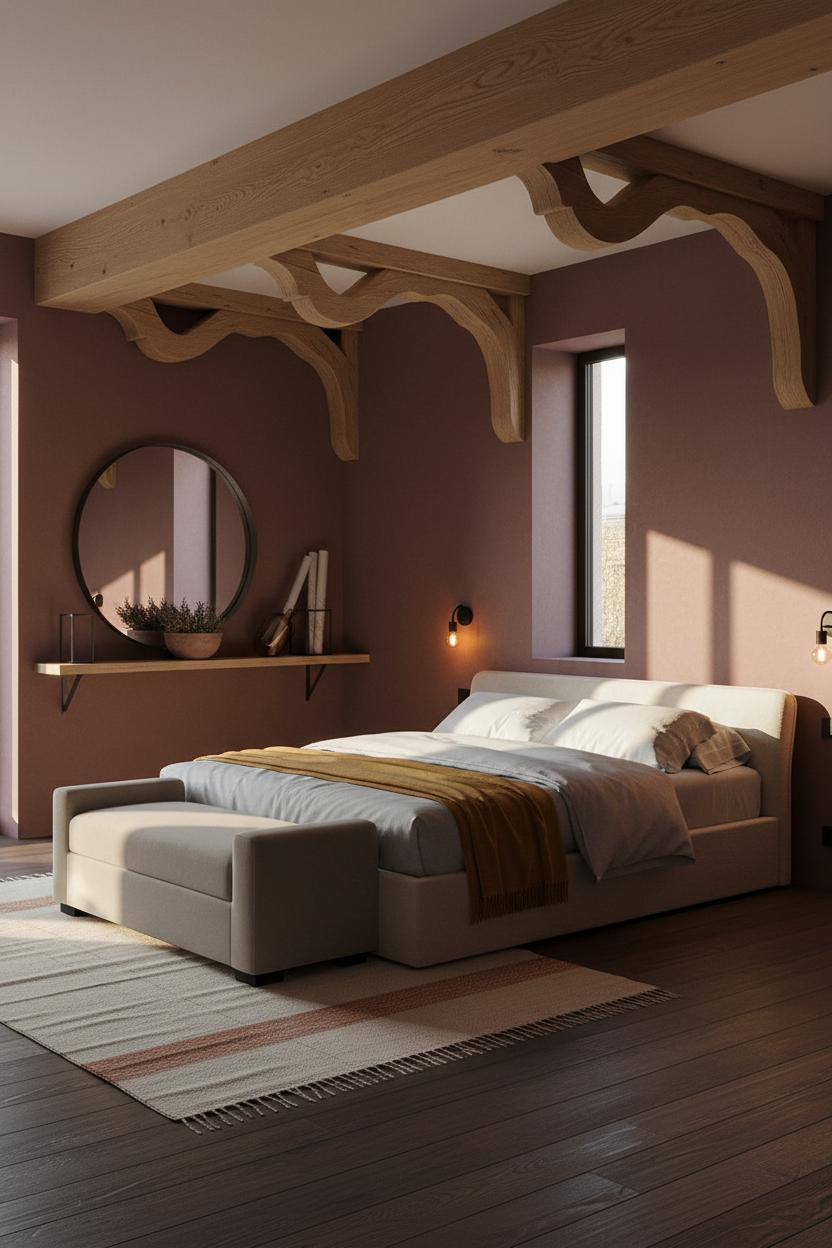

This is the kind of architectural detail that makes you want to sell your apartment and move to Seville.
In this room, the honey-stained oak soffit beam with hand-carved corbels casts layered shadow geometry across burgundy-plum plaster walls. That contrast, dark carved wood against deep matte color, makes flat paint look lazy by comparison.
Where to start: Even one exposed corbel bracket with a simple shelf does something similar. You don’t need a twelve-foot span to get the idea across.
Clay Rose Walls And A Stone Archway Entry
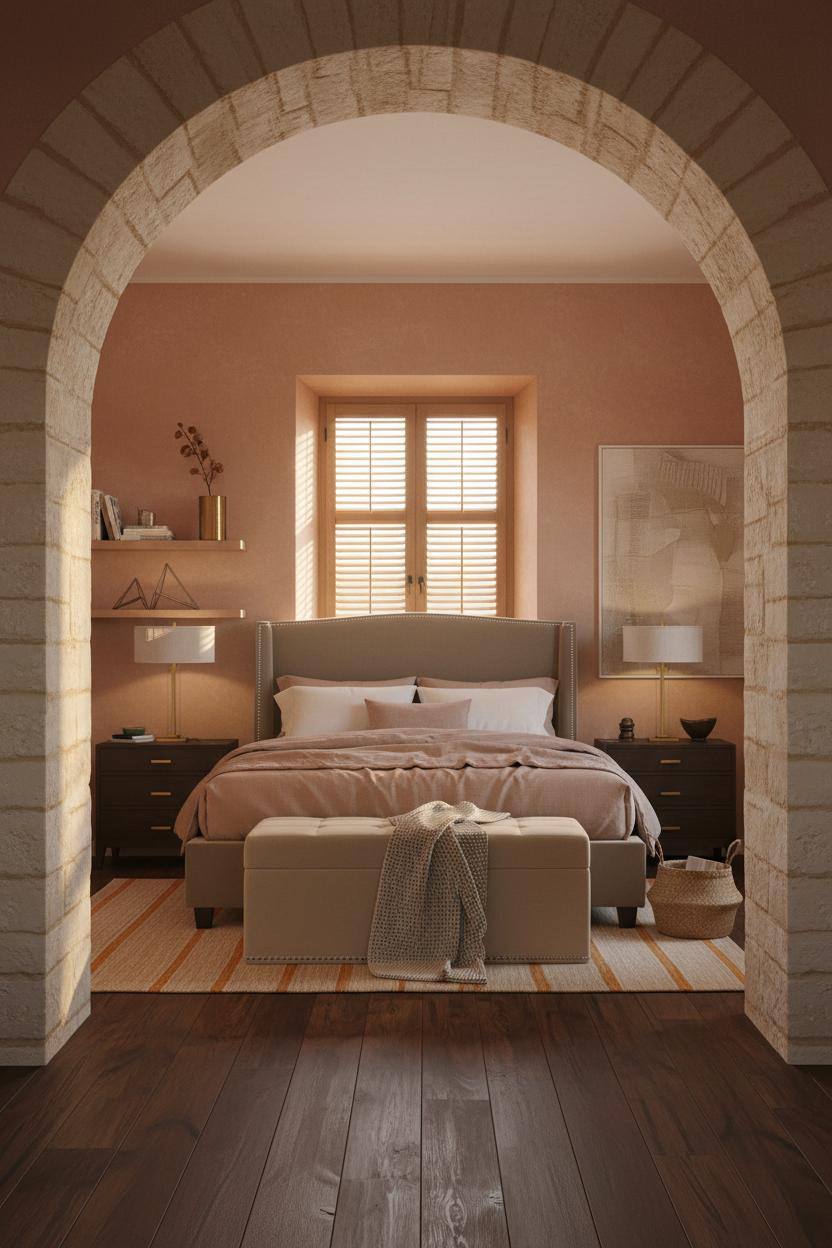
Honestly, the archway is doing almost nothing structurally. And yet it changes the whole room.
What gives it presence: A thick lime-plastered stone arch with trowel marks still visible adds weight that a simple painted doorway can’t replicate. The room feels like it has a history, in a way that feels earned rather than staged.
Pro move: Lean an oversized raw linen canvas against the far wall instead of hanging art. It keeps things collected, not curated.
Floor-To-Ceiling Shutters Do The Work Of Curtains
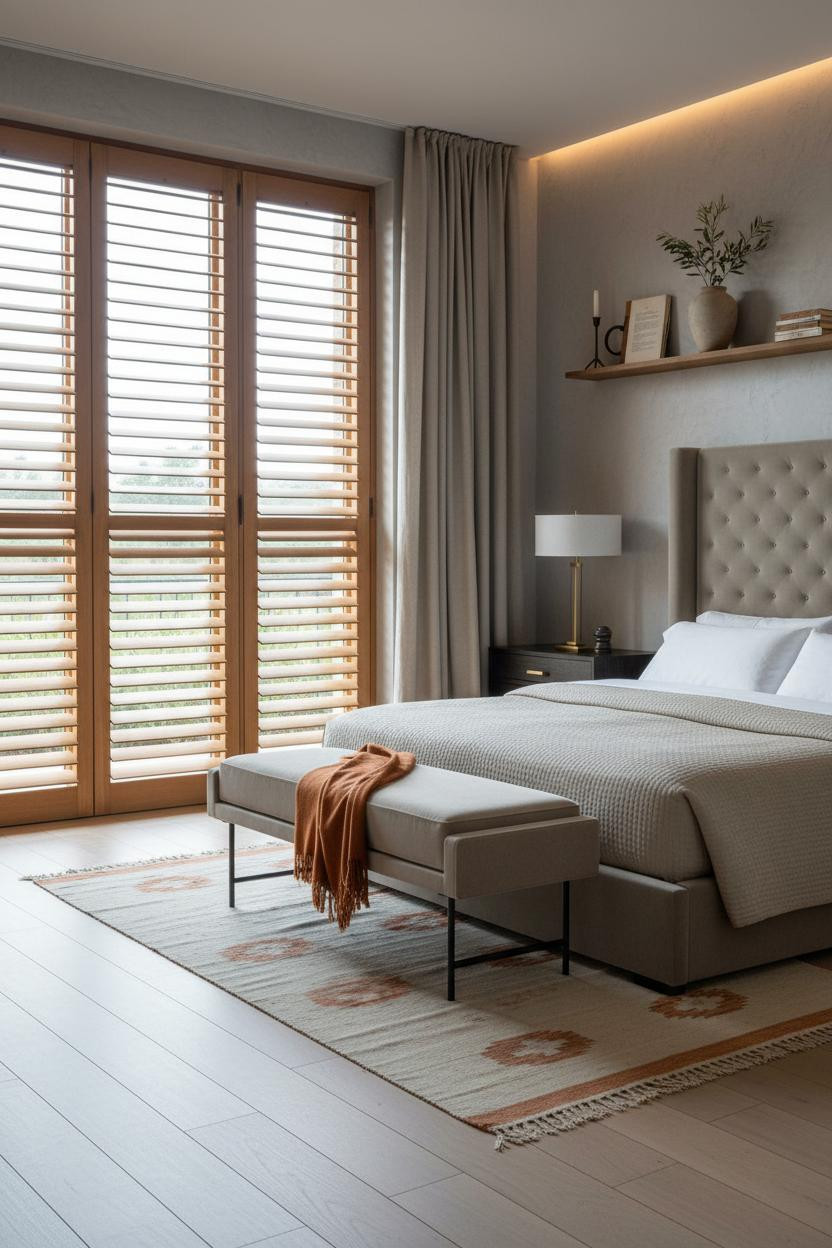
Nothing fancy. That’s the point.
The real strength: Weathered honey-brown shutters spanning floor to ceiling cast horizontal shadow bars across stone-grey plaster, which means the light does the decorating for you. The room feels lived-in and intimate without a single piece of art on the walls.
What not to do: Don’t pair these with heavy linen drapes over the top. The shutters are enough. Layering both makes the window feel crowded and kills the coastal simplicity.
Sage Board-And-Batten In A Mediterranean Room
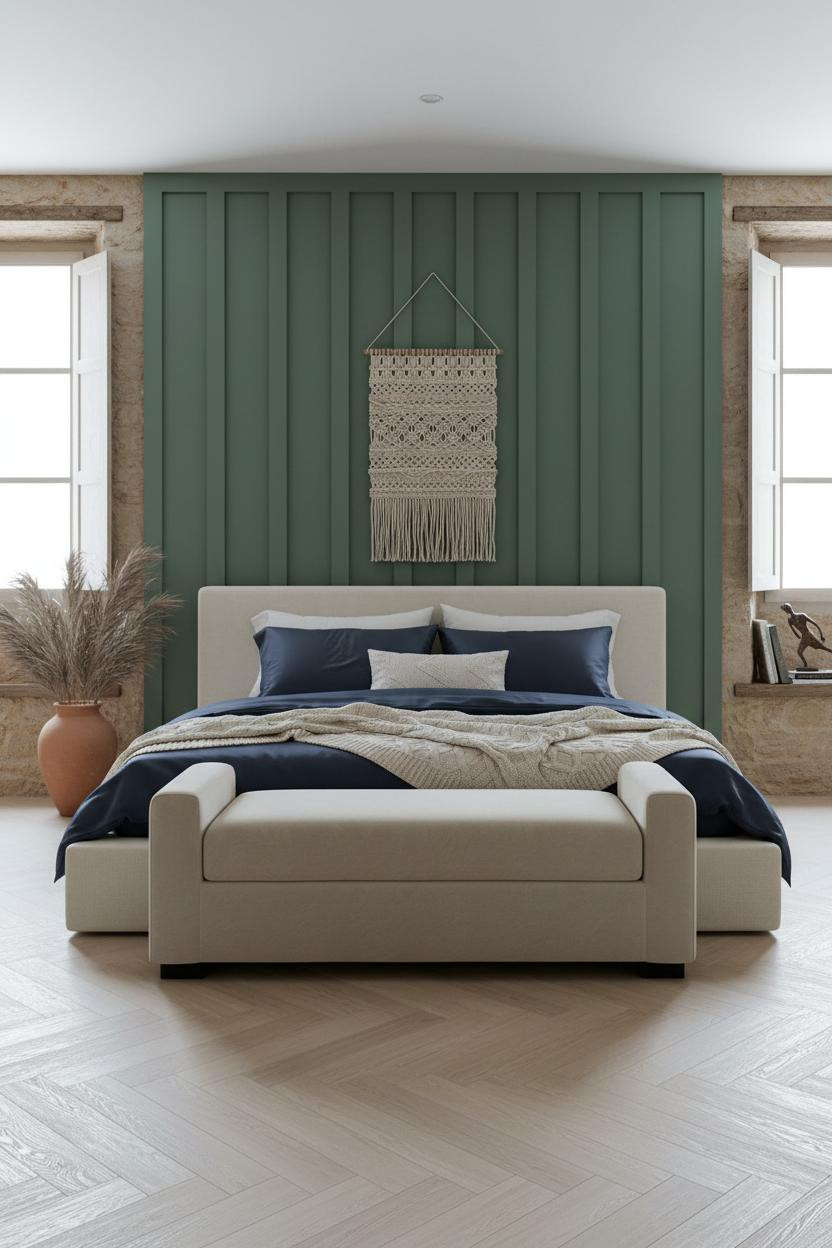
I’d honestly never put board-and-batten in a Mediterranean context. But it works here, and I can’t argue with it.
The deep sage-moss plank treatment behind the bed creates a vertical grid that reads as Spanish farmhouse rather than coastal cottage, especially when paired with warm stone flanking walls and pale herringbone parquet underfoot. The geometry grounds it.
Try this: A woven undyed cotton wall hanging centered above the headboard softens the linear planks, in a way that feels organic rather than decorative.
A Lime-Washed Arch Alcove In Forest Green
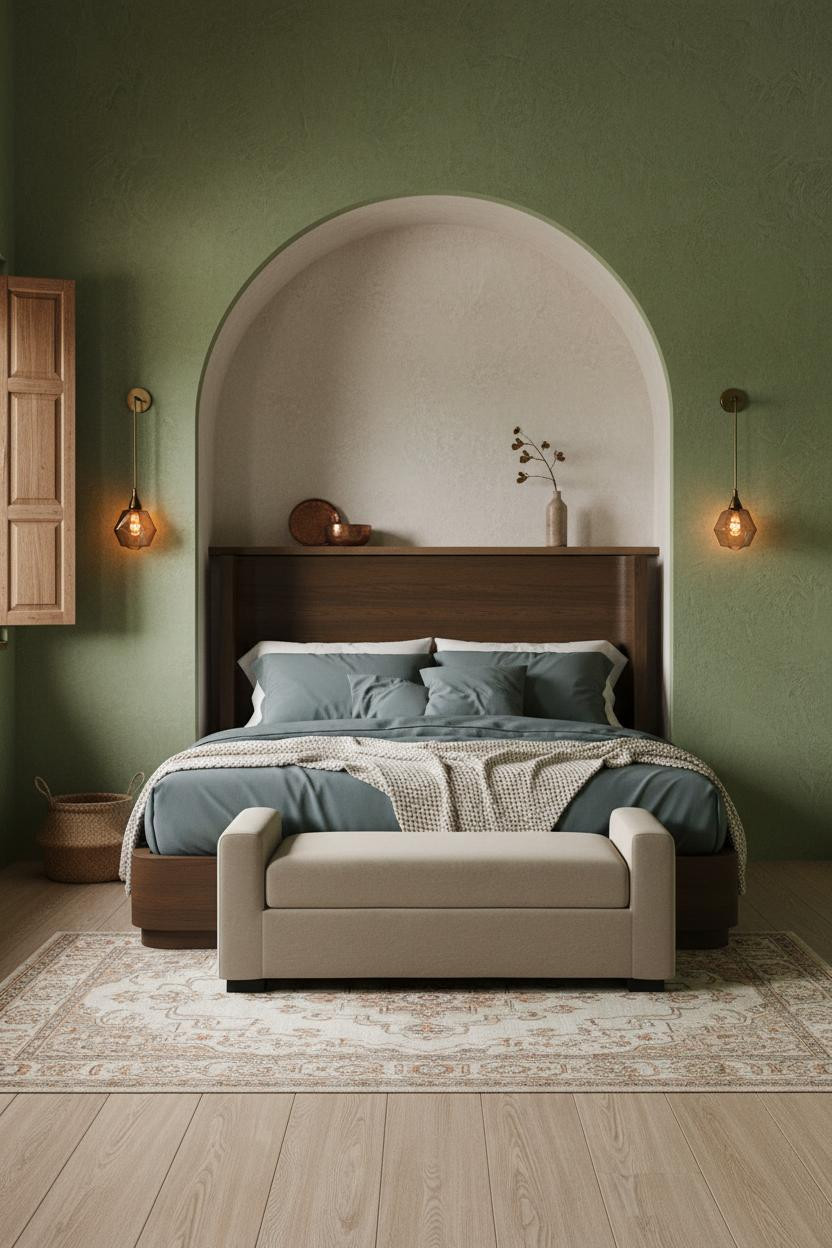

Dark walls in a Mediterranean bedroom. It sounds wrong. It isn’t.
Why it holds together: Forest green lime wash on an organic matte surface absorbs light rather than reflecting it, so the room feels calm and cohesive rather than cave-like. The bleached oak floor keeps it from going too heavy.
The smarter choice: Use geometric brass sconces flanking the arch rather than pendants. Scale matters here, and pendants compete with the curve overhead.
An Arched Niche With Azulejo At The Base
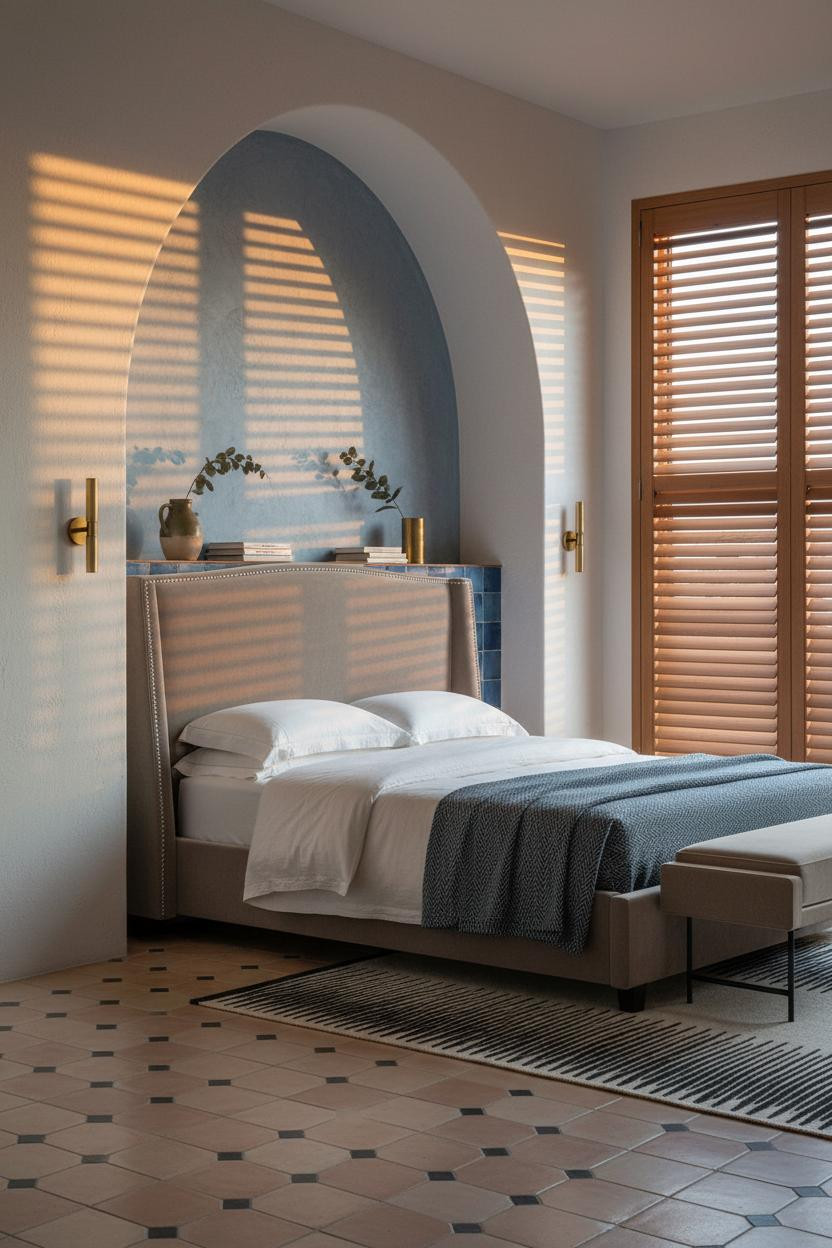
This is the combination I’d actually save for a real project. Dusty blue plaster with a terracotta encaustic cement tile floor is a pairing that somehow keeps getting better every time I look at it.
What creates the mood: The floor-to-ceiling arched niche recessed into ivory plaster brings deep shadow geometry into the room, which keeps the dusty walls from feeling flat. Just enough contrast to feel lively, without tipping into busy.
The finishing layer: Inside the niche, keep it sparse. One ceramic jug, a few journals, a single dried branch. The niche does its best work with space to breathe.
Exposed Beams And Terracotta Tile: The Classic Pairing
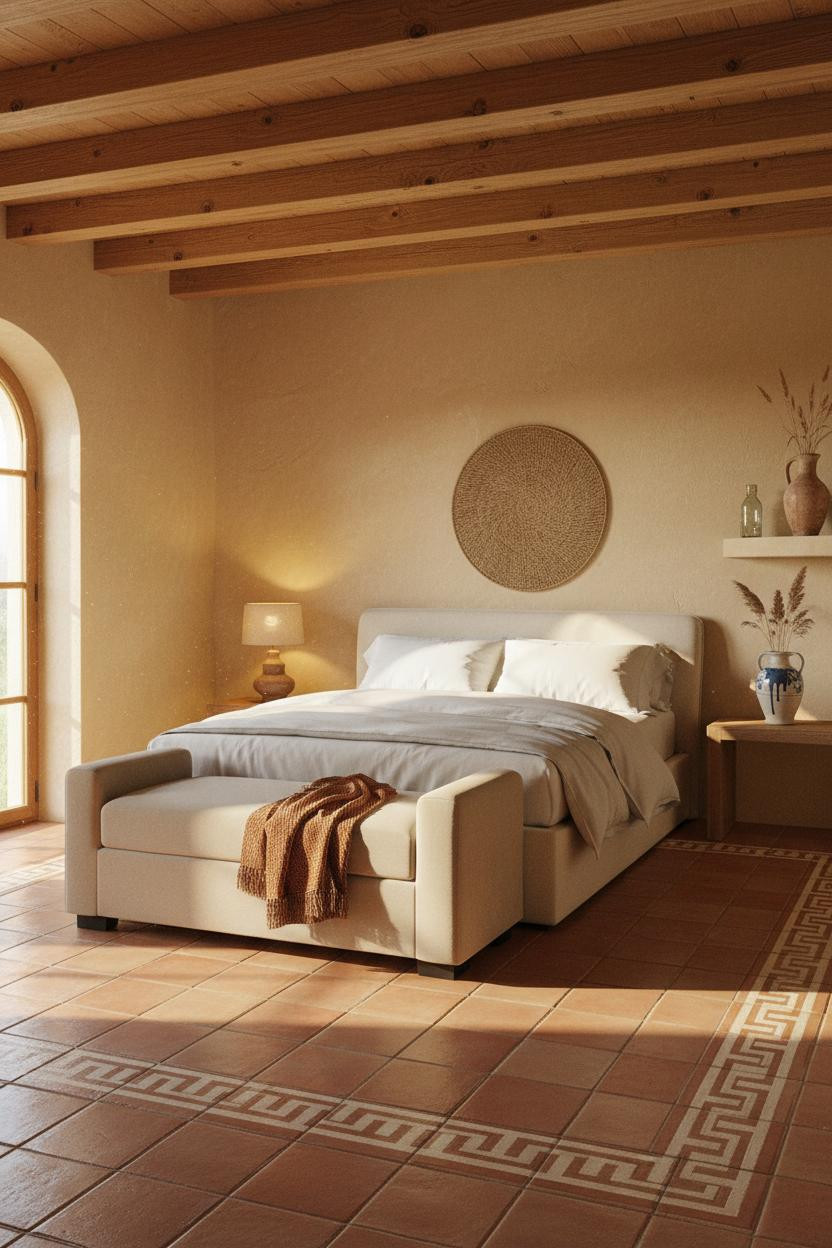
Yes, it’s the obvious combination. But obvious doesn’t mean wrong.
There’s a reason hand-hewn ceiling beams over large-format terracotta tile keeps appearing in Spanish villa bedrooms. The warmth of honey-patina wood and matte fired clay together makes ochre plaster walls feel like they’ve been there for two hundred years. That kind of depth is very hard to get any other way.
What cheapens the look: Smooth-finished fake beams. The knots and grain variation in real wood are what catch morning light. Faux material makes the whole room look like a restaurant, not a villa.

Our #1 Pick
Saatva Classic Mattress
America’s best-selling online luxury innerspring. 365-night trial, lifetime warranty, free white glove delivery.
Shop Saatva Classic
The Foundation Of Every Beautiful Bedroom
Walls get repainted. Tile panels get swapped out for something new. But the mattress stays, which means it’s actually the longest-lived decision in the whole room.
The Saatva Classic has dual-coil support that holds its structure year after year, a breathable organic cotton cover that doesn’t trap heat, and a Euro pillow top that still feels right a decade in. It’s the kind of bed that makes you feel like the rest of the room came together on purpose.

The rooms people save are the ones where nothing looks accidental. Start with the bed. The rest figures itself out.