“`html
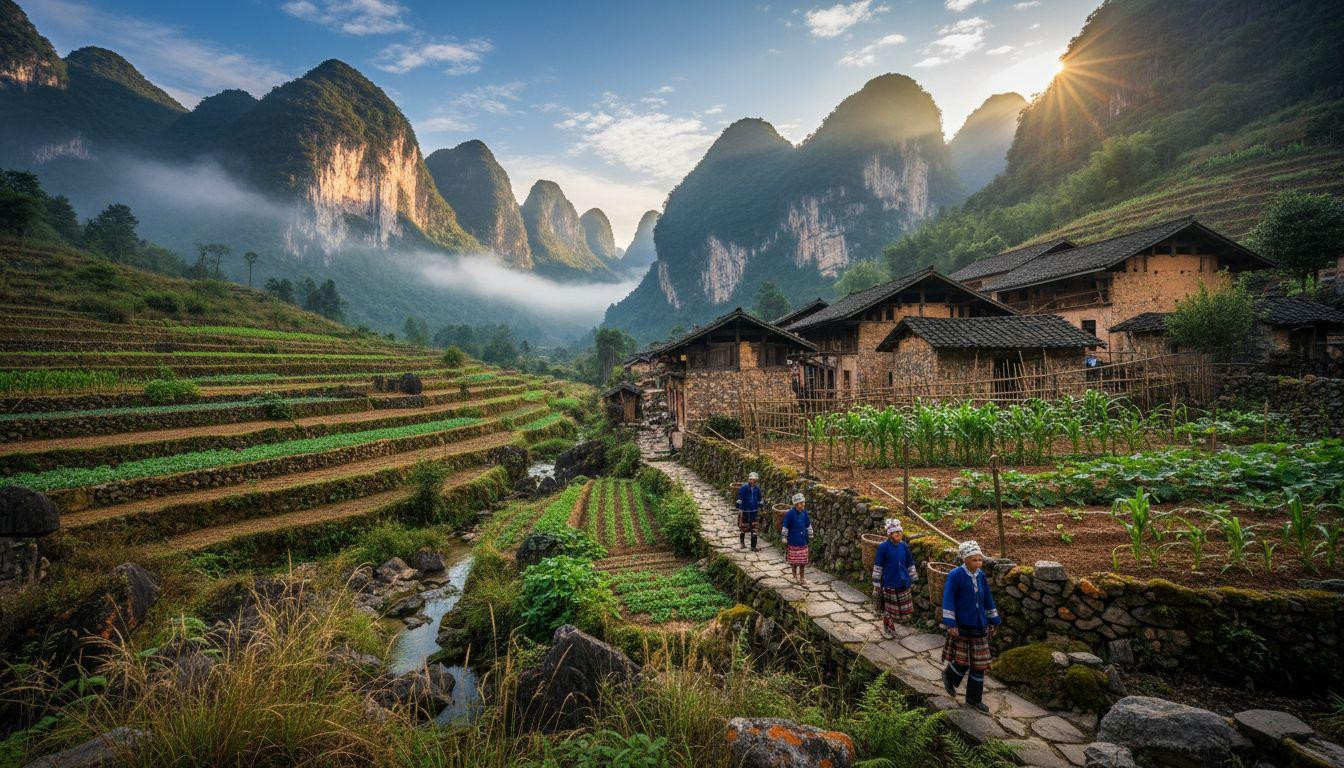
The village sits in a karst valley where mist lifts around 7am and centenarians walk mountain paths before breakfast. Bama Yao Autonomous County in northwestern Guangxi holds more than 80 residents over age 100 in a population of 240,000. That density exceeds United Nations longevity standards by a factor of three. Visitors arrive expecting health secrets. What they find instead are twelve observable daily practices that reveal longevity through absence rather than abundance.
12 daily rituals where Bama’s centenarians outlive modern wellness culture
The practices below aren’t performed for longevity. They’re simply how life works here. Each combines what visitors witness, why it matters physiologically, and how to participate without disrupting village rhythms.
Dawn mountain walks where 99-year-olds climb daily
Residents leave homes between 5:30am and 6am to tend terraced vegetable gardens carved into hillsides. The paths gain 300-500 feet in elevation over distances of 1-2 miles. Huang Meijian, age 99, walks this route every morning: “Work and walk around every day.”
The cardiovascular benefit comes from consistency rather than intensity. Decades of daily climbing build leg strength and lung capacity that persist past 90. Visitors can join morning walks by staying in village guesthouses and following residents uphill. Move at their pace. Carry water. Don’t photograph without permission.
What you’ll witness at dawn
Elderly farmers in traditional Yao clothing navigate steep stone steps with tools and baskets. The air smells of damp earth and vegetation. Morning fog obscures valley bottoms while hilltops catch first light. Most residents complete their farming work by 9am and return home for breakfast.
Mineral spring water consumed from karst limestone sources
Bama’s spring water flows through underground limestone formations before emerging at natural sources throughout the county. Locals call it “longevity water” and consume it exclusively. The water temperature stays around 64°F year-round. Scientific analysis shows higher mineral content than standard drinking water, though specific longevity claims remain unproven.
Residents drink the water because it’s available, not because they’re optimizing health. Springs are accessible to visitors. Bring a container. The water tastes clean with a slight mineral edge. Some springs require short hikes to reach.
The cultural belief versus medical evidence
Villagers attribute long life partly to water quality. Researchers note the correlation but can’t isolate causation from other lifestyle factors. What matters observationally is that residents have consumed this water for generations without commercial filtration or bottled alternatives. The practice reflects geographic reality rather than wellness philosophy.
Sweetcorn congee breakfasts eaten daily for decades
The morning meal consists of congee made from locally grown corn, sometimes with added beans or pumpkin. Huang Makan, age 108, describes his diet: “Eat green, organic, simple foods. I eat sweetcorn congee a lot. I don’t have many demands.” Portions are modest. Preparation is basic. No refined ingredients appear.
This diet emerged from agricultural availability in a remote mountain county. Corn grows well in the region. Meat was historically expensive and scarce. The resulting plant-based pattern aligns with longevity research findings, though residents didn’t design it for health outcomes.
Where to try authentic village meals
Family-run restaurants in Bama’s main townships serve traditional breakfasts for $2-3. The congee arrives plain or with pickled vegetables. Some guesthouses include breakfast. The food is genuinely simple. Visitors expecting elaborate presentation will be disappointed. Those seeking authentic village nutrition will find it unchanged from decades past.
Agricultural labor continuing past age 90
Residents work vegetable gardens, harvest corn, and tend crops well into their 90s. The labor is physically demanding but self-paced. No one rushes. Work happens in morning coolness and late afternoon. Midday heat is for rest. This pattern provides daily exercise without gym memberships or fitness tracking.
Dr. Yang Ze from Beijing Hospital’s Institute of Geriatrics studied Bama in the 1990s and noted: “They were physically active, working on the farms until well into their 90s.” The activity is functional rather than recreational. It serves household needs while maintaining strength and mobility.
Visitor observation guidelines
Don’t enter private fields without invitation. Observe from pathways. If residents gesture you closer, approach respectfully. Some elderly farmers enjoy brief conversations. Others prefer solitude. The work itself is the point, not tourist interaction. Photography should be minimal and never intrusive.
Extended family households where loneliness doesn’t exist
Bama’s centenarians live with children, grandchildren, and great-grandchildren in multi-generational homes. The average household includes three or four generations under one roof. Elderly residents participate in family decisions, childcare, and daily routines. Social isolation is structurally impossible.
Research on longevity consistently identifies strong social bonds as protective factors. Bama’s family structure provides this without intentional design. The arrangement reflects traditional Chinese household patterns that persist in rural areas while disappearing in cities.
Evening courtyard gatherings
Families congregate outdoors after dinner when weather permits. Conversations happen in Yao dialect and Mandarin. Elders tell stories. Children play. The gatherings last 30-60 minutes before residents retire early. Visitors staying in village guesthouses may witness these scenes from a respectful distance.
Plant-based simplicity with minimal processed foods
The typical Bama meal consists of 70-80% vegetables and grains. Protein comes from beans and occasional fish. Meat appears rarely. Processed foods are absent. Sugar consumption is minimal. This pattern emerged from poverty and isolation rather than nutritional knowledge.
Modern longevity research validates plant-based diets, but Bama’s residents weren’t following research. They were eating what grew locally and what they could afford. The health benefits arrived as side effects of geographic and economic constraints.
Local market experience
Bama’s township markets operate most mornings. Vendors sell corn, sweet potatoes, pumpkins, beans, and leafy vegetables. Prices run $1-2 per kilogram. The produce is organic by default since chemical fertilizers and pesticides remain too expensive for small farmers. Visitors can purchase ingredients and observe what actually fills local plates.
Low-stress acceptance expressed through daily contentment
Huang Puxin, age 113, summarizes his philosophy: “Be a good person. Have a good heart.” This attitude appears consistently among elderly residents. They express few material desires, accept aging without resistance, and maintain calm demeanors. Stress hormones measured in longevity populations show notably lower levels than urban counterparts.
The contentment isn’t performed for visitors. It reflects lives lived without career pressure, financial anxiety, or social media comparison. Residents worked farms, raised families, and participated in village life. Ambition beyond these boundaries was structurally limited by geography and economy.
Conversations with village elders
Some centenarians enjoy brief exchanges with respectful visitors. Approach through local guides who speak Yao dialect. Ask about daily routines rather than longevity secrets. The conversations reveal practical wisdom about pacing, acceptance, and finding purpose in simple tasks. Don’t expect profound philosophical revelations. The wisdom is embedded in how they live, not what they say.
Pollution-free mountain air breathed for lifetimes
Bama’s remote location kept factories away. The county has minimal industrial development. Air quality measurements show particle counts far below Chinese urban averages. Residents breathe clean air by geographic accident rather than environmental policy.
The karst mountain environment creates natural air circulation. Morning mist settles in valleys and burns off by mid-morning. Afternoons bring clear visibility extending for miles. Respiratory health among elderly residents reflects decades of breathing unpolluted air.
Morning mist phenomenon timing
Mist forms overnight in valley bottoms where temperature drops. It lifts between 7am and 9am as sun warms the landscape. The visual effect is most dramatic in spring and fall. Photographers should position themselves on elevated viewpoints by 6:30am. The mist doesn’t appear every day. Humidity and temperature determine formation.
Minimal material possessions in simple village homes
Traditional Bama homes contain basic furniture, cooking equipment, and farming tools. Huang Makan’s lifestyle reflects this minimalism: “I don’t have many demands.” Residents own what they use. Decorative items are few. Storage is minimal because possessions are minimal.
This simplicity emerged from poverty rather than philosophy. But the psychological effect is measurable. Research on material desire and stress shows inverse correlation. Fewer possessions mean fewer maintenance demands, less financial pressure, and reduced decision fatigue.
What visitor perspective shifts reveal
Travelers from consumer cultures often report discomfort followed by relief when witnessing Bama’s material simplicity. The initial reaction is pity. The delayed reaction is recognition that residents aren’t suffering from lack. They’re benefiting from absence of excess. The shift happens around day three of a visit.
Community storytelling preserving oral traditions
Evening gatherings include storytelling by elderly residents. The stories cover family history, village events, and traditional Yao culture. Younger generations listen. Knowledge transfers orally rather than through written records. This practice maintains social bonds while preserving cultural memory.
The storytelling serves multiple functions. It gives elders valued roles. It educates children. It reinforces community identity. The content isn’t recorded or commercialized. It exists only in performance and memory.
How visitors can observe without disrupting
Storytelling happens in Yao dialect. Non-speakers won’t understand content but can observe the social dynamics. Position yourself at courtyard edges. Don’t record video or audio. Don’t interrupt. The practice is for community, not tourists. Respectful observation is acceptable. Participation requires language skills and cultural context visitors typically lack.
Natural sleep cycles aligned with daylight hours
Most Bama residents sleep from 9pm to 5am. Artificial lighting is minimal. Homes use basic electric bulbs but many residents still prefer early sleep. The pattern aligns with natural circadian rhythms. Sleep quality among elderly residents is notably high compared to urban populations using screens and artificial light.
The sleep schedule emerged from practical constraints. Before electricity, darkness meant sleep. The habit persisted even after power arrived. Residents didn’t consciously optimize sleep. They simply maintained traditional patterns that happened to support health.
Night sky visibility conditions
Light pollution is minimal in Bama’s rural areas. Clear nights reveal dense star fields. The Milky Way is visible to naked eyes. Visitors staying in village guesthouses can experience natural darkness increasingly rare in developed regions. Bring a basic star chart. The sky looks different without city glow.
Walking as primary transportation for all ages
Residents walk to fields, markets, neighbors’ homes, and township centers. Daily distances range from 2-4 miles for elderly residents. The walking is functional rather than recreational. It provides consistent low-impact exercise integrated into daily life.
Mountain terrain makes walking more demanding than flat-ground equivalents. Paths include stone steps, dirt trails, and paved village roads. The accumulated cardiovascular benefit over decades contributes measurably to longevity outcomes.
Trail access for visitors
Village pathways are public. Visitors can walk the same routes residents use. Wear appropriate footwear for uneven terrain. Bring water. Morning walks offer coolest temperatures and best light. Respect private property boundaries. Stay on established paths. The trails aren’t marked for tourists. Navigation requires attention or local guidance.
Planning your visit to Bama’s longevity villages
Bama sits 3.5 hours by car from Nanning, Guangxi’s capital city. Most visitors rent vehicles or join organized tours. Public buses run but require multiple transfers. The drive passes through karst landscape similar to Guilin’s famous formations.
Best timing and seasonal considerations
Late April through May offers mild temperatures around 72-77°F and lower humidity than summer. September through October provides similar conditions. Avoid Chinese national holidays when domestic tourism peaks. Weekdays see fewer visitors than weekends. The current late April timing places you in an ideal window before summer heat arrives.
Accommodation and costs
Village guesthouses charge $20-40 per night for basic rooms. Mid-range hotels in Bama’s township center run $50-100. Meals at family restaurants cost $2-5. Daily expenses including accommodation and food total $40-60 for budget travelers. This compares favorably to other authentic cultural destinations charging significantly more.
Cultural sensitivity guidelines
Bama’s centenarians aren’t tourist attractions. They’re residents living traditional lives. Don’t treat them as photo opportunities. Ask permission before photographing people. Hire local guides who speak Yao dialect. Support village businesses by purchasing meals and crafts. The tourism income helps but shouldn’t overwhelm traditional patterns that created the longevity phenomenon in the first place.
Your questions about Bama Yao answered
How does Bama compare to other longevity destinations?
Bama’s centenarian density of 31 per 100,000 people ranks fifth globally among recognized longevity zones. It offers comparable demographic significance to Okinawa or Sardinia but with dramatically lower tourism development and costs. The remote mountain setting contrasts with coastal Blue Zones. Visitors find more authentic village experience and fewer commercial wellness operations.
What makes the longevity practices observable versus theoretical?
Unlike wellness retreats teaching longevity concepts, Bama presents actual centenarians living integrated traditional lives. Visitors witness 99-year-olds farming, families eating simple meals together, and elders participating in community gatherings. The practices aren’t performed for tourists. They’re observable because they’re genuine daily routines. This authenticity differentiates Bama from commercialized health destinations.
Is the longevity phenomenon declining?
Yes. Research from the 1990s documented higher centenarian proportions than current levels. Tourism development and modernization have introduced processed foods, reduced physical labor, and increased stress. The proportion of residents reaching 100 has measurably fallen. This decline makes visiting now more valuable than waiting. The traditional patterns creating longevity are eroding in real time.
Morning mist lifts from the valley at 8am. An elderly farmer walks uphill carrying tools. The path is steep. Her pace is steady. She’s done this for 80 years. Tomorrow she’ll do it again.
“`