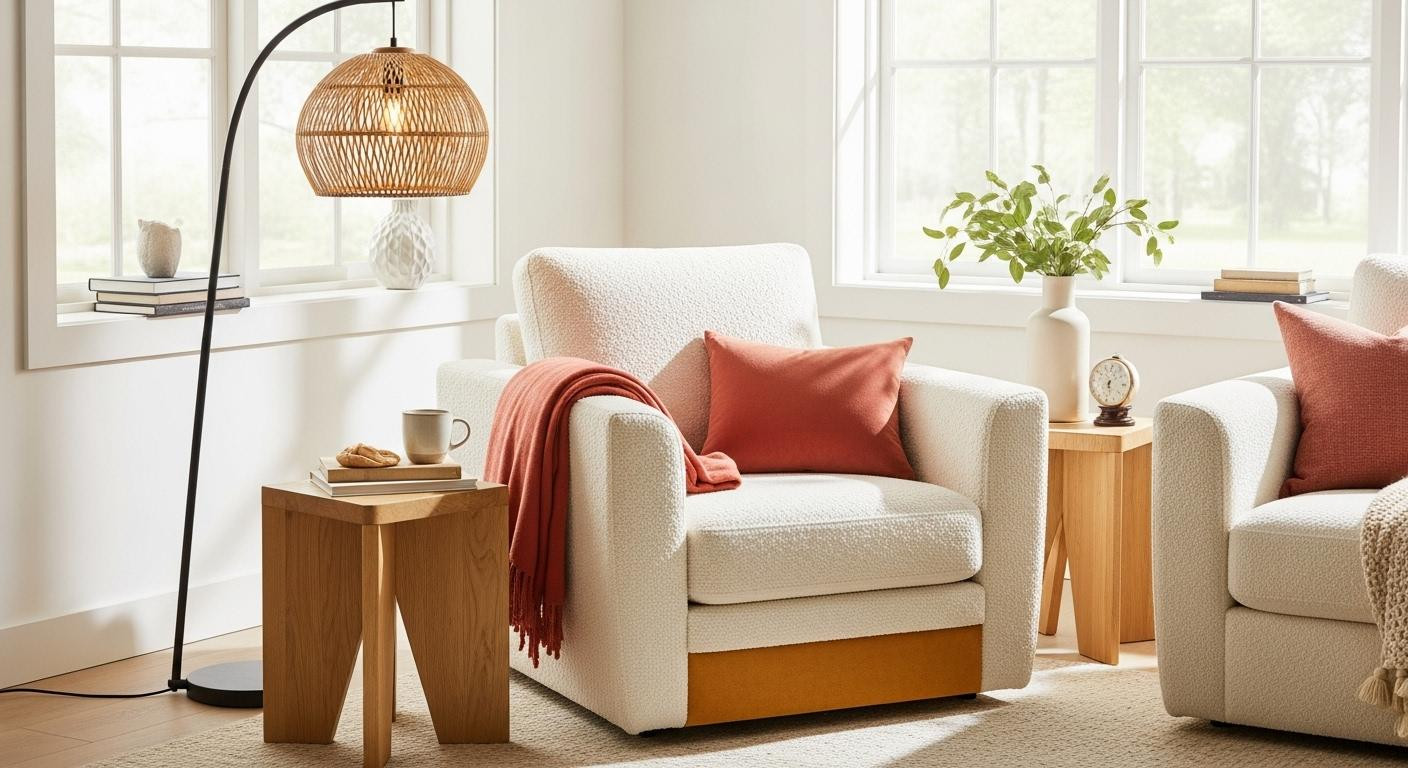
You saved 47 Pinterest corners this December. Cream boucle chairs, arched brass lamps, faux fur throws cascading just so. You bought the Target dupes totaling $318. You arranged everything in your living room corner exactly like the pins. You stepped back and felt instant disappointment. The corner looks cluttered, not cozy. Cramped, not curated. Every time you recreate Pinterest cozy corners without measuring first, wrong-scale furniture sabotages the intimate feeling within 48 hours. Interior designers confirm the failure isn’t your taste. It’s spatial math you can’t see in photos.
The Pinterest corner translation problem designers see in 70% of homes
Corners collect furniture faster than they create comfort. According to design professionals featured in Architectural Digest, this represents the core issue with viral corner recreations. Pinterest images lack dimensional context entirely. A pin showing a 7-foot-wide corner with a 36-inch armchair looks identical to a 4-foot corner with that same chair. Until you buy it and discover the truth.
Professional stylists with client portfolios confirm most viral corners occupy 5×6 feet minimum (30 square feet of usable space). Yet 80% of US living rooms feature corners measuring only 4×5 feet. This 20% size gap creates the cramped sensation that ruins cozy corner attempts. When furniture blocks the layering space needed for throws and side tables, texture advice from design experts becomes impossible to execute. Your Pinterest taste remains perfect. Your corner dimensions simply mismatch the inspiration images.
The cream boucle chair that looks spacious in a styled photo? It measures 31 inches deep and requires 72 inches of total width for proper breathing room. Your corner measures 60 inches across. The math doesn’t work, but the photos never warned you.
The 4×6 conversation geometry rule that fixes cozy corner failures
Interior designers measure corners in conversation geometry rather than pure square footage. This represents the physical space one person needs to sit comfortably plus arm’s-reach access to textile layers. Professional organizers with certification confirm corners below 48 square feet (4×6 feet) create obstacle courses instead of retreats when styled with standard furniture.
Why 48 square feet is the cozy corner minimum
The formula breaks down precisely. A 30-inch armchair depth plus 24-inch walkway clearance plus 18-inch side table equals 72 inches of width minimum. Budget decorators featured on Apartment Therapy note this threshold supports actual corner use, not just corner decoration. Below 48 square feet, adding an arched lamp or floor pouf blocks movement entirely.
Professional designers recommend measuring your corner before shopping using this three-step protocol. First, tape the corner perimeter to mark boundaries. Second, subtract 18 inches on all sides for walkway clearance. Third, calculate remaining square footage. If the result measures under 48 square feet, shift to micro corner strategy instead of fighting spatial reality.
Measuring your corner before shopping
Design experts with client experience recommend taping furniture outlines on your floor before purchasing anything. A 3×3-foot chair outline shows exactly how much corner space disappears. Walk through the taped layout multiple times. Does the path from sofa to corner require sideways shuffling? That signals scale problems before you spend $300.
For corners measuring 48-60 square feet, standard cozy corner furniture works perfectly. For under-48 square feet spaces, wall-mounted shelves with floor cushions deliver identical emotional warmth without spatial cramping. According to ASID-certified interior designers, room-wide layering strategies complement corner-specific solutions for cohesive home warmth.
The $150-$500 cozy corner shopping formula for measured spaces
Once you’ve confirmed your corner measures 48 square feet or larger, budget tiers align with space availability. Smaller corners need lighter visual weight. Larger corners tolerate bolder furniture presence without overwhelming.
Budget tier ($150-$250): Target and Amazon essentials
For 48-54 square foot corners, Target’s $129 cream boucle chair duplicates West Elm’s $799 version at 31-inch depth. Amazon’s $29 rattan lamp matches Article’s $249 arched floor lamp aesthetic. Add a $20 Target faux fur throw and $40 IKEA side table. Total investment: $218. This fits standard apartment corners perfectly based on typical 10×12 foot living room dimensions.
The Target chair’s 31-inch depth works specifically because it leaves 41 inches of a 72-inch-wide corner for walkway and table placement. Professional staging experts confirm this ratio prevents the furniture-pile look that destroys cozy corner attempts. Throw selection guides help complete the textile layer without overspending.
Elevated tier ($300-$500): West Elm and Wayfair mix
Corners measuring 54-60 square feet accommodate upgraded pieces without crowding. West Elm’s boucle armchair at $799 becomes an investment anchor. Wayfair’s $49 arched lamp, CB2’s $39 throw, and either Restoration Hardware’s $400 side table or IKEA’s $40 version complete the setup. The additional 6-12 square feet allows floor rug layering. A 5×7 foot rug adds $60-500 depending on material quality.
Larger corners tolerate heavier visual weight through darker colors or bulkier furniture without triggering the cramped sensation. Lighting designers with residential portfolios recommend layered lighting approaches for corners, positioning arched lamps 18 inches behind chair backs for optimal glow distribution.
The 48-hour cozy corner test designers use
After arranging your measured corner, design professionals recommend the 48-hour sit test. Spend 20 minutes in the corner reading, drinking coffee, or scrolling each evening for two days. Notice every micro-frustration honestly. Does the chair armrest hit the wall when you shift position? Must you stand to reach the lamp dimmer switch? Does grabbing the throw require awkward stretching across the side table?
These spatial relationship failures compound into abandonment within 48 hours. According to interior designers specializing in small spaces, Pinterest aesthetics succeed only when physical comfort supports actual use. The sensory promise of warmth and envelopment requires functional spatial planning first. If adjustments prove necessary, they involve moving furniture 6 inches outward, not adding more decorative pillows. Focal point planning strategies ensure corners enhance rather than clutter living room flow.
Professional organizers with certification note that corners requiring constant furniture rearrangement signal initial measurement errors. Proper pre-shopping corner assessment eliminates this trial-and-error cycle entirely. The cozy corner trend works beautifully when spatial geometry receives equal attention to aesthetic selection.
Your questions about the cozy corner trend taking over Pinterest right now answered
Can cozy corners work in rentals with awkward corner layouts?
Yes, through furniture floating techniques that adapt to non-90-degree corners. Pull the chair 12-18 inches away from walls to create visual breathing room regardless of corner angle. Home improvement contractors observe this strategy works especially well with angled bay windows or diagonal room corners. Use removable peel-and-stick wallpaper at $30 per roll to define corner zones without damaging landlord walls. Command hooks rated for 7.5 pounds support textile wall hangings that soften irregular corner angles beautifully.
What if my corner is smaller than 48 sq ft?
Shift entirely to micro cozy strategy instead of forcing standard furniture into inadequate space. Wall-mounted floating shelves at 18-inch depth replace floor-space-consuming side tables. Oversized floor cushions measuring 24×24 inches each provide seating for two in just 24-30 square feet total. Clip-on reading lamps delivering 400-800 lumens create identical golden-hour glow as floor lamps while saving 400 square inches of precious floor space. Design experts with tested projects confirm this micro approach maintains the emotional retreat feeling without spatial compromise.
How do I choose between boucle and velvet chair fabrics?
Boucle dominates 70% of Pinterest corner saves because texture photographs dramatically in natural window light. The nubby surface catches shadows and highlights that translate beautifully to photos and real life. Velvet offers deeper color saturation in jewel tones but shows wear patterns faster in high-traffic family room corners. For corners used daily, performance boucle versions at $129 from Target outperform velvet’s maintenance demands. For low-traffic bedroom reading nooks visited occasionally, velvet adds plush luxury without durability concerns.
December evening, 6:47pm. You sink into the cream boucle chair you measured twice before buying. The arched lamp glows amber overhead, casting your 48-square-foot corner in golden warmth. Your fingertips graze the faux fur throw puddled beside you, exactly arm’s-reach away. Outside, winter darkness presses against cold windows. In here, your carefully measured corner holds the world at bay.