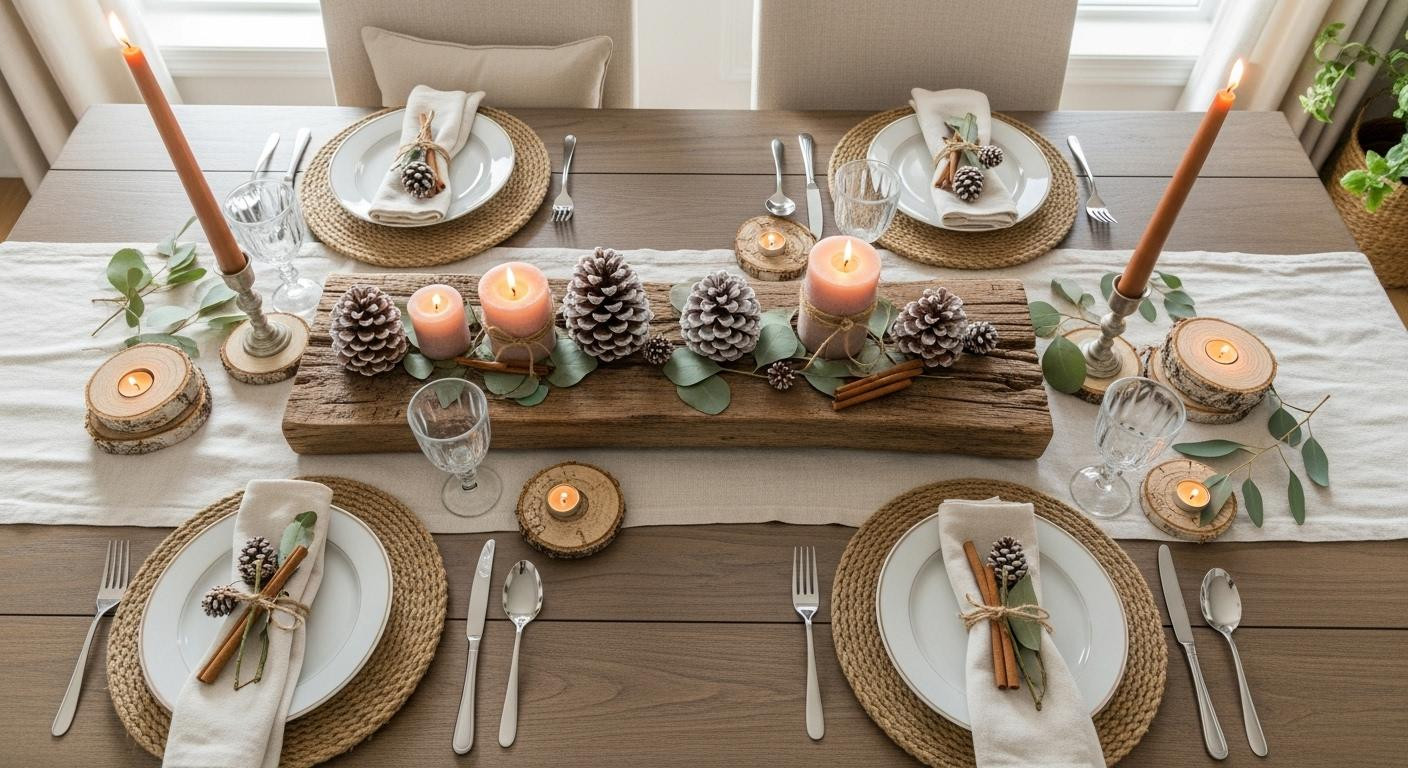
Your fingertips graze rough birch bark. Four woodland textures transform your dining table into a $4,000 lodge feel in 90 minutes. The rough wood contrasts with soft linen. Candlelight flickers across pinecones and evergreen sprigs. This isn’t Pinterest fantasy. It’s achievable rustic magic built from layers you can touch. According to design professionals featured in home publications, the secret isn’t expensive items. It’s specific texture zones that trigger cabin immersion psychology. The transformation costs $100 to $1,000 depending on your choices. Interior designers specializing in seasonal tablescapes confirm one principle: minimal yet human, pared back yet deeply cozy.
The 4 texture zones that create rustic table magic
Zone 1 establishes your foundation with aged wood. A centerpiece slab from Wayfair costs $50. It creates the grounding woodland floor effect. The wood grain catches light and anchors every other element.
Zone 2 adds natural fiber layers. Rope chargers from Target run $12 each. IKEA linen runners cost $15. These become the touchable elements that design experts cite as essential. Your hands rest on them during dinner.
Zone 3 introduces organic greenery accents. Frosted pinecones and eucalyptus from Amazon total $15 to $30. Professional event stylists note these layers add warmth without overwhelming small spaces. Fresh elements signal life and season.
Zone 4 completes with soft glow elements. DIY pinecone tea lights cost $10. Dim candlelight psychology changes room perception instantly. This quartet works because each texture appeals to different sensory receptors. Rough meets smooth meets living meets flickering. The combination creates multidimensional expensive perception without high cost. This guide to dinner layering explores similar principles.
How neutral palettes amplify texture
The beige/brown/olive science
Neutrals feel boring until you understand their power. Design analysts confirm beige, brown, gray, and olive actually showcase shape and texture. Color doesn’t compete for attention. Wood grain becomes the visual star.
Rustic tables avoid jewel tones for this reason. The hushed effect requires tonal restraint. Linen drape and rope weave stand out against quiet backgrounds. One warm accent prevents monotony. House Beautiful trend forecasters recommend cinnamon or russet pops for 2025. The rule: 80 percent neutral, 20 percent warmth.
Why 80 square foot dining nooks benefit most
Small spaces gain unexpected advantages. Typical rental dining measures 8 by 10 feet. Neutral plus texture makes compact rooms feel larger. Your eye follows texture variety instead of color blocks. Dark dining rooms use similar psychology.
Maximalist jewel tones look beautiful but require 12 by 14 feet minimum. Otherwise the space overwhelms. Rustic neutral democratizes luxury for standard US dining spaces. Most homes measure 10 by 12 feet for dining areas. This aesthetic fits reality.
The $100 to $1,000 shopping spectrum decoded
Budget tier: DIY plus thrift magic
The breakdown starts simple. Wayfair wood slab costs $50. Amazon frosted greenery adds $15. Target rope chargers run $20 total. IKEA linen napkins cost $18.
Birch coasters from Etsy or DIY total $12. DIY pinecone candles need $10. Your total reaches approximately $125. Time investment spans 4 to 6 hours including crafting. Organization experts note imperfect birch rings signal authenticity. Sterile catalog looks lack human touch. Lodge room styling follows similar authentic principles.
Curated tier: polished rustic investment
West Elm brass lanterns upgrade from $30 Wayfair pinecone holders to $150. Pottery Barn velvet runners replace $15 IKEA linen at $80. CB2 wicker chargers cost $45 versus $12 Target rope versions.
Total investment reaches $500 to $800. This tier suits photographers needing repeatability. Hosts valuing 1 hour setup versus 4 to 6 hours DIY choose this path. Event design specialists confirm high end pieces still require texture mixing. Matching sets read flat and lifeless.
The transformation timeline demystified
Centerpiece work spans 1 to 2 hours realistically. Full tablescape extends to 4 to 6 hours with crafting. Most viral tables photograph mid transformation. Pinterest creates illusion of instant perfection.
Reality check helps here. Zone 1 wood base plus Zone 4 candles equal 30 minutes. This delivers 70 percent of visual impact. Zones 2 and 3 refine but aren’t mandatory initially. Quick table transformations prove speed possibilities.
The goal isn’t perfection. It’s the feeling when you walk into your dining room and exhale. Interior designers specializing in residential work confirm warmth and character happen in textures, not timelines. Start small and layer gradually.
Your questions about rustic winter table magic answered
Do I need a farmhouse table for rustic styling to work?
No farmhouse table required. Rustic aesthetic succeeds on texture contrast, not furniture style. Modern IKEA tables at $150 work perfectly with aged wood centerpieces. Your eye focuses on layering, not the base table. Design experts confirm farmhouse chic works with imperfect tiles and mixed materials. The same principle applies to tables. The wood slab becomes the farmhouse element.
How do I transition from Christmas to rustic winter without looking bare?
Swap red and green for cinnamon and russet. Keep evergreens but add birch and pinecones for woodland versus holiday vibe. Replace metallic gold with aged brass or wrought iron. Transition tutorials demonstrate 15 minute swaps maintaining cozy density. Remove Christmas specificity while preserving warmth and texture layers.
Can I mix this with my existing modern plates and glasses?
Yes, rustic layers intentionally bridge sleek and organic. Rope chargers plus neutral napkins specifically soften modern white dinnerware. The texture performs the rustic work. Dishes stay practical and clean lined. Avoid matching everything to wood tones. That reads dated country, not modern rustic. Contrast creates visual interest and contemporary appeal.
Your hand rests on the linen napkin. Birch bark feels rough under your thumb. Candlelight catches the wood slab grain, casting soft shadows across evergreen sprigs. The room exhales. This isn’t a catalog. It’s Tuesday dinner that feels like a cabin retreat, built from four textures and ninety minutes you already had.