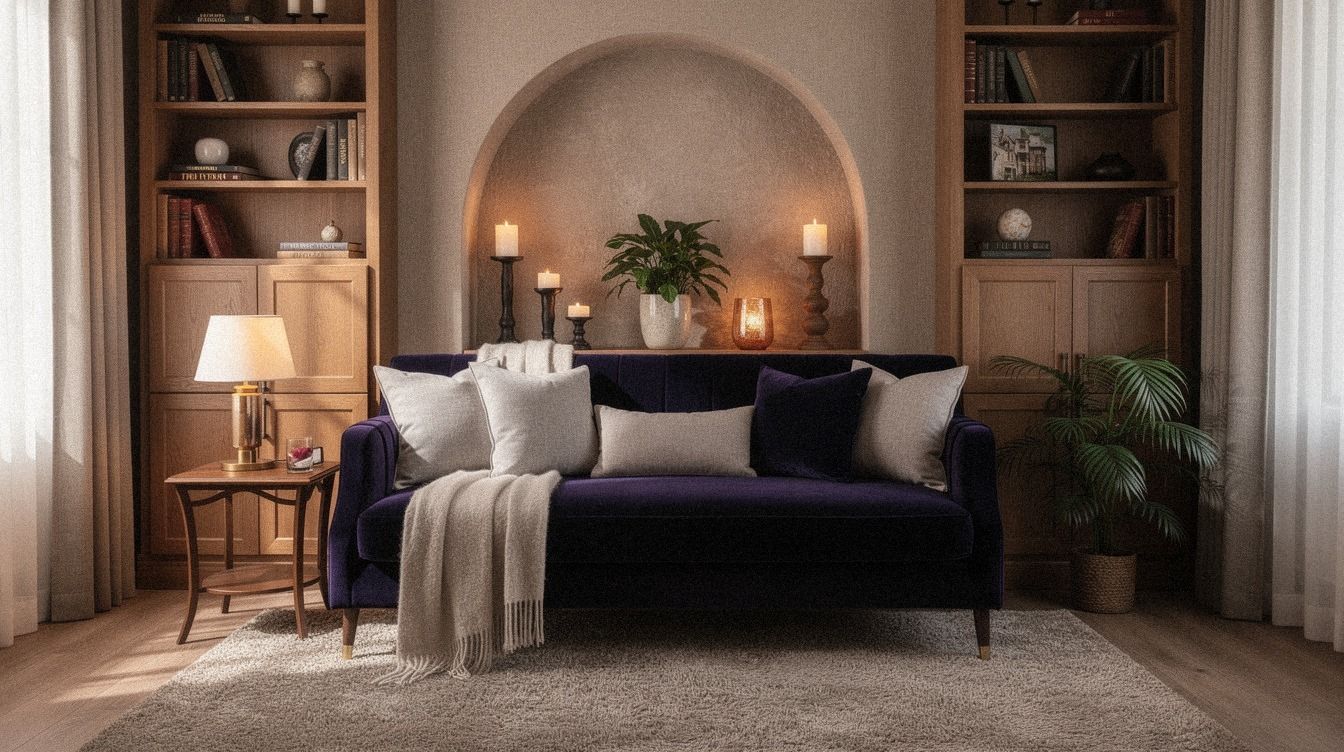
What to put in a detail room comes down to comfort, storage, and light, and my version landed at about $300 to $1,200 for the soft layers that changed everything. I pulled this room together after months of using it as a half-finished spillover zone, and the difference wasn’t dramatic in a loud way. It just started working.
I wanted a place where you could disappear for an hour, read, snack, shut the door, and feel your shoulders drop. So I stopped treating it like a novelty and started treating it like a tiny living room with rules.
Here’s what it looked like before and why the Two-Zone Rule mattered
Before I fixed it, the room had the full awkward spare-corner package: hard floor, one lonely lamp, no place to stretch out, and nowhere to hide the useful stuff you need once you stay longer than twenty minutes. You could step inside, sure, but you couldn’t settle. That’s the line I care about now.
If you can’t settle, the room is decoration, not refuge.
I also made the classic small-room mistake of letting every function sit out in the open. Blankets on a chair.
Books in random stacks. Drinks carried in one at a time. It looked busy and still didn’t serve you.
Once I split the room into two jobs, lounge first and storage second, the plan clicked. If you’re shaping a hidden retreat with a little more drama, my notes on luxury detail room ideas for a high end hidden hideaway push this same idea much further.
- I slid in a narrow velvet daybed
- I anchored the floor with a washable rug
- I added wall sconces on dimmers
- I built shelves for books and candles
- I tucked a cabinet under the ledge
- I stocked woven baskets with extra blankets
- I placed a tiny drink fridge inside
- I hid snacks in a lacquered tray
- I brought in a folding game table
- I mounted acoustic panels behind framed art
- I set a speaker inside the bookcase
- I added blackout curtains across the reveal
- I placed a brass lockbox on the shelf
- I styled one corner with floor pillows
- I left a tray ready for quiet nights
1I slid in a narrow velvet daybed
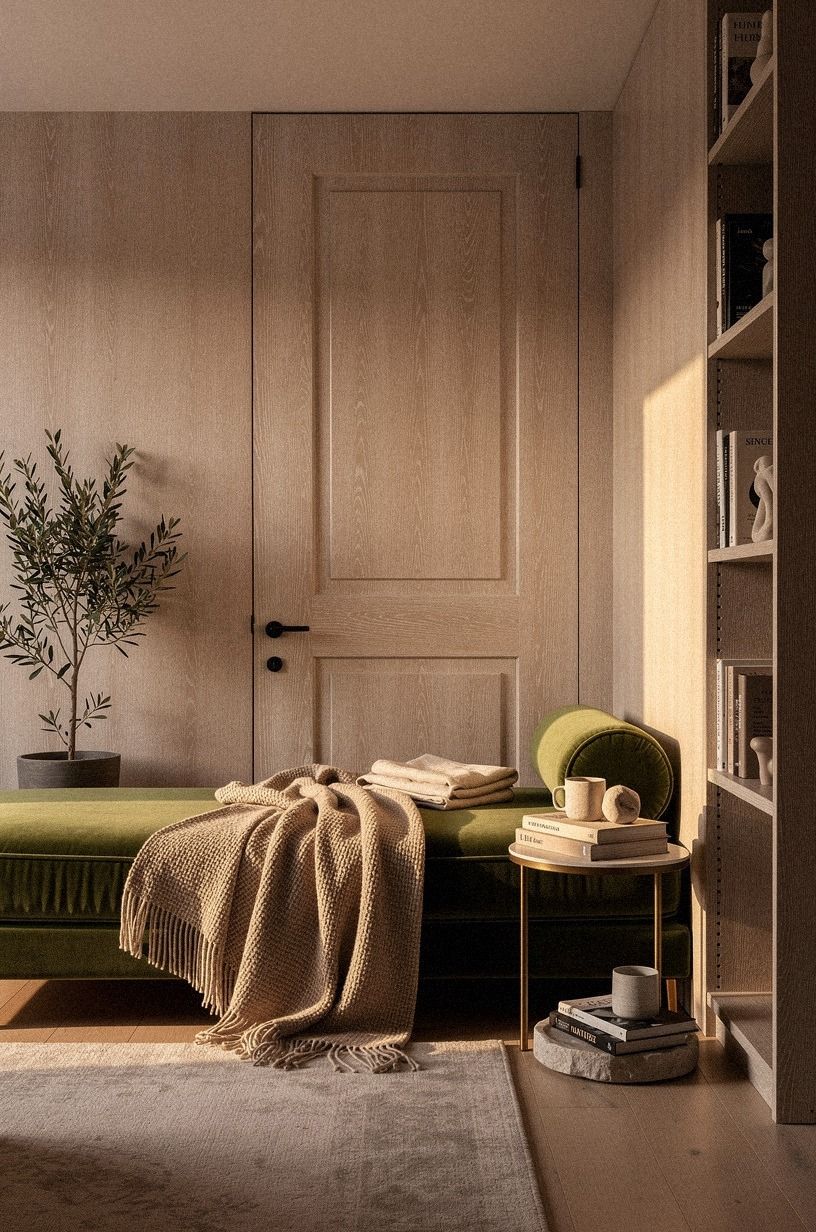
The first real fix was the velvet daybed. I picked a narrow profile because you need the room to breathe when you walk in, and a deep sofa would have eaten the whole footprint.
Most living-room seating runs about 35 to 40 in deep, which is great in an open room and a mistake in a concealed one. My daybed stayed slimmer, so you could still move past it with a tray in your hands.
I went with mohair-look olive velvet because it catches low light without looking shiny. And you feel that right away when you sit down.
If you’re planning your own hidden lounge, give your body somewhere to lean before you buy anything decorative. A folded Belgian flax linen coverlet at the foot kept it from reading dorm-ish, and two back cushions made it feel like a real seat instead of backup furniture.
You could do this with an Article bench-style daybed or even a clean twin base if your budget is tight, but I’d skip anything leggy and delicate. In a room like this, visual weight matters more than flexy curves.
The piece has to say stay a while. I kept thinking about the tucked-in layouts from under stairs detail room ideas turn dead space into magic because they understand one thing: if the seat doesn’t feel anchored, the room never feels safe.
2I anchored the floor with a washable rug
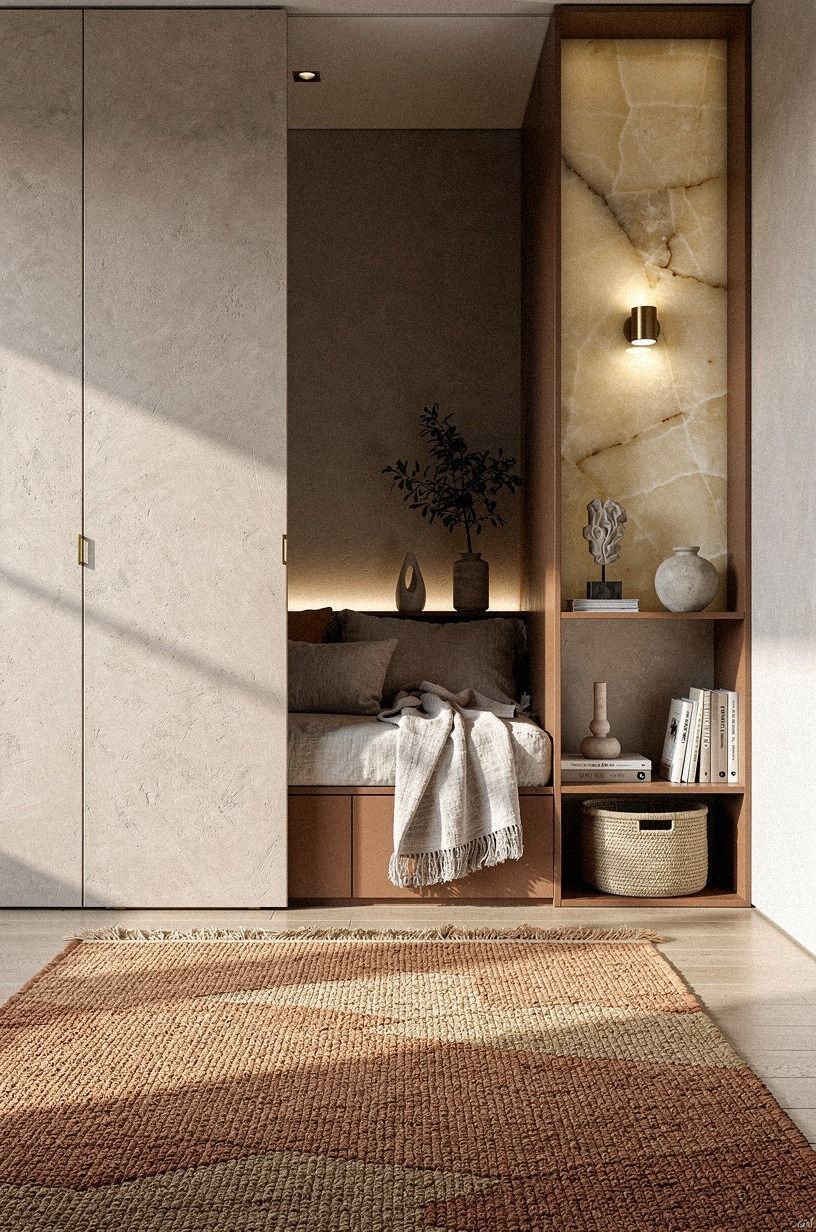
A rug changed the room faster than paint would have. You step in, your feet hit softness, and suddenly the hideaway makes sense.
I used a washable rug large enough to catch the front legs of the daybed, because that old floating-rug mistake makes even a good room feel temporary. In most living rooms, 8×10 or 9×12 is the safe move.
Here, I scaled down but kept that same anchoring principle.
Mine had a muted clay-and-ink pattern, something close to Benjamin Moore Revere Pewter HC-172 translated into textile. That low-contrast look let the books and blankets do the talking.
If you’re doing things for a detail room on a budget, don’t blow your money on a precious wool rug you’ll be scared to snack on. Washable wins here every single time!
And yes, I tried a flat jute first. Bad call. It looked nice for about one afternoon, then the whole room felt scratchy and stingy.
A retreat should forgive you. If you want more layered fall texture, your complete fall 2025 home decor checklist 12 essentials from 25 transform every room in 8 weeks has the same soft-underfoot logic I used here.
3I added wall sconces on dimmers
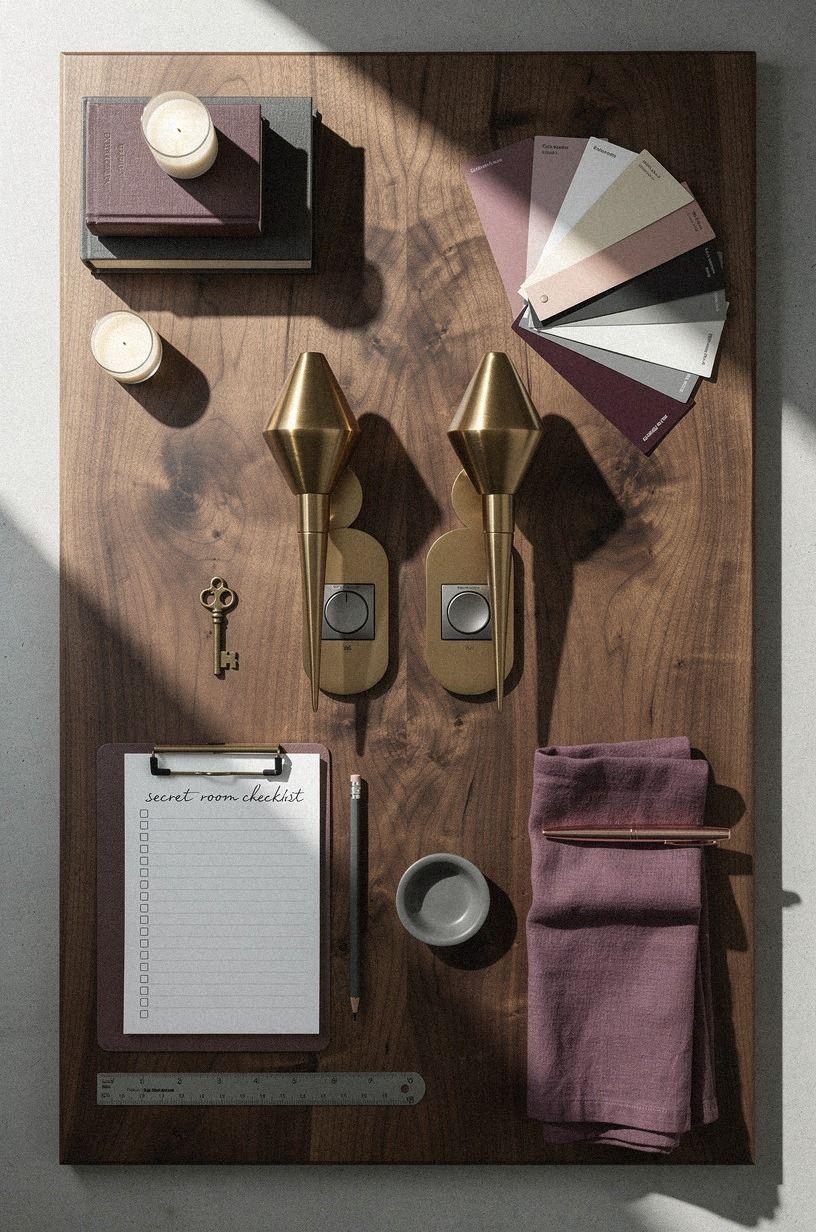
Overhead light would’ve killed the mood, so I skipped it and built the room around plug-in wall sconces on dimmers.
4I built shelves for books and candles
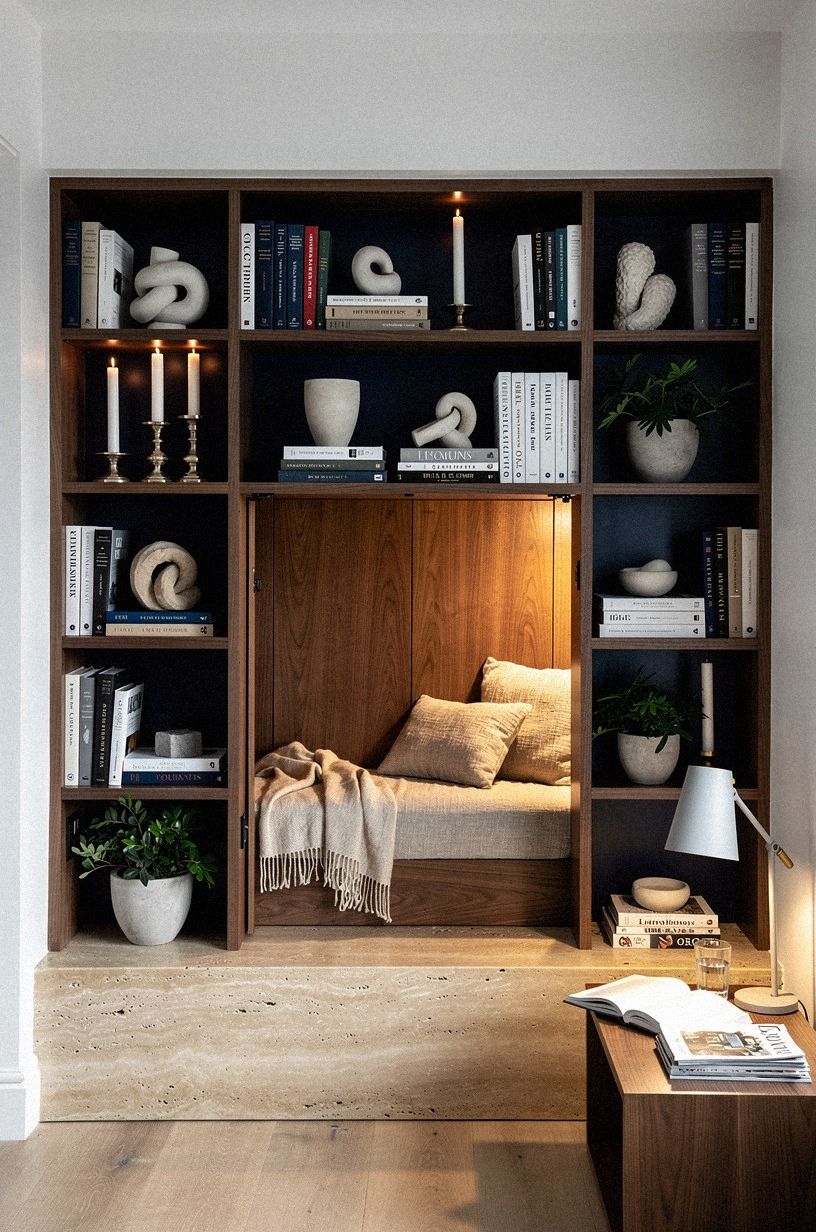
Shelves were the point where the room stopped feeling improvised. I built shallow painted bookcases along one wall so you could see your books, grab a candle, and still keep the passage clear.
Deep shelves look generous in photos, but in a narrow hideaway they steal your knees and your calm. I kept mine tighter, more like a built-in library lane.
The finish mattered more than I expected. I painted the shelves in Sherwin-Williams Evergreen Fog SW 9130, a gray-green that softens wood, brass, and paper without turning muddy.
Then I mixed paperbacks, a few hardcovers, and short candle holders so the wall felt collected, not stagey. You want variety your eye can trust.
I also learned you need empty space on a shelf the way you need silence in a good room. Don’t stuff every cubby.
Leave breathing room around a stack or a bowl, especially if your room is already wrapped in panels. It looks better and feels calmer right away! For more built-in inspiration, I kept returning to underground basement detail room ideas because the best ones understand that storage should disappear into the architecture, not sit on top of it.
5I tucked a cabinet under the ledge
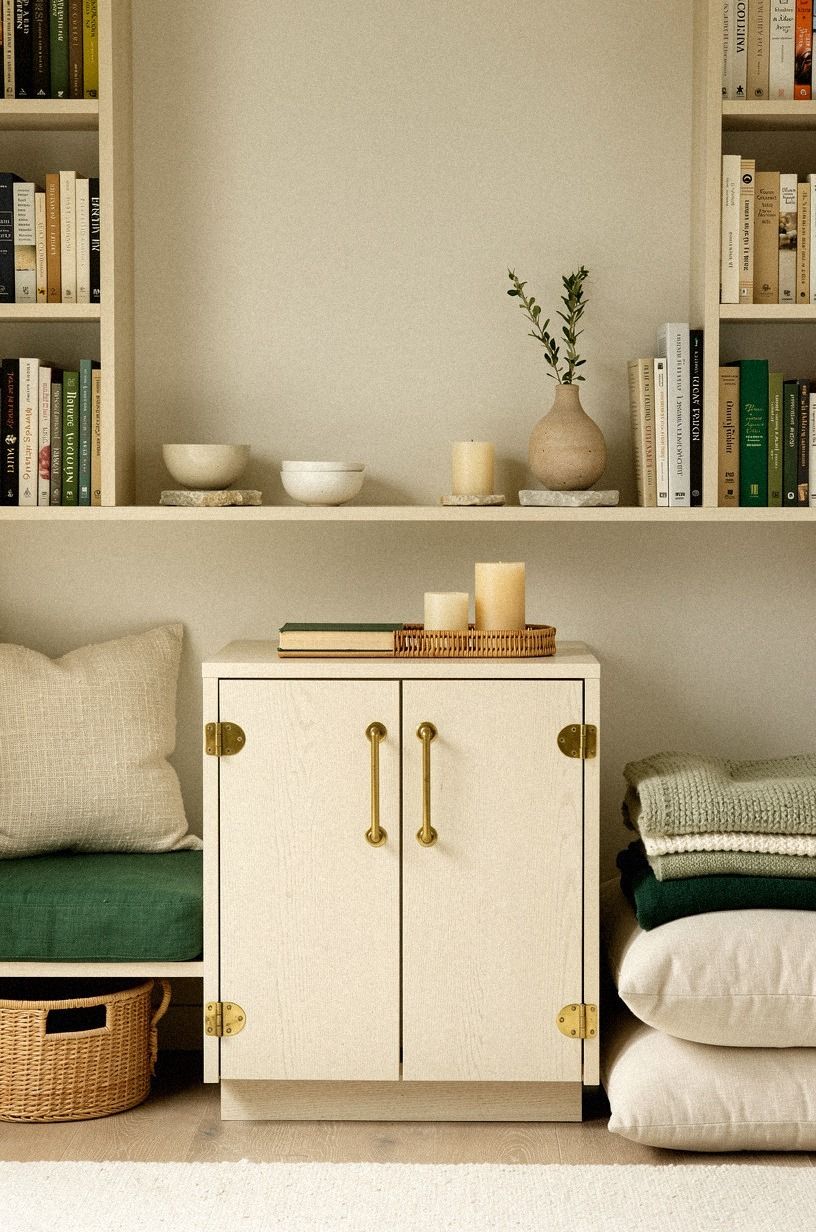
This was the least glamorous move and maybe the most useful.

6I stocked woven baskets with extra blankets
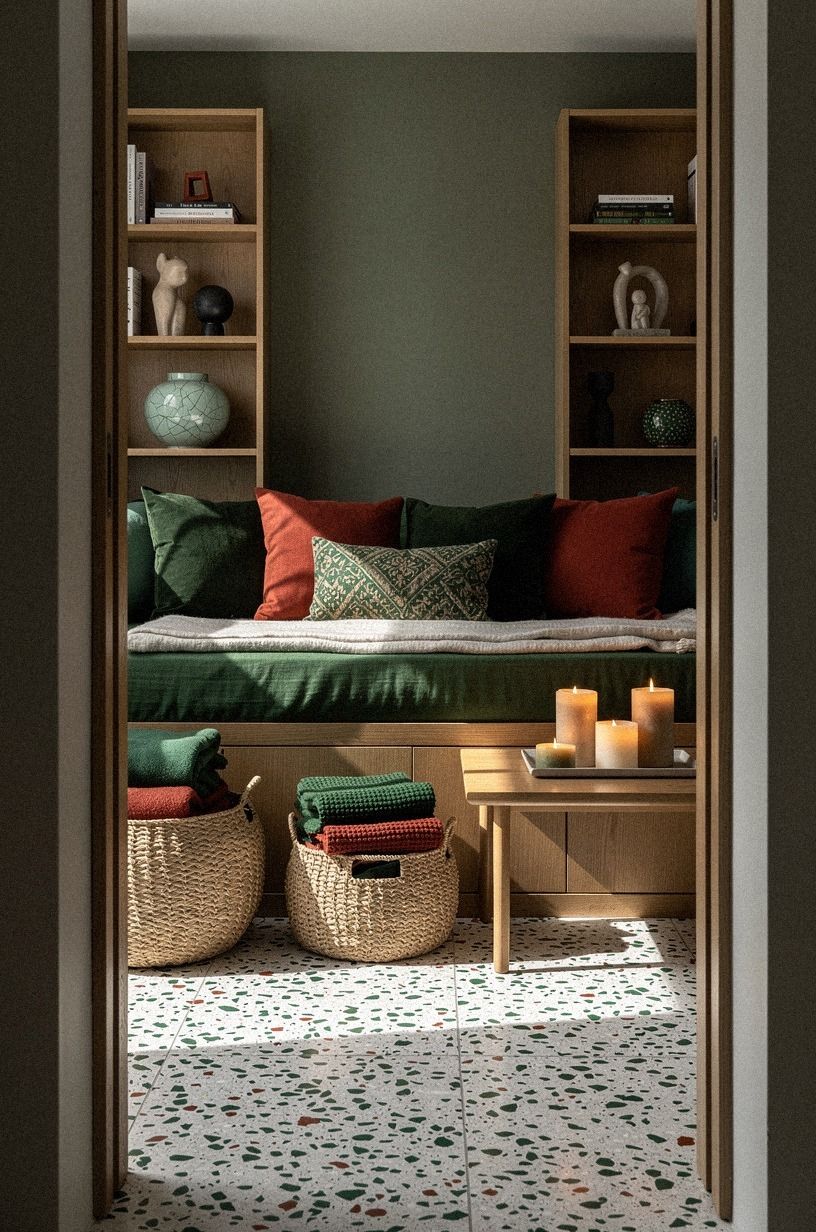
Blankets are part of the reason a hideaway gets used in fall, so I stopped tossing them around and gave them a proper landing spot. Two woven baskets sat near the daybed, filled with extra throws you could grab without opening anything or asking where stuff lived.
That ease matters. You want the room to say yes immediately.
I mixed one chunky merino throw with a lighter Turkish cotton layer so the pile looked relaxed, not bulky. Texture is the part that reads warm before you even touch it. And if you’re wondering what to put in a detail room beyond furniture, this is where I’d push you first: objects that change the way the room feels against your skin.
But keep the basket scale under control. Huge floor baskets can make a small retreat feel like a laundry ad. Mine were lower and wider, tucked so they softened the doorway view instead of blocking it.
The layered, ready-for-autumn look borrowed a lot from your complete fall 2025 home decor checklist 12 essentials from 25 transform every room in 8 weeks, because that kind of softness is never wasted.
7I placed a tiny drink fridge inside
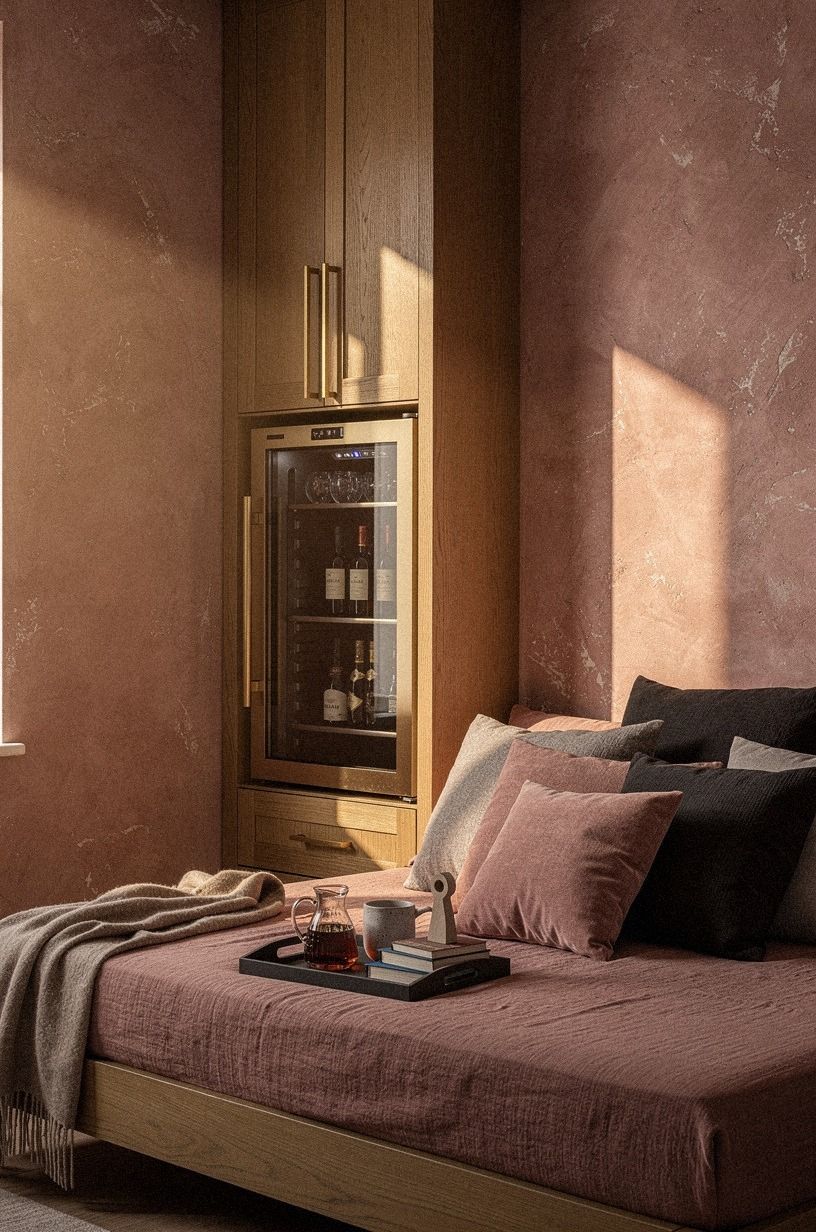
At first I thought a fridge would make the room feel silly. Then I realized I kept leaving for sparkling water and never coming back.
So in it went. A compact drink fridge tucked into the corner turned the room from a novelty into a place you could stay for two full chapters and not break the spell.
Mine sat off to the side, not dead center, because appliances should serve the room, not become the room. I kept the finish dark and let the bookshelves pull more focus.
If you’re choosing things to put in a detail room for adults, cold drinks beat decorative clutter every time. You will use function.
You won’t use a random sculpture.
I also kept the top clear except for one lacquer tray, because a mini fridge covered in objects just starts looking like a dorm workaround. Clean line, cold drinks, done. If your version leans more lounge than reading nook, the indulgent touches in luxury detail room ideas for a high end hidden hideaway make a good companion to this move.
8I hid snacks in a lacquered tray
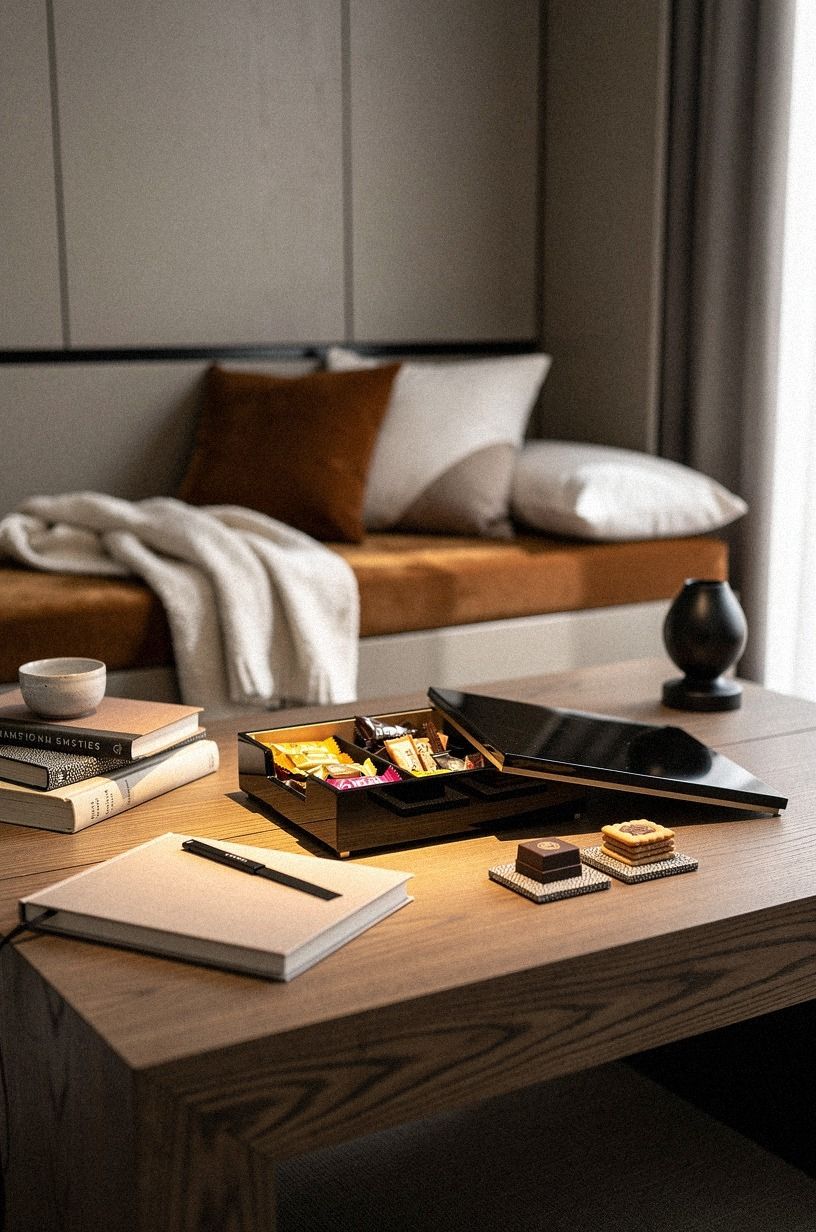
A tray sounds minor until you use the room at night. Then it becomes the whole routine.
I kept snacks in a lacquered tray on the low table so the room always felt ready without looking messy. Almonds in a bowl.
Good dark chocolate. Napkins folded small.
Nothing crinkly and loud.
The tray itself was deep oxblood, almost like Farrow & Ball Hague Blue No.30 under warm light, and that glossy finish bounced candlelight in a way matte wood couldn’t. If you’re styling detail room stuff, choose one surface that feels a little polished. It keeps the blankets and books from tipping rustic.
And here’s the thing: hiding snacks in a tray is better than stashing them in drawers. You want access with a little ceremony.
Lift the lid, pour the drink, open the book. That rhythm is what made my room feel intentional.
I used some of the same restraint I like in underground basement detail room ideas, where the good rooms aren’t crowded. They’re edited.
9I brought in a folding game table
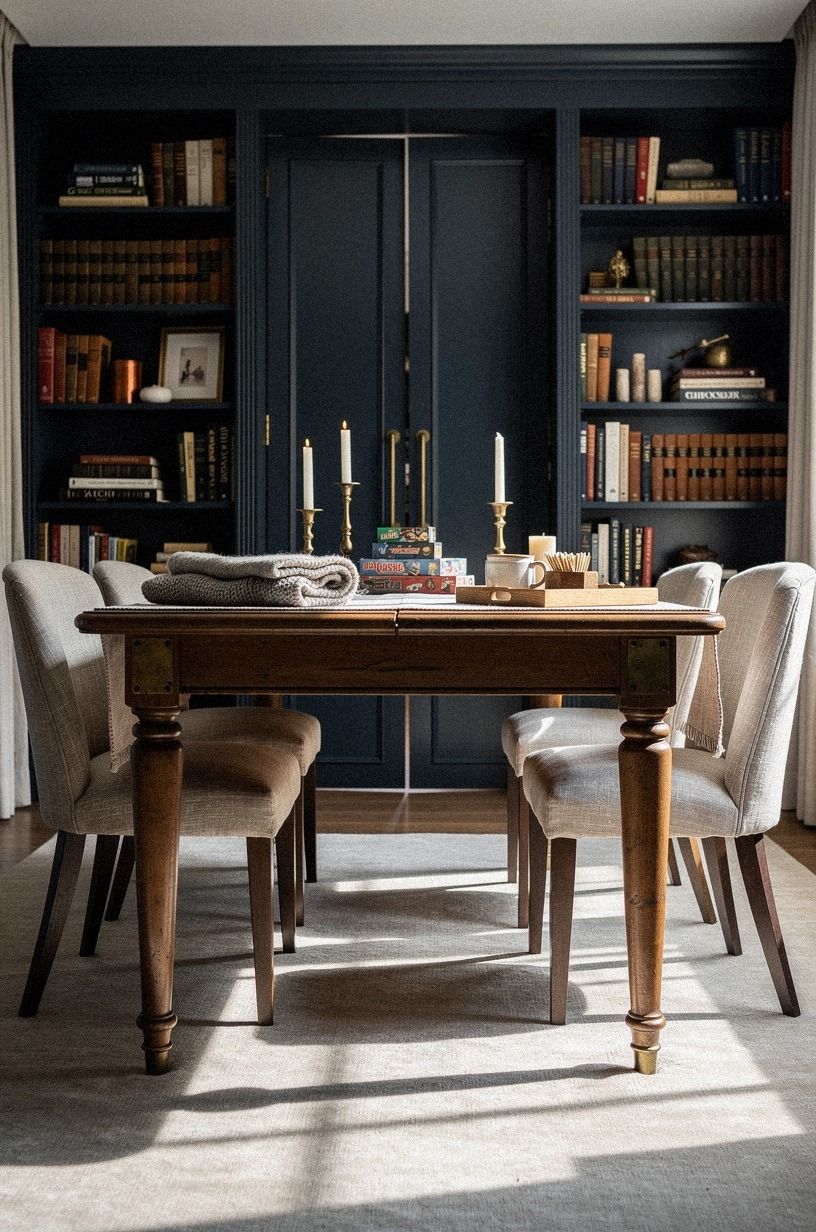
This was my compromise between romance and reality.
10I mounted acoustic panels behind framed art
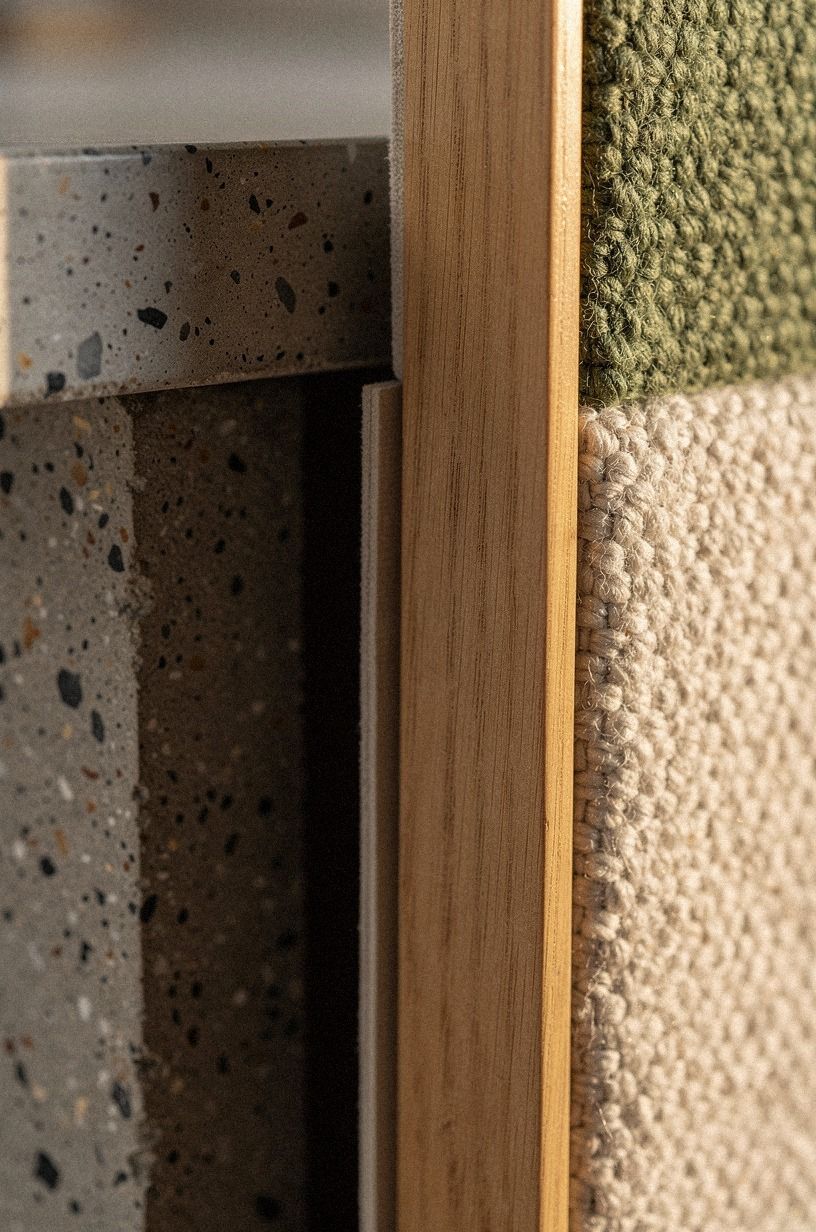
Noise control was one of those boring decisions that paid off immediately. I hid acoustic panels behind framed art so the room stayed soft even when the house outside it wasn’t.
You don’t need visible studio foam to make a room sound calmer. You need absorption where your eye already expects depth.
I wrapped the panel face in boucle fabric before the frame went up, and that little tactile edge made the close-up details feel richer, not technical. If you’re building things for a detail room because you want a true escape, sound matters as much as seating.
Maybe more. A quiet room feels more private than a locked one.
But don’t cover every wall. Too much dampening can make a tiny room feel dead.
I learned that after overpadding a past office nook, and the silence felt weirdly flat. One art cluster on the bounce wall was enough.
For anyone shaping a retreat under a staircase or behind panels, under stairs detail room ideas turn dead space into magic proves the same point in a smaller footprint.
11I set a speaker inside the bookcase
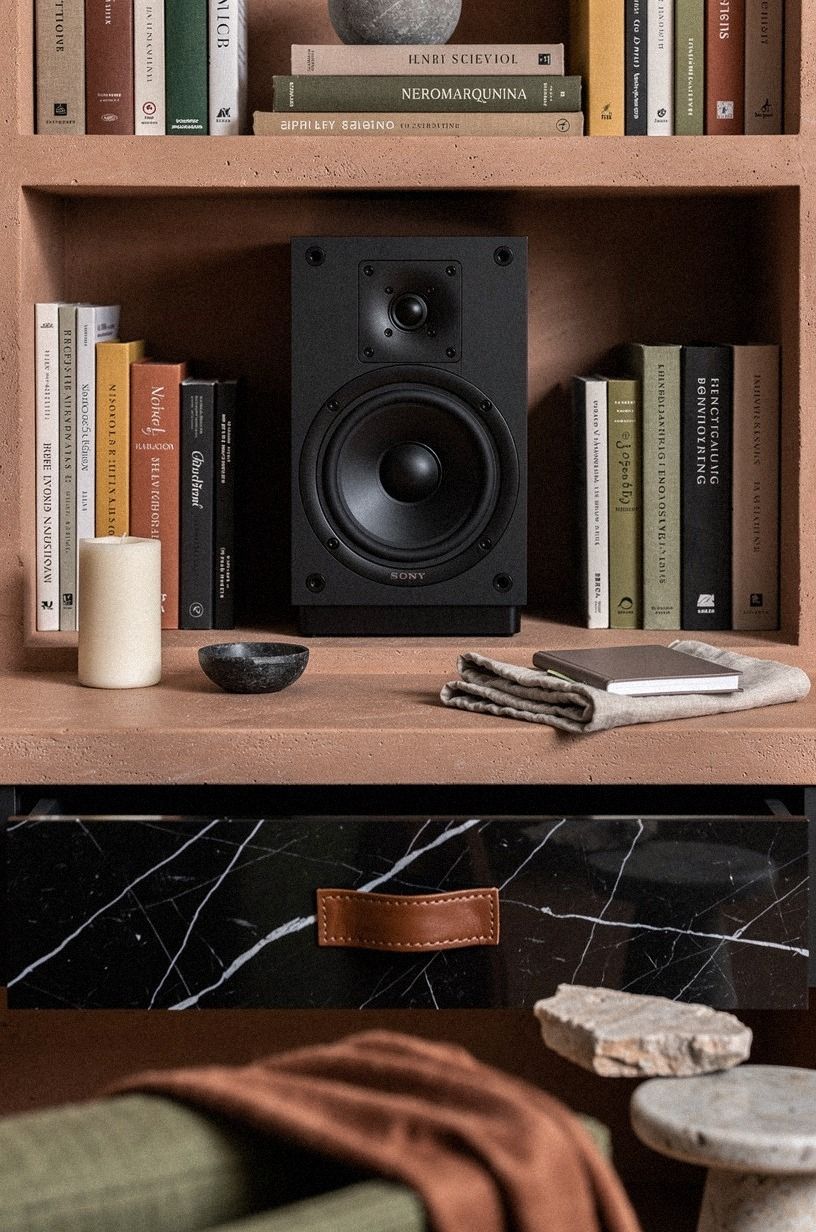
Music needed to be there without announcing itself, so I nested a compact speaker right into the bookcase. It sat low across the shelf, half framed by books and candles, which kept the tech from slicing through the softer mood. That’s my rule now: if an object works hard, let it look a little quiet.
I skipped a giant smart speaker and used something smaller with a warm, balanced sound. You don’t need bass shaking the door panel.
You need low jazz, rain sounds, or one album that can carry the room without demanding center stage. And yes, you will use it more if it’s already plugged in and ready.
The styling around it mattered too. A short stack of books, one brass candle holder, one hidden drawer nearby. Done.
If you start crowding the shelf, the speaker becomes one more problem to look at. I stole that keep-it-integrated instinct from luxury detail room ideas for a high end hidden hideaway, where the best amenities barely call attention to themselves.
12I added blackout curtains across the reveal
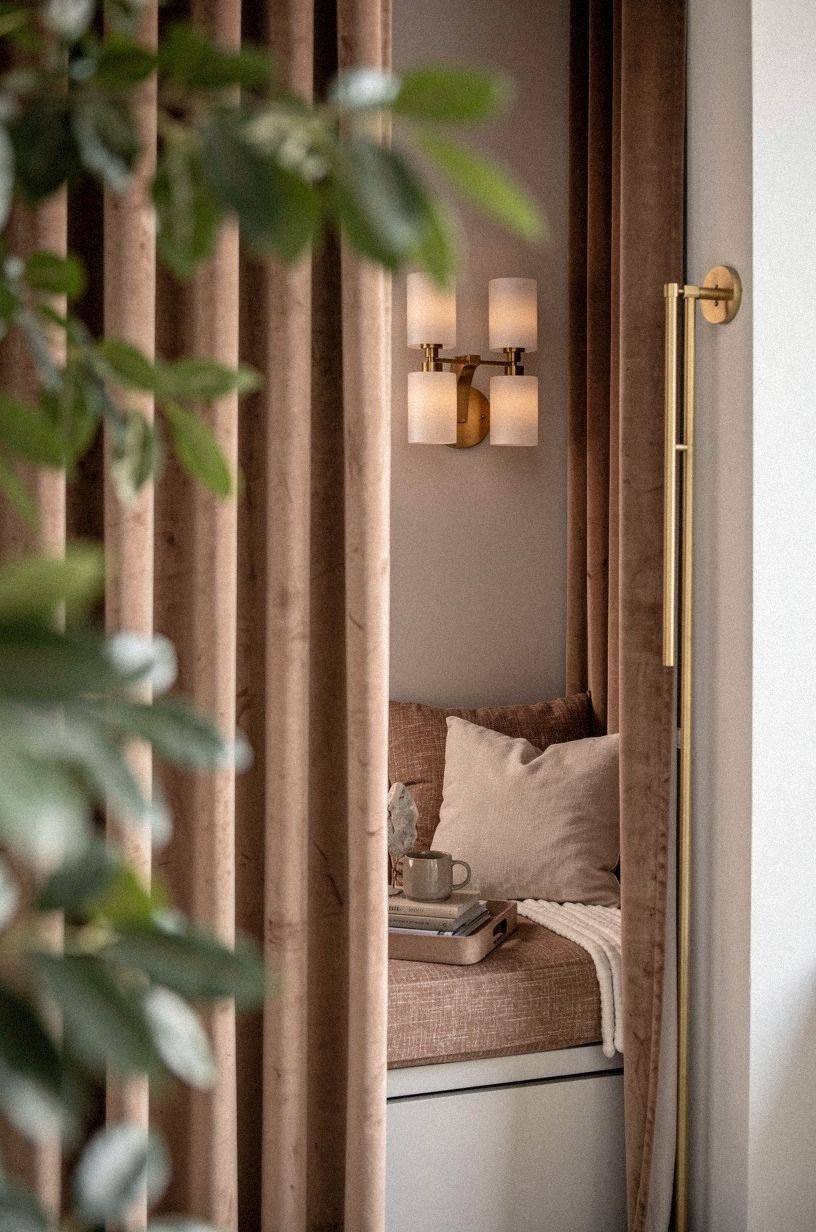
Curtains were what turned the room from clever to cocooning.
13I placed a brass lockbox on the shelf
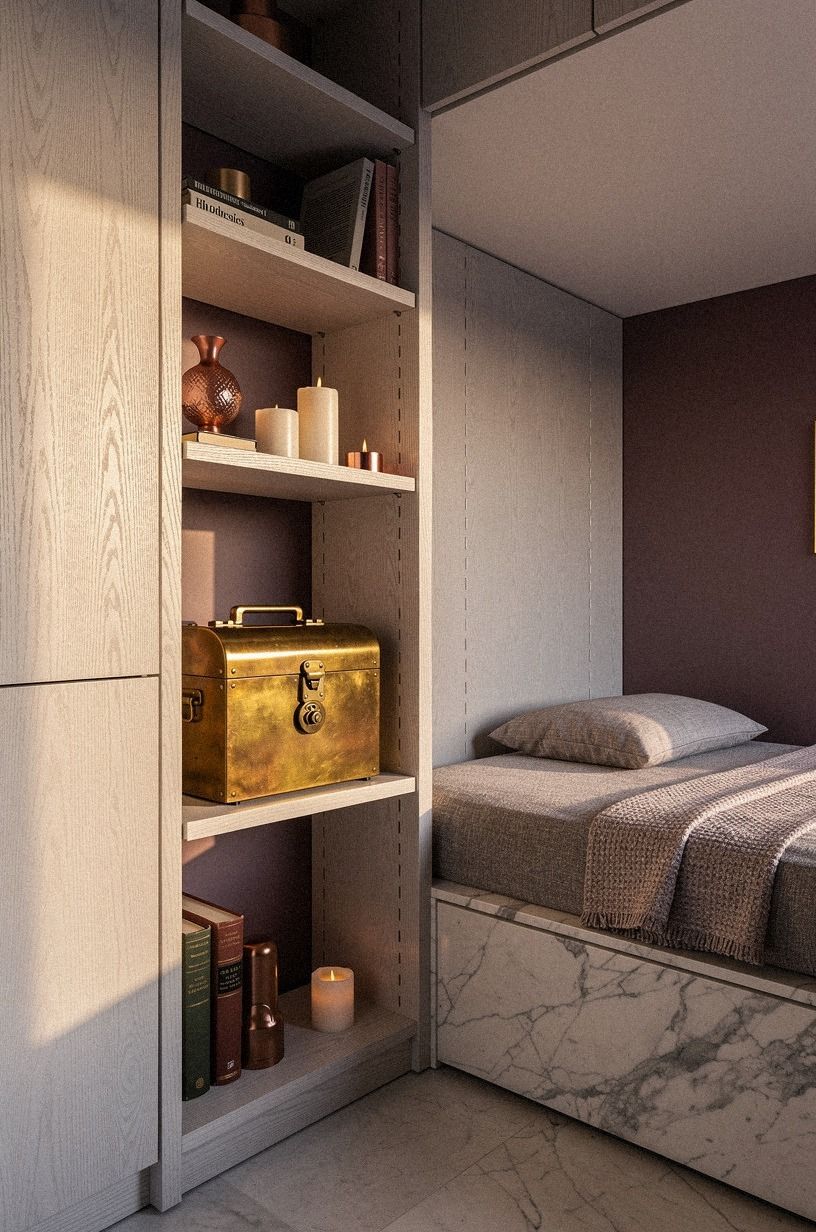
Not everything in a hideaway is decorative. I added a brass lockbox on one shelf for journals, letters, and the few personal things I didn’t want drifting around the house.
It looked right in the room, but it also gave the room a purpose beyond ambience. That dual job is what keeps a tucked-away space from turning into a prop.
Brass was the right finish because it aged into the rest of the palette instead of shouting for attention. Against painted shelves, books, and candlelight, it read almost old hotel. If you’re deciding what to put in a detail room, include one item that holds the private part of the room, not just the pretty part.
But I’d skip anything with a slick modern safe look. Wrong energy.
You want a piece that belongs with paper, wood, and fabric. The object should feel inherited, even if you bought it last week.
That same mood shows up in luxury detail room ideas for a high end hidden hideaway, and honestly, it’s what gives hidden rooms their staying power.
14I styled one corner with floor pillows
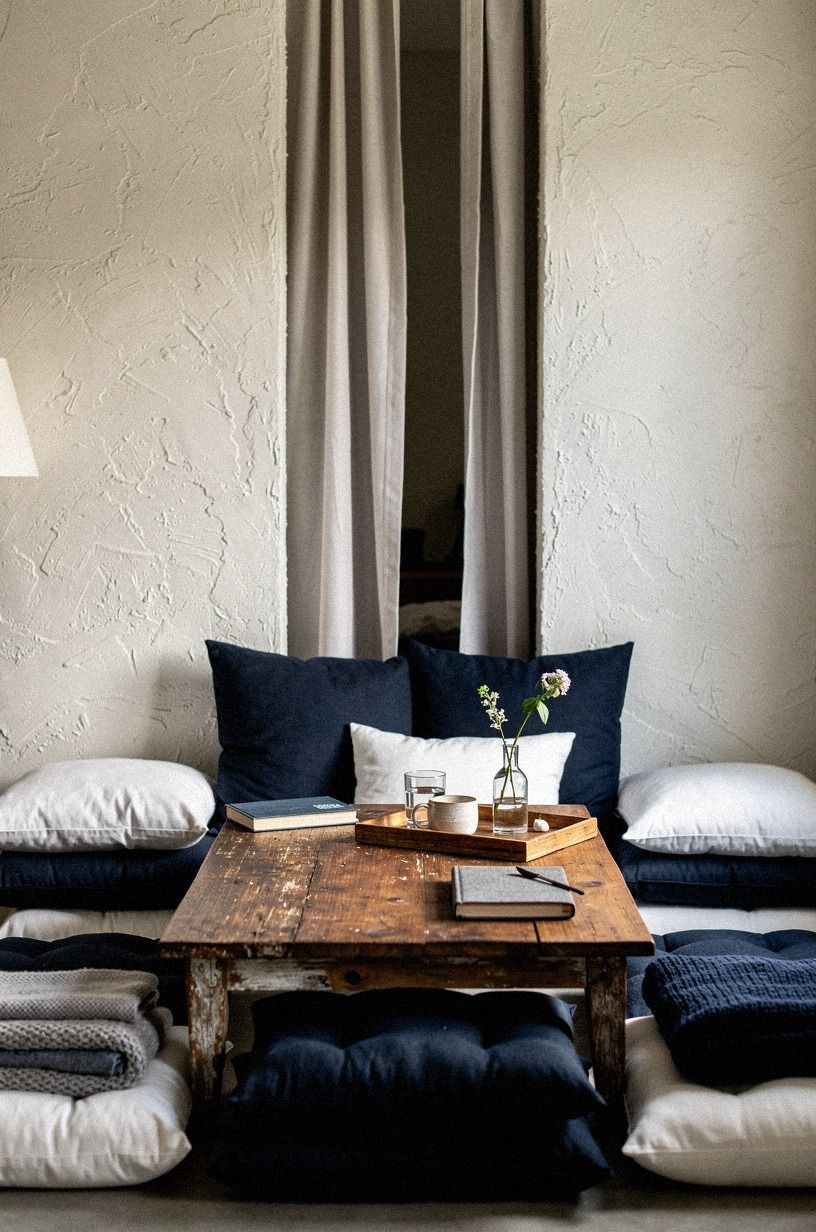
One corner needed to stay loose, not all furniture and millwork, so I built a softer landing with floor pillows. That ended up being the spot where you dropped down to read, where a friend sat during cards, or where I dumped a folded blanket before settling on the daybed. Flexible corners work harder than rigid ones.
I mixed a larger boucle floor cushion with one flatter cotton pillow so the pile looked layered instead of childish. Scale is the whole story here.
Tiny pillows scatter. Bigger ones ground the corner and make it feel intentional from the doorway view.
If you’re furnishing things to put in a detail room, let one area stay casual on purpose.
And don’t overdecorate that corner. One pillow too many and it starts looking like a sleepover setup.
I kept a stack of books nearby and let the rug edge define the zone. That little bit of restraint was borrowed from underground basement detail room ideas, where comfort works best when the floor still shows through.
15I left a tray ready for quiet nights
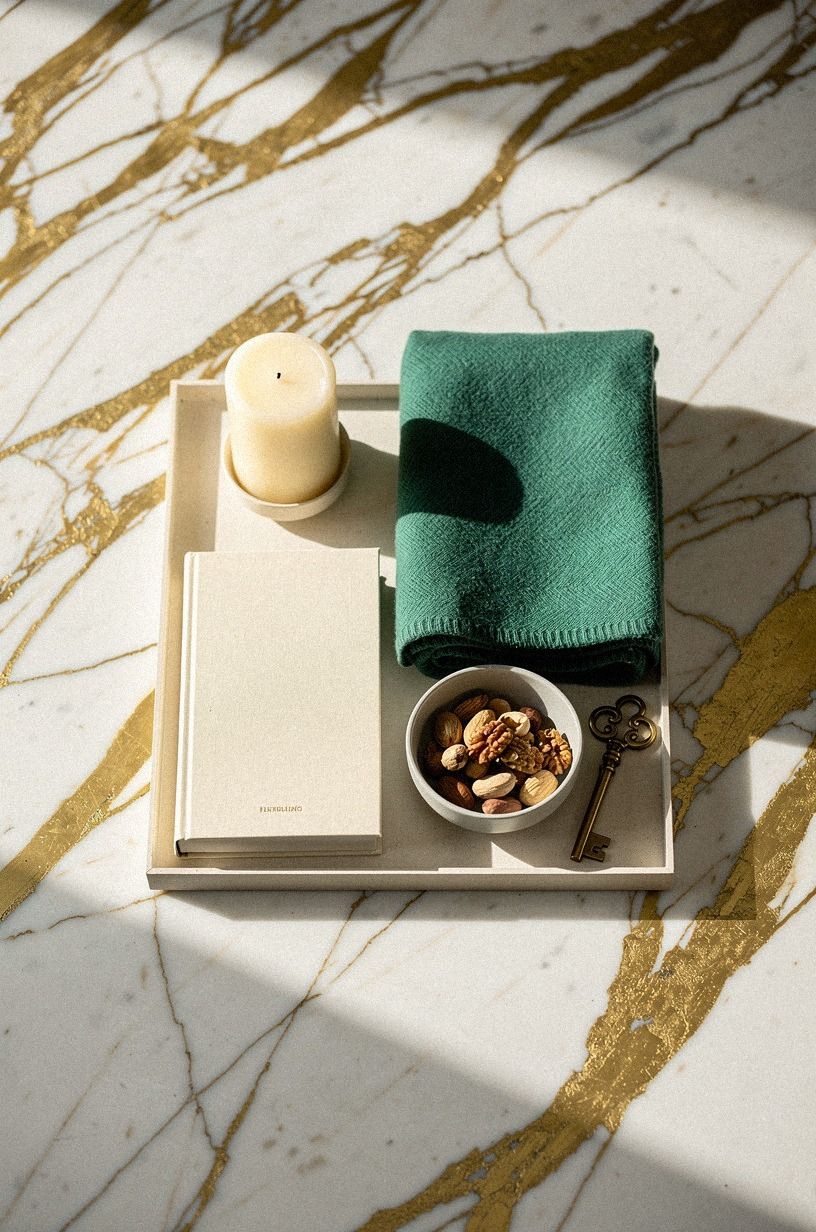
This final move sounds repetitive until you realize it’s what made the room usable on a Tuesday. I left a ready tray out for quiet nights with one book, one candle, one folded throw, and a small bowl for something salty. You shouldn’t have to assemble calm from scratch every time you enter the room.
The tray sat overhead-beautiful but practical, almost like a standing invitation. I used a low wood tray here rather than metal because I wanted the sound of it to stay soft when it landed on the table. Little sensory details count.
The whole room felt better once nothing clinked or flashed. That tiny shift changed the mood more than I expected!
But the real win was psychological. When the tray was waiting, I used the room.
When it wasn’t, I forgot the room existed. That told me everything. Your hideaway should remove friction, not add rituals you have to earn.
For more hidden-room routines that make use easy, detail gaming room ideas for the ultimate hidden setup nails that same ready-when-you-are thinking.
How much it cost
I kept the spending in the soft-furnishing lane and skipped custom millwork, which is why the room changed so much without blowing up the budget. Most of my money went to the seat, rug, light, and storage, because those are the pieces that changed how long you can stay in the room. Paint and styling help, but comfort is what gives a hideaway its pull.
My version sat near the low end of that first tier because I reused a side table, bought the rug on sale, and chose plug-in sconces over hardwiring. If you’re weighing where the money counts, I’d spend on the seat and the rug first, then the layered light.
Everything else can come in over time. You can read the same restraint in luxury detail room ideas for a high end hidden hideaway, even when the finishes get fancier.
The Three-Layer Hideaway Rule that made the room feel finished
What surprised me most was how little this room cared about trends. It didn’t need more objects or some hyper-styled reveal moment.
It needed three layers working at the same time: something soft under you, something warm around you, and something useful within arm’s reach. That’s the whole rule. If one of those layers is missing, you feel it immediately, even if you can’t name why.
I learned that the hard way because I kept trying to solve the room visually first. I fussed with candles, stacked books, and swapped art around before I fixed the comfort problem.
None of it held. The room looked finished in photos and unfinished in real life.
Once I brought in the daybed, the washable rug, and the dimmable sconces, the room started carrying its own weight. Then the tray, baskets, curtain, and lockbox made sense because they were supporting a room that already worked.
You can apply that same rule to almost any hidden nook you have. Under the stairs, in a basement corner, behind a paneled wall, whatever you’re working with.
Start with one soft surface, one controllable light source, and one storage move that keeps the practical clutter out of sight. Then sit in the room for a week before buying anything else.
Really. You’ll notice what’s missing much faster from your body than from your mood board.
And here’s my honest opinion: I wouldn’t chase a super themed look in a room like this. A hideaway gets old fast when it’s trying too hard to be mysterious.
What lasts is warmth, privacy, and ease. You should be able to step in with a book and not think about the styling at all.
That’s when you’ve done it right.
The Questions I Get Asked Most
What is the best What to Put in a Detail Room [The Ultimate Hideaway Checklist] for a small living room?
A narrow daybed plus a washable rug is the best starting point for a small living room. Comfort without bulk is what buys you real use. Think slim Article seating, one soft rug, and light on the wall so your floor space stays clear.
Where can I buy What to Put in a Detail Room [The Ultimate Hideaway Checklist] pieces on a budget?
Start with IKEA, Target, and Wayfair for the basics, then check Facebook Marketplace for the warmer pieces. Secondhand wood and brass age better than cheap trendy accents.
Daybed frame. Plug-in sconces.
Storage basket. Low cabinet.
How much does a What to Put in a Detail Room [The Ultimate Hideaway Checklist] makeover cost?
For a soft makeover, expect about $300 to $1,200 in typical US spending. The seat and rug matter most if you want the room to work.
Reused side table. Sale rug.
Plug-in lighting. That combo keeps the cost grounded.
Can I create a What to Put in a Detail Room [The Ultimate Hideaway Checklist] on a budget?
Yes, and you don’t need custom work to pull it off. Cheap comfort still counts if you choose the right pieces.
Reuse a lamp with a dimmer plug. Fold throws into baskets.
Add a washable rug. Hang curtains on a tension rod.
Is a What to Put in a Detail Room [The Ultimate Hideaway Checklist] worth it in a small space?
Yes, especially in a small space, because the scale forces you to be intentional. A tiny room gets cozy faster when every inch earns its keep. Keep storage low, put light on the wall, and let one seating piece anchor the zone.
Is What to Put in a Detail Room [The Ultimate Hideaway Checklist] a good idea for a rental?
Yes, if you lean on removable layers. Renters can still get the hideaway feeling with plug-in sconces, blackout curtains on a tension rod, baskets, and art-hung sound panels that don’t need built-ins. Soft goods do more than people think.
Where I’d Start First with the One-Soft-Surface Rule
If I had to pick one, I’d start with the washable rug. A hard floor keeps a room feeling temporary, and every other cozy layer has to fight that.
Get softness underfoot first. Then your light, seat, and storage finally have something to land on.