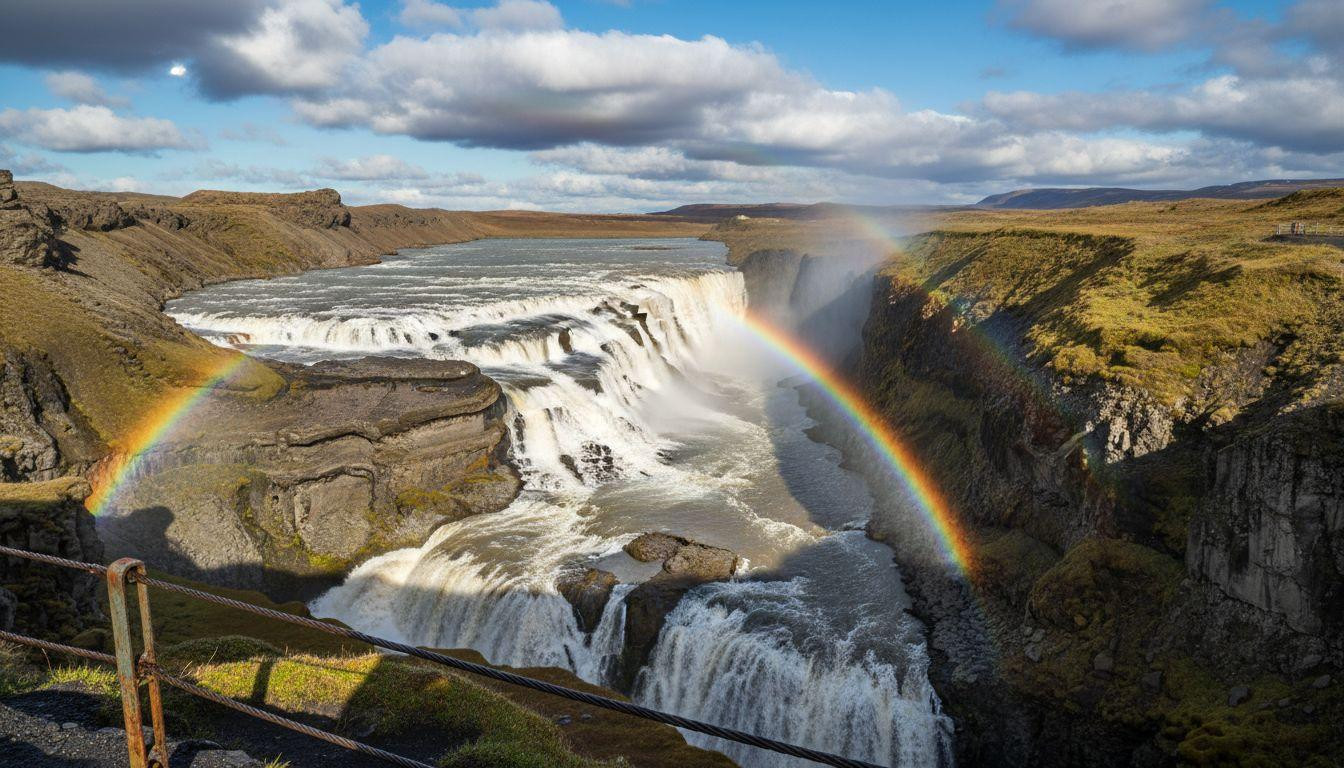
Standing at the edge of Gullfoss, the thunderous roar hits you first. Then comes the golden-brown water plunging 105 feet into a rugged canyon below. Iceland’s second-largest glacier feeds this spectacle where natural rainbows dance through glacial mist on sunny days.
The sound builds as you approach from the parking area. What starts as distant rumbling becomes chest-deep vibration. Your first glimpse reveals why locals call this the Golden Falls.
Where Iceland’s second-largest glacier meets ancient rock
The Hvítá River carries meltwater from Langjökull Glacier across 72 miles of volcanic terrain. Ten thousand years of glacial floods carved the deep canyon you see today. Basalt cliffs rise 230 feet on both sides of the narrow gorge.
Route 35 brings you here in 1 hour 45 minutes from Reykjavík. Free parking fills quickly during summer peak hours between 11am and 3pm. The paved path to the main viewing platform takes 5 minutes from your car.
GPS coordinates 64.3275° N, 20.1218° W place Gullfoss perfectly between Geysir (6 miles away) and Þingvellir National Park. Over 80% of Iceland visitors experience this Golden Circle route that connects three geological wonders.
The two-tier drop that creates natural rainbows
Gullfoss splits into two distinct cascades. The upper tier drops 36 feet before the water plunges another 69 feet into Gullfossgjúfur Canyon. This wedge-shaped formation creates maximum mist volume for rainbow formation.
Upper and lower falls dynamics
Summer brings 140 cubic meters of glacial water per second over both tiers. That equals filling an Olympic swimming pool in under one minute. Winter reduces flow to 109 cubic meters per second but maintains dramatic force.
The canyon measures 1.5 miles long and narrows to just 65 feet wide at the falls. Turquoise pools might be beautiful, but Gullfoss offers raw geological power instead of calm water.
When and where rainbows appear
Glacial flour suspended in the water creates the golden-brown color that inspired the name. Fine basaltic minerals shimmer in sunlight. Mid-morning and late afternoon offer optimal rainbow viewing when the sun sits behind you.
Summer’s nearly 24-hour daylight provides flexible photography opportunities. Winter rainbows appear more rarely but create stunning contrasts against ice formations. Cloudy days with sun breaks produce the most reliable rainbow conditions.
Walking to the edge of glacial power
Two viewing platforms offer different experiences. The upper platform provides panoramic canyon views. The lower platform (when open) brings you close enough to feel spray on your face.
The 5-minute approach
The paved path handles 30-45 minute visits comfortably. Gravel sections require careful footing in winter when frozen spray creates icy conditions. Early morning visits (7-9am) avoid crowds and offer superior lighting.
Winter transforms the experience entirely. Ice sculptures form where spray freezes on canyon walls. Three-tier waterfalls elsewhere may offer hiking challenges, but Gullfoss remains accessible year-round.
What you’ll feel
The mist carries the smell of fresh glacial water and volcanic stone. Your clothes gradually dampen despite standing 50 feet from the falls. Wind amplifies the spray, requiring lens cloths for photography.
Winter visitors describe the crystalline silence broken only by water impact. Summer brings constant rumbling that vibrates through your chest. The physical sensation commands complete attention for those crucial rainbow moments.
The woman who saved Iceland’s Golden Falls
In the 1920s, foreign investors proposed a hydroelectric dam at Gullfoss. The farmer’s daughter, Sigríður Tómasdóttir, walked barefoot to Reykjavík in protest. She threatened to throw herself into the falls if development proceeded.
Her lawsuit bankrupted her family but saved the waterfall. The project was abandoned and Gullfoss became protected land. Today’s visitor center exhibits celebrate her environmental victory with displays and commemorative items.
This conservation story resonates with modern travelers seeking authentic experiences. Affordable natural wonders like Gullfoss prove you don’t need expensive expeditions for life-changing moments.
Your questions about Gullfoss answered
When does the water flow strongest?
June through August brings peak flow at 140 cubic meters per second. Warmer temperatures increase glacial melt from Langjökull. Winter flow drops to 109 cubic meters per second but remains powerfully dramatic. Summer crowds peak between 11am-3pm daily.
Is it really completely free?
Zero entrance fees and free parking make Gullfoss accessible to all budgets. The visitor center restaurant offers traditional Icelandic meals for $15-25 per entrée. Camping nearby costs $10-12 per night at facilities with showers and WiFi.
How does this compare to other Icelandic waterfalls?
Gullfoss ranks among Iceland’s 10,000 waterfalls for power and accessibility. Skógafoss offers different viewing angles but lacks the canyon setting. Seljalandsfoss allows behind-waterfall walks but generates less volume. Gullfoss combines drama, history, and infrastructure uniquely.
Standing at the platform as afternoon light catches the mist, rainbows appear for perhaps two minutes. The glacial thunder fills the canyon. This moment explains why one determined woman risked everything to preserve Iceland’s golden treasure.