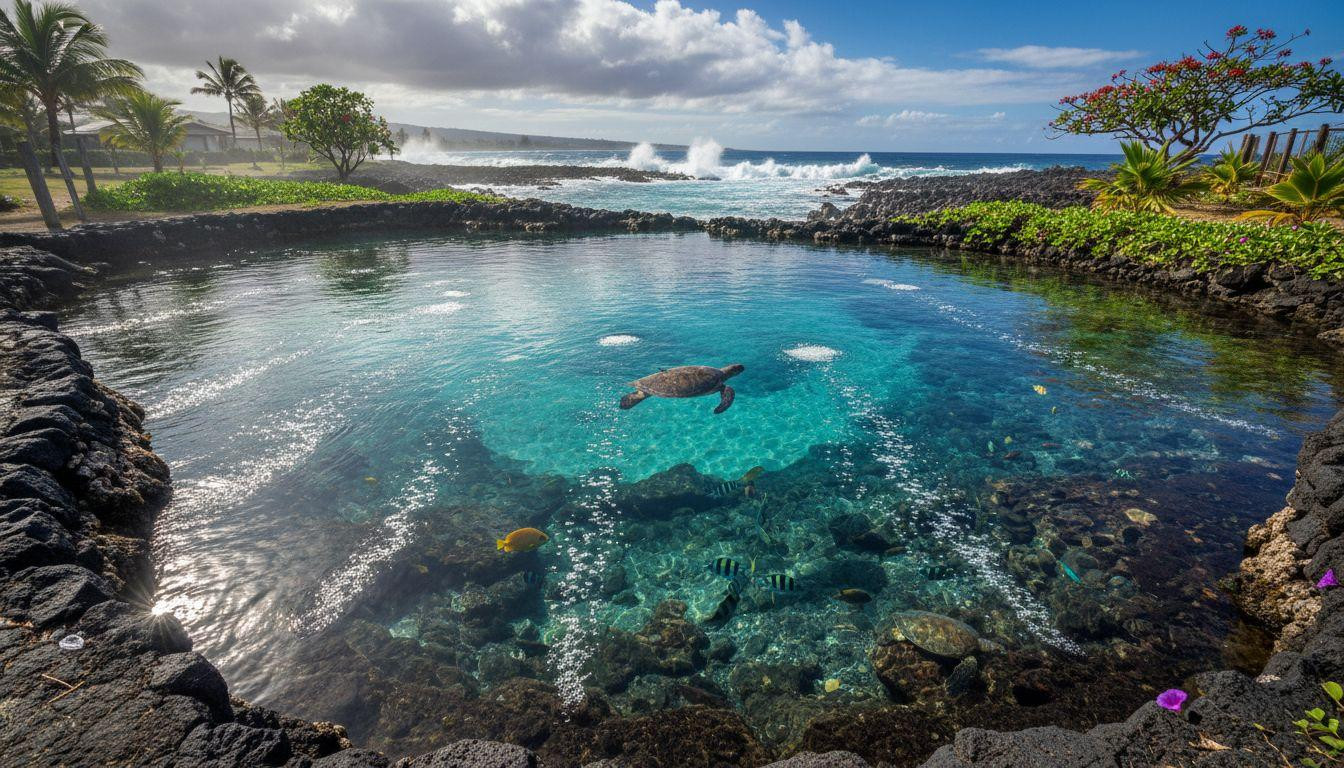
The sound came first, like champagne bottles popping open beneath the water. Then the warmth, 88°F geothermal springs bubbling up through black lava rock into crystal-clear pools where sea turtles drifted alongside snorkelers in perfect harmony. This was Champagne Pond, Big Island’s most beloved thermal refuge in Kapoho Bay, where freshwater met saltwater in effervescent bliss until May 2018 when Kilauea’s lava buried paradise under 60 feet of volcanic rock.
Where Champagne Pond once welcomed swimmers
Champagne Pond sat at sea level in Kapoho Bay, on the Big Island’s easternmost point near Cape Kumukahi Lighthouse. The Vacationland community surrounded this natural wonder with oceanfront rentals and dirt roads leading to the water’s edge.
Visitors reached the pond via Highway 137 through Puna District, parking at nearby Kapoho Tide Pools before walking around a gate. The 100-by-50-foot pool required no entry fee, no permits, just reef shoes to navigate the rocky bottom where geothermal springs mixed heated freshwater with Pacific saltwater.
Local tourism boards recorded hundreds of annual visitors to this overlooked spot, far fewer than Hilo’s Rainbow Falls just 21 miles west. The intimate scale kept crowds minimal while offering volcanic Big Island experiences without the tour buses.
The bubbles that named paradise
Audible fizz like opening bottles
The constant bursting of geothermal gas created Champagne Pond’s signature soundtrack. Bubbles rose from underwater vents with audible pops that earned the site its name, a natural effervescence you could hear even above gentle ocean waves.
Volcanic activity beneath the bay pushed warm freshwater up through lava rock fissures. The gas composition remained natural volcanic emissions, creating streams of bubbles that tickled swimmers and made the 88°F water feel silky against skin.
Sea turtles among tropical fish
Hawaiian green sea turtles (honu) treated Champagne Pond like a personal spa. Snorkelers encountered these sacred animals lounging in the warm currents alongside parrotfish, angelfish, and other tropical species drawn to the sheltered cove.
The maximum depth reached about 13 feet, perfect for snorkeling but too shallow for scuba diving. Crystal-clear visibility on sunny days allowed underwater photographers to capture unique marine encounters in this geothermal environment.
May 2018 when Kilauea took it back
Lower Puna lava flow
Kilauea’s Fissure 8 eruption began in May 2018, sending massive lava flows toward Kapoho Bay. The Vacationland community evacuated as molten rock consumed homes, roads, and natural features at unprecedented speed.
By June 2018, lava had completely filled Kapoho Bay, creating new land where the 0.5-square-mile bay once existed. The flow also vaporized nearby Green Lake, Hawaii’s largest natural freshwater lake, demonstrating the eruption’s devastating scope.
The bay that disappeared
Champagne Pond vanished beneath 60 feet of solidified lava rock. The entire Vacationland neighborhood (population around 500) lost homes, infrastructure, and access roads in what became the largest property destruction in Big Island history.
Ironically, Cape Kumukahi Lighthouse survived both the 1960 and 2018 lava flows, standing as Puna District’s symbol of resilience. The lighthouse marks where visitors now hike 2 miles from Government Beach Road to reach new black sand beaches formed by the same lava flows that destroyed Champagne Pond.
What remains now
Today, cement blocks bar access to the former Kapoho area. The site lies completely inaccessible beneath hardened lava fields stretching toward jungle vegetation. No roads, trails, or viewing platforms exist where Champagne Pond once bubbled.
Social media trends like #KapohoLavaHike showcase the dramatic transformation, with over 10,000 TikTok views documenting pioneer plants growing on the new lava surface. The closest experience involves hiking to Cape Kumukahi’s new coastline, where volcanic activity continues reshaping Big Island geography.
Alternative geothermal pools exist at locations like Ahalanui Beach Park, though their current status remains uncertain following subsequent volcanic activity affecting Puna District infrastructure.
Your questions about Champagne Pond answered
Can you visit Champagne Pond today?
No access exists to the original site. Champagne Pond lies buried under 60 feet of lava rock with no roads, trails, or safe viewing areas. The entire Kapoho Bay area remains closed to public access for safety reasons.
What made the bubbles so special?
Geothermal activity pushed gas-rich freshwater through underwater vents, creating constant bubbling sounds like opening champagne bottles. The 88°F temperature felt perfect for swimming while the natural carbonation created a unique sensory experience unavailable anywhere else in Hawaii.
How does it compare to other thermal pools?
Champagne Pond offered free access to 88°F geothermal water compared to Iceland’s Blue Lagoon ($80-120 entry, 100°F industrial pools). The natural setting with sea turtles and tropical fish created intimate wildlife encounters impossible at commercial thermal facilities.
The morning light still touches Cape Kumukahi Lighthouse where Champagne Pond once welcomed swimmers to its warm embrace. Steam no longer rises from bubbling pools, but the memory of that gentle fizzing soundtrack echoes in stories told by those who experienced Big Island’s lost geothermal paradise.