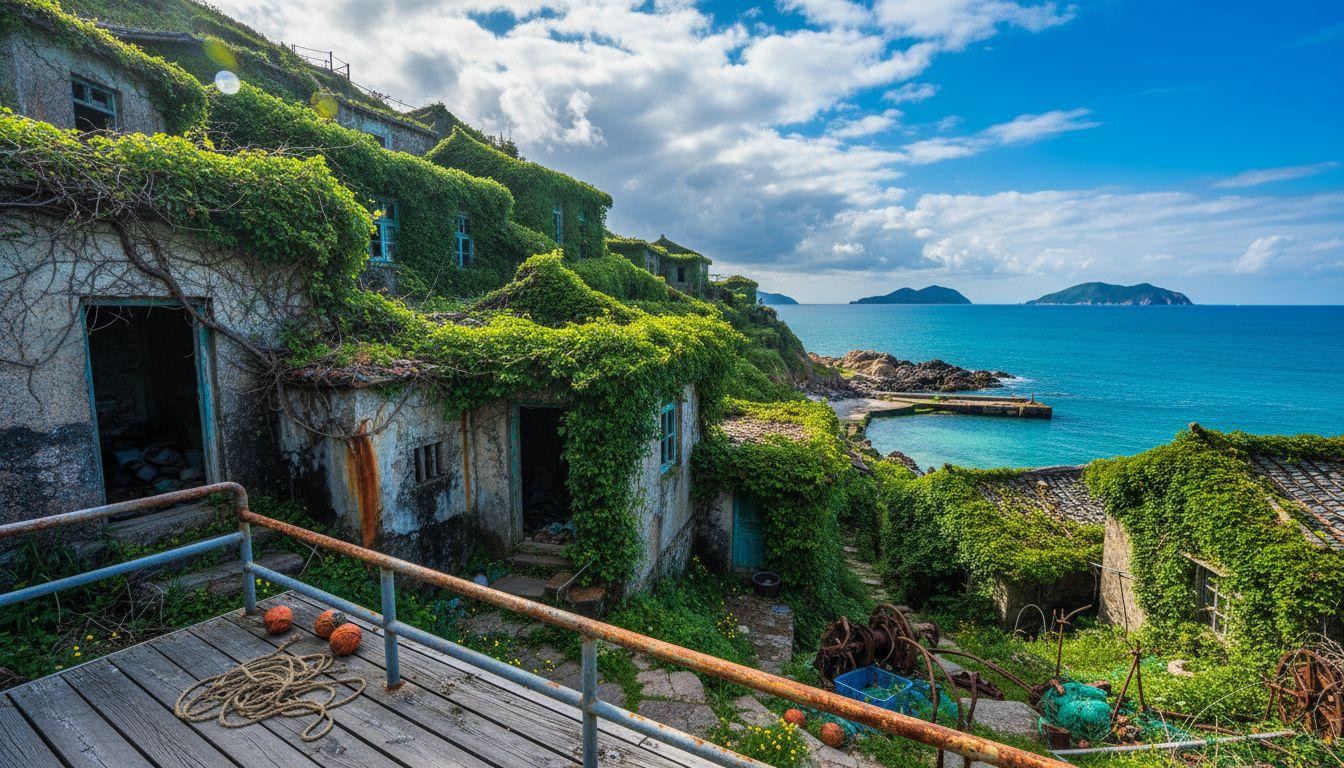
The ferry cuts through morning mist as Shengshan Island emerges from the East China Sea. What looks like a green hillside reveals itself as something impossible: an entire village swallowed by ivy. Stone houses disappear beneath emerald curtains that flow down to turquoise waters 87 miles from Shanghai.
This is Houtouwan, where nature reclaimed what humans abandoned in the 1990s. December fog makes the ivy-covered facades seem to breathe with the tide.
The village that time forgot
Houtouwan thrived as a fishing village through the 1980s with 3,000 residents. Then Shanghai’s economic boom drew younger generations to the mainland for work. By the early 2000s, only elderly residents remained.
The final families relocated to nearby villages as ferry schedules became irregular. What they left behind was a ghost town of stone cottages and narrow lanes.
When humans left
The exodus happened gradually over 15 years. Many homes still contain furniture and family photos exactly as owners left them. Remote island villages across Asia faced similar depopulation as mainland opportunities grew.
Depleted fish stocks and expensive supply deliveries made island life unsustainable. Unlike sudden disasters, Houtouwan simply emptied as residents chose mainland prosperity over isolation.
Nature’s architecture
Boston ivy (*Parthenocissus tricuspidata*) began climbing abandoned walls within months. The vines grow 3-6 feet annually in this humid coastal climate. Twenty-five years later, ivy blankets 60% of buildings completely.
Continuous green facades flow from rooftops to doorways. Stone staircases vanish beneath leafy curtains that rustle in sea breezes.
The green facade
Summer brings dense emerald coverage when vines reach peak fullness. December strips leaves to reveal intricate vine networks clinging to weathered stone. Historic stone architecture throughout the world faces similar natural reclamation when abandoned.
Morning light filters through bare branches in winter, creating cathedral-like spaces between buildings. The “Green Cathedral” cluster near the observation deck offers the most dramatic ivy-wrapped ruins.
Why December brings fog
Coastal fog rolls through the village 45% of December mornings. Mist clings to ivy-covered walls until 10:30 AM, creating ethereal photo opportunities. Fog transforms coastal landscapes worldwide into mysterious, otherworldly scenes.
Winter brings 150-200 daily visitors compared to 800-1,200 in summer. Empty trails and quiet observation decks reward December travelers seeking solitude.
Walking through silence
The main path winds uphill past ivy-choked doorways and windows. Only sounds are distant waves, wind through vines, and occasional gull cries. Human voices echo strangely in this green-wrapped ghost town.
Stone steps descend toward the sea where fishing boats once moored. Rusted anchor chains peek through ivy curtains like archaeological artifacts.
The observation deck
The viewing platform (entry fee $3) overlooks continuous ivy coverage flowing down to turquoise water. Clear island waters create striking color contrasts against the green-blanketed village.
Best photography happens during golden hour (4:30-5:15 PM in December) when low sun illuminates bare vine patterns. Morning fog photography requires overnight stays in Shengshan town guesthouses ($16-25 per night).
Inside the green rooms
Building interiors remain off-limits since 2020 due to structural concerns. Vine weight has caused several collapses. Visitors glimpse abandoned furniture through ivy-framed windows and doorways.
Traditional wooden tables, ceramic bowls, and family photographs survive in vine-protected rooms. Nature preserves what it consumes, creating accidental museums within green walls.
The melancholy beauty
Houtouwan evokes quiet reflection on impermanence and nature’s patient power. Unlike dramatic ruins, this village whispers its abandonment through gentle green coverage. The beauty lies in nature’s unhurried victory over human ambition.
Recent visitor surveys consistently describe the site as “ethereal” and “meditative.” The ivy-wrapped facades represent hope and loss simultaneously: renewal through abandonment, beauty through decay.
Your questions about Houtouwan answered
How do I get there?
Take the bus from Shanghai’s Nanpu Bridge Station to Shenjiawan Port (90 minutes, $7). Board ferries to Shengshan Island (50-70 minutes, $8). Local taxis reach Houtouwan in 10 minutes ($5-7). Total journey takes 3.5-5 hours depending on connections.
When should I visit?
June-August offers fullest ivy coverage but brings crowds. December provides fog-wrapped solitude with bare vines creating dramatic silhouettes. Spring brings new green growth. Avoid Chinese holidays when visitor numbers triple.
What does it cost?
Day trips from Shanghai cost $22 total (transport, entry, meal). Overnight trips add $16-25 for island guesthouses. This compares favorably to Shanghai hotel rates ($65-90) while offering unique experiences unavailable in mainland China.
December mist lifts from ivy-wrapped walls as ferry horns echo across empty waters. The abandoned village keeps its green secrets while tide pools reflect morning light below.