“`html
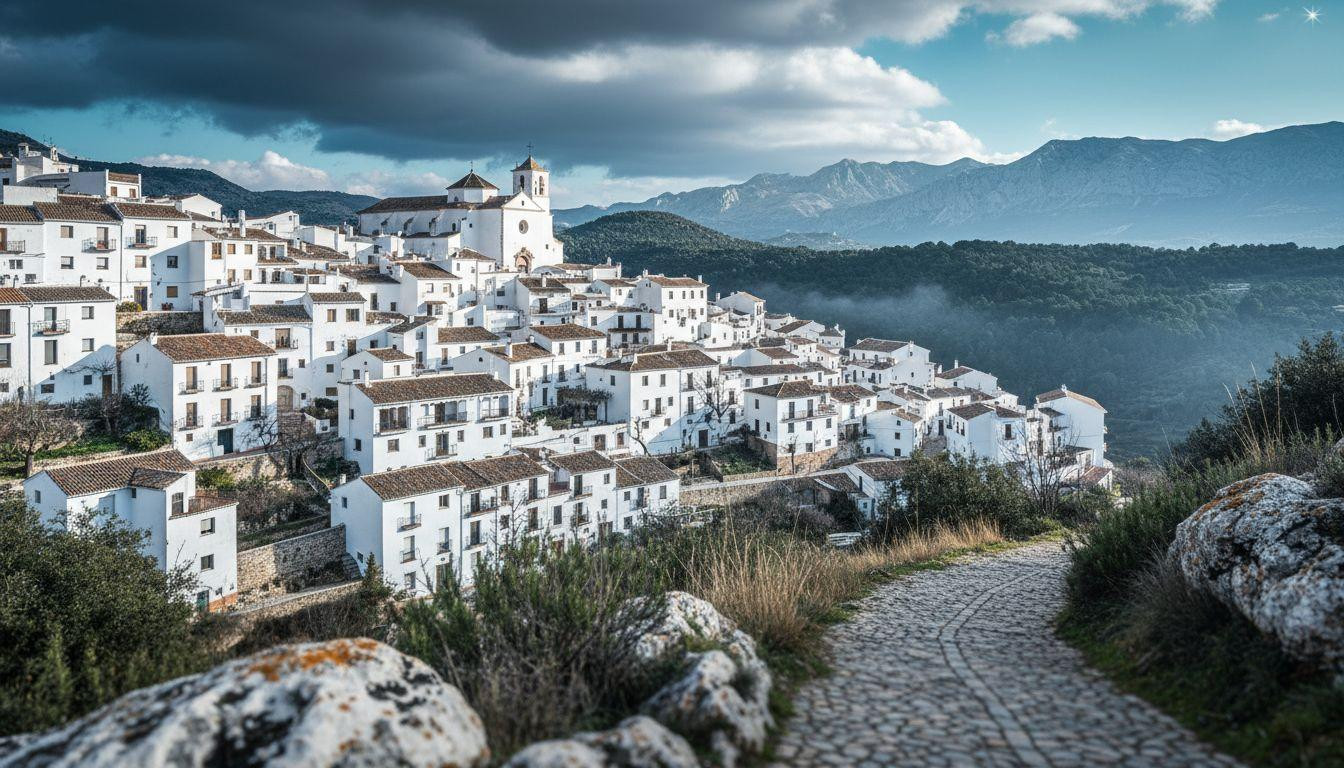
Storm warnings flash across Andalusia in February 2026. The Sierra de Grazalema braces for another round of Atlantic rain. But 2,100 residents in this white village know what happens next. Twenty minutes after clouds break, morning light hits limestone walls in a way that exists nowhere else in Spain. This isn’t postcard sunshine. It’s storm-filtered silver cutting through pine-dark ridges at 2,700 feet elevation. The show lasts maybe fifteen minutes before diffuse light takes over.
The storm light window
Grazalema sits at 36.760°N, 5.367°W in Cádiz province. February brings the Sierra’s wettest season. Spain’s rainfall record happened here in 1963 when 57 inches fell in one day. Atlantic storms hit the mountains and dump moisture through orographic lift. The village gets 79 inches annually while coastal Cádiz gets 24.
Post-rain atmospheric clarity peaks around 7:50am in early February. Rayleigh scattering intensifies after rain washes aerosols from thin mountain air. White cal lime walls reflect 80-90% of visible light versus standard paint’s 50-60%. East-facing facades catch low sun angles between 15-20 degrees. The color temperature shifts to 4,000-5,000K, cooler than normal dawn’s 3,500K. Locals call it the fifteen-minute theater.
Where Andalusia keeps its weather drama
The wettest microclimate in Spain
The Sierra de Grazalema Natural Park covers 132,000 acres. UNESCO designated it a Biosphere Reserve in 1984 for its unique ecosystem. Pinsapo firs thrive here on 39-plus inches of annual moisture. These living fossils date back 20 million years. Some trees exceed 1,000 years old.
DANA weather systems concentrate over the Sierra 10-plus times yearly. Cold drops over warm Mediterranean air create intense short storms. The village recorded 2.2 inches in February 2025. Roads stay passable on the A-374 despite mountain curves. Red alerts happen but closures are rare.
Architecture built for light amplification
Moorish builders introduced cal whitewash in the 15th century. Calcium hydroxide reflects heat in summer and repairs easily in wet climate. Narrow cobbled streets create high contrast between shadowed alleys and sunlit facades. Plaza de España sits at the village center where dawn light hits hardest.
Mirador del Puerto offers panoramic views 1.2 miles north at 3,280 feet. The viewpoint looks down on whitewashed house clusters against dark pine forests. Ronda’s dramatic Puente Nuevo bridge sits 19 miles east but lacks Grazalema’s storm-light timing.
What the light reveals
Morning rituals in storm season
Locals monitor sky conditions from 6:30am. The village café opens early for light-chasers. Streets stay empty except for photographers setting tripods in Plaza de España. Griffon vultures return after storms pass. Over 100 birds soar on thermals above limestone cliffs.
The post-storm silence breaks around 8:15am when shops open. Scent of rain on limestone mixes with pinsapo resin from nearby forests. Cobblestones dry in patches. Temperature hovers around 48°F with wind dropping to 5mph. The air feels sharp and clean.
Beyond the fifteen minutes
Garganta Verde canyon trail runs 1.9 miles from village edge. Waterfalls flow one to two days after February storms. The hike gains 980 feet through Mediterranean scrub and oak forest. Pinsapo forest walks cover 3.1 miles in mist that lingers past noon.
Village architecture shows details in flat post-storm light. Wrought-iron balconies cast geometric shadows. Flower pots line whitewashed walls. Menu del día at local tavernas costs $13-20. Roasted goat and mountain stews use ingredients from Sierra farms.
The practical reality
Hostales and casas rurales charge $44-77 per night in February. Málaga’s coastal access points sit 75 miles south via A-357 and A-374. The drive takes two hours through mountain curves. Car rental from Málaga Airport runs $220-330 weekly. Fuel costs $22 for the round trip.
Parking stays free near Plaza de España on Calle Santa Clara. February weekdays see fewer than 50 visitors. Bring rain gear and warm layers for 57°F highs. AEMET weather app provides reliable storm tracking. Sunrise happens at 7:50am in early February and shifts to 7:40am by March 1.
Your questions about Grazalema answered
When exactly does the storm light happen?
Twenty to forty minutes after heavy rain stops, typically between 7:30-9:00am in February. Monitor cloud breaks from Plaza de España. The effect lasts fifteen to twenty minutes before diffuse light takes over. Dawn timing shifts earlier through March as days lengthen.
Is it worth visiting if storms don’t come?
Grazalema without storms still delivers Sierra hiking and Pinsapo forest walks. The village offers authentic pueblo blanco experience minus Ronda’s crowds. But storm light represents the singular weather-dependent phenomenon worth timing a trip around. Provence’s lavender plateau timing windows require similar planning.
How does this compare to other Andalusian white villages?
Zahara and Olvera show similar whitewashed architecture. Grazalema’s 2,700-foot elevation and 79-inch annual rainfall create atmospheric conditions other villages lack. The microclimate produces more frequent post-storm clearing. Iceland’s turquoise river color phenomenon shares weather-dependent timing but different geology.
Storm warnings clear by 8:15am. The village returns to whitewashed quiet under flat February light. What happened in those fifteen minutes—silver breaking through dark pines, white walls glowing against storm-gray sky—won’t repeat until the next Atlantic system moves through. This is why locals check weather at dawn.
“`