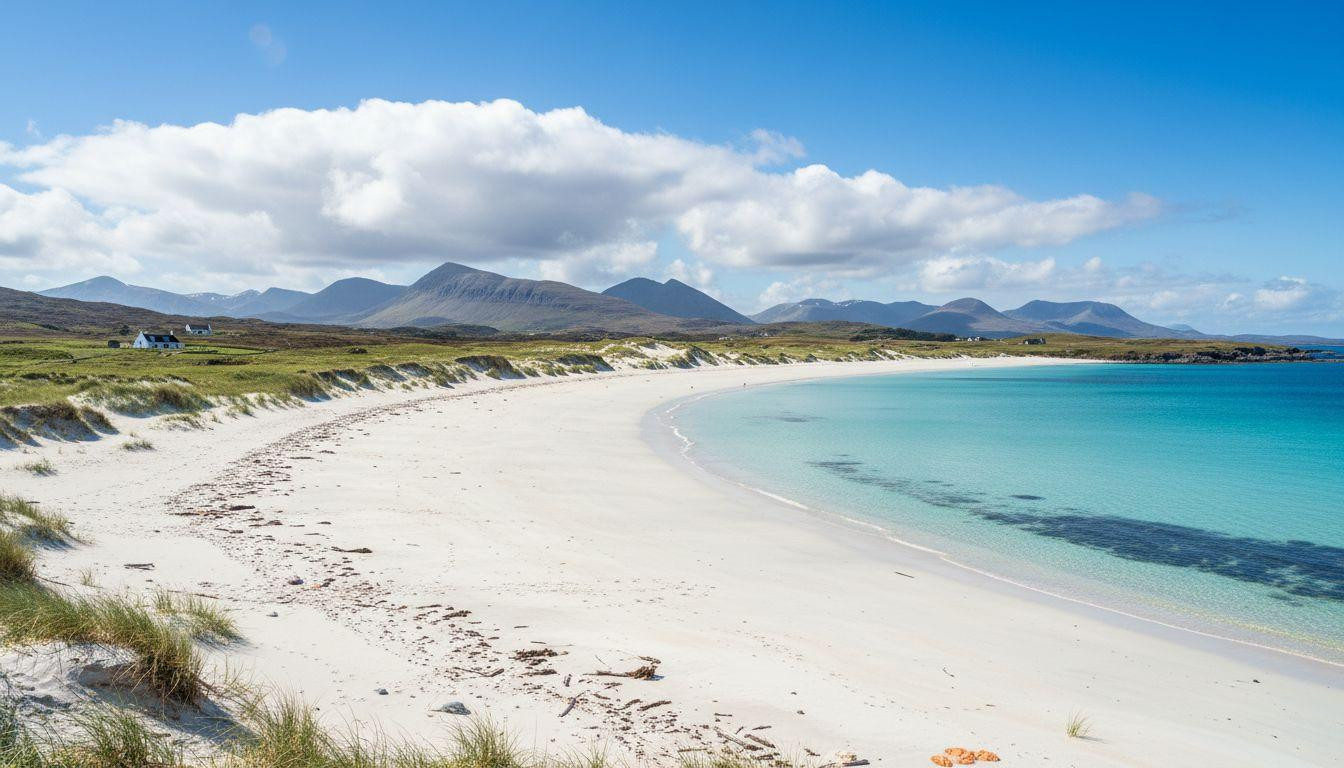
The ferry from Tarbert cuts through morning mist across the Sound of Harris. Then the bay opens wide: three miles of white sand stretching beneath water so turquoise it defies the latitude. This is Luskentyre Beach, where Scotland’s Outer Hebrides deliver a geographical paradox that photographers struggle to explain and visitors refuse to believe until they stand ankle-deep in aquamarine shallows at 57°N.
The Hebridean Caribbean setting
Luskentyre sits on Harris’s west coast, facing Taransay island across a wide estuary. The sparse settlement holds fewer than 100 residents scattered among traditional croft houses. Behind the beach, vast sand dunes roll into machair grassland where corncrakes still call in summer.
The North Harris mountains frame the eastern horizon while the Atlantic stretches endlessly west. No resort development mars the coastline. Two simple car parks serve visitors: one beside the beach, another near the old cemetery. A public toilet with donation box completes the infrastructure.
Access requires commitment. The A859 from Tarbert leads to a minor road marked Losgaintir. Three miles of single-track tarmac wind through moorland before revealing the bay. This Brittany island grows 2,500 exotic palms 800 meters from white Atlantic sand, but nothing matches Harris’s raw authenticity.
The color science behind the magic
Light on shallow sand
Sunlight penetrates clear Atlantic water to illuminate the white sand floor beneath. The shallow bay averages three feet deep at mid-tide. Light refracts through these shallows, creating aquamarine and turquoise bands that shift with clouds and tides.
Local tourism boards confirm the optical effect peaks during late spring through early summer. Sunshine combined with fluffy white clouds produces the most intense blues. Even in winter mist, the sands sparkle with pale luminescence.
The machair factor
Behind the dunes, flower-rich machair grassland adds visual depth. Orchids bloom in late spring while traditional grazing maintains the ecosystem. The Scottish Geology Trust recognizes Luskentyre as an outstanding example of dynamic beach-dune-machair landforms supporting rare wildlife including great northern divers and Slavonian grebes.
5 Queensland beaches where granite rocks frame turquoise water 125 miles from resort crowds offer similar colors, but Harris combines them with distinctive Hebridean character.
The experience of emptiness
Winter’s brooding beauty
January brings wild weather and dramatic skies. Daytime temperatures hover around 43°F with frequent Atlantic fronts. The beach stays largely empty except for dog walkers and photographers. Recent visitor surveys show 90% fewer people than summer months.
Winter swimming remains possible but challenging. Water temperatures drop to roughly 46°F. The hardy few who brave it describe the experience as invigorating rather than comfortable.
Summer’s gentle crowds
Peak season from June through August sees highs around 61°F. The shallow bay warms slightly faster than deeper waters. Families do swim, though most visitors prefer walking the full three-mile length. TripAdvisor reviewers consistently note the beach never feels crowded despite Britain’s best beach awards.
This Victorian seaport where 1880s brick warehouses meet Olympic mountain fog offers different coastal beauty, while Luskentyre delivers pure natural spectacle.
Why this beauty stays quiet
Remote location protects Luskentyre from day-trippers. The journey from Stornoway requires 2.5 hours including ferry connections. Most visitors fly to Glasgow or Edinburgh, then connect to Stornoway before driving south to Harris.
Accommodation remains limited and expensive. Budget options start around $50-110 per person nightly. Mid-range guesthouses in nearby Seilebost or Tarbert cost $120-220 per room. Luxury lodges with sea views exceed $240-430 per night.
Local restaurants in Tarbert serve fresh seafood with main courses typically $18-30. The remoteness that preserves the beach’s character also limits visitor numbers naturally. Better than Gloucester where parking costs $20 and Rockport keeps granite quarries free, Luskentyre charges nothing for its world-class beauty.
Your questions about Luskentyre Beach answered
When does the water look most turquoise?
Mid-tide conditions with sunshine and scattered clouds produce the most intense aquamarine colors. Late May through early July offers the best combination of long daylight hours and relatively warm weather. Tour guides monitor weather forecasts obsessively to time visits perfectly.
Can you actually swim comfortably?
Swimming happens but requires tolerance for cold water. Even summer temperatures rarely exceed 59°F. The shallow bay provides some warming compared to deeper Atlantic waters. Winter swimming attracts only the most hardy visitors seeking dramatic rather than comfortable experiences.
How does it compare to actual Caribbean beaches?
Visual similarities on sunny days are striking. Water clarity matches tropical standards while sand quality rivals any Caribbean resort. The crucial difference lies in temperature and setting: Luskentyre offers wild, windswept authenticity versus warm, developed tourism. Trade-offs include zero crowds and genuine crofting culture.
Morning light spreads across the bay, touching each ripple with silver. The mountains of North Harris catch the early sun while Taransay island emerges from overnight mist. Another day begins in Scotland’s most unlikely tropical paradise, where geography defies expectations and turquoise water flows beneath northern skies.