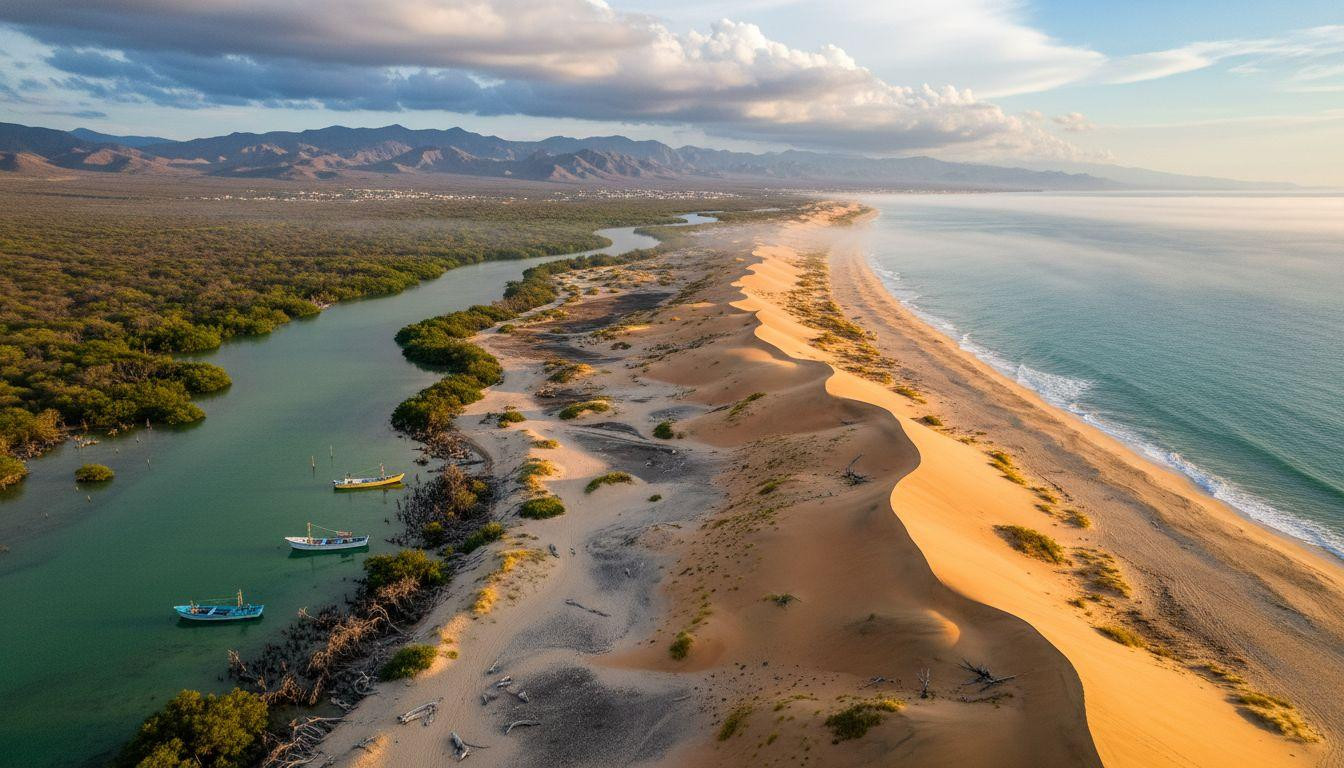
The water turns jade-green in January. Not the crystalline turquoise of postcards, but something richer. Plankton blooms thick enough to cloud visibility down to 15 feet, and that murky richness is exactly what brings whale sharks to El Mogote. The sandbar stretches 7.5 miles along La Paz Bay, backed by golden dunes that glow orange at sunrise. Most tourists fly into Cabo San Lucas and never make it this far north. The 56 boats permitted daily here feel empty compared to Cabo’s unlimited crowds.
The sandbar that feeds giants
El Mogote sits at the mouth of Bahía de La Paz, the largest coastal water body in the Gulf of California at 1,017 square miles. North winds funnel nutrients into shallow bays between the sandbar and mainland, creating plankton concentrations dense enough to sustain the world’s largest fish. The mangrove-fringed dunes trap this nutrient soup in pockets 20-40 feet deep.
Walk the ocean-facing beach at dawn and the sand shows no footprints. The inlet side hides fishing shacks where maybe 50 seasonal residents work nets. No hotels, no restaurants, no paved roads. Just dunes and the occasional panga boat cutting through morning fog.
Why green water means whale sharks
The plankton bloom magnet
Whale sharks filter 6,000 pounds of plankton daily through mouths that open five feet wide. Juveniles use El Mogote’s nutrient-rich bays as nursery grounds from November through April, with peak numbers arriving December through February. The plankton density here creates visibility trade-offs. Caribbean snorkeling offers 60-foot clarity, but no whale sharks. El Mogote’s 8-15 foot visibility comes with 30-foot sharks gliding past your mask.
Recent visitor surveys from 2025 show 70-80% sighting success rates in January. The season opened November 12, 2025 with six confirmed sharks, building to typical mid-season counts of 15-20 individuals per day by late December.
Mexico’s strictest whale shark rules
The government limits operations to 14 boats per four-hour time slot, maximum 56 boats daily. Tours cost $100-150 per person including wetsuit, snorkel gear, and conservation fees of $5-10 that fund marine protection programs. Operators like Baja Charters have run these tours for over 10 years with perfect safety records. Late arrivals forfeit full fees with no refunds. The rules work because they’re enforced.
What snorkeling feels like here
In the water
Cold hits first. Winter upwelling keeps water temperatures between 64-70°F, cold enough that the included wetsuit matters. Encounters last 20-30 minutes, with 3-6 sharks typical per outing. They feed at the surface with mouths agape, moving slowly enough that strong swimmers can keep pace for 50-yard stretches. The plankton-thick water glows green-gold in morning light.
Sound underwater is just your own breathing and the occasional deep thrum when a shark’s tail sweeps past. They ignore snorkelers completely, focused on filtering the nutrient-rich soup that brought them here. A few miles south, Espíritu Santo Island offers sea lion encounters in the same protected waters.
On the sandbar
Between tours, guides beach pangas on the ocean side for lunch breaks. Walk the dunes and the silence feels absolute except for wind through salt grass. Mangrove channels on the inlet side offer calm kayaking through twisted root systems where herons fish in ankle-deep water. The contrast to Hawaii’s volcanic coastal parks is stark but the isolation feels similar.
The January window
Peak season runs December through February when whale shark numbers hit their highest and weather stays calm. January specifically offers the sweet spot of established shark populations before spring migrations begin. Air temperatures hold steady at 68-77°F with minimal rainfall. The date January 28, 2026 falls perfectly within this prime window.
Book tours 2-3 days ahead to secure morning slots when seas are calmest. Same-day bookings are possible but risky during peak weeks. If the first outing yields no sharks, reputable operators offer free return trips. For broader marine experiences, Palau’s jellyfish lakes offer different but equally remarkable encounters at similar price points.
Your questions about El Mogote answered
How do I get there from the US?
Los Angeles to La Paz International Airport (LAP) takes 2 hours direct with fares running $150-300 roundtrip in 2025. The airport sits 15 minutes from downtown La Paz by taxi ($10-15). Tour operators pick up from hotels or meet at Coromuel Marina, a 10-15 minute drive north of the malecón. Driving from Los Cabos airport takes 2 hours covering 87 miles. No train service exists.
Is green water safe to snorkel?
The plankton bloom is natural seasonal upwelling, not pollution. These nutrient-rich waters support the entire food chain from microscopic organisms to whale sharks. The water is skin-safe with no stinging organisms. Visibility reduction is the only trade-off, and it’s what makes the whale shark aggregation possible. Think of it as looking through slightly cloudy aquarium glass at the world’s best exhibit.
How does this compare to other whale shark spots?
Oslob in the Philippines hand-feeds sharks, raising ethical concerns about altering natural behavior. Tours there cost $120-180. The Maldives charges $200-plus for deep-water encounters with no snorkel guarantees. Galápagos requires $5,000 minimum cruise investments. El Mogote offers wild feeding behavior in accessible shallows for $100-150, with strict regulations protecting both sharks and habitat. The experience mirrors budget-friendly reef snorkeling in accessibility but with megafauna instead of coral.
The ferry back to La Paz leaves late afternoon. Most visitors make it with time to spare. The plankton-green water stays in your memory longer than the turquoise you expected.