Early July. Valensole’s lavender fields turn brown under harvest machines. Sixty-five miles north, Sault’s purple rows at 4,600 feet haven’t peaked yet. The altitude delays bloom by three weeks.
Most visitors miss this. They arrive in June when lower Provence finishes cutting. By mid-July, when Sault’s 1,400 residents walk among waist-high purple, the tour buses have moved on.
The altitude advantage
Sault sits on a plateau where Mont Ventoux’s white peak dominates the eastern horizon. The elevation keeps nights cool through summer. Lavender blooms later here, from late June through mid-July, extending the season when valley farms have already distilled their harvest.
Five-generation family farms work these higher fields. They still use the old method: women and children cut in morning cool, men run the copper stills by afternoon. The mules are gone, but the rhythm stays the same.
Temperature drops 15 degrees from valley to plateau. This matters for the flowers. Lower elevations peak in early June. Sault’s fields reach full purple around July 8-15, giving visitors a second chance at the bloom.
Where purple meets Provence stone
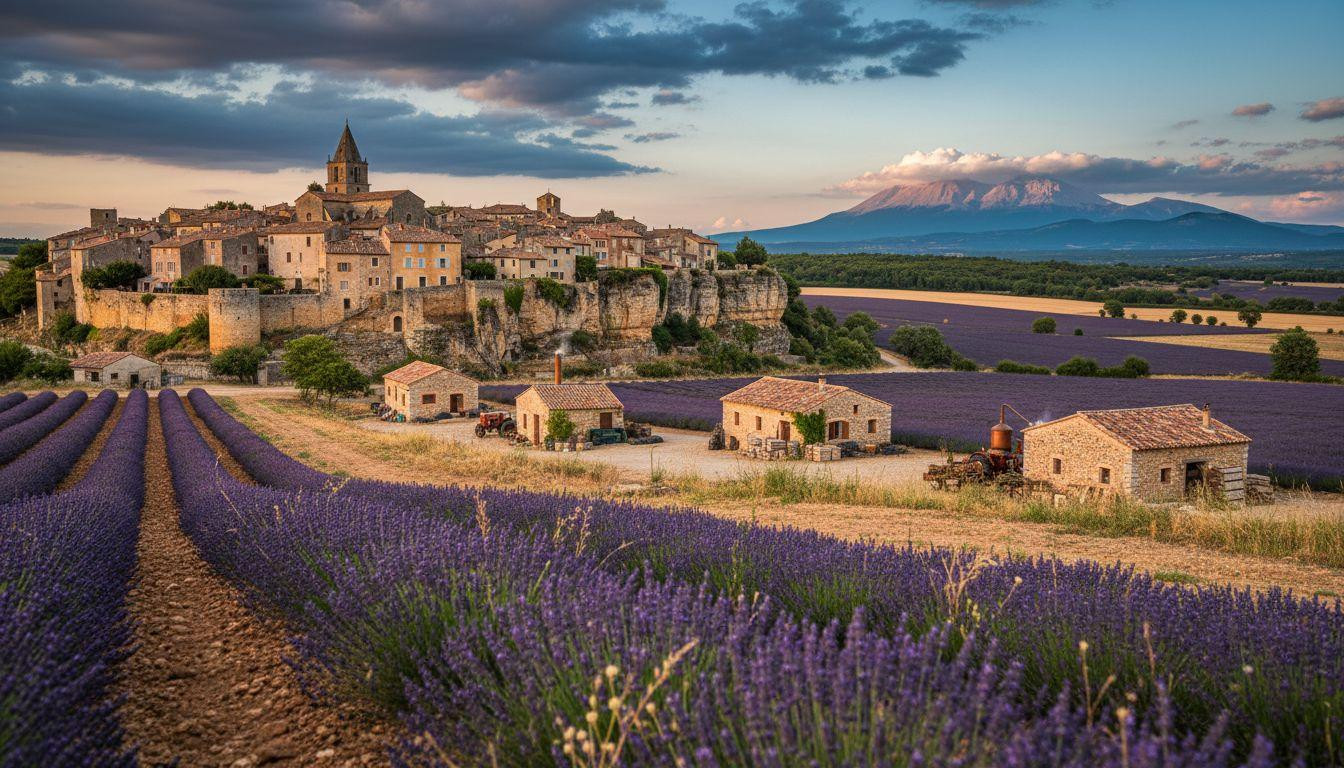
The village perches on golden limestone cliffs. Red-tiled roofs cluster around a medieval church. From the ramparts, lavender rows stripe the plateau in endless purple lines toward Mont Ventoux’s bare summit.
The visual reality
Unfenced fields let you walk between the rows. The scent intensifies near the plants, sweet and herbal, carrying on wind across the plateau. Morning mist lifts around 8am. For maybe twenty minutes, the whole valley turns soft gold against purple.
Sunset works better for photos. Two hours before dark, light turns horizontal. The lavender glows. Mont Ventoux catches pink on its white rocks. Most visitors leave by 4pm, missing this.
Beyond the postcard
Working distilleries dot the plateau. Families who’ve farmed here since the 1800s run copper stills in stone buildings. They welcome visitors for free tastings of essential oils, explain the harvest calendar, demonstrate the old mule-powered presses still used for small batches.
The co-op distillery processes most commercial lavender. But family operations preserve the craft methods. You can watch the whole process from cut stems to bottled oil in a single afternoon visit.
The lavender experience in Sault
The Chemin des Lavandes loops 2.5 miles through working fields. The trail stays flat, suitable for families. No fences block access to the rows. Local custom allows walking and photos but prohibits picking.
Walking the fields
Early morning offers the best conditions. Temperatures stay comfortable, under 75°F before 10am. The fragrance peaks in morning dew. Bees work the flowers but ignore visitors. By noon, heat pushes most people back to village cafes.
Late afternoon brings different light. Shadows lengthen across the rows. The purple deepens. Other Provence villages forty miles south finish their day, but Sault’s plateau stays bright until 8pm in July.
Family distillery culture
Five distilleries around Sault open for visits. Tours run free to $11 per person. You taste oils, learn to identify true lavender versus lavandin hybrids, see the copper stills that haven’t changed design in 200 years.
Workshops teach soap-making, nougat production with lavender honey, and traditional sachet embroidery. Materials cost $8-15. The products use local ingredients: almonds from nearby orchards, honey from plateau hives, oils from the morning’s distillation.
When Sault wakes for harvest
August 15 brings the Fête de la Lavande. The village population doubles for the day. Parades wind through cobbled streets. Artisan markets sell oils, soaps, ceramics, linens. Music plays in the square until midnight.
The festival marks harvest peak. By mid-August, most fields have been cut. Distilleries run full-time. The whole plateau smells of processing lavender, stronger than the living flowers. Book rooms six months ahead for festival weekend.
Winter offers different appeal. Snow dusts the plateau from December through February. The village empties. You can walk deserted fields, see Mont Ventoux’s peak white against blue sky, eat in local restaurants without reservations. Alpine villages charge triple for similar winter quiet.
Your questions about Sault answered
When exactly do Sault’s fields peak?
July 8-15 shows fullest bloom at 4,600-foot elevation. Lower plateau fields around 3,900 feet peak late June. This extends viewing season compared to Valensole, which finishes by early July. Harvest runs mid-July through mid-August depending on weather.
How does Sault compare to Valensole?
Valensole offers vast uninterrupted fields with dramatic mountain backdrops. Better for wide landscape photos. Sault provides smaller family farms, hilltop village architecture, quieter atmosphere. Meals average $22-33 versus $33-44 in Valensole. Accommodations run $66-99 per night, about 20% below regional average. Similar perched villages across Mediterranean Europe charge more for equivalent views.
What’s the best time to visit?
Early morning or two hours before sunset provides ideal light and temperatures. July offers peak bloom. August brings harvest activity and festival crowds. September shows cut fields but quiet village life. Winter suits visitors who want authentic agricultural communities without tourist infrastructure.
The last distillery finishes processing around 5pm. Workers head home. Purple fields stretch empty under evening light. Mont Ventoux turns pink, then gray, then dark against stars. The plateau keeps its quiet.