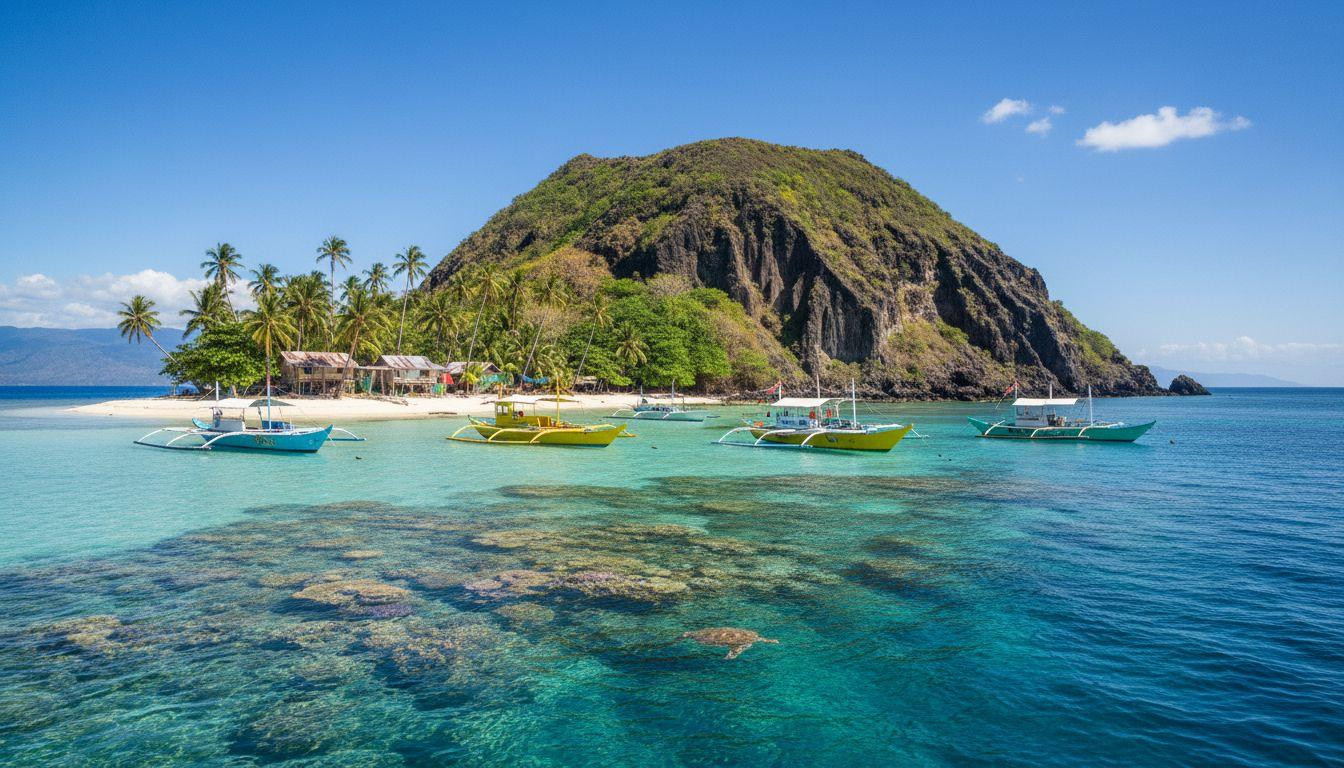
The bangka boat cuts through calm Philippine waters as dawn breaks over Apo Island. Within minutes of entering the crystal-clear sanctuary, a green turtle glides past at arm’s length. This tiny volcanic island, just 0.74 square miles, hosts one of the world’s most successful community-managed marine sanctuaries. What makes this place extraordinary isn’t just the guaranteed turtle encounters. It’s how 920 residents transformed their fishing village into a conservation model that protects 650 fish species while welcoming visitors for under $60 per day.
Where the Philippines hid its marine sanctuary
Apo Island sits 4 miles offshore from Negros Oriental, accessible only by traditional bangka boats from Dumaguete. The journey takes 30-90 minutes depending on departure point and sea conditions. This remoteness has preserved what development destroyed elsewhere.
In 1982, villagers made a radical decision. Instead of exploiting their reefs until collapse, they designated 1,100 yards of shoreline as a no-fishing zone. The community-led conservation effort predated most government marine protection programs by decades.
Two simple fishing villages, connected by sandy paths between bamboo houses, anchor the island’s authentic character. No resort developments. No golf courses. Just families who’ve fished these waters for generations, now serving as sanctuary guardians.
Swimming through living coral gardens
The mandatory guide system
Every snorkeler must follow local guides holding safety ropes. This creates “turtle trains” of visitors moving slowly through designated reef areas. The system prevents coral damage while ensuring wildlife encounters. Guides know exactly where turtles rest and feed throughout the day.
Water visibility reaches 130 feet on calm days. December through May offers peak conditions with minimal rainfall and gentle currents. Morning departures provide the clearest water before afternoon winds arrive.
What you’ll actually see underwater
The sanctuary protects over 400 coral species, nearly 90% of all Philippine coral varieties. Massive brain corals, delicate staghorn formations, and colorful soft corals create underwater gardens visible from the surface. Fish populations have increased eightfold since protection began.
Green and hawksbill turtles appear on every tour, often swimming within touching distance. The population exceeds 60 resident turtles, with juveniles frequently spotted in shallow feeding areas. Parrotfish, angelfish, and grouper cruise through coral formations in numbers that disappeared from most Philippine reefs decades ago.
A day on Apo Island
The morning boat journey
Day tours depart Dumaguete between 6-8am, including hotel pickup, boat transport, snorkeling gear, guides, and lunch. Packages cost $40-60 per person, significantly cheaper than comparable diving destinations in Southeast Asia.
The bangka ride provides first glimpses of the island’s volcanic silhouette rising from turquoise waters. Boats anchor in designated areas to minimize reef impact. Small groups of 6-12 people ensure personalized attention from local guides.
Beyond snorkeling
Between water activities, village walks reveal daily island life. Fishermen repair nets under coconut palms while children play in sandy courtyards. Simple eateries serve fresh seafood caught outside sanctuary boundaries using sustainable methods.
Lunch features grilled fish, rice, tropical fruits, and the local specialty kinilaw (raw fish ceviche). Overnight stays cost $15-30 in family homestays, offering sunset views without crowds. Morning arrivals experience the island before day-trippers arrive.
December in the dry season
December 2025 marks peak season for Apo Island visits. The northeast monsoon brings calm seas and minimal rainfall. Water temperatures hover around 82°F, perfect for extended snorkeling without wetsuits.
Post-typhoon reef recovery shows nature’s resilience. Coral regeneration accelerates during calmer months, with new growth visible on previously damaged areas. Marine life activity increases as calmer waters reduce stress on reef ecosystems.
Early morning departures avoid midday heat and afternoon winds. Sunset boat returns offer golden hour photography opportunities as the volcanic island silhouette darkens against orange skies.
Your questions about Apo Island answered
How does it compare to Palawan destinations?
Apo Island costs 20-30% less than El Nido or Coron day tours. Crowds remain minimal with mostly day-trippers versus resort guests. Turtle encounters occur on virtually every snorkel trip, unlike hit-or-miss wildlife viewing elsewhere. Community management ensures tourism revenue directly benefits local families rather than external operators.
Do I need dive certification for the best experience?
Snorkeling provides excellent reef access without certification requirements. The sanctuary’s shallow areas (6-30 feet deep) offer optimal turtle viewing and coral diversity. Certified divers can explore deeper areas for $80-120 per dive, but snorkeling captures the island’s main attractions accessibly.
What about conservation fees and permits?
Island entry fees cost $5-10 per person, with an additional $10 marine sanctuary fee. These charges fund conservation programs, turtle monitoring, and community development projects. No advance permits required for day visits, though overnight stays benefit from booking ahead during peak season.
The bangka engine cuts to silence as afternoon light filters through clear water. A turtle surfaces nearby, taking a breath before diving back to coral gardens below. In this moment, surrounded by healthy reefs and traditional boats, Apo Island reveals why community conservation creates lasting paradise.