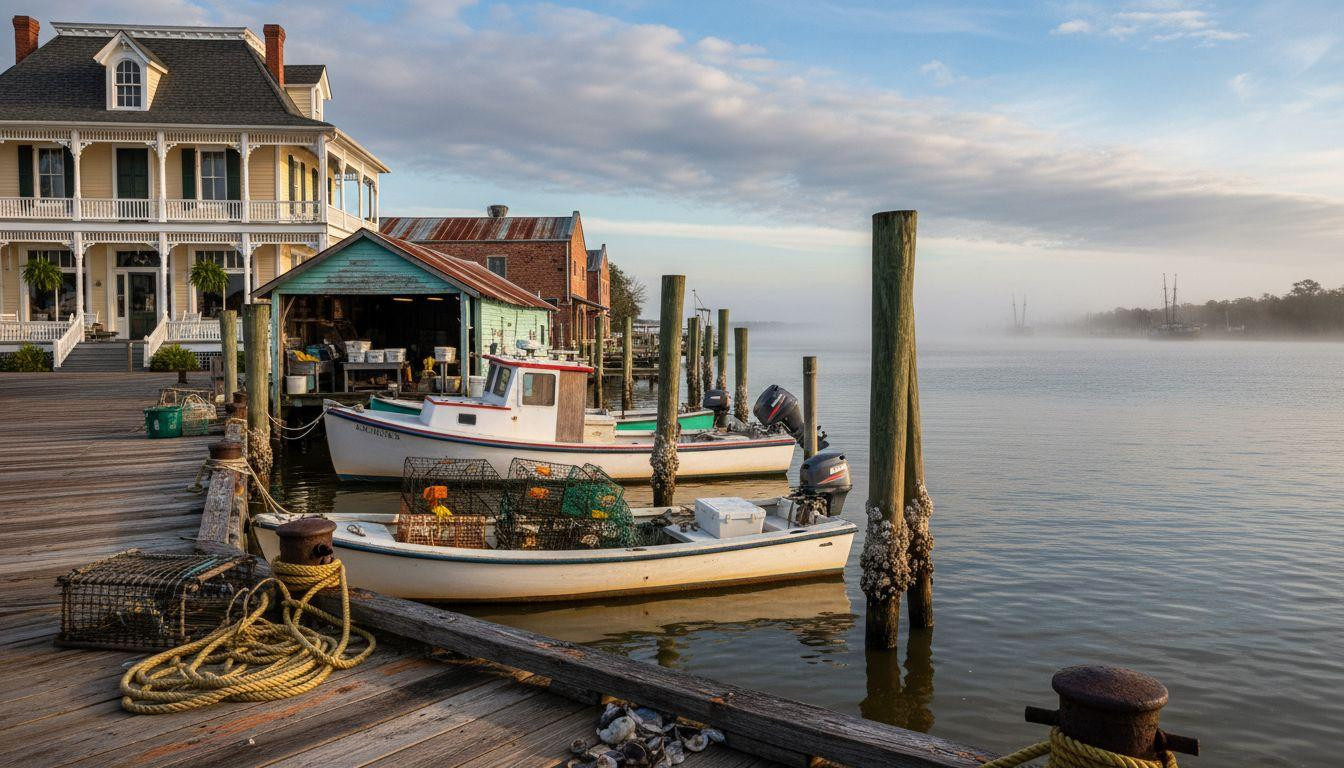
Morning fog drifts across Apalachicola Bay, wrapping the historic waterfront in silver veils that part to reveal weathered shrimp boats and Victorian warehouses. This small Florida town of 2,500 souls holds onto something most coastal destinations have lost: an authentic working waterfront where oyster culture still shapes daily life. The December air carries salt and pine, promising a glimpse into maritime heritage that tourism hasn’t quite erased.
Where oyster heritage lives in daily rhythms
Apalachicola sits at the mouth of the Apalachicola River, where fresh water meets the Gulf of Mexico in a 200-square-mile estuary. The bay historically provided 90% of Florida’s oysters until a moratorium closed commercial harvesting in 2020. Yet the culture persists in weathered docks, shucking stations, and boat repair shops that line Water Street.
Over 900 structures fill the National Register Historic District, designated in 1980. Greek Revival mansions from the 1830s cotton boom stand alongside Victorian gingerbread cottages painted in soft blues and whites. Unlike Destin’s manufactured resort atmosphere, authenticity grows from necessity here, not marketing.
Morning in the fog
The waterfront awakens
Dawn breaks over Battery Park at 6:30am, revealing oyster boats moored along the Apalachicola River. Commercial harvesting resumes January 1, 2026, ending a five-year closure. Watermen prepare gear despite the moratorium, maintaining boats and checking restoration sites where 240,000 oysters were placed on limestone reefs this year.
Shucking stations stand ready at Boss Oyster and Up the Creek raw bars. Fresh Gulf shrimp arrives daily at $8 per pound. The working docks stretch 200 yards along the river, where tourism boats now outnumber fishing vessels 3-to-1.
Historic downtown’s quiet streets
Broad Street’s brick warehouses date to Apalachicola’s 1840s cotton port heyday, when 12,000 residents shipped millions of bales to New Orleans. Today’s population of 2,461 walks the same sidewalks past the Orman House (1838) and Raney House Museum, both Greek Revival mansions preserved as state parks.
John Gorrie invented mechanical ice-making here in 1851, testing his refrigeration prototype on yellow fever patients. His museum occupies a former cotton warehouse at 46 6th Street, entry $5 for adults.
The oyster bay experience
Raw bars and working docks
Apalachicola oysters taste distinctly briny and metallic, shaped by the bay’s mineral-rich waters. Raw bars serve them by the dozen at $12-18, significantly cheaper than Key West’s $25-30 prices. Local shuckers work with practiced efficiency, their knives gliding through shells in seconds.
The Gibson Inn anchors Commerce Street in a restored 1907 hotel, rooms from $150-200 nightly. Tupelo honey and gulf shrimp complete the local culinary trinity, available at family restaurants like the Owl Cafe and Caroline’s Dining on the River.
Beyond the bay
St. George Island stretches 7 miles east across the causeway, offering 28 miles of undeveloped beaches backed by dunes. Cape St. George Lighthouse climbs 74 feet above the Gulf, entry $5. Kayaking tours explore tidal creeks at $40 per half-day, revealing dolphins and manatees in shallow waters.
Tate’s Hell State Forest covers 200,000 acres of pine flatwoods and cypress swamps, named for a lost logger who emerged muttering about his hellish ordeal in the 1870s.
The forgotten coast difference
Franklin County’s 12,500 residents have watched tourism replace the seafood industry as economic necessity. Guide boats and rental houses now fill former shrimping harbors, yet Apalachicola maintains working waterfront character through zoning restrictions and community resistance to chain development.
Hotel rates average $150-200 nightly, 40% below comparable coastal destinations. December fog creates atmospheric mornings reminiscent of Pacific Northwest fishing villages, with temperatures hovering around 50-65°F ideal for unhurried exploration.
Your questions about Apalachicola answered
When’s the best time for oysters?
The Florida Seafood Festival runs the first weekend of November, drawing 50,000 visitors for oyster shucking contests and live music. Commercial harvesting resumes January 1, 2026, with limited seasons through February. Winter months offer the calmest weather and fewest crowds for authentic waterfront experiences.
How does it compare to other Florida coastal towns?
Apalachicola receives 500,000 annual visitors versus Destin’s 8 million, creating a dramatically different atmosphere. Lodging costs 40-50% less than beach resort towns, while maintaining genuine maritime culture. Cedar Key offers similar working port authenticity 150 miles south, but lacks Apalachicola’s architectural heritage and festival scene.
What about access from major cities?
Tallahassee sits 75 miles northeast via Highway 319, a 90-minute drive. Flights into Tallahassee Regional Airport cost $200-400 from major hubs, plus $50-80 daily car rental. Northwest Florida Beaches International Airport lies 100 miles west but offers more flight options. The drive from Atlanta takes 8 hours via Interstate 10.
Salt air mingles with wood smoke from waterfront restaurants as evening fog begins its slow roll across Apalachicola Bay. Shrimp boats silhouette against pink sunset clouds, their masts swaying with ancient rhythms that development dollars haven’t quite managed to purchase.