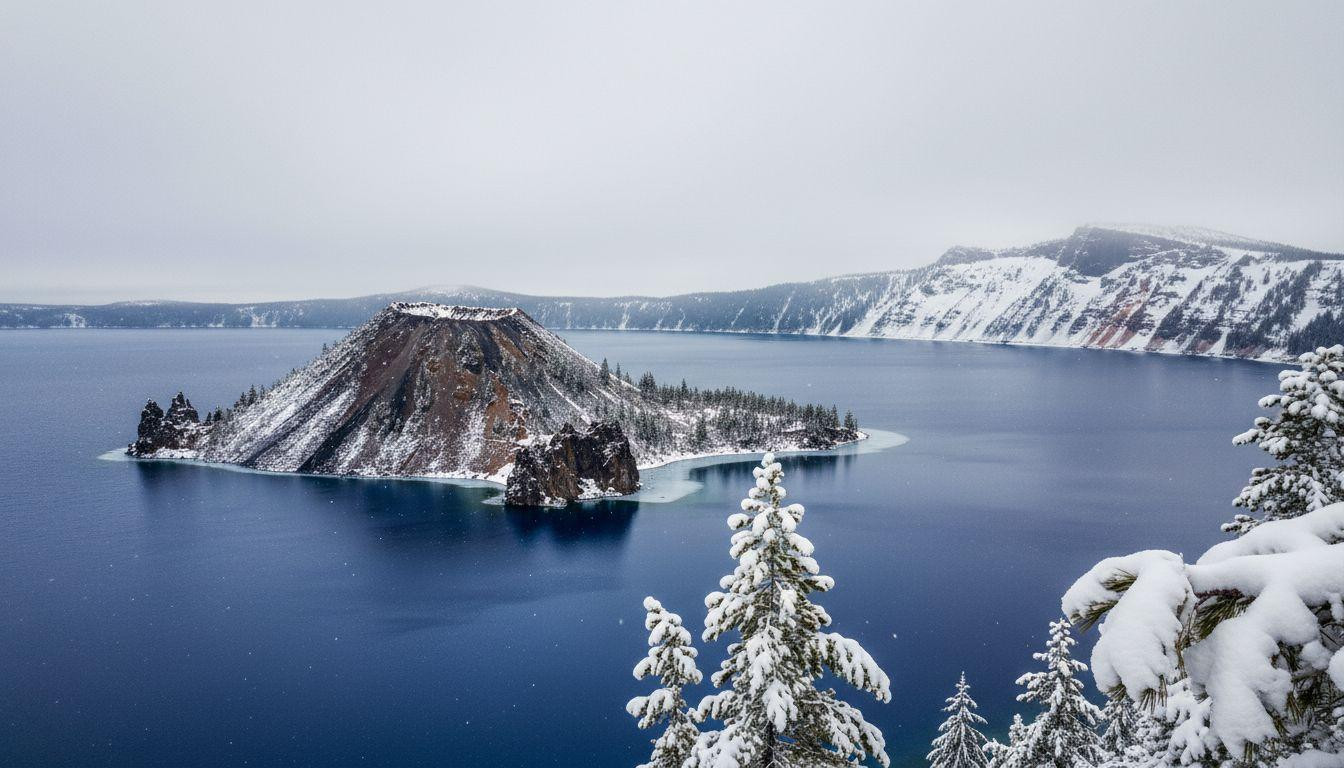
This Oregon notch drops 1,200 feet below Crater Lake’s crowded rim where alpine touring skis unlock Phantom Ship views no summer boat tour reaches. January 2026 brings 200-400 inches of La Niña powder to Kerr Notch at 6,686 feet elevation. The backcountry overlook sits empty while 2,000 daily visitors pack summer rim drives above.
Skinning up through lodgepole pine forest in pre-dawn darkness, the crunch of fresh snow echoes against volcanic ridges. Crater Lake National Park’s winter transforms from crowded spectacle to earned solitude. Only alpine touring gear reaches this remote vantage point where volcanic stillness meets backcountry reward.
The overlooked winter gateway
Kerr Notch sits at coordinates 42.9123522°N, -122.071693°W, positioned strategically below the famous rim overlooks. While summer crowds drive Rim Drive at 7,000-7,900 feet elevation, this backcountry feature drops to 6,686 feet. The elevation difference creates unique upward viewing angles toward Phantom Ship’s 300-foot basalt spires.
Highway 62 stays plowed year-round to Mazama Village, requiring chains in the designated Snow Zone. From the winter parking area, skin tracks wind 3-5 miles through forested pumice slopes and aa lava ridges. The approach gains 1,000-1,500 vertical feet over 2-4 hours, filtering crowds to near zero.
Park entry costs $15 in winter versus $30 in summer. No additional backcountry permits required beyond standard vehicle entry. Glacial water views remain accessible when Rim Drive closes October through May.
Phantom Ship revealed from below
The unique low-angle perspective
From Kerr Notch, Phantom Ship appears 2-3 miles across the caldera at a 10-20 degree upward angle. This contrasts dramatically with horizontal rim views or water-level boat tours. The low position reveals basalt spire understructure and winter ice formations against cobalt-blue lake ice.
Crater Lake formed 7,700 years ago when Mount Mazama collapsed, creating America’s deepest lake at 1,943 feet. The caldera holds zero rivers, maintaining perfect water balance through evaporation and subsurface flow. Winter ice intensifies the lake’s famous blue through mineral-free snowmelt chemistry.
Winter’s sculptural advantage
January conditions create pristine white snowfields framing dark basalt spires. The 65% overcast typical of Pacific Northwest winters provides soft, diffused light ideal for photography. Phantom Ship’s “ghost sails” illusion emerges as wind sculpts snow into sail-like formations.
Dawn arrives at 7:45 AM PST mid-January, painting alpenglow across the caldera walls. Temperatures range 10-25°F at the notch, warmer than the exposed rim’s 0-20°F range. The sheltered forest position reduces wind from the rim’s brutal 30-60 mph gusts.
Earning the alpine moment
The backcountry commitment
Alpine touring skis, boots, and bindings enable the lightweight skinning approach through moderate avalanche terrain. Beacon, probe, and shovel remain mandatory per National Park Service backcountry standards. The physical difficulty rates intermediate-advanced due to elevation gain and route-finding requirements in potential whiteout conditions.
Typical encounter rate averages 0-2 other skiers per day in this zone. The 533-inch annual snowpack isolates the area from casual visitors. Brutal access filters participants to serious backcountry enthusiasts only.
Self-supported economics
Daily costs range $15-50 versus $150-200 at nearby Mt. Bachelor resort. Medford alpine touring rentals cost $50-80 per day at shops like Play It Again Sports. Union Creek Resort provides lodging at $150-250 nightly, 30 miles from the park entrance.
The self-supported approach eliminates lift lines and groomed runs. Powder turns happen in untouched bowls with Phantom Ship as backdrop. Reward after effort defines the authentic backcountry experience.
Winter’s hidden timing advantage
La Niña patterns through February 2026 deliver 125-200% normal snowpack to the Cascades. The current 117-inch base at park headquarters indicates excellent powder conditions. Recent storm cycles added 5 inches of fresh snow ideal for skiing.
Summer’s 500,000 annual visitors shrink to fewer than 50 daily in winter backcountry zones. Rim Drive closes completely, eliminating road access to traditional overlooks. Boat tours cease operation, making ski access the only method to reach elevated Phantom Ship viewpoints.
The contrast creates temporal exclusivity impossible in summer. Tourist buses disappear, replaced by wind whispers through Phantom Ship’s basalt teeth and the quiet crunch of fresh powder underfoot.
Your Questions About Kerr Notch answered
Can I access Kerr Notch without advanced backcountry ski experience?
No maintained trails exist to Kerr Notch in winter. Alpine touring equipment and avalanche awareness remain mandatory. The National Park Service recommends consulting rangers at Mazama Village (541-594-3100) before attempting backcountry travel. Partner travel and filed itineraries increase safety margins significantly.
What makes this different from summer Rim Drive overlooks?
The 300-1,200 foot elevation drop provides unique upward viewing angles impossible from rim level. Summer’s horizontal perspective from 7,000+ feet contrasts with winter’s low-angle views revealing Phantom Ship’s structural details. Untouched snow conditions replace crowded viewpoints and tour buses.
How does Kerr Notch compare to other winter alpine destinations?
Yosemite’s Glacier Point requires helicopter access in winter, rating higher difficulty than Crater Lake’s ski approach. Mt. Bachelor offers groomed runs one hour away but lacks wilderness character. Kerr Notch provides authentic backcountry solitude with iconic volcanic scenery at moderate technical demands.
Soft morning light filters through overcast skies, casting blue shadows across endless white. Phantom Ship’s dark spires pierce the caldera’s rim as powder sparkles in alpine silence.