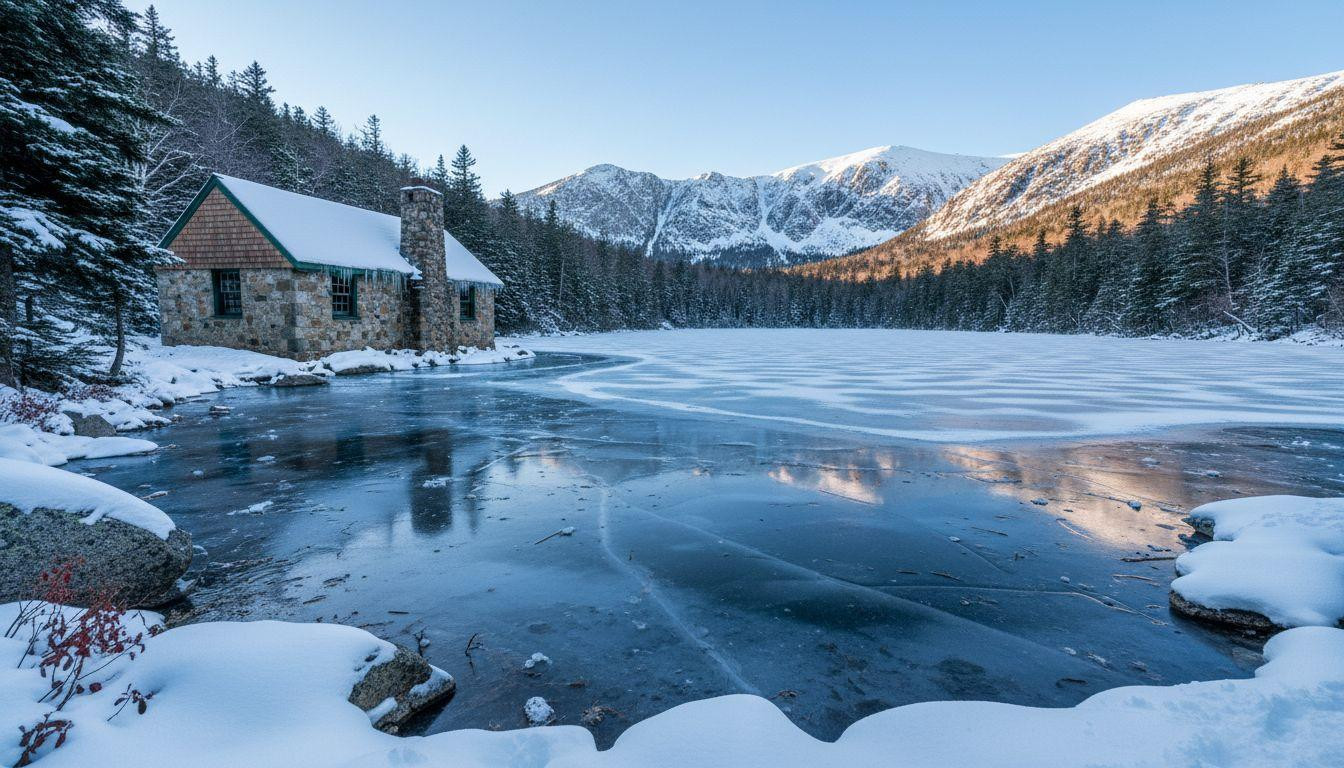
December morning at 2,730 feet, fresh powder blankets the Lonesome Lake Trail. The Appalachian Mountain Club hut sits silent for winter while this pristine glacial tarn reflects Franconia Ridge in perfect stillness. This is New Hampshire’s White Mountains before crowds discover the magic. Where 6-8 inches of new snow filters casual hikers and leaves crystal-clear alpine water for snowshoers willing to walk 1.6 miles through untouched wilderness.
A glacial tarn carved by ancient ice
Lonesome Lake formed as an Appalachian glacial tarn during the Pleistocene era. Ancient ice carved this cirque lake in the Franconia Range, creating a 10-acre basin of exceptional clarity. At 2,730 feet elevation within White Mountain National Forest, it offers the kind of pristine alpine experience typically found in western ranges.
The lake sits in Franconia Notch State Park, established in the 1930s for conservation. This Vermont gorge offers similar glacial geology just 90 minutes south. But Lonesome Lake delivers western-style mountain reflections without expensive flights to Colorado or Canada.
The tarn maintains mirror-like clarity year-round. In winter, its frozen surface creates a natural amphitheater surrounded by snow-covered peaks. North Kinsman rises to 4,293 feet directly across the water, while Cannon Mountain’s distinctive profile dominates the eastern skyline.
Winter transforms access into solitude
Fresh powder filters the crowds
December 11, 2025 brought 6-8 inches of fresh snow to the trail. Local trail reports describe “fluffy, windy” conditions perfect for snowshoeing but challenging for casual hikers. Lafayette Place parking often goes unplowed, requiring visitors to walk 100 yards from the I-93 tunnel area.
This natural filtering system keeps summer crowds away. The trail receives an estimated 10,000-20,000 annual visitors, but winter numbers drop significantly. Snowshoes become mandatory equipment, and only prepared hikers attempt the moderate 1,000-foot climb through unmarked snow.
The historic hut stands watch
The AMC built Lonesome Lake Hut in 1939 as part of their backcountry shelter network. For over 85 years, this stone structure has welcomed Appalachian Trail hikers. During winter months, it operates as self-service only, with no heat or staffing.
The hut’s rustic architecture adds visual interest against the white wilderness. Stone walls and wooden frames create a timeless scene that’s appeared in countless winter photographs. These snowy rim overlooks showcase similar alpine architecture throughout New England.
What makes this worth the snowshoe trek
Crystal clarity meets mountain reflections
Glacial tarns maintain exceptional water clarity due to their geological formation. Lonesome Lake’s basin collects minimal sediment, creating visibility that rivals Lake Louise in Banff. The difference: no entrance fees, tour buses, or international crowds.
Franconia Ridge’s snow-covered peaks reflect perfectly in the still surface. Morning light illuminates these reflections with soft alpine colors. The frozen lake surface develops wind-sculpted snow patterns that change daily, creating natural art installations visible only to snowshoers.
Moderate trail, authentic alpine feel
The Lonesome Lake Trail covers 3.2 miles round-trip with manageable terrain. Most snowshoers complete the journey in 2-3 hours, including time at the lake. The moderate difficulty makes it accessible to intermediate winter hikers without requiring technical climbing skills.
Trail conditions vary significantly in winter. Recent snowfall creates opportunities for first tracks, while packed sections offer easier travel. These alpine trail segments provide similar moderate winter access in the Pacific Northwest.
The quiet that makes you return
Pine-scented air mingles with fresh snow. Powder crunches rhythmically under snowshoes. Wind whispers through fir trees, diffusing winter light into ethereal white glows.
The frozen lake holds timeless quality. This view matches what AMC builders saw in 1939, the same silence that drew Appalachian Trail visionaries. Unlike Vermont ski resorts or crowded Cape Cod beaches, this remains self-reliant snowshoeing where carrying emergency equipment matters.
Local winter traditions emphasize preparation and respect. The “Live Free or Die” ethos means hikers share shovels for stuck vehicles and maintain trail courtesy. First tracks feel earned through proper planning and winter skills.
Your questions about Lonesome Lake answered
When’s the best time to visit?
Mid-December through March offers optimal snow conditions. Post-storm days provide the best powder for first tracks. Midweek visits avoid weekend crowds from nearby ski areas. Current forecasts show snow continuing through December 2025, creating excellent conditions for winter access.
What gear do you actually need?
Snowshoes become mandatory with any snow accumulation. Rental shops in Lincoln and Franconia charge $30-50 per day. Essential gear includes insulated layers, emergency shelter, headlamp, and a shovel for parking lot emergencies. AMC recommends their standard 10 essentials for all winter hiking.
How does this compare to Vermont options?
Lonesome Lake offers more solitude than popular Vermont destinations like Mount Mansfield or Camel’s Hump. Trail access stays free compared to $20-30 ski area parking. The glacial tarn provides unique alpine scenery not found in Vermont’s Green Mountains, with better mountain reflections than most New England winter destinations.
Morning light touches the frozen lake surface as wind sculpts fresh snow into natural patterns. The AMC hut stands silent against Franconia Ridge, holding 85 years of winter stories. This is New Hampshire’s alpine secret where snowshoe tracks disappear by spring but memories of glacial clarity last forever.