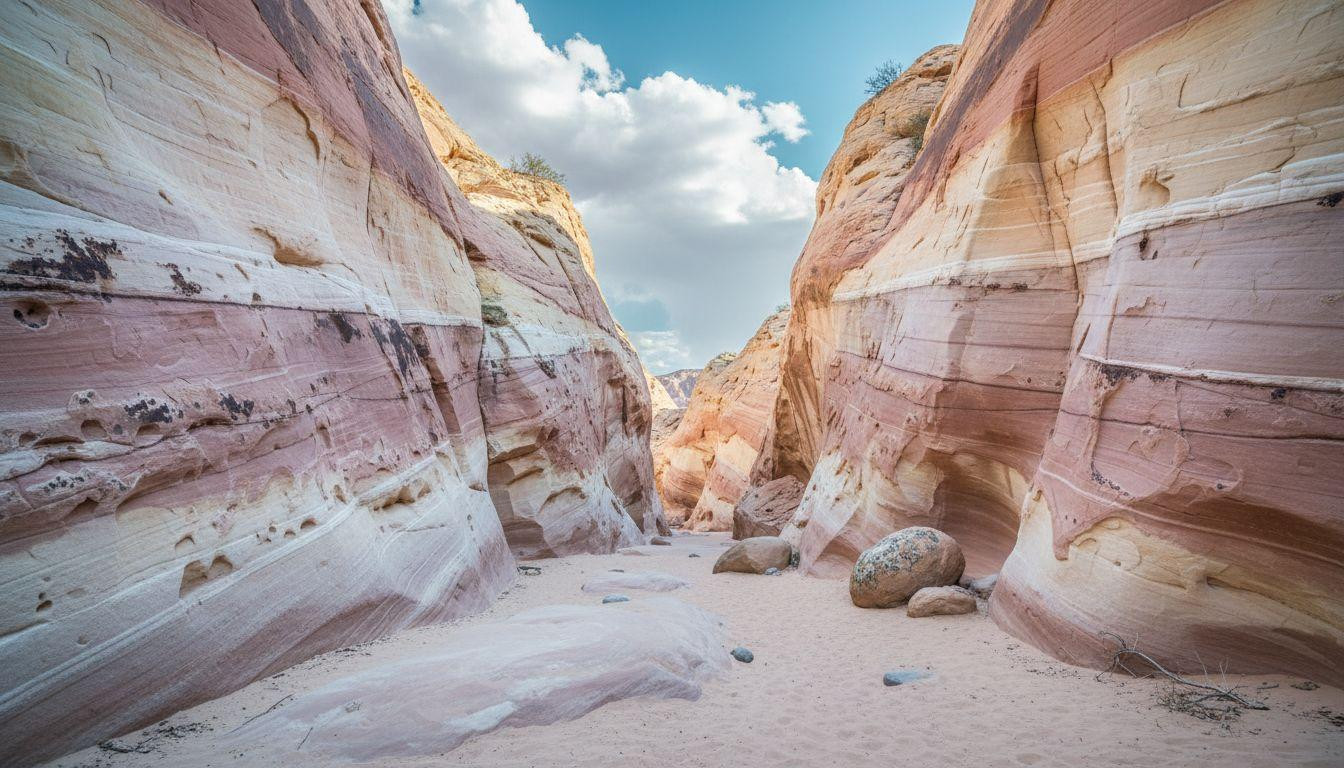
Valley of Fire’s name promises red sandstone drama, but Pastel Canyon delivers something quieter. Cream, pink, and lavender bands layer in narrow slot walls where mineral oxidation creates bedroom colors instead of fire-engine reds. This moderate 1.5-mile trail sits within Nevada’s oldest state park, 60 miles from Las Vegas. January offers perfect hiking conditions while summer heat closes the trail May 15-September 30.
The canyon’s ephemeral nature keeps crowds minimal. Seasonal closures and less-photographed status mean solitude in a park that sees 200,000 annual visitors.
The colored sandstone setting
Unlike Fire Wave’s zebra stripes or Aztec red formations elsewhere in the park, Pastel Canyon reveals mineral oxidation in softer tones. White and pale yellow striations layer between muted reds and subtle lavender bands. The palette shifts as you walk deeper into the slot.
Iron oxide creates rust tones. Manganese produces purple hints. Minimal oxidation leaves cream sections untouched. Geologically 150 million years old, these formations carved from ancient sand dunes then exposed by water erosion over millennia.
Morning light between 8-10am enhances color separation without harsh shadows. The canyon name references this unexpected softness in a park dominated by dramatic fire-red formations. This Mojave ghost town keeps 5 original 1880s silver buildings where calico peaks glow amber sits 150 miles northeast with similar colored geological features.
Walking through color revelation
The visual progression
First 0.3 miles traverses exposed wash with typical desert vegetation. Canyon walls appear around 0.5 miles, initially showing standard red sandstone. Pastel sections emerge gradually, not dramatic entrance but slow reveal as walls narrow and overhead light filters differently.
Peak pastel concentration occurs in middle slot section between 0.7-1.0 mile marks where walls close to 6-10 feet apart. The narrowest point reaches 3 feet across with 80-foot vertical walls overhead.
Geological specificity
Color bands aren’t painted. They’re oxidation patterns from groundwater movement through porous sandstone over millions of years. Cream equals minimal iron content. Pink shows moderate iron oxide presence. Lavender indicates manganese traces mixed with iron.
Deeper red reveals heavy iron concentration. Vertical striping shows ancient water flow paths while horizontal layering reveals original sand dune positions from 150 million years ago.
The moderate hiking experience
Trail characteristics
Round trip measures 1.5 miles with less than 50 feet elevation gain. Terrain mixes sandy wash, slanted rock surfaces, and occasional scrambling over small boulders reaching 3-4 feet maximum height. No technical climbing required but proper footwear essential on loose sand alternating with slick rock.
Trail marking remains minimal. AllTrails GPS recommended for navigation beyond the first slot entrance. Water sources don’t exist anywhere along the route. Carry 1 liter minimum despite winter temperatures averaging 60°F.
Seasonal access reality
Open October 1 through May 14 annually. Closed May 15-September 30 for heat safety. This California lake freezes silvery-blue at 8,200 feet where snowshoes reach volcanic mirror stillness offers winter accessibility across the state border.
Park management enforces closure strictly after experiencing heat-related fatalities in moderate trails during summer months. Even 90°F feels dangerous in exposed desert with minimal shade coverage reaching only 30% in narrow sections.
The quiet discovery feeling
Pastel Canyon receives a fraction of visitors compared to Fire Wave, the park’s Instagram star, or White Domes loop trail. Average encounter rate stays at 2-3 other groups on weekday mornings versus 50-plus at Fire Wave trailhead by 10am.
The discovery sensation comes from expectation reversal. Entering “Valley of Fire” prepared for dramatic reds, finding instead a slot canyon painted in bedroom colors feels like accessing a geological secret the park’s marketing doesn’t advertise.
Walking alone through narrow passages where walls show lavender and cream creates intimacy with 150-million-year-old stone. 7 narrow canyons where mud walls glow amber and silence replaces crowds offer similar solitude across the Southwest.
Your Questions About Pastel Canyon Answered
When exactly is it open in 2026?
October 1, 2025 through May 14, 2026, then reopens October 1, 2026. Closed entire summer May 15-September 30 annually for heat safety. Best months remain November through April for cooler temperatures. January can see occasional trail closures from flash flood risk after winter storms.
How does this differ from other Valley of Fire trails?
Fire Wave measures 1.5 miles with famous red and white stripes drawing 200-plus daily visitors. White Domes spans 1.1 miles through red slot canyon sections popular with tour buses. Pastel Canyon stretches 1.5 miles showing cream, pink, and lavender bands with 20-30 daily visitors maximum.
Do I need a guide for navigation?
No guide required for straightforward trail access using GPS apps. Risk involves unclear trail markings in wash sections beyond 0.5 miles, potentially confusing but not dangerous. This Arkansas waterfall splits into twin curtains above a pool few hikers reach requires similar moderate navigation skills. Rangers at the visitor center provide free trail maps showing key landmarks for $15 park entry fee.
Afternoon light washes the pastel bands into pale whispers against smooth sandstone. February visitors discover colors most intense before spring heat arrives to close this quiet geological gallery until October returns.