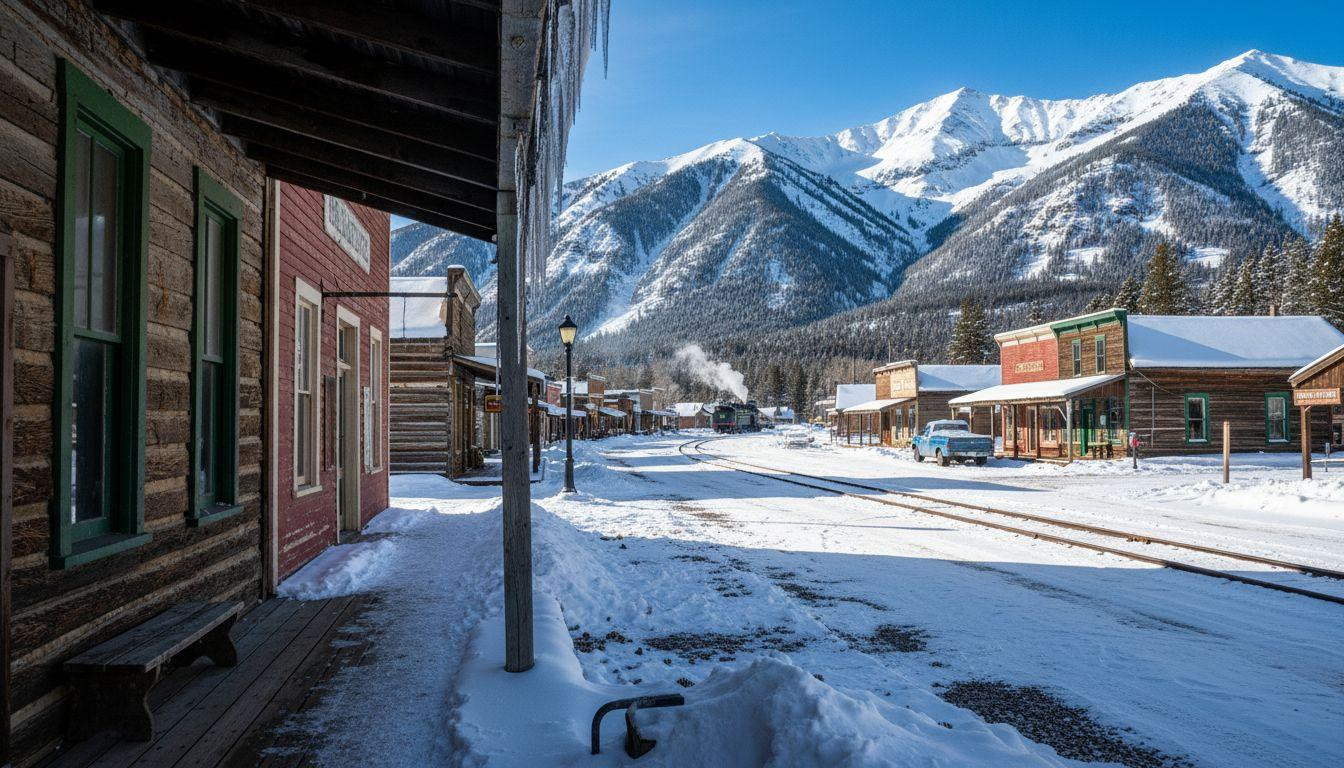
Blair Street at 7:45pm on a January weeknight. The last restaurant dims its lights. Snow falls on wooden boardwalks built in 1883. Population 650 settles into mountain silence at 9,318 feet. By 8pm, Silverton empties completely. The Victorian mining town that drew 2,000 souls during the 1880s silver boom now closes its doors when darkness arrives. Winter transforms this remote Colorado settlement into something closer to a ghost town than a ski resort.
Where the Victorian era never left
Silverton sits 50 miles north of Durango in the San Juan Mountains. The town earned National Historic Landmark status in 1968. False-front saloons and log cabins line Blair Street exactly as they stood 140 years ago. No boutique hotels. No chain restaurants. The general store sells mining supplies alongside coffee.
Elevation creates isolation. At 9,318 feet, winter arrives early and stays late. The Million Dollar Highway (US-550) connects Silverton to the outside world. Heavy snow closes this route frequently between December and March. When the road shuts down, the town becomes an island in white.
The Durango & Silverton Narrow Gauge Railroad stops running all winter. Summer brings 150,000 passengers on steam trains through the canyon. Winter brings silence. The tracks sit empty under snow until spring.
When winter closes the door
Annual snowfall averages 175 inches. January 2026 temperatures hold steady in the 10-20°F range. The cold doesn’t drive people away. The remoteness does. Pagosa Springs sits 90 miles east with hot springs and open roads. Silverton offers neither convenience nor comfort.
The 8pm emptying ritual
Restaurants close by 7:30pm on weeknights. The two microbreweries might stay open until 9pm if customers linger. Most don’t. Locals finish dinner and head home. Tourists who drove up for the day leave before dark. The drive back to Durango takes an hour in good conditions. Winter conditions are rarely good.
By 8pm, Blair Street goes dark. Streetlights illuminate empty boardwalks. Woodsmoke rises from residential chimneys. The town population of 650 spreads thin across the valley. No crowds. No nightlife. Just mountain quiet.
What stays open in the silence
Three businesses cater to winter visitors. Snowmobile outfitters rent machines for backcountry access. One ski shop stays open for Silverton Mountain guests. The grocery store keeps limited hours. Everything else hibernates until the train starts running again in May.
Experiencing Silverton’s frozen time
Silverton Mountain operates as Colorado’s only guided-access ski area. Daily rates run $199 for ungroomed terrain and expert-only runs. No beginner slopes. No lift lines. The mountain receives the same 175 inches that blanket the town. Peninsula’s frozen waterfalls draw ice climbers 1,200 miles east. Silverton’s ice routes sit 10 minutes from Blair Street.
The last train until spring
The Durango & Silverton Railway runs winter photo specials in February. Two-day excursions cost $475 and feature historic locomotives under night skies. The train departs Durango at dawn and returns by dusk. These special runs sell out months ahead. Regular passenger service doesn’t resume until late April.
Road access requires 4WD vehicles and winter tires. The 48-mile drive from Durango climbs 2,000 feet through avalanche zones. Rental agencies in Durango charge $100-200 daily for suitable vehicles. Shuttle services run $150-250 round trip.
Skijoring and winter festivals
Skijoring combines horse racing with Nordic skiing. Riders pull skiers through obstacle courses on Blair Street. The annual competition on February 14-15 awards $15,000 in prizes. Thousands attend despite 10°F temperatures. The event represents Silverton’s biggest winter gathering.
Winterfest runs January 9-11 with ski demos and gear giveaways. Snowscape festival (January 30-February 1) features tropical-themed cocktail crawls when snow totals run low. Locals dress in Hawaiian shirts and drink rum while standing in snowdrifts.
The cost of mountain solitude
Lodging ranges from $80 for basic rooms to $300 for historic inn suites. Telluride charges $200-600 for comparable dates 50 miles southwest. Silverton’s isolation keeps prices 40% below national ski town averages. Meals cost $15-25. The town has no luxury dining. Elk burgers and green chile stew dominate menus.
Affordability comes from inaccessibility. No airport within 65 miles. No interstate highway. The nearest hospital sits in Durango. Winter visitors accept these limitations or stay elsewhere.
Your questions about Silverton answered
How do you reach Silverton in winter?
Drive from Durango in a 4WD vehicle (1 hour, $20-30 fuel). Fly into Durango-La Plata County Airport and arrange shuttle service ($100-200). Rent a snowmobile for backcountry access. The train doesn’t run December through April. Check US-550 conditions before attempting the drive. The highway closes during heavy snow and avalanche danger.
What do residents do when the town empties?
Community gatherings replace tourist traffic. Locals organize woodstove storytelling nights and potluck dinners. The tropical cocktail crawl started as a joke about low snow years. Now it’s tradition. Six hundred people know each other by name. Winter isolation strengthens those bonds.
Is Silverton safer than crowded ski resorts?
The town reports minimal crime January through March. Unlocked doors remain common. Backcountry terrain requires avalanche knowledge and proper equipment. Wind Cave’s snowshoe routes offer gentler winter access 400 miles northeast. Silverton’s steep terrain and extreme elevation demand experience.
Morning light hits the San Juan peaks around 7am. The town stays dark for another hour. Steam rises from a single café. Fresh snow covers yesterday’s tracks. By the time most visitors wake up, locals have already lived half their day.