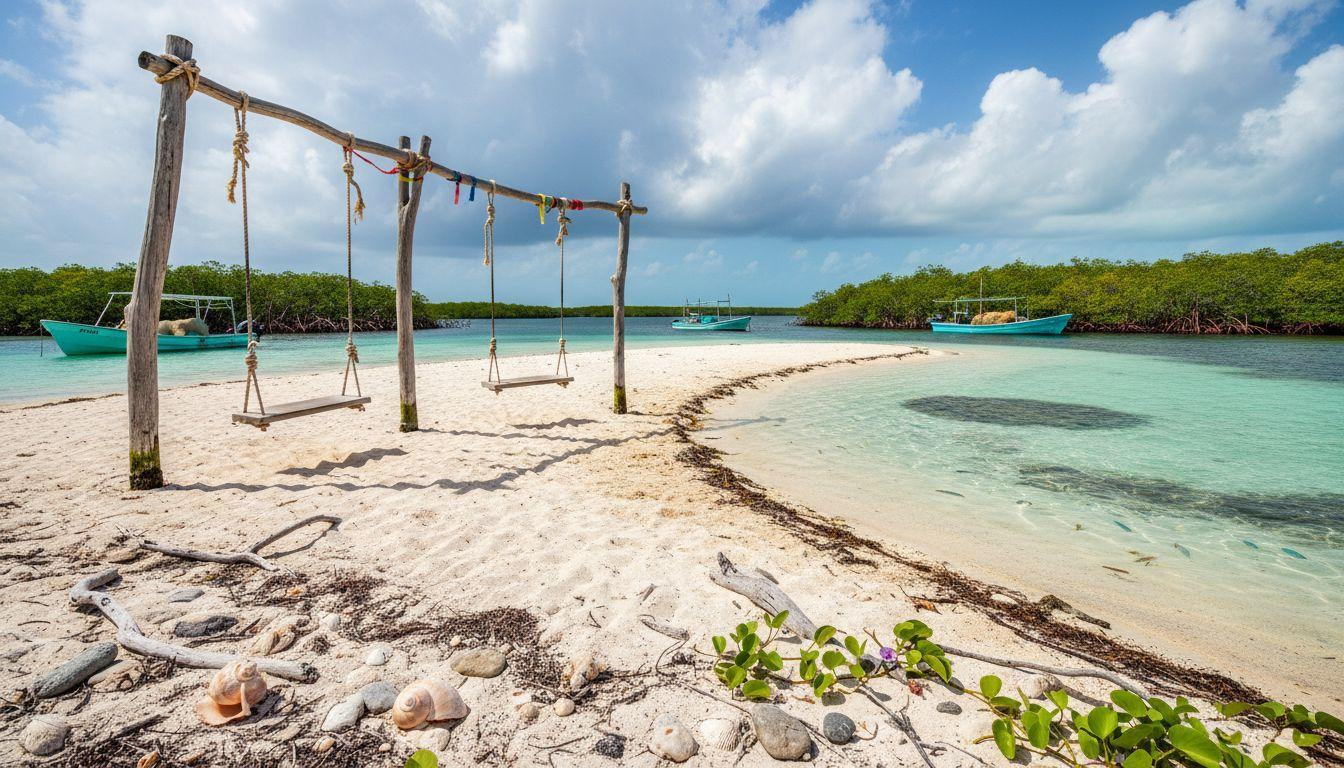
A 10-minute boat ride through emerald mangrove channels ends at something that feels impossible. White sandbanks rise from turquoise-green water so clear you can count fish swimming 6 feet below. Wooden swings hang over shallow lagoons where the Gulf of Mexico meets freshwater springs. This is Isla Columpios, where local fishermen turned post-hurricane recovery into Mexico’s most authentic island escape.
The boat captain cuts the engine as crystalline water reveals the bottom. You’ve reached a place that exists because of destruction and renewal.
The sandbank sanctuary
Isla Columpios floats in the mangrove ecosystem south of Chuburná Puerto, a fishing village 25 miles north of Mérida. Four fisherman cooperatives manage boat access for $13 per person, departing from a simple beach parking lot that costs $1. The 10-15 minute ride through narrow mangrove channels feels like entering a secret world.
White sand islands emerge where Hurricane Gilberto devastated the coastline in 1988. What seemed like environmental catastrophe became unexpected beauty. The storm cleared sediment and debris, allowing 15 years of natural regeneration to create the crystal-clear channels visitors navigate today.
Wooden swings hang over shallow lagoons where depths rarely exceed 4 feet. Unlike Tulum’s resort-heavy beaches, this remains boat-access only, naturally filtering crowds.
The cooperative transformation
From chalk mining to ecotourism
Local fishermen once extracted chalk from these coastal areas while maintaining traditional fishing practices. When Hurricane Gilberto struck, it destroyed both industries along with the mangrove infrastructure. Rather than abandon the area, four fishing cooperatives slowly rebuilt with sustainability in mind.
Around 2020-2022, these cooperatives recognized tourism potential in their regenerated ecosystem. They added the signature swings over ojo de agua (freshwater springs that bubble up through saltwater) and began offering guided mangrove tours. Price regulation between cooperatives keeps costs authentic rather than tourist-inflated.
Authentic management model
No resorts or hotel chains control access to Isla Columpios. The same families who fish these waters at dawn guide visitors through mangrove channels by afternoon. Tour operators like Descubre Chuburná charge 300-350 pesos ($15-18) for 2-3 hour experiences including kayaking and fresh ceviche.
According to local tourism surveys, this cooperative model keeps prices 50-70% below Yucatán coastal averages. Similar community-based conservation efforts demonstrate how local management preserves both ecosystems and authenticity.
The water experience
Kayaking through crystal channels
Silent paddle routes wind through mangrove tunnels where herons, pelicans, and cormorants nest undisturbed. Kayak rentals cost 200 pesos ($10) per hour, with guides pointing out flamingo feeding areas during December-March optimal weather. Water temperature holds steady at 77-82°F throughout winter months.
The mangrove ecosystem creates natural sound dampening. Engine noise from distant boats fades into gentle water lapping and bird calls. Morning tours offer the best wildlife sightings before afternoon heat sends animals to shaded roosts.
Swimming at the swings
The wooden swings hang over lagoons where freshwater springs create underwater “eyes” of even clearer water. Visibility extends 15-20 feet in these spots, revealing small tropical fish and pristine sand bottoms. Weekdays bring near-solitude, while weekends see modest crowds of families from nearby Progreso.
Powdery white sand allows comfortable barefoot walking between swimming spots. Unlike tidal sandbars that disappear, these islands remain accessible year-round, though water levels vary slightly with seasons.
The authentic escape
Boat-only access eliminates the resort development that transformed Cancún and Playa del Carmen. No beach clubs demand minimum spends or charge entrance fees. Small kiosks on the islands sell coconut water and snacks, while tour operators prepare fresh ceviche using fish caught that morning.
December-March brings ideal conditions: dry weather, calm seas, and 75-85°F temperatures perfect for all-day water activities. This timing coincides with North American winter, when travelers seek warm-weather escapes without spring break chaos.
The village of Chuburná maintains its working-harbor character, with colorful houses built directly on beach sand. Caribbean-quality waters at Mexican prices create exceptional value for travelers seeking authentic coastal experiences.
Your questions about Isla Columpios answered
How do I get there from Mérida?
Drive 45 minutes north via Highway 261 to Chuburná Puerto, or take public transport for under $3 total. Autoprogreso buses (25 pesos) connect Mérida to Progreso, then colectivos (15 pesos) reach Chuburná. Mototaxis (25 pesos) cover the final stretch to boat launch areas where tour operators wait.
When is the best time to visit?
December-March offers optimal conditions with dry weather, calm waters, and comfortable 75-85°F temperatures. Weekdays provide the most solitude, while weekends bring local families enjoying their neighborhood beach. Hurricane season (June-November) brings rougher seas and reduced boat schedules.
How does it compare to other Yucatán beaches?
Isla Columpios costs significantly less than Holbox Island ferry tours ($50-150) or Tulum beach clubs ($100+ minimums). The 25-mile distance from Mérida makes it more accessible than Holbox’s 3+ hour journey. Cooperative management maintains authentic pricing while preserving the ecosystem through sustainable visitor limits.
Late afternoon light transforms the turquoise lagoons into mirrors reflecting mangrove canopies. Fishermen secure their boats for evening as day-trippers head home. The swings sway empty over crystal water, waiting for tomorrow’s quiet discovery.