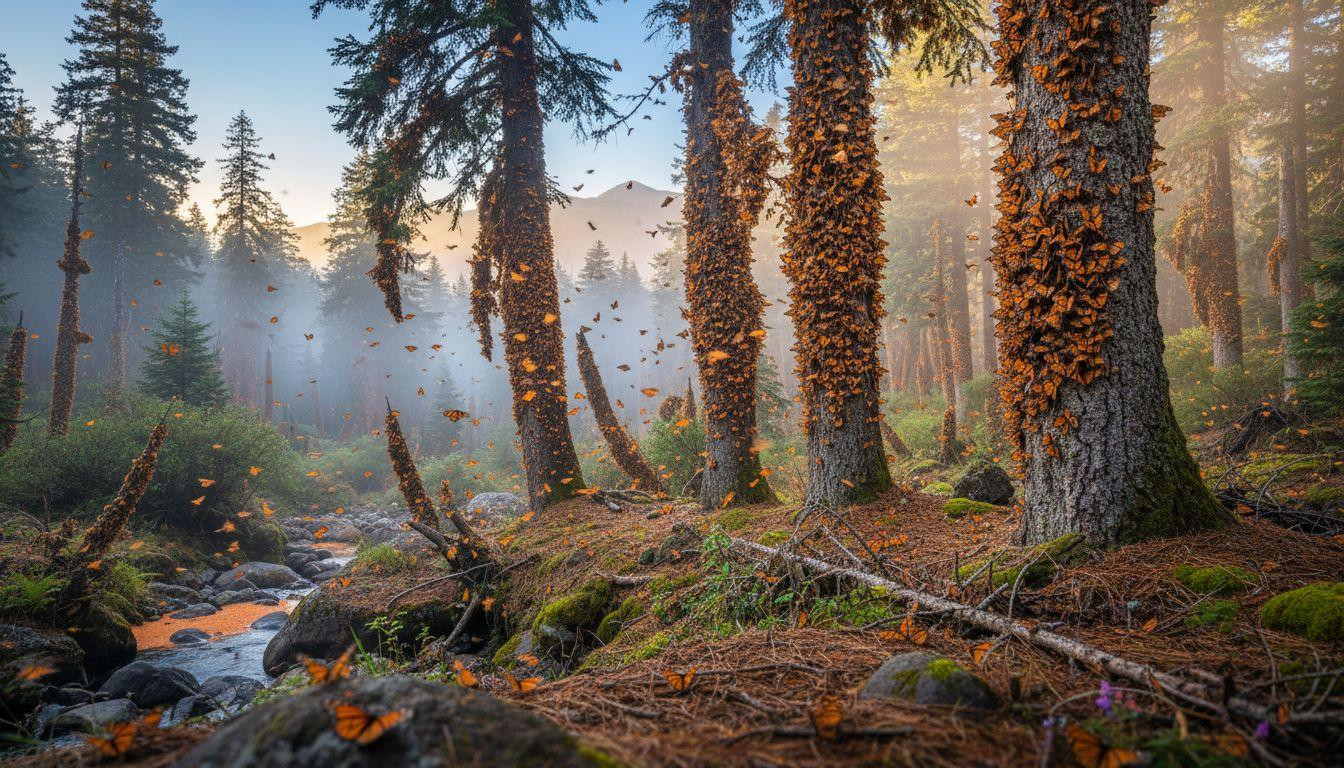
The morning fog lifts around 8am in the Sierra Chincua sanctuary, and for maybe ten minutes the oyamel fir forest turns entirely orange. Not from sunrise. From 1.8 million monarch butterflies waking on branches 10,000 feet above sea level. Their wings rustle like gentle rain on leaves. Orange scales dust your jacket like confetti. This is Angangueo, population 5,000, four hours west of Mexico City in Michoacán’s mountains. The 2025-2026 season projects a 20% butterfly increase over last year. Entry costs 80 pesos, about $4. The sanctuaries close March 31.
The mountain forests that make migration possible
Oyamel firs grow only between 9,800 and 10,660 feet in these volcanic mountains. The trees create a microclimate monarchs need to survive winter without freezing. When butterflies cluster on trunks, they raise bark temperature by 18 degrees Fahrenheit through collective body heat. The UNESCO Biosphere Reserve protects 13,554 hectares of core zones where logging is completely banned. Guided tours stay on marked trails.
Angangueo sits in a steep valley where pastel-painted houses climb hillsides on narrow cobblestone streets. The town mined copper and silver until the 1990s. Now it hosts butterfly pilgrims. Sidewalks empty by 8pm. The general store sells fresh tortillas and trail snacks from the same counter. Three small hotels charge $50-80 per night. Family-run posadas go for $20-40.
What you actually see at the sanctuaries
El Rosario Sanctuary sits 20 minutes from Angangueo by car. Sierra Chincua is 30 minutes. Both require guides, included in your entry fee. The trails climb steadily for about an hour through dense forest. You’ll hear the butterflies before you see them. That soft rustling grows louder as you approach the clusters.
Standing beneath orange rivers
The butterflies pack trees so densely that branches bend under their weight. When morning sun warms the canopy around 10am, thousands take flight at once. The air fills with orange. They spiral down to drink from mountain streams, turning the water surface orange from shed scales. Some land on your shoulders. The forest smells of damp earth and woody oyamel resin. Fog drifts through in waves. For more mountain sanctuary experiences, this Colorado town soaks in hot springs while snow falls at 7,040 feet.
Sierra Chincua versus El Rosario
El Rosario gets more visitors because it’s the most accessible. School groups arrive on weekdays. Go mid-week in February if you want quieter trails. Sierra Chincua sees fewer crowds and offers horse rentals for $15-25 to reach the colonies. Both sanctuaries host millions of butterflies. The experience differs mainly in atmosphere, not butterfly density. Reforestation crews planted 100,000 new oyamel firs at Sierra Chincua in 2025.
The migration these butterflies complete
Monarchs fly over 4,000 kilometers from Canada and the United States to reach these exact forests. They navigate by sun angle without GPS. No individual butterfly makes the round trip. The generation that arrives in November lives six months instead of the usual six weeks. They mate in March before flying north. Their offspring continue the journey back. Scientists still don’t fully understand how they find the same oyamel groves their great-great-grandparents used.
Day of the Dead traditions hold that butterflies carry the souls of ancestors returning home. The monarchs arrive November 1-2, exactly when families celebrate. Villages near the sanctuaries maintain altars in the forests. This cultural layer adds weight to the silence beneath the clusters. You’re witnessing something locals have protected for generations. Similar seasonal wildlife spectacles happen at this sandbar where whale sharks arrive to feed in plankton-green water.
Practical details that matter
Buses from Mexico City to Angangueo run daily and cost $20-50 for the four-hour trip. Rental cars go for $50-80 per day plus gas. The drive passes Nevado de Toluca volcano. Book lodging ahead in February when Mexican families visit during school breaks. Rancho Cumbre Monarca offers laid-back rooms near Sierra Chincua. In town, La Margarita sits close to the main square.
Bring layers. Morning temperatures at 10,000 feet hover around 45 degrees Fahrenheit. By noon it can reach 65. The altitude affects some visitors. Spend a night in Angangueo before hiking to acclimatize. Trail surfaces turn muddy after rain. Wear boots with grip. Guides speak Spanish primarily, though some know basic English. Tipping $5-10 is standard. For more accessible natural wonders, winter locks 19 waterfalls in ice where stone tunnels echo through empty gorges.
Your questions about Angangueo butterfly sanctuaries answered
When exactly should I visit in 2026?
The season runs through March 31, 2026. Peak butterfly activity happens January through mid-March when clusters are densest and weather is stable. Late February offers the best balance of warm temperatures and full colonies before spring migration begins. Weekday mornings see fewer visitors than weekends. Sanctuaries opened November 22, 2025.
Why do butterflies choose these specific mountains?
Oyamel firs grow only at this elevation in central Mexico. The trees create humid microclimates that keep temperatures between 30-65 degrees Fahrenheit all winter. Too cold and butterflies freeze. Too warm and they burn energy reserves before spring. These forests sit at the exact latitude where monarchs can survive six months without food. Climate change threatens this narrow habitat range.
How does this compare to seeing monarchs in California?
Pacific Grove hosts thousands of monarchs in eucalyptus groves. Angangueo hosts 1.8 million in 2026 across multiple sanctuaries. Mexico’s clusters create “orange rivers” that blanket entire trees. California offers easier access from US cities but smaller scale. Mexico requires international travel and mountain hiking but delivers UNESCO World Heritage immersion. Entry costs $4 versus free in California. For other Americas destinations, 6 Panama islands offer overwater huts for $100 with turquoise water.
The fog returns around 3pm most afternoons. Butterflies settle back into clusters as temperatures drop. The forest goes quiet except for that soft rustling. Orange scales collect in puddles along the trail. You walk down through mist with the sound of wings following you.